Introduction
Chemical peels and skin resurfacing are sophisticated cosmetic dermatology procedures designed to improve skin texture, tone, and overall appearance. By removing damaged outer layers of the skin, these treatments stimulate the body’s natural healing process, revealing fresher, more youthful-looking skin beneath.At BestCosmeticHospitals, we provide the information necessary to navigate your skin rejuvenation options. This guide will help you understand the available treatments, the importance of clinical expertise, and how to select a reputable hospital for your skin health journey.
Understanding Chemical Peels & Skin Resurfacing
Chemical peels use a specialized chemical solution to exfoliate the skin, while skin resurfacing typically involves mechanical or energy-based methods to remove surface layers. Both approaches are tailored to the patient’s specific needs.
Personalized Treatment Planning
No two skin profiles are identical. A successful outcome depends on a thorough assessment of your skin type, history, and specific concerns. Specialized hospitals excel in creating customized treatment plans that balance efficacy with patient safety, ensuring a controlled and supervised healing process.
SKIN RESURFACING OVERVIEW TABLE
| Aspect | Description |
| Medical Specialty | Cosmetic Dermatology |
| Main Purpose | Skin rejuvenation and texture improvement |
| Common Concerns | Acne scars, pigmentation, fine lines |
| Specialists Involved | Board-certified Dermatologists, Cosmetic Surgeons |
| Treatment Goal | Improved skin clarity, tone, and elasticity |
Common Skin Concerns Treated
Acne Scars
Deep or superficial scarring resulting from past acne can be significantly softened through resurfacing.
Fine Lines & Wrinkles
Treatments target the collagen layer to plump the skin and reduce the depth of aging lines.
Sun Damage
Helps remove superficial pigmented spots and sun-induced textural changes.
Hyperpigmentation
Reduces uneven color patches caused by sun exposure or previous inflammation.
Melasma
Specialized, gentle peel protocols can manage hormonal pigmentation concerns.
Uneven Skin Texture
Smooths out rough patches and large pores for a refined appearance.
SKIN CONDITIONS TABLE
| Skin Concern | Description | Common Treatment |
| Acne Scars | Residual marks from acne | Fractional Laser / Medium Peel |
| Fine Lines | Aging-related skin laxity | RF Microneedling / Laser |
| Sun Damage | Discoloration/roughness | Superficial/Medium Peel |
| Hyperpigmentation | Darkened skin patches | Chemical Peel / Laser |
| Melasma | Hormonal skin darkening | Customized Light Peels |
| Uneven Texture | Rough surface/large pores | Microdermabrasion / Peels |
Types of Chemical Peels
Chemical peels are categorized by their depth of penetration into the skin.
Superficial Peels
Use mild acids (like AHAs) to remove the outermost layer. They are excellent for a “glow” and require minimal recovery.
Medium-Depth Peels
Use TCA or other solutions to reach deeper layers. They are ideal for treating mild wrinkles and skin discoloration.
Deep Chemical Peels
Reach the lower dermal layers. Used for significant sun damage or deep scars, these require a longer recovery period.
CHEMICAL PEEL TYPES TABLE
| Peel Type | Best For | Downtime |
| Superficial | Mild texture/brightening | Minimal (1–3 days) |
| Medium | Pigmentation/fine lines | Moderate (5–10 days) |
| Deep | Deep scars/sun damage | Extended (2–4 weeks) |
Skin Resurfacing Treatments
Fractional Laser Resurfacing
Targets small sections of the skin, leaving surrounding tissue intact for faster healing.
CO₂ Laser Resurfacing
A potent tool for deep wrinkle and scar removal; it provides significant results but requires more downtime.
Erbium Laser
Often used for lighter resurfacing; it provides precision with less heat than CO₂ lasers.
Microdermabrasion
A non-invasive mechanical exfoliation for superficial texture refinement.
Microneedling with RF
Combines microscopic punctures with radiofrequency energy to boost collagen production.
Combination Therapy
Using multiple modalities to address different skin concerns simultaneously.
SKIN RESURFACING PROCEDURES TABLE
| Procedure | Best For | Main Benefit |
| Fractional Laser | Texture and scars | Precision healing |
| CO₂ Laser | Deep aging/scarring | Maximum skin tightening |
| Erbium Laser | Mild sun damage | Fast recovery |
| Microdermabrasion | Dull skin/pores | Immediate smoothness |
| RF Microneedling | Tightening/scars | Collagen stimulation |
| Combination | Complex skin concerns | Holistic improvement |
How Treatment Is Performed
- Initial Dermatology Consultation: Discussing goals and skin history.
- Skin Analysis: Using tools to look beneath the surface.
- Treatment Planning: Choosing the intensity and type of procedure.
- Procedure Day: Cleansing, application/application of device, and post-treatment soothing.
- Recovery & Follow-Up: Monitoring skin progress to ensure optimal healing.
TREATMENT PROCESS TABLE
| Step | Description | Purpose |
| Consultation | Detailed skin history review | Safety and goal alignment |
| Skin Assessment | Analyzing depth/pigmentation | Accurate treatment design |
| Procedure | The actual treatment session | Stimulating skin regeneration |
| Recovery | Following aftercare instructions | Ensuring proper healing |
| Follow-Up | Professional skin evaluation | Adjusting future care |
Advanced Technologies Used
- Digital Skin Analysis: Visualizes deep-set damage and potential outcomes.
- Fractional CO₂ Laser: Gold standard for deep resurfacing.
- RF Microneedling: Advanced collagen induction therapy.
- AI Skin Imaging: Tracks progress over multiple sessions.
- LED Healing Therapy: Uses light to reduce post-procedure redness.
TECHNOLOGY TABLE
| Technology | Purpose | Patient Benefit |
| Digital Analysis | Mapping skin health | Personalized approach |
| Fractional CO₂ | Intense resurfacing | Deep repair |
| RF Microneedling | Firming and texture | Non-surgical tightening |
| AI Imaging | Progress monitoring | Objective results |
| LED Therapy | Anti-inflammatory | Reduced downtime |
Top Hospitals for Chemical Peels & Skin Resurfacing
Hospital Overview
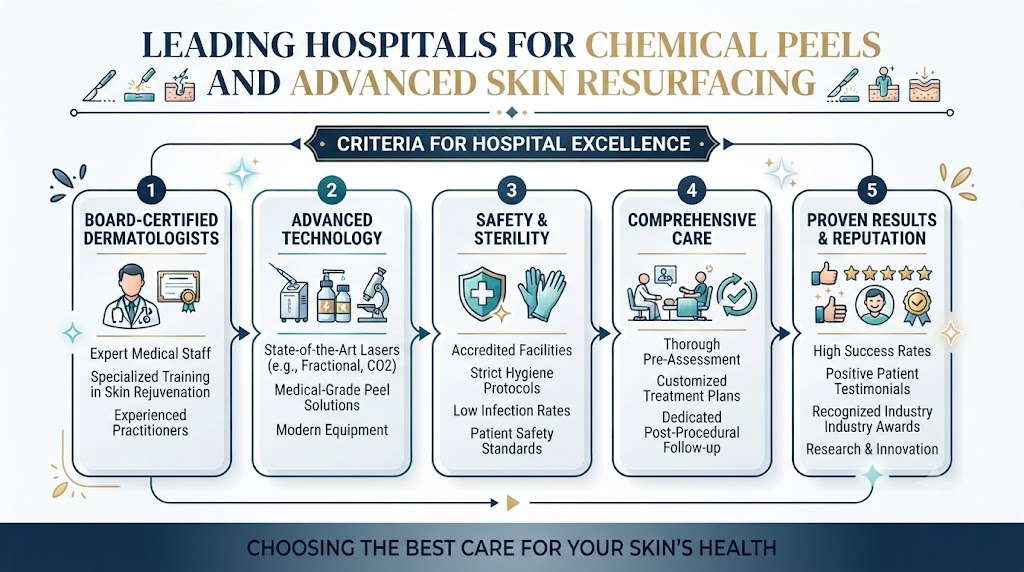
Look for centers that prioritize “patient-first” care, with separate aesthetic wings that maintain surgical-grade sterility.
Cosmetic Dermatology Department
Should offer a full suite of options rather than a “one-size-fits-all” laser treatment.
Specialist Team
Includes dermatologists with fellowship training in cosmetic and laser dermatology.
International Patient Services
Top-tier hospitals provide translation and recovery concierge services for international visitors.
HOSPITAL COMPARISON TABLE
| Hospital Name | Location | Chemical Peels | Laser Resurfacing | Specialists | Intl. Patients |
| Center A | Global | Comprehensive | Advanced | Board Certified | Yes |
| Center B | Global | Specialized | High-End | Expert Team | Yes |
| Center C | Global | Customized | Cutting-Edge | Experienced | Yes |
Recovery and Aftercare
Successful skin resurfacing requires patience. Always prioritize sun protection, as treated skin is temporarily more sensitive to UV rays.
RECOVERY TABLE
| Recovery Stage | Focus | Expected Outcome |
| First 48 Hours | Soothing/Hydration | Redness/Swelling peaks |
| First Week | Gentle cleansing | Peeling/Flaking subsides |
| First Month | Sun protection | Fresh, new skin visible |
| Long-Term | Maintenance/SPF | Improved texture and tone |
Benefits of Specialized Cosmetic Hospitals
- Expert Care: Doctors understand the science of skin, not just the machinery.
- Advanced Equipment: Access to the latest FDA-approved technology.
- Personalized Treatment: Adjusting parameters for your specific skin type.
- Better Safety: Emergency protocols are in place.
- Ongoing Follow-Up: Long-term management of skin health.
Risks and Limitations
- Sensitivity: Skin will be raw during the initial healing phase.
- Pigment Changes: Improper treatment can sometimes cause temporary hyperpigmentation.
- Infection Risk: Following hygiene protocols is mandatory to prevent issues.
- Realistic Expectations: Skin improvement is gradual; “flawless” skin is not a medically guaranteed outcome.
Future of Cosmetic Skin Rejuvenation
| Innovation | Potential Benefit |
| AI Skin Analysis | High-precision treatment tracking |
| Personalized Peels | Formulas blended for your exact DNA |
| Regenerative Therapies | Healing the skin using growth factors |
FAQs
- What is a chemical peel?
A chemical exfoliation method for skin renewal. - What is skin resurfacing?
Removing outer layers to reveal smoother skin. - Which is best for acne scars?
Usually fractional laser or deep peels. - How long is recovery?
3 days to 4 weeks depending on depth. - Are chemical peels painful?
You may feel a tingling or heating sensation. - Is laser safe?
Yes, when performed by a skilled professional. - How many sessions?
Often 3–6 for optimal results. - Who should avoid this?
Those with active infections or certain skin conditions. - Can pigmentation return?
Yes, without proper sun protection. - How do I choose a hospital?
Look for board certifications. - Do I need special skincare?
Yes, post-procedure creams are often required. - Are results permanent?
Improvements are long-lasting but aging continues. - Can I use makeup?
Usually not until the skin is fully healed. - Is it suitable for all skin types?
Some lasers are better suited for darker skin; consultation is key. - What is the best age?
Treatment is based on skin condition, not age.
Final Thoughts
The path to improved skin health is built on professional guidance, advanced technology, and patient commitment to aftercare. By choosing a reputable hospital that emphasizes safety and personalized dermatological care, you ensure that your skin rejuvenation process is as effective and safe as possible.We encourage you to explore BestCosmeticHospitals to find resources, compare specialized centers, and learn more about making informed decisions for your cosmetic dermatology needs. Always prioritize your skin health by consulting with qualified experts before proceeding with any treatment.