Introduction
The popularity of laser hair removal has grown significantly as more people seek long-term solutions for hair management. While many options exist for hair removal, choosing a facility based in a hospital setting—specifically one specializing in cosmetic dermatology—offers a unique level of safety, professional oversight, and medical-grade technology.At a specialized cosmetic hospital, your treatment is guided by professionals who understand the nuances of skin physiology and laser physics. This medical approach helps ensure that your treatment plan is tailored to your unique skin tone and hair type, prioritizing both efficacy and safety. In this guide, we explore how to evaluate these services and what you need to know before starting your journey. For tools to help you research facilities and compare treatment options, you can explore BestCosmeticHospitals.
What Is Laser Hair Removal?
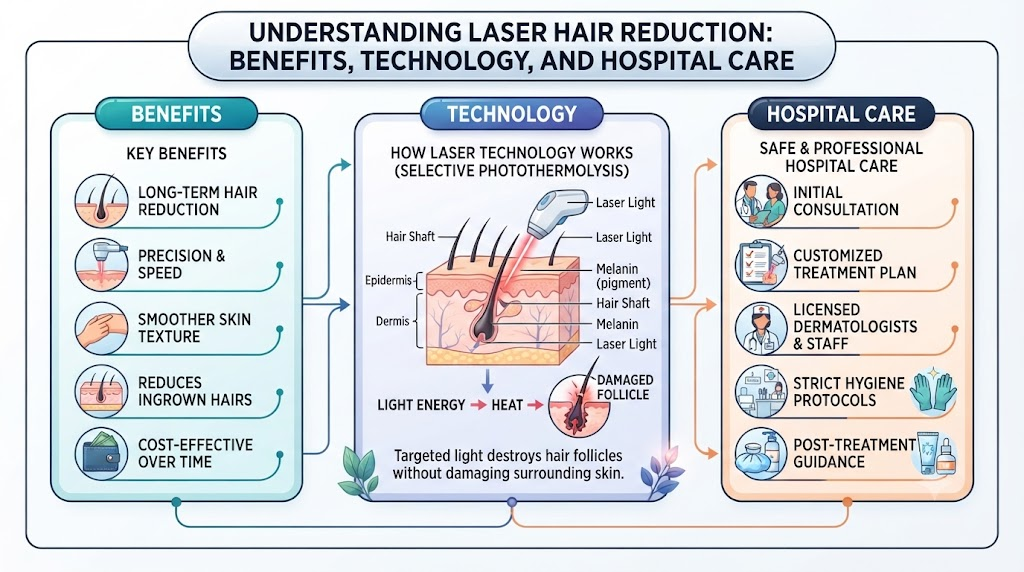
Laser hair removal is a cosmetic procedure that uses a concentrated beam of light to target and heat hair follicles. The pigment (melanin) in the hair absorbs the light, which damages the follicle and inhibits future hair growth.
Because human hair grows in cycles (anagen, catagen, and telogen), the laser can only effectively target hair in its active growth phase. This is why multiple sessions are required to capture all the hairs in a given area over time. This procedure is suitable for various parts of the body, ranging from the face to the legs.
Why Choose a Specialized Cosmetic Hospital?
When you choose a hospital-based cosmetic dermatology service, you are choosing an environment governed by strict medical protocols.
- Qualified Specialists: Procedures are performed or overseen by dermatologists and plastic surgeons.
- Advanced Equipment: Hospitals typically invest in the latest, FDA-approved laser technology.
- Safety Standards: Clinical environments provide superior hygiene and sterilization protocols.
- Personalized Planning: Because these facilities treat diverse skin conditions, they are experts at creating custom settings for your specific melanin content and skin sensitivity.
Common Treatment Areas
Laser hair removal can be performed on almost any area where unwanted hair grows.
Laser Hair Removal Areas Table
| Treatment Area | Suitable For | Sessions Usually Required |
| Face | Fine facial hair | Multiple sessions |
| Underarms | Thick hair | Multiple sessions |
| Legs | Large treatment area | Multiple sessions |
| Bikini Line | Sensitive area | Multiple sessions |
| Back | Dense hair growth | Multiple sessions |
Advanced Laser Technologies
Not all lasers are the same. A specialized hospital will often have access to a variety of systems to match your skin and hair profile.
Laser Technology Comparison Table
| Technology | Best For | Major Benefit |
| Alexandrite | Light skin tones | Fast treatment speeds |
| Diode Laser | Most skin types | Deep follicle penetration |
| Nd:YAG | Darker skin tones | Improved safety profile |
| IPL | Larger areas | Versatile aesthetic treatment |
Modern systems also incorporate cooling technologies (such as chilled sapphire tips or cryogen spray) to keep the skin surface cool and comfortable during the laser pulse.
Who Is a Good Candidate?
While most people can undergo laser treatment, the best results depend on several factors:
- Skin and Hair Type: Traditional lasers target dark pigment; however, advanced systems have made treatment more accessible for a wider range of skin tones.
- Hormonal Conditions: Conditions like PCOS may require a different approach or more sessions.
- Realistic Expectations: It is vital to understand that laser hair removal provides long-term hair reduction, not necessarily 100% permanent removal for every single patient.
Benefits of Advanced Laser Hair Removal
- Long-Term Reduction: Significant decrease in hair density over time.
- Precision: Targeted treatment that leaves surrounding skin unharmed.
- Efficiency: Can treat many hairs simultaneously in a very short time.
- Ingrown Hair Prevention: A common solution for those prone to painful ingrown hairs from shaving or waxing.
Preparing for Treatment
- Consultation: Discuss your medical history, including any medications that may make your skin light-sensitive.
- Sun Avoidance: Avoid sun exposure or tanning beds for at least 4–6 weeks before treatment.
- Shaving: You will typically be asked to shave the treatment area the day before to ensure the laser focuses on the follicle beneath the skin rather than the hair above it.
- Patch Test: Always ask for a patch test to see how your skin reacts to the laser settings.
During and After the Procedure
During the session, both you and the technician will wear protective eyewear. You may feel a sensation similar to a rubber band snap, though cooling systems help manage this.
Aftercare:
- Redness/Swelling: Normal and usually subsides within a few hours.
- Sun Protection: Your skin will be highly sensitive to UV rays; use broad-spectrum SPF daily.
- Gentle Skincare: Avoid hot showers, saunas, and harsh exfoliants for a few days post-treatment.
Possible Side Effects Table
| Side Effect | Usually Temporary? | Recommended Care |
| Redness | Yes | Cold compress |
| Mild Swelling | Yes | Skin cooling gels |
| Skin Sensitivity | Yes | Gentle, fragrance-free skincare |
| Pigment Changes | Sometimes | Dermatologist follow-up |
How to Choose the Right Hospital
Focus on facilities that offer a transparent consultation process. A good hospital will be honest about what results you can expect based on your skin type. Look for:
- Clear hygiene and safety protocols.
- Reviews that mention the quality of follow-up care.
- Availability of board-certified dermatologists.
Hospital Selection Checklist
- Qualified Specialists: Ensures the laser is used at safe, effective levels.
- Advanced Equipment: Newer machines are safer and more efficient.
- Hygiene Standards: Essential for preventing skin infections.
- Personalized Consultation: The hallmark of quality cosmetic care.
Common Mistakes Patients Make
- Price-Shopping: Choosing the cheapest clinic often means sacrificing safety or using outdated equipment.
- Missing Sessions: Laser hair removal requires adherence to a schedule. Missing sessions disrupts the hair cycle timing.
- Waxing/Plucking: These remove the hair root, which the laser needs to “see” to be effective. Stick to shaving.
- Unrealistic Expectations: Understand that “permanent reduction” means the hair grows back much thinner and slower, but the body may still produce new hairs due to hormonal changes.
Frequently Asked Questions (FAQs)
- Is laser hair removal permanent?
It offers long-term hair reduction, but maintenance sessions may be needed. - Does it hurt?
Most describe it as a snapping sensation; cooling technology makes it manageable. - How many sessions are required?
Usually 6–8 sessions, spaced 4–8 weeks apart. - Is it safe?
When performed by professionals in a clinical setting, it is highly safe. - Which laser is best for dark skin?
The Nd:YAG laser is generally considered the safest for darker skin tones. - Can men undergo this?
Yes, it is very common for back, chest, and neck hair. - What should I avoid before?
Tanning and plucking/waxing. - Are there side effects?
Minor, temporary redness or swelling is common. - Can I shave between sessions?
Yes, that is the recommended method. - How long is a session?
From 10 minutes (underarms) to an hour (full legs). - Is it suitable for sensitive skin?
Yes, when settings are correctly adjusted. - How do I choose the right hospital?
Look for medical-grade equipment and board-certified experts. - Is it safe for all areas?
Almost anywhere, except near the eyes. - What happens after?
You should avoid sun and use soothing moisturizers. - How should I care for my skin?
Daily SPF is the most important step.
Final Thoughts
Advanced laser hair removal is an effective way to simplify your grooming routine and improve skin texture. However, the best outcomes depend entirely on the technology used and the expertise of the professional performing the procedure. By choosing a reputable cosmetic hospital, you prioritize your safety and ensure the best possible results.We encourage you to approach your aesthetic journey with patience and realistic expectations. For comprehensive information, hospital comparisons, and guidance on choosing the right cosmetic care, visit BestCosmeticHospitals. Your path to smoother skin should always be supported by clinical expertise and professional care.