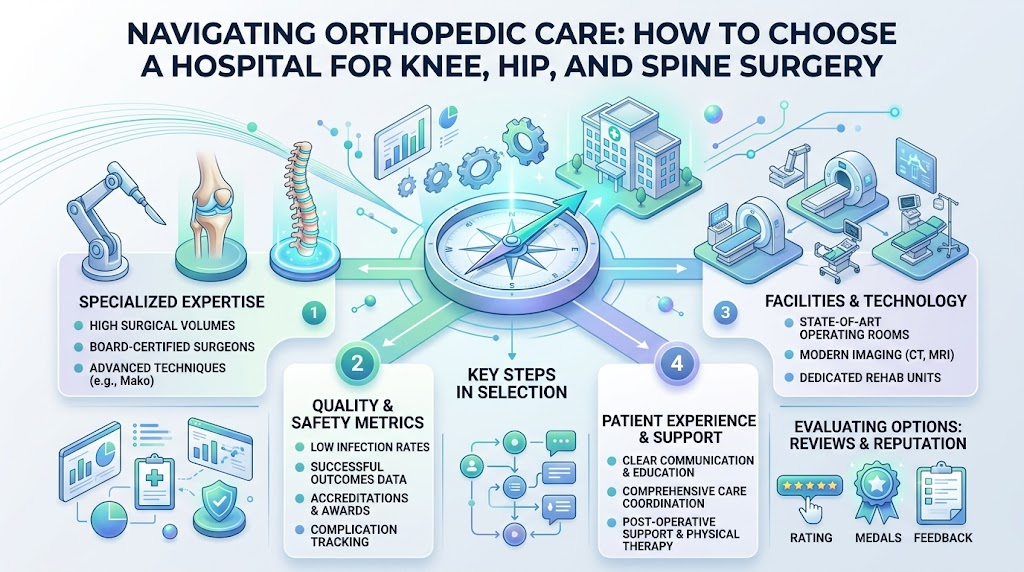
Navigating musculoskeletal health issues can feel overwhelming. Whether managing persistent joint discomfort, recovering from a sudden sports-related ligament tear, or exploring surgical options for chronic spinal pain, selecting the right medical care is a crucial early step. BestOrthoHospitals conditions span a broad spectrum—from acute, traumatic bone fractures to progressive degenerative disorders like osteoarthritis. Because each clinical scenario involves unique physical demands and treatment goals, different conditions often require distinct subspecialties, diagnostic capabilities, and post-treatment protocols.When faced with a complex health choice, patients often benefit from researching and comparing healthcare institutions before scheduling a consultation. Factors such as physician credentials, facility certifications, subspecialty focus, advanced imaging capabilities, physical therapy resources, and post-operative follow-up care all contribute to the overall quality of patient experience. Naturally, many individuals begin their journey by searching for the best orthopedic hospitals to understand what distinguishes comprehensive care programs.
Understanding Orthopedic Care
Orthopedic care encompasses the evaluation, prevention, diagnosis, and management of disorders affecting the musculoskeletal system. This intricate system includes bones, joints, ligaments, tendons, muscles, and nerves that together enable physical movement and structural stability. Clinical care within this field addresses a wide variety of issues, ranging from acute traumatic injuries to long-term chronic conditions.
Many patients assume that an orthopedic consultation automatically leads to surgical intervention. In clinical practice, however, non-surgical management is frequently the primary course of action. Musculoskeletal treatment typically spans several approaches:
- Diagnostic evaluations using detailed clinical exams and modern diagnostic imaging.
- Conservative management, including lifestyle modifications, targeted activity alterations, and ergonomic adjustments.
- Specialized physical therapy and targeted rehabilitation programs designed to restore strength and joint mobility.
- Pharmacological interventions, such as anti-inflammatory medications or targeted joint injections, managed under appropriate medical oversight.
- Surgical interventions, which are reserved for structural issues that do not respond adequately to conservative strategies or where immediate repair is medically indicated.
Ultimately, conservative measures are explored whenever clinically appropriate, reserving surgical approaches for scenarios where structural integrity needs direct restoration.
What to Look for When Choosing an Orthopedic Hospital
Evaluating medical facilities requires a balanced consideration of clinical capabilities, operational standards, and patient support structures. Because patient outcomes rely on the entire care delivery system rather than a single procedure, several key elements warrant attention during your preliminary research.
When reviewing potential healthcare options, patients often look for a best orthopedic hospital that demonstrates a strong clinical infrastructure across several critical dimensions:
- Subspecialty Departments: Comprehensive facilities typically house dedicated divisions for adult joint reconstruction, spine care, sports medicine, trauma, hand and upper extremity, and pediatric orthopedics.
- Physician Credentials and Volume: The depth of professional experience among the medical staff, including board certifications and experience in specific procedures, plays a significant role in care quality.
- Diagnostic Infrastructure: Access to on-site high-resolution MRI, CT scanning, digital radiography, and specialized musculoskeletal ultrasound facilitates accurate and timely clinical evaluations.
- Surgical Facilities and Infection Control: Dedicated orthopedic operating rooms equipped with modern surgical technology and stringent infection-prevention protocols contribute to procedural safety.
- Integrated Rehabilitation Services: In-house physical therapy teams and physical medicine specialists work alongside surgical teams to manage structured recovery plans.
- Emergency and Trauma Capabilities: Facilities capable of handling complex fractures and acute musculoskeletal emergencies offer round-the-clock specialized care.
- Accessibility and Patient Experience: Factors such as geographic location, communication policies, clear administrative procedures, and insurance compatibility directly impact practical convenience.
While individual factors contribute to a hospital’s overall capabilities, no single feature alone dictates whether a facility is right for a specific clinical scenario.
How to Find the Best Orthopedic Doctors
Physicians specializing in musculoskeletal care often focus on particular subfields after completing general orthopedic training. Finding an appropriate specialist involves aligning a physician’s specific subspecialty expertise with your individual health concerns.
When evaluating potential specialists, patients often search for the best orthopedic doctors to identify clinical leaders in specific domains. Key factors to evaluate during this search include:
- Fellowship Training: Advanced subspecialty training in areas such as adult joint reconstruction, complex spine surgery, or sports medicine indicates focused clinical expertise.
- Procedural Familiarity: Experience in treating specific conditions or performing particular procedures helps ensure the physician stays current with best practices in that domain.
- Institutional Affiliations: The quality and capabilities of the primary hospitals where the physician maintains surgical privileges reflect the surrounding medical infrastructure.
- Patient Communication: Clear explanations regarding diagnosis, realistic discussions of treatment trade-offs, and a willingness to answer patient questions support informed decision-making.
- Comprehensive Treatment Philosophy: Physicians who thoroughly explore conservative, non-surgical interventions prior to recommending invasive options prioritize patient-centered care.
Because clinical needs vary, a physician who is well-suited for complex spinal reconstruction may not be the appropriate choice for a complex shoulder arthroscopy. Alignment between specialist focus and patient condition remains paramount.
Finding the Best Orthopedic Hospital Near Me
Geographic location is a practical consideration in healthcare planning. When managing conditions that require multiple clinical visits, searching for the best orthopedic hospital near me helps identify local care options that minimize travel burden.
Distance becomes particularly relevant in several specific clinical scenarios:
- Frequent Physical Therapy: Post-operative recovery or non-surgical rehabilitation often involves twice-weekly therapy sessions over several months.
- Routine Post-Operative Follow-Ups: Frequent traveling immediately after major joint or spine procedures can cause physical discomfort and unnecessary fatigue.
- Emergency Access: Sudden traumatic injuries, severe post-surgical changes, or acute pain flare-ups require timely physical access to your clinical team.
- Family Support Logistics: Nearby facilities make it easier for family members or caregivers to assist during inpatient stays or outpatient appointments.
However, proximity should be weighed alongside specialized expertise. For highly complex procedures or rare clinical conditions, traveling further to access specialized expertise or specialized facilities may be a reasonable trade-off.
Choosing the Best Hospital for Knee Replacement
Knee osteoarthritis and severe joint degeneration can significantly restrict basic mobility and diminish overall quality of life. When conservative management techniques—such as physical therapy, weight management, and joint injections—no longer provide adequate relief, surgical options like knee replacement may be considered.
Patients researching surgical centers often seek out the best hospital for knee replacement to understand quality indicators in joint care. Essential aspects to consider when evaluating joint replacement programs include:
- Diagnostic Assessment: Comprehensive preoperative evaluations that examine lower-limb alignment, soft-tissue balance, and overall physical readiness.
- Surgical Expertise and Options: Surgical teams experienced in partial, total, and revision knee replacements, utilizing modern alignment techniques tailored to patient anatomy.
- Pain Management Protocols: Multimodal pain protocols designed to manage discomfort effectively while minimizing dependency on heavy sedation during early recovery.
- Inpatient and Outpatient Rehabilitation: Structured physical therapy programs initiated shortly after surgery to encourage early mobility, joint extension, and muscle activation.
- Education and Discharge Planning: Comprehensive pre-surgery classes and detailed home-care guidelines that prepare patients and caregivers for a safe transition home.
Each surgical approach and implant option involves specific tradeoffs. Treatment options must always be discussed directly with an orthopedic surgeon who can assess joint mechanics and overall physical health.
Choosing the Best Hospital for Hip Replacement
Hip joint degeneration, whether caused by osteoarthritis, rheumatoid conditions, or avascular necrosis, can make simple daily tasks like walking, bending, or sitting difficult. Evaluating medical centers for hip joint reconstruction requires looking at the entire care continuum, from preoperative planning to long-term functional recovery.
When researching care centers, patients often look for the best hospital for hip replacement to identify programs with proven structural support. Practical factors to assess include:
- Comprehensive Preoperative Screenings: Detailed cardiac, medical, and joint evaluations designed to identify and manage potential surgical risks ahead of time.
- Surgical Range and Planning: Surgical teams proficient in various surgical approaches—such as anterior, posterior, or lateral approaches—tailoring techniques to individual patient anatomy and clinical needs.
- Mobility and Physical Therapy Support: Dedicated inpatient physical therapy teams focused on safe gait training, hip movement precautions, and independence with daily activities.
- Post-Acute Care Coordination: Clear pathways for transitioning from hospital stay to outpatient therapy or home-based physical rehabilitation.
Achieving positive surgical outcomes depends heavily on patient adherence to post-operative physical therapy guidelines, general physical health, and open communication with the surgical team.
What Makes a Good Joint Replacement Hospital?
Joint replacement surgery requires a coordinated, multidisciplinary effort that extends well beyond the operating room itself. Facilities specializing in joint reconstruction coordinate care among multiple clinical teams to support overall patient safety and long-term recovery.
A hospital demonstrating strong capabilities as a best joint replacement hospital typically integrates several core structural components:
- Multidisciplinary Medical Teams: Coordinated communication between orthopedic surgeons, anesthesiologists, hospitalists, physical therapists, and specialized nursing staff.
- Tailored Perioperative Care: Dedicated joint replacement units designed specifically to facilitate early patient mobilization and comfortable recovery environments.
- Patient-Centered Education Programs: Structured educational materials and orientation sessions that clarify what patients should expect before, during, and after surgery.
- Established Rehabilitation Pathways: Clear, standardized therapy protocols designed to restore joint range of motion, muscle strength, and functional stability safely.
Matching facility capabilities with individual health profiles, activity goals, and medical history helps set realistic expectations for joint restoration.
Choosing a Spine Surgery Hospital
Spine care involves treating complex, delicate structures where nerve tissue intersects with the skeletal frame. Conditions such as herniated discs, spinal stenosis, spondylolisthesis, and degenerative disc disease require meticulous clinical evaluation before any intervention is considered.
Because spinal issues often improve through conservative therapies, patients seeking specialized care often look for the best spine surgery hospital to find multidisciplinary centers capable of offering both non-surgical and surgical options. Critical aspects to evaluate include:
- Advanced Imaging and Diagnostics: High-field MRI, dynamic X-rays, and diagnostic nerve studies to accurately isolate the structural source of pain or neurological deficits.
- Conservative Spine Care Integration: Dedicated pain management physicians, physical therapists, and physiatrists working alongside surgeons to offer comprehensive conservative options first.
- Surgical Range and Expertise: Board-certified spine specialists skilled in both traditional open approaches and minimally invasive techniques for decompression or fusion when surgery is clinically indicated.
- Neurological Monitoring Infrastructure: Modern intraoperative neurophysiological monitoring equipment to help safeguard nerve function during complex spinal procedures.
- Post-Operative Rehabilitation: Specialized therapy programs tailored to protect healing spinal structures while gradually rebuilding core stability and functional mobility.
Surgical intervention for spinal conditions is generally considered only when conservative options have been exhausted or when progressive neurological issues—such as severe weakness or numbness—require immediate attention.
Finding a Hospital for Sports Injuries
Sports medicine focuses on preserving, restoring, and optimizing physical function in active individuals, athletes, and those recovering from acute soft-tissue injuries. Common conditions include anterior cruciate ligament (ACL) tears, meniscus damage, rotator cuff tears, shoulder dislocations, labral tears, and chronic tendinopathies.
Active individuals searching for specialized facilities often target a best sports injury hospital to find comprehensive sports medicine programs. High-performing facilities typically offer:
- Specialized Sports Medicine Clinicians: Physicians and orthopedic surgeons with dedicated fellowship training in sports medicine and athletic injury management.
- Minimally Invasive Surgical Capabilities: Expertise in advanced arthroscopic procedures for shoulder, knee, hip, and ankle joints, designed to minimize soft-tissue disruption.
- Targeted Physical Rehabilitation: On-site physical therapy centers equipped with sport-specific rehabilitation tools, biomechanical assessments, and motion analysis technology.
- Return-to-Activity Frameworks: Structured, criteria-based progression models that ensure patients meet specific functional and strength criteria before returning to demanding athletic activities.
Effective sports injury care emphasizes proper healing, mechanical correction, and long-term joint preservation to prevent secondary injuries down the road.
How to Compare Top Orthopedic Hospitals
Comparing potential healthcare institutions requires analyzing structured clinical details rather than relying on marketing materials or general impressions. Using an organized framework helps ensure that all critical factors are evaluated systematically.
When reviewing institutions considered among the top orthopedic hospitals, patients should compare care facilities across several key dimensions:
| Evaluation Criteria | Key Considerations to Research | Why It Matters for Patient Care |
| Subspecialty Depth | Fellowship-trained specialists in knee, hip, spine, or sports care. | Ensures physician expertise aligns precisely with your specific condition. |
| Diagnostic Capabilities | On-site high-resolution MRI, CT, and digital X-ray facilities. | Facilitates accurate clinical assessment and avoids delays in care planning. |
| Treatment Philosophy | Strong emphasis on conservative options before recommending surgery. | Ensures invasive procedures are considered only when clinically necessary. |
| Integrated Rehabilitation | On-site physical therapy facilities and specialized care teams. | Supports smooth transitions from immediate treatment to long-term recovery. |
| Location & Access | Proximity for frequent follow-up visits, therapy, and family support. | Reduces physical strain and travel logistics during the recovery period. |
| Insurance Alignment | Coverage compatibility with your specific healthcare insurance network. | Helps manage financial obligations and avoids unexpected medical expenses. |
Online hospital comparisons, care profiles, and informational platforms serve as useful starting points for gathering background details. However, these tools should complement—never replace—direct discussions with qualified healthcare providers.
Questions to Ask an Orthopedic Doctor
Preparing specific questions prior to a clinical consultation helps ensure that key concerns are systematically addressed. Clear communication with your physician helps set appropriate expectations and encourages active participation in your care plan.
Consider discussing the following topics during your appointment:
- What structural or mechanical factors are driving my current symptoms?
- Which non-surgical treatments, such as physical therapy or injections, are appropriate for my condition?
- What specific diagnostic tests or imaging studies are needed to confirm the diagnosis?
- If surgery is recommended, what specific procedure is proposed, and why is it preferred over conservative alternatives?
- What are the potential benefits, known risks, and expected limitations of the proposed treatment?
- What does the post-treatment recovery and physical rehabilitation timeline look like?
- How long should I expect to take time off from regular daily activities, work, or sports?
- What follow-up appointments or monitoring steps will be required throughout the recovery process?
How to Prepare for an Orthopedic Consultation
Thorough preparation helps maximize the clinical value of your appointment, giving your physician a complete picture of your health status and medical history.
Bring Relevant Medical Records
Organize and bring all previous medical documentation related to your current condition. This includes recent physical examination notes, physical therapy discharge summaries, operative reports from prior surgeries, and a complete list of current medications and dosages. Providing prior imaging reports and digital imaging files (such as MRI or X-ray CDs) saves time and prevents unnecessary duplicate testing.
Describe Symptoms Clearly
Be ready to explain your symptoms in specific detail. Note precisely when the discomfort started, whether it resulted from an acute injury or developed gradually, and which specific movements or daily activities make it better or worse. Describing pain intensity, frequency, and whether pain radiates to other parts of the body gives your specialist valuable diagnostic context.
Prepare Questions
Write down your most pressing health questions in advance so you do not forget them during the consultation. Having a written list keeps the conversation focused on your top concerns, including activity goals, work limitations, and preferred treatment approaches.
Share Relevant Medical History
Disclose your complete personal health background, including underlying medical conditions like diabetes, hypertension, or heart disease, as well as previous surgeries or known allergies. Underlying health conditions can influence treatment choices, medication selections, surgical risks, and post-procedure recovery timelines.
Discuss Treatment Options
Engage in a balanced discussion regarding all reasonable treatment avenues. Ask about non-surgical care paths, potential risks, expected long-term outcomes, and recovery expectations so you feel fully informed before making care decisions.
Common Mistakes to Avoid When Choosing an Orthopedic Hospital
Navigating healthcare research can be tricky, and certain common oversights can complicate your path to care. Being aware of these missteps helps ensure a more deliberate search:
- Choosing based solely on search result placement without looking into specific physician qualifications or hospital capabilities.
- Assuming that higher treatment costs or lavish facility amenities automatically correlate with superior clinical outcomes.
- Overlooking physician subspecialty focus by choosing a general practitioner for a condition that requires specialized joint or spine care.
- Focusing exclusively on surgical solutions without fully exploring appropriate non-surgical or physical therapy options first.
- Neglecting the role of post-treatment rehabilitation and failing to verify the quality and convenience of local therapy services.
- Relying entirely on unverified online commentary rather than evaluating objective medical credentials and professional backgrounds.
- Delaying necessary medical evaluations due to prolonged online browsing when experiencing red-flag symptoms like severe weakness or joint instability.
How BestOrthoHospitals Can Help Patients Research Their Options
Navigating healthcare directories and sorting through institutional information can require considerable time and effort. Having structured resources simplifies the preliminary research process for patients and their families.
Platform tools like BestOrthoHospitals offer structured healthcare search features designed to help users research and compare orthopedic medical centers and clinical specialists. By organizing information according to geographic location, subspecialty focus, treatment offerings, and facility details, the platform helps individuals systematically review their options.
Patients can use BestOrthoHospitals to gather relevant background information, learn about subspecialty options, and compile a tailored list of potential care centers. This foundational research prepares patients to have more productive, detailed conversations during professional consultations with qualified medical experts.
Why Patients Should Research Before Choosing Orthopedic Care
Taking an active, informed role in your healthcare decisions offers clear practical advantages. Conducting thoughtful research prior to consultations provides a solid foundation for evaluating your options responsibly.
Key benefits of structured healthcare research include:
- Understanding available subspecialties and identifying physicians whose focus matches your specific condition.
- Gaining clarity on the full spectrum of treatment options, including conservative therapies, physical rehabilitation, and surgical approaches.
- Formulating targeted, practical questions to ask during medical appointments.
- Evaluating institutional infrastructure, including rehabilitation services, emergency support, and post-treatment follow-up structures.
- Addressing logistical considerations early, such as facility location, travel demands, and insurance alignment.
While self-education is a powerful tool for patient engagement, online findings should always support—rather than replace—the clinical judgment of a licensed healthcare professional.
The Growing Role of Digital Healthcare Research
Digital tools have transformed how individuals gather health information, evaluate care options, and communicate with healthcare providers. Today’s patients have unprecedented access to educational resources that make navigating complex healthcare choices more accessible.
Modern healthcare platforms offer various useful digital tools:
- Detailed institutional and clinical profiles summarizing specialist credentials, hospital services, and care capabilities.
- Educational libraries offering accessible explanations of musculoskeletal conditions, diagnostic tests, and procedural steps.
- Digital scheduling and administrative portals that streamline appointment requests and patient communication.
- Secure digital document-sharing systems that facilitate the transfer of medical records and diagnostic imaging files between providers.
While these digital advancements make healthcare information more organized and accessible, online resources serve purely as educational guides. Physical examinations, diagnostic testing, and clinical evaluations by qualified specialists remain the bedrock of safe medical care.
Frequently Asked Questions About Orthopedic Hospitals and Doctors
1.How Do I Choose the Best Orthopedic Hospital?
Select a hospital by evaluating its subspecialty programs, physician credentials, diagnostic technology, surgical infrastructure, integrated physical therapy services, and post-operative support. It is also important to consider practical factors such as geographic location, emergency access, and insurance compatibility.
2.What Should I Look for in the Best Orthopedic Doctors?
Focus on board certification, dedicated fellowship training in relevant subspecialties (such as joint reconstruction or spine care), procedural experience with your specific condition, clear communication styles, and a treatment philosophy that explores conservative management before recommending surgery.
3.How Can I Find the Best Orthopedic Hospital Near Me?
Start by researching accredited facilities within your immediate area that feature dedicated orthopedic divisions. Compare their subspecialty expertise, diagnostic capabilities, and physical therapy offerings against your specific clinical needs, keeping in mind that traveling slightly further may be beneficial for highly specialized care.
4.How Do I Choose the Best Hospital for Knee Replacement?
Look for joint reconstruction programs that offer comprehensive preoperative assessments, experienced surgical teams, modern alignment technology, structured pain management protocols, dedicated inpatient physical therapy, and clear discharge planning for home recovery.
5.What Should I Consider When Choosing a Hospital for Hip Replacement?
Evaluate the surgical team’s experience with various hip approaches, the thoroughness of medical screenings, the availability of specialized joint recovery units, the quality of post-operative physical therapy, and clear protocols for long-term functional recovery.
6.Do All Orthopedic Problems Require Surgery?
No. A significant majority of orthopedic conditions are managed using non-surgical strategies. Conservative options—including physical therapy, lifestyle changes, medication management, targeted joint injections, and activity modifications—are generally explored before surgical options are considered.
7.How Can I Choose a Spine Surgery Hospital?
Look for spine care centers that feature multidisciplinary teams, high-resolution diagnostic imaging, dedicated pain management specialists, and fellowship-trained spine surgeons. Prioritize facilities that emphasize conservative treatments first and utilize intraoperative nerve monitoring during necessary surgical procedures.
8.What Should I Bring to an Orthopedic Consultation?
Bring all relevant medical records, prior physical therapy summaries, list of current medications, surgical history, digital copies and written reports of relevant imaging studies (MRI, CT, X-rays), insurance information, and a written list of questions for your doctor.
9.Can Online Hospital Directories Help Me Choose an Orthopedic Hospital?
Yes. Online directories and healthcare research platforms help organize information about medical specialties, facility capabilities, doctor credentials, and locations. They serve as valuable tools for preliminary research, which should then be verified directly with healthcare providers during a medical consultation.
10.Can BestOrthoHospitals Help Me Research Orthopedic Hospitals and Doctors?
Yes. BestOrthoHospitals provides an organized platform designed to help patients search and compare orthopedic medical centers and specialists based on geographic location, clinical subspecialty, available treatments, and specific medical requirements.
Conclusion
Choosing the right orthopedic care center and specialist is an important step in managing your musculoskeletal health effectively. Because orthopedic conditions range from acute sports injuries to complex, progressive joint and spine disorders, taking time to carefully evaluate your options helps ensure that your clinical team’s capabilities align directly with your specific treatment requirements.Systematically reviewing physician qualifications, subspecialty fellowship training, diagnostic facilities, surgical safety standards, and post-operative physical therapy resources allows you to approach your health journey with confidence. Practical considerations like location, travel demands, and insurance compatibility also play an important role in ensuring smooth, consistent care throughout treatment and recovery.