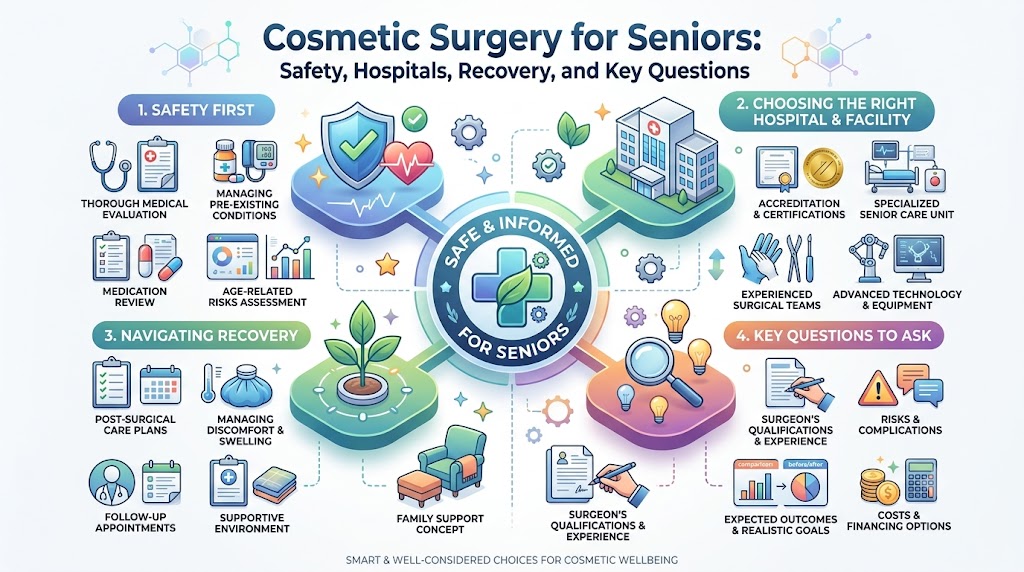
Introduction
Some older adults consider cosmetic surgery for personal reasons. They may want to change a feature or feel more comfortable with their look.Cosmetic surgery is still medical care. So, good planning is important before any procedure. Age alone does not decide if surgery is suitable. Health, medicines, and the planned procedure also matter.If you are researching cosmetic care, BestCosmeticHospitals can help you explore hospitals, surgeons, procedures, and patient information.
Can Seniors Consider Cosmetic Surgery?
Yes, some older adults may consider cosmetic surgery. But the decision should not depend on age alone.Doctors may look at overall health before surgery. They may check heart and lung health, past surgeries, medicines, and anesthesia history. They may also discuss the person’s goals and recovery needs.A healthy older adult may have different needs than another person of the same age. This means each patient needs an individual medical review.Cosmetic surgery is also a personal choice. Aging is a natural part of life. No one needs cosmetic surgery simply because they are getting older.
Why Medical Assessment Matters Before Surgery
A medical check can help the care team plan safely. It can also show if more testing or specialist advice is needed.Doctors may review blood pressure, heart health, lung health, diabetes, kidney health, and mobility. They may also ask about past surgery and problems with anesthesia.These health issues do not always prevent surgery. They may simply need closer review before treatment.
Health Conditions to Discuss
Older adults may have more than one health condition. Some may have heart disease, diabetes, lung disease, or kidney problems.Others may have joint or movement problems. Tell the care team about all known health issues. This helps them plan care around the person’s needs.A full health history can also help the anesthesia team. Good planning may lower some surgery and anesthesia risks.
Medicine Review
Medicine review is an important part of surgery planning. Some older adults take several medicines each day.Tell the medical team about prescription medicines. Also mention vitamins, supplements, and medicines bought without a prescription.
Blood-thinning medicines may need special review. Never stop or change prescribed medicines without medical advice. The surgeon and anesthesia team should guide any changes.
Anesthesia Considerations
- Anesthesia helps control pain during surgery. Some types also make the patient sleep during the procedure.
- The anesthesia team may ask about health problems and past anesthesia. They may also review medicines, allergies, and heart or lung health.
- Older adults may have a higher risk of some anesthesia side effects. This is why careful planning and monitoring matter.
- The right anesthesia plan depends on the procedure. It also depends on the person’s health. One type is not right for every patient.
Common Cosmetic Procedures for Older Adults
Older adults may consider different cosmetic procedures. The choice depends on personal goals and medical advice.A facelift can change some visible signs of aging. Eyelid surgery can change the look of the eyelids. A neck lift can change loose skin around the neck.
Other options include brow lifts and skin treatments. Some people may also consider body contouring. These procedures are not automatically suitable for every senior.
| Procedure | General purpose |
|---|---|
| Facelift | Changes some facial aging signs |
| Eyelid surgery | Changes the look of the eyelids |
| Neck lift | Changes loose neck skin |
| Brow lift | Changes the brow area |
| Skin procedures | Improve some skin concerns |
| Body contouring | Changes certain body areas |
A surgeon should explain the possible benefits and risks. They should also explain other options when suitable.
Choosing the Right Cosmetic Hospital
- The hospital matters as much as the procedure plan. Families should look beyond attractive rooms and advertising.
- Look for trained surgeons and suitable operating facilities. Anesthesia support and patient monitoring are also important.
- The hospital should have a clear plan for problems. It should also offer proper recovery and follow-up care.
Surgeon Qualifications
Check the surgeon’s medical training and specialist education. Also check professional registration and relevant certification.Procedure experience is important too. A surgeon may have broad cosmetic experience. But experience with the planned procedure can also matter.Ask where the surgeon performs the procedure. You can also ask about follow-up care and emergency plans.
Procedure-Specific Experience
Ask simple questions during the consultation. For example, ask how often the surgeon performs the planned procedure.You can also ask about anesthesia and recovery. Ask what risks are linked to the procedure.A good consultation should allow honest questions. You should understand the plan before making a choice.
Hospital Safety and Equipment
A suitable facility should have proper surgical equipment. It should also have trained nurses and anesthesia support.Patient monitoring is important during and after surgery. Emergency equipment should also be available when needed.Some procedures may need more hospital support than others. The level of care depends on the surgery and patient.
Accreditation and Quality
Accreditation means a facility has been checked against certain standards. It can give patients useful information about the facility.Check who gave the accreditation. Also check what services the review covered and whether it is current.Accreditation does not guarantee a perfect result. It should be one part of your hospital review.BestCosmeticHospitals.com also highlights safety, accreditation, surgeon credentials, and facility support as useful areas to check.
Planning for Recovery After Surgery
Recovery can be easier with good planning. Seniors may need help with travel, meals, and daily tasks.Before surgery, plan who will provide support at home. Also plan transport for follow-up visits.Your surgeon will give specific recovery instructions. These may cover wound care, activity, and follow-up visits. Follow those instructions closely.Recovery can vary by procedure and person. Do not compare your recovery with someone else’s.
Family and Caregiver Support
Family members can provide useful support after surgery. They may help with transport and appointments.They can also help prepare meals and handle home tasks. A caregiver can write down questions for medical visits.Caregivers should not make medical decisions alone. The medical team should provide medical instructions.A trusted family member can also help during recovery. This can make it easier to notice changes and contact the care team.
Home Recovery Planning
Prepare the home before the procedure. Keep important items within easy reach.Plan simple meals and safe transport. Keep emergency contact details easy to find.Make sure follow-up visits are planned. Also arrange help with tasks that may be difficult after surgery.Your surgeon’s instructions should always come first. Recovery needs can differ between procedures
Emotional and Personal Expectations
Cosmetic surgery can bring different feelings. Some people may feel excited before surgery. Others may feel nervous or unsure.Swelling and bruising can happen during healing. The final appearance may also take time to settle.No surgeon can promise an exact appearance. It is better to discuss realistic goals before surgery.Cosmetic surgery should support your personal choice. It should not be driven by pressure from family or others.
Cost and Financial Planning
Cosmetic surgery costs can vary. The total cost depends on many factors.These may include surgeon fees and hospital charges. Anesthesia, tests, and follow-up care may also add costs.Some patients may need extra care after surgery. Ask for clear cost details before booking.Do not choose a hospital only because it costs less. Compare safety, surgeon training, facility care, and follow-up support too.
Red Flags to Watch For
Be careful when a provider makes very strong promises. No surgery should be described as completely risk-free.Be cautious if someone promises perfect results. Pressure to book quickly is another warning sign.You should also ask questions about unclear costs. A provider should be willing to explain risks and credentials.BestCosmeticHospitals.com also highlights pressure tactics, unclear pricing, and guaranteed results as warning signs during provider research.
When a Second Opinion May Help
A second opinion can help when surgery is major. It may also help when the patient has several health problems.It can be useful when doctors suggest different treatment plans. It may also help when the risks are not clear.A second opinion can give you more information. It can also give you time to think.Cosmetic surgery is usually planned in advance. Taking time to ask questions is reasonable.
How BestCosmeticHospitals.com Can Help
- BestCosmeticHospitals.com can support cosmetic surgery research. Readers can explore information about hospitals, surgeons, and procedures.
- The platform also provides information about safety and recovery. It covers cosmetic care and treatment destinations as well.
- This information can help families compare care options. It should not replace a medical consultation.
- A qualified healthcare professional should decide if surgery is suitable. The final choice should also match the patient’s goals and health needs.
Frequently Asked Questions About Cosmetic Surgery for Seniors
1. Can seniors have cosmetic surgery?
Some seniors may have cosmetic surgery. Suitability depends on health, procedure type, and medical review.
2. Does age alone decide if cosmetic surgery is safe?
No. Age is only one part of the assessment. Overall health and the planned procedure also matter.
3. What health checks may seniors need before surgery?
Doctors may review heart and lung health. They may also review medicines, past surgery, and other health issues.
4. Should seniors discuss their medicines before surgery?
Yes. Tell the medical team about all medicines and supplements. Never change prescribed medicines without medical advice.
5. Can anesthesia be different for older patients?
Anesthesia needs can vary with age and health. The anesthesia team will review the patient’s medical history.
6. How should seniors choose a cosmetic hospital?
Check surgeon training, facility safety, anesthesia support, and follow-up care. Also ask about emergency support.
7. What should seniors expect during recovery?
Recovery depends on the procedure and the person. Rest, follow-up visits, and home support may be needed.
8. Can family members help after cosmetic surgery?
Yes. Family members can help with travel, meals, appointments, and daily tasks.
9. Should seniors get a second opinion before surgery?
A second opinion can be useful for major or complex surgery. It can also help when treatment choices are unclear.
10. When should seniors seek professional advice about cosmetic surgery?
Speak with a qualified healthcare professional before choosing surgery. They can review your health, goals, and treatment options.
Final Thoughts
Cosmetic surgery is a personal choice for older adults. Age alone should not decide the choice.Overall health is very important before surgery. So are medicines, anesthesia, surgeon training, and hospital safety.Recovery also needs careful planning. Family support and follow-up care can make the process easier.BestCosmeticHospitals.com can help families research hospitals, surgeons, procedures, and safety information. A qualified healthcare professional should always assess personal surgical needs.