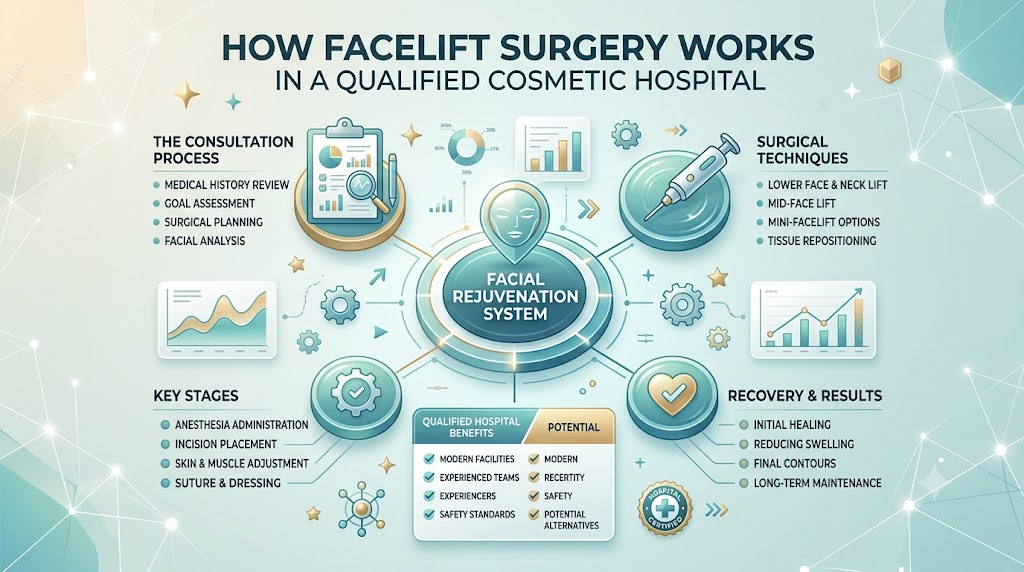
Facelift surgery is a cosmetic procedure for facial aging. It may address loose skin and sagging facial tissues. Some people also want changes around the jawline. The process involves much more than the surgery itself. A hospital first checks the person’s health and goals. The surgical team then plans suitable care with the patient. Choosing a qualified hospital can also support patient safety. BestCosmeticHospitals helps readers learn about cosmetic hospitals and services. You can visit / to explore useful information about cosmetic care.
What Is Facelift Surgery?
Facelift surgery is also called rhytidectomy. It is a cosmetic surgery for visible facial aging. The procedure may address sagging skin around the face. It may also address jowls and loose neck skin. Some procedures also adjust deeper facial tissues. The surgeon may then remove or redrape extra skin. The exact approach can differ between patients. Each person’s facial structure and skin condition are different. So, results and techniques can also vary.
Why Do People Consider Facelift Surgery?
People may consider facelift surgery for different cosmetic reasons. Facial aging can change skin, tissues, and facial shape. Some people notice loose skin around the lower face. Others may notice jowls or changes in the jawline. Loose neck skin can also affect facial appearance. A facelift can address some of these visible changes. However, it does not stop natural aging. People should also have realistic expectations before surgery.
How Hospitals Assess Facelift Patients
Hospitals usually perform a detailed assessment before surgery. The surgeon may review the person’s medical history. Previous surgeries and cosmetic procedures may also matter. Doctors may ask about allergies and current medicines. They may also discuss supplements and lifestyle habits. Smoking and alcohol history can also be important. The surgeon may examine skin condition and facial structure. Healing factors may also affect surgical planning. Patient goals are another important part of the assessment. This information helps the surgeon discuss possible options safely.
The First Facelift Consultation
The first consultation gives patients time to discuss concerns. They can explain the changes they want to address. The surgeon may discuss different facelift techniques. These may include a traditional facelift or mini facelift. Other approaches may also be discussed when suitable. The consultation can also cover risks and recovery. Patients can ask about follow-up care and costs. They should also ask what surgery cannot change. Clear discussion can help create realistic expectations before treatment.
Facelift Surgery Planning
Facelift surgery planning differs from person to person. The surgeon may review skin looseness and facial shape. The jawline and neck area may also need review. Skin quality can affect the planned approach. Previous cosmetic surgery may also affect planning. Overall health is another important factor. Patient goals also help guide the discussion. A traditional facelift may address wider facial changes. A mini facelift may use a smaller surgical approach. A deep plane facelift works with deeper facial tissues. A neck lift may also be discussed for neck concerns. The surgeon decides which approach may be suitable.
Preparing for Facelift Surgery
Hospitals usually complete a preoperative health review first. This review helps the team understand the patient’s health. Medical history and medicine use may be discussed. Allergy information should also be shared with the team. The hospital may request certain medical checks. Smoking habits may also be discussed before surgery. Surgery-day planning is another important part of preparation. Patients may need transportation and home support afterward. The surgical team provides patient-specific preparation instructions. Patients should follow those instructions carefully.
What Happens on Surgery Day?
The hospital process usually starts when the patient arrives. Registration and final health checks may happen first. The patient then meets members of the surgical team. The team may review the planned procedure again. Anesthesia is also discussed before the operation. The patient is prepared for the planned surgery. The procedure then takes place in a suitable operating area. After surgery, the patient moves to a recovery area. The team monitors the patient during early recovery. Exact steps can vary between hospitals and patients.
Facelift Surgery: Step-by-Step Overview
Step 1: Anesthesia
Anesthesia or sedation helps keep the patient comfortable. The type used depends on the planned procedure. The anesthesia team checks the patient’s health before surgery. They also monitor the patient during the procedure.
Step 2: Incision Planning
The surgeon plans incision locations based on the technique. Incisions may follow natural areas around the face. They may also involve areas near the ears or hairline. The exact locations depend on the surgical plan.
Step 3: Facial Tissue Adjustment
Some facelift procedures adjust deeper facial tissues. SMAS is a supportive layer beneath the skin. The surgeon may work with deeper tissues during some procedures. The approach depends on the patient’s planned treatment.
Step 4: Skin Redraping
Extra skin may be removed during the procedure. Remaining skin may then be placed over the new contour. The goal is to create a planned facial shape. The exact result varies between patients.
Step 5: Closing the Incisions
The surgical team closes the planned incision areas. Dressings may be placed after the procedure. The team checks the treated areas before recovery begins.
Step 6: Recovery Monitoring
Patients are monitored after the procedure. Some patients may leave the hospital the same day. Others may need observation based on their health. The hospital team decides the appropriate level of monitoring.
Simple Comparison of Facelift Surgery Stages
| Facelift Stage | What Usually Happens | Main Purpose |
|---|---|---|
| Consultation | Goals and health history are discussed | Understand patient needs |
| Assessment | Health and facial features are reviewed | Support safe planning |
| Preparation | Hospital checks are completed | Prepare for surgery |
| Surgery | Planned facial tissues are addressed | Improve facial contour |
| Recovery | Patient is monitored after surgery | Support safe early recovery |
| Follow-Up | Healing is reviewed | Track recovery |
The facelift surgery process can vary between patients. Hospital policies and surgical plans can also differ. Patients should ask their surgical team about their own care process.
What Happens After Facelift Surgery?
Early recovery can involve swelling and bruising. Some patients may also notice tightness or mild discomfort. Dressings may be used around treated areas. The incision areas need time to heal. Follow-up visits help the surgeon check progress. Recovery can vary between different patients. It can also depend on the procedure performed. Patients should follow instructions from their surgical team. They should contact the hospital about concerning changes.
Facelift Follow-Up Care
Follow-up care is an important part of facelift aftercare. The surgeon checks healing during these visits. They may also review swelling and incision areas. Patients can ask questions about changes they notice. The team can also watch for possible complications. Follow-up timing depends on the surgeon and patient. There is no single recovery schedule for everyone. Regular communication can support safer postoperative care.
Possible Risks and Safety Concerns
Every surgery has possible risks and complications. Facelift risks can include infection and bleeding. Some patients may have wound-healing problems. Swelling and scarring can also occur. Temporary or lasting changes in sensation are possible. Facial nerve-related complications are also possible but uncommon. Anesthesia can also have risks. Some patients may not be satisfied with the cosmetic result. A qualified surgical team works to reduce these risks. Patients should discuss possible risks before choosing surgery.
When Should Patients Contact the Hospital?
Some changes after surgery need prompt medical attention. Severe or rapidly worsening pain can be concerning. Heavy bleeding or sudden major swelling also needs attention. Breathing problems require urgent professional evaluation. Severe weakness can also be a warning sign. High fever or signs of infection may need medical review. Other sudden or unusual changes should not be ignored. Patients should contact their surgical team when serious symptoms occur. Urgent medical care may be needed for severe symptoms.
How to Choose a Facelift Hospital
Choosing a facelift hospital requires careful research. Patients should check the surgeon’s qualifications and experience. Experience with facelift procedures can also be important. Hospital accreditation may provide useful safety information. Patients can also ask about anesthesia support. Emergency services and operating facilities should be considered. Infection-control standards are another important factor. Post-surgery monitoring and follow-up care also matter. Clear communication can make the care process easier. Patients should also ask for transparent cost information.
Understanding Facelift Costs
Facelift costs can vary between hospitals and patients. Surgeon fees can form part of the total cost. Hospital or facility fees may also apply. Anesthesia fees can be another part of the cost. Procedure complexity can affect the final amount. Additional procedures may also change the total cost. Preoperative checks and follow-up care may have separate charges. Location can also affect hospital costs. Patients should ask for a clear cost breakdown. They should understand what is included before booking surgery.
Facelift Surgery and Realistic Expectations
Facelift surgery can address certain visible aging changes. It may improve the appearance of loose facial skin. It may also change some jawline and neck concerns. However, surgery does not stop natural aging. It cannot make someone look exactly like a younger version. It also cannot guarantee perfect facial symmetry. It may not remove every facial line. Cosmetic results can vary between patients. Realistic expectations are important before making a decision.
How BestCosmeticHospitals Can Help
BestCosmeticHospitals helps readers learn about cosmetic hospitals. It also provides information about cosmetic procedures and specialties. Readers can explore facelift-related information before speaking with a surgeon. The website can help people understand hospital-selection factors. It can also help patients prepare questions for consultations. Patient safety and cosmetic care are important areas to understand. BestCosmeticHospitals.com does not perform facelift surgery. It does not diagnose patients or promise cosmetic results. Medical decisions should always involve qualified healthcare professionals.
Frequently Asked Questions
1. What is facelift surgery?
Facelift surgery is a cosmetic procedure for facial aging. It may address sagging skin and loose facial tissues. It can also address some jawline and neck changes.
2. Why do people choose facelift surgery?
People may choose surgery because of visible facial aging. Common concerns include loose skin and jowls. Some people also have concerns about their jawline or neck.
3. What happens during a facelift consultation?
The surgeon discusses the patient’s goals and health history. They may review possible techniques and expected changes. Risks, recovery, follow-up, and costs may also be discussed.
4. How do hospitals assess facelift patients?
Hospitals review medical history and current health. They may also review medicines, allergies, and previous procedures. The surgeon may examine facial structure and skin condition.
5. What happens during facelift surgery?
The procedure usually involves anesthesia, planned incisions, and tissue adjustment. Extra skin may be removed or redraped. The patient is then monitored during early recovery.
6. How long does facelift recovery take?
Recovery varies between patients and procedures. Swelling and bruising can happen during early healing. The surgical team provides guidance based on the patient’s recovery.
7. What risks can facelift surgery have?
Possible risks include infection, bleeding, swelling, and scarring. Wound-healing problems and sensation changes can also happen. Patients should discuss risks with their surgical team.
8. How can I choose a good facelift hospital?
Check surgeon qualifications and hospital facilities. Also ask about anesthesia support and follow-up care. Clear costs and patient communication are also useful factors.
9. What questions should I ask a cosmetic surgeon?
Ask about the planned procedure and possible risks. You can also ask about recovery and follow-up care. Cost and surgeon experience are also useful topics.
10. Does facelift surgery stop facial aging?
No, facelift surgery does not stop natural aging. It addresses certain visible signs of aging. Future changes can still happen as the face ages.
Final Thoughts
Facelift surgery is a personal cosmetic decision. The process starts with careful assessment and consultation. Qualified surgical care is important for patient safety. Realistic expectations can also help patients make informed choices. Good follow-up care is another important part of recovery. Patients should compare hospitals, surgeons, services, and costs carefully. BestCosmeticHospitals.com can help readers learn about cosmetic hospitals. It can also help people understand facelift care and hospital-selection factors. Medical decisions should always be made with qualified professionals.