
Introduction
Cosmetic surgery is a personal decision that needs careful planning. Cost is an important part of that decision. However, the lowest advertised price may not cover everything you need.
The same procedure can have different prices at different hospitals. The final amount may include the surgeon’s fee, hospital charges, anesthesia, tests, medicines, and follow-up care. Some costs may appear only after a medical assessment.
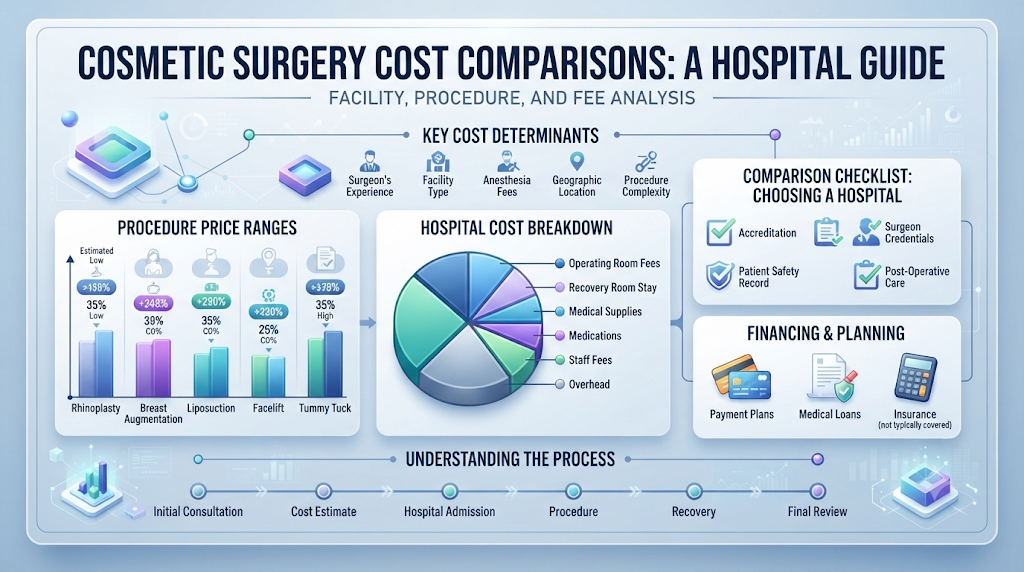
Good Cosmetic Surgery Cost Comparisons look beyond the headline price. Patients should compare the full treatment plan, surgeon qualifications, hospital safety, and recovery support. BESTCOSMETICHOSPITALS can be explored as a resource for cosmetic hospital information.
Understanding Cosmetic Surgery Costs
Cosmetic surgery costs are the expenses linked to a planned procedure and its care. They may cover the surgeon, operating room, anesthesia, medical tests, and recovery support. The exact list depends on the hospital and procedure.
Prices differ because hospitals do not all provide the same services. One quote may include several follow-up visits. Another may charge for each visit separately. Some packages may also include garments or medicines, while others leave them out.
The type of procedure also matters. A simple procedure may need less operating time than a complex operation. The number of areas treated and the patient’s needs can also change the plan.
An advertised starting price is not always the final bill. It may apply only to selected patients or a limited treatment plan. A hospital can provide a more useful estimate after examining the patient’s needs.
Main Factors That Affect Cosmetic Surgery Prices
Several factors can change the total cost. Understanding them helps patients compare hospital estimates more fairly.
Type of Procedure
Different procedures need different levels of care. Rhinoplasty changes the shape or structure of the nose. Liposuction removes selected areas of fat. Breast augmentation uses implants or other approved methods to change breast size.
A tummy tuck removes extra skin and may repair separated abdominal muscles. Breast reduction removes breast tissue and skin. Facelifts and eyelid surgery focus on different areas of the face.
Each procedure has its own surgical needs. Therefore, one procedure’s price cannot be used as a guide for another.
Procedure Complexity
A procedure may become more complex when it involves several areas or detailed surgical work. Longer operating time can increase facility and professional fees.
Some patients may need a combined treatment plan. This can involve more planning, monitoring, and recovery support. The surgeon should explain why a specific approach is recommended.
Surgeon’s Qualifications and Experience
A surgeon’s training and experience may affect professional fees. Specialist training and experience with a particular procedure are important points to review.
Patients should check the surgeon’s medical registration, qualifications, and relevant training. They should also ask how often the surgeon performs the planned procedure. A low fee should never replace careful checks of skills and experience.
Hospital Location
Hospital costs can vary by city and region. Rent, staff costs, equipment, and other operating expenses may differ between locations.
A hospital in a large city may have different charges from one in a smaller area. Patients travelling to another city should also include transport and accommodation in their budget.
Hospital Facilities
The surgical facility can affect the estimate. Charges may cover the operating room, recovery area, nursing team, and medical equipment.
Patients should check where the operation will take place. They should also ask whether the facility has suitable monitoring and emergency support.
Anesthesia Requirements
Anesthesia helps prevent pain during surgery. The type used depends on the procedure and the patient’s needs.
The estimate may include the anesthesiologist’s fee, medicines, and monitoring. Patients should ask who will provide anesthesia and whether these charges are separate.
Patient’s Medical Needs
A patient’s health history can affect the treatment plan. Some people may need extra tests or a specialist review before surgery.
The surgeon may also change the plan after an examination. These changes can affect the final estimate. Patients should discuss relevant health concerns during the consultation.
Main factors that affect cosmetic surgery costs
| Cost Factor | How It Affects the Price | What Patients Should Check |
|---|---|---|
| Procedure type | Different operations need different care and resources | Confirm the exact procedure and treatment plan |
| Surgical complexity | Longer or more detailed surgery may increase costs | Ask about operating time and treated areas |
| Surgeon’s fee | Training and procedure-specific experience may affect fees | Check qualifications and who will perform the surgery |
| Hospital facilities | Operating rooms, equipment, and nursing support add charges | Confirm the facility and included services |
| Anesthesia | Anesthesia staff, medicines, and monitoring may add costs | Ask whether all anesthesia fees are included |
| Medical tests | Required tests and reviews may add expenses | Request a list of planned tests |
| Recovery care | Medicines, garments, and follow-up visits may affect the total | Check what support is included after surgery |
Common Expenses Included in a Cosmetic Surgery Quote
A hospital quote may contain several separate charges. These often include the surgeon’s professional fee and the hospital or surgical facility fee.
Other possible items include:
- Operating room and nursing charges.
- Anesthesia and anesthesiologist fees.
- Pre-surgery consultations and medical tests.
- Implants or other procedure-specific materials.
- Surgical garments and recovery supplies.
- Medicines provided during the hospital stay.
- Follow-up consultations included in the package.
Not every hospital includes all these items. Some may list them separately. Others may offer a package price that combines several services.
Patients should request a written, itemized estimate. This means a document that lists each service and its charge. It makes it easier to see what the quote covers and what remains unpaid.
Additional Costs Patients Should Consider
The first hospital estimate may not cover every expense. Patients should plan for possible extra costs before making a decision.
These may include:
- Extra medical tests or specialist consultations.
- Prescription medicines and wound care supplies.
- Compression garments or surgical support clothing.
- Additional nights in the hospital.
- Travel, accommodation, meals, and local transport.
- Time away from work or daily responsibilities.
- Further treatment if a complication occurs.
- Revision surgery, if needed.
- Follow-up visits outside the quoted package.
Not every patient will need these services. Some expenses depend on the procedure and recovery. Ask the hospital which costs are included and which could arise later.
Also ask how unexpected expenses are handled. The hospital should explain who to contact and how additional treatment charges are assessed.
Comparing Cosmetic Surgery Costs Across Hospitals
Comparing headline prices alone can give an incomplete picture. Two hospitals may use different package terms or include different services.
Start by comparing the same procedure and treatment scope. Check whether both estimates include the surgeon, anesthesia, operating room, tests, materials, and aftercare.
Review the qualifications of the surgeons who may perform the operation. Confirm the name of the surgeon rather than relying only on a hospital’s general information.
Patients should also compare the facilities. Ask where the surgery will take place and what emergency support is available. Check how the hospital manages recovery and follow-up visits.
A written estimate makes this process easier. Ask whether the amount is fixed or may change after assessment. Request an explanation of any unclear charge before paying a deposit.
Cost Comparison for Common Cosmetic Surgery Procedures
Cosmetic surgery hospital prices depend on the procedure and the patient’s needs. There is no single price that applies to every hospital or patient.
Rhinoplasty: This procedure changes the nose’s shape or structure. Price may depend on the surgical plan, the work required, and whether the procedure is a first operation or a revision.
Liposuction: Cost may depend on the number of areas treated and the amount of surgical work needed. Anesthesia, facility use, and recovery garments may also affect the estimate.
Breast augmentation: The type of implant or method used can affect costs. Patients should check whether the quote includes the implants, anesthesia, facility charges, and follow-up care.
Breast reduction: This operation removes breast tissue and skin. The amount of work needed and the patient’s medical needs may affect the total estimate.
Tummy tuck: The cost can depend on the amount of skin removed and whether muscle repair is part of the plan. Hospital stay and recovery support may also affect the total.
Facelift: The treatment approach and areas addressed can change the price. Patients should check whether anesthesia, facility fees, and follow-up visits are included.
Eyelid surgery: The estimate may differ depending on whether the upper eyelids, lower eyelids, or both are treated. The surgeon’s plan and anesthesia needs can also affect the cost.
A hospital should provide a personalized estimate after consultation. Patients should not rely on general online figures as a final price.
How to Read a Hospital Cost Estimate
A hospital may provide an itemized quote or a package price. An itemized quote lists separate services and fees. A package price combines selected services into one amount.
Both formats can be useful if the hospital explains them clearly. Check the surgeon’s fee, facility charges, anesthesia, tests, and materials. Look for services that are excluded.
Ask whether taxes and administrative fees apply. Confirm how many follow-up visits are covered and how long the package remains valid.
Patients should also review the deposit, cancellation, and refund policies. Ask whether a deposit can be returned if the surgeon decides the procedure is unsuitable.
If a charge is unclear, request a written explanation. Do not accept an estimate you do not understand.
Does a Lower Cosmetic Surgery Price Mean Better Value?
A lower price does not always mean better value. One hospital may offer a lower package because it includes fewer services. Another may include more recovery support in its estimate.
Very low prices deserve careful questions. Ask whether the surgeon’s fee, anesthesia, operating room, and follow-up care are included. Check whether the facility has suitable safety arrangements.
The surgeon should have suitable qualifications and experience for the procedure. Anesthesia should be provided by an appropriately trained professional. Patients should also understand how they will be monitored during and after surgery.
A higher price does not automatically guarantee better results or safer care. The goal is to compare the full service, the qualifications of the care team, and the safety arrangements. Patients should make their decision after a proper consultation.
Insurance and Payment Options
Procedures performed only to improve appearance are often not covered by standard health insurance. However, some reconstructive or medically necessary procedures may have different coverage rules.
Coverage depends on the policy, medical reason, and insurer’s terms. Patients should contact their insurer before booking. Ask for written confirmation of what may be covered.
Some hospitals or clinics may offer payment plans or medical financing. These options can make payments easier to spread over time. However, patients should review interest rates, fees, repayment periods, and late-payment rules.
Do not take on debt that you cannot afford. Cosmetic surgery is usually a planned procedure, so patients should take enough time to consider the full financial commitment.
Comparing Hospitals for Safety and Quality
Cost comparisons should include safety and quality. A suitable hospital should have clear processes before, during, and after surgery.
Patients should check the surgeon’s medical qualifications and relevant specialist training. Confirm that the surgeon has experience with the planned procedure. Check the hospital or facility’s licensing and accreditation where applicable.
Ask about the anesthesia professional and patient monitoring. Find out how the hospital prevents infection and responds to emergencies. The team should explain the risks, recovery needs, and possible complications.
Patients should also ask who will provide follow-up care. They need clear instructions for wound care, medicines, and warning signs after surgery.
Do not rely only on advertisements, testimonials, or promotional rankings. These may not show the full quality of care. A direct discussion with the surgeon and hospital team can help patients make a better-informed choice.
Planning Cosmetic Surgery in Another City or Country
Treatment in another city or country can add costs beyond the hospital quote. Travel, accommodation, meals, local transport, and time away from work should be included in the budget.
Patients should have a proper consultation with the surgeon who will perform the procedure. They should understand the treatment plan, risks, and recovery needs before travelling.
Plan enough time for early follow-up before returning home. Ask when travel is safe and whether a longer stay may be needed. The right timing depends on the operation and the patient’s recovery.
Patients should also have a plan for complications after returning home. Find out who will provide care locally and whether extra treatment may cost more. A low advertised international price may leave out important services.
The NHS advises patients to check surgeon qualifications, aftercare, and the risks of travelling for cosmetic surgery. These points matter when comparing treatment options abroad. NHS guidance on cosmetic surgery abroad.
Frequently Asked Questions
1. Why do cosmetic surgery costs differ between hospitals?
Hospitals may have different surgeon fees, facility charges, and care packages. The procedure, surgical complexity, anesthesia, and patient’s medical needs also affect the estimate. Location and recovery support can change the total. This is why patients should compare itemized quotes rather than relying only on advertised starting prices.
2. What is usually included in a cosmetic surgery quote?
A quote may include the surgeon’s fee, hospital charges, operating room, anesthesia, and nursing support. It may also cover tests, implants, medicines, garments, and follow-up visits. However, inclusions vary. Ask the hospital for a written list of services before accepting the estimate.
3. Which extra expenses should patients consider?
Patients may need to budget for extra tests, medicines, wound care supplies, and recovery garments. Travel, accommodation, and additional hospital nights may also add costs. Further treatment or revision surgery may involve separate fees. Ask the hospital which expenses are not covered by the original quote.
4. Does the surgeon’s experience affect cosmetic surgery costs?
A surgeon’s qualifications, specialist training, and experience may influence professional fees. However, a higher fee does not guarantee a better result. Patients should check relevant qualifications and experience with the planned procedure. They should also discuss risks, treatment options, and aftercare during consultation.
5. How can patients compare hospital prices fairly?
Compare the same procedure and treatment scope at each hospital. Check surgeon fees, anesthesia, facility charges, tests, materials, and follow-up care. Ask about excluded services and possible extra costs. Written itemized estimates make it easier to understand what each hospital offers.
6. Does health insurance cover cosmetic surgery?
Procedures performed only to improve appearance are often excluded from standard health insurance. Some reconstructive or medically necessary procedures may have different coverage rules. The exact terms depend on the policy and insurer. Patients should contact their insurer and confirm coverage in writing before treatment.
7. Is the cheapest cosmetic surgery hospital always the best choice?
No. A low price may exclude important services or recovery support. Patients should check the surgeon’s qualifications, facility safety, anesthesia arrangements, and emergency care. A higher price does not guarantee better care either. Compare the full treatment plan before making a decision.
8. Can cosmetic surgery costs change after consultation?
Yes. A consultation may show that the patient needs a different treatment plan, extra tests, or additional care. These changes can affect the estimate. Ask the hospital which parts of the quote may change and request an updated written estimate before agreeing to surgery.
9. What should patients ask before accepting a hospital quote?
Ask what the price includes and who will perform the procedure. Confirm anesthesia, facility, tests, medicines, and follow-up charges. Also ask about extra hospital nights, cancellations, refunds, and further treatment. Make sure you understand the aftercare plan and who to contact if concerns arise.
10. How can patients plan a budget for cosmetic surgery?
Start with a written hospital estimate and check every included service. Add possible costs for medicines, garments, travel, accommodation, and time away from work. Keep some money available for unexpected needs. Review payment terms carefully and avoid borrowing more than you can repay.
Final Thoughts
Good Cosmetic Surgery Cost Comparisons involve more than checking the lowest advertised price. Patients should compare the full treatment plan, hospital fees, surgeon qualifications, safety arrangements, and follow-up care.
Request written estimates from hospitals and ask about every unclear charge. Discuss personal risks, recovery needs, and expected expenses with a qualified surgeon before making a decision.
For further cosmetic hospital information, explore BESTCOSMETICHOSPITALS.COM. Take time to compare your options and choose care based on suitability, safety, and clear information.