
Introduction
Pediatric cosmetic surgery involves procedures that change a child’s appearance. Some procedures are planned for appearance alone. Others repair a birth difference, injury, burn, or health problem. These two types of surgery have different goals.
Reconstructive surgery aims to repair a body part or improve its function. Cosmetic surgery mainly aims to change appearance. For example, a child may need surgery to repair a cleft lip or treat a serious injury. These procedures are different from elective surgery for appearance.
Children are still growing. Their bodies, faces, and feelings can change over time. A procedure that seems suitable today may not be right later. The child’s health, age, growth, and emotional needs must all be considered.
Parents should seek advice from qualified specialists. They should also understand the risks, recovery needs, and other choices. BestCosmeticHospitals can be a starting point for learning about cosmetic care. Parents must still check each surgeon and hospital carefully.
Pediatric cosmetic surgery should never be treated as a routine choice. A child’s health and well-being must always come first.
Understand When Pediatric Cosmetic Surgery May Be Considered
The reason for surgery is one of the first things to discuss. Doctors must understand whether the procedure is medically needed or only appearance-related.
Reconstructive surgery may help children in several situations:
- Birth differences: Some children are born with differences in their lips, ears, or other body parts.
- Burn injuries: Surgery may help repair damaged skin or reduce tight scars.
- Accidents: Injuries can change the shape or function of a body part.
- Functional concerns: Some physical differences may affect breathing, movement, eating, or hearing.
- Growth-related needs: A specialist may recommend treatment at a certain stage of development.
Elective cosmetic surgery is different. It is mainly intended to change appearance. It may not offer a clear medical benefit.
Doctors may suggest waiting until the child is older. This allows more time for physical and emotional growth. The best timing depends on the procedure and the child’s needs.
Parents should ask why surgery is being considered now. They should also ask whether waiting could be safer or more suitable. Every child needs an individual assessment.
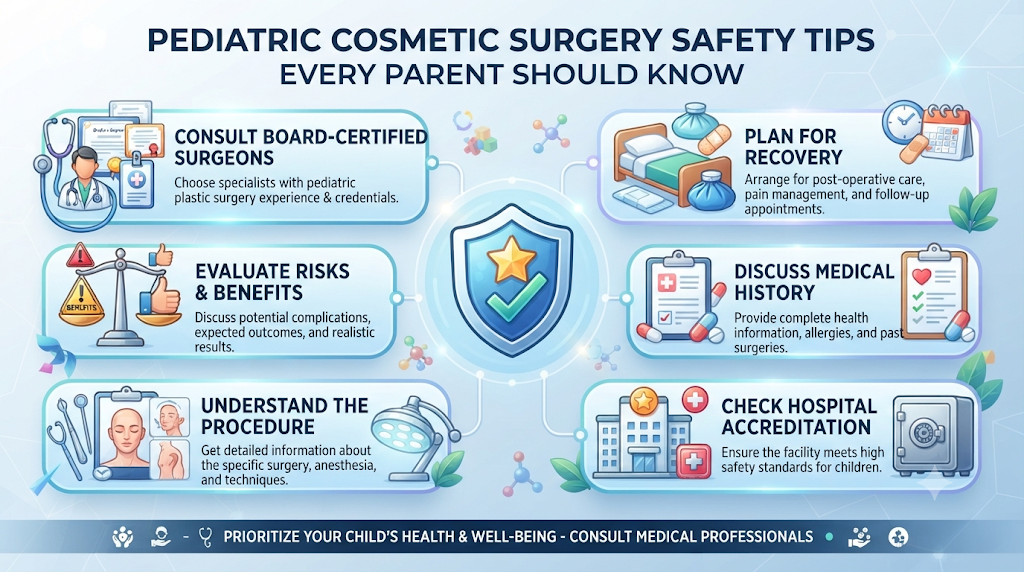
Choose a Qualified Pediatric Surgical Team
Children need care from professionals who understand their growing bodies. A surgeon’s experience with adults alone may not be enough.
Parents should check the surgeon’s:
- Medical qualifications: Confirm the surgeon’s training and current registration.
- Specialist training: Ask whether the surgeon has training in plastic or reconstructive surgery.
- Child-related experience: Ask how often the surgeon treats children with similar needs.
- Procedure experience: Discuss the surgeon’s experience with the exact procedure.
- Hospital privileges: Check whether the surgeon is approved to work at the proposed facility.
A pediatric plastic surgeon may be suitable for some procedures. Other cases may need a different specialist. The care team may include pediatricians, nurses, anesthesiologists, and child health professionals.
Parents should also ask who will give anesthesia. They should know who will monitor the child after surgery. A good team should explain the plan in clear language.
Do not choose a surgeon based only on price or online photos. Ask about training, risks, expected results, and follow-up care. Parents should feel free to seek another opinion.
Check the Hospital’s Safety Standards
The hospital or surgical facility must be suitable for the child’s age and needs. It should have trained staff and equipment for pediatric care.
Parents should check whether the facility provides:
- Pediatric anesthesia care: Staff must know how to care for children during anesthesia.
- Recovery monitoring: Trained staff should watch the child after the procedure.
- Infection prevention: The hospital should follow clear cleaning and sterilization rules.
- Emergency equipment: The team should be ready to manage unexpected problems.
- Extra care when needed: The facility should have access to suitable intensive care support.
- Safe surgical checks: Staff should confirm the child’s identity, procedure, and consent before surgery.
Parents can ask whether the hospital has recognized accreditation. They can also ask how emergencies are handled. Accreditation can be useful, but it does not replace checking the actual team and facilities.
A safe facility should welcome questions. Staff should explain where the child will recover and who will provide care. Parents should not feel rushed into a decision.
Assess the Child’s Physical Readiness
A child must be medically assessed before any planned operation. The surgeon and pediatric care team should review the child’s overall health.
They may ask about:
- Past illnesses and ongoing health conditions.
- Allergies to medicines, food, or other substances.
- Current medicines, vitamins, and supplements.
- Previous operations or problems with anesthesia.
- Recent infections, fever, cough, or breathing problems.
- Family history of unusual reactions to anesthesia or bleeding.
The doctor may examine the child and request tests. The tests depend on the child’s health and planned procedure. Not every child needs the same tests.
Growth is also important. The face and body continue to develop during childhood and the teenage years. Surgery may need to wait until growth reaches a suitable stage.
There is no single age that is right for every procedure. Parents should ask how growth may affect the timing and long-term result. The decision must be based on the child’s individual needs.
Understand Emotional Readiness and Consent
A child’s feelings matter as much as physical health. Children should receive simple and honest explanations about the procedure.
Parents can help by:
- Explaining what will happen in words the child understands.
- Allowing the child to ask questions.
- Listening carefully to worries or fears.
- Avoiding promises about a perfect appearance.
- Giving the child time to understand the decision.
A parent or legal guardian must provide informed consent. This means they understand the procedure, benefits, risks, and other options before agreeing.
Children who can understand the decision should also be involved. Their agreement is often called assent. The level of involvement depends on their age and understanding.
A child should never feel forced to have surgery. Family pressure, bullying, peer comments, or social media should not drive the decision.
A mental health professional may help when body image concerns or emotional distress are present. Counselling and other non-surgical support may be more suitable than surgery. If the procedure is not medically needed, parents should consider waiting.
Learn About Anesthesia Safety for Children
Anesthesia is medicine that prevents pain during surgery. It may make a child sleep or numb a specific area. The type depends on the procedure and the child’s health.
A qualified anesthesia professional should assess the child before surgery. For some procedures, a pediatric anesthesiologist may be especially important.
Parents should share all health details. This includes allergies, medicines, previous anesthesia problems, and recent illness.
The care team will explain when the child must stop eating and drinking. These instructions help reduce the risk of stomach contents entering the lungs during anesthesia. Parents must follow the exact timing given by the hospital.
During surgery, staff monitor important body functions. These may include:
- Breathing and oxygen levels.
- Heart rate and blood pressure.
- Body temperature.
- Response to anesthesia.
After surgery, the child should be monitored while waking up. Parents should ask who will provide this care and how long monitoring may last. They should also ask about possible anesthesia side effects.
Understand Possible Risks and Complications
Every operation has some risk. The level of risk depends on the child’s health, procedure, anesthesia, and care setting.
Possible surgical risks include:
- Bleeding: Some bleeding may happen after an operation. Heavy or ongoing bleeding needs medical attention.
- Infection: Germs can enter the wound and cause redness, pain, or discharge.
- Scarring: A scar may remain after the wound heals. Its appearance can change over time.
- Pain: Some discomfort is expected. Severe or worsening pain should be checked.
- Swelling: Swelling may happen during normal healing. Sudden or increasing swelling needs attention.
- Anesthesia problems: Some children may have nausea, breathing problems, or other reactions.
Children may heal differently from adults. Their skin and tissues are still developing. Growth can also affect the long-term result of some procedures.
A child may need more treatment later. In some cases, a second operation may be considered. Parents should ask about this possibility before agreeing to surgery.
No surgeon can promise a perfect result. Families should understand the likely benefits and limits. Ask the surgeon to explain risks linked to the exact procedure.
Prepare the Child Before Surgery
Good preparation can help a child feel safer and more confident. Parents should explain the procedure in simple words.
Helpful steps include:
- Talk honestly: Explain why the procedure is planned and what may happen.
- Answer questions: Give the child time to share worries.
- Follow food and drink rules: Follow the hospital’s fasting instructions exactly.
- Review medicines: Ask which medicines should continue or stop.
- Share health details: Tell the team about allergies, illness, and recent symptoms.
- Plan home support: Arrange transport and an adult to supervise the child.
- Plan school time: Ask when the child can return to normal activities.
Do not hide a fever, cough, rash, or other new symptom. Tell the surgical team before the procedure. Do not give extra medicines or supplements without approval.
Parents should also bring any requested medical records. Keep the hospital’s contact details nearby. A calm and supportive approach can reduce fear.
Support Safe Recovery and Aftercare
Recovery depends on the procedure and the child’s health. Some children return home the same day. Others may need hospital observation.
Parents should follow the care team’s instructions about:
- Wound care: Keep the area clean and follow dressing instructions.
- Hygiene: Ask when bathing or washing the area is safe.
- Rest: Allow enough time for sleep and quiet activities.
- Movement: Follow limits on sports, running, and rough play.
- Pain relief: Give only approved medicines at the advised dose.
- Follow-up: Attend all appointments so the team can check healing.
Watch the wound and the child’s general condition. Mild swelling or discomfort may occur after surgery. However, symptoms should not become severe or keep getting worse.
Contact the surgical team if the child develops a fever, increasing pain, unusual swelling, or wound discharge. Seek urgent medical help for heavy bleeding, trouble breathing, fainting, or a child who is difficult to wake.
Do not wait for a routine appointment if serious warning signs appear. Ask the surgeon for written aftercare instructions before leaving the hospital.
Pediatric Cosmetic Surgery Safety Checks
| Safety Area | What Parents Should Check | Why It Matters |
|---|---|---|
| Surgeon qualifications | Confirm specialist training, registration, and experience with children. | Children need care suited to their age and development. |
| Pediatric anesthesia | Ask who will give anesthesia and what child-specific training they have. | Children need careful anesthesia assessment and monitoring. |
| Hospital facilities | Check pediatric recovery areas, equipment, and trained staff. | The facility must be ready for the child’s care needs. |
| Infection control | Ask about sterilization, cleaning, and wound-care procedures. | These steps help reduce the risk of infection. |
| Emergency support | Ask about emergency equipment, intensive care access, and transfer plans. | The team must be ready to respond to unexpected problems. |
| Follow-up care | Confirm review visits and whom to contact after discharge. | Follow-up helps the team monitor healing and address concerns. |
Possible Surgical Risks and Recovery Considerations
| Possible Concern | What Parents May Notice | Recommended Action |
|---|---|---|
| Pain | Mild discomfort may occur after surgery. Severe or worsening pain is concerning. | Use only approved pain medicine. Contact the team if pain increases. |
| Swelling | Some swelling may occur during early healing. Sudden or increasing swelling needs attention. | Follow care instructions and report unusual swelling. |
| Bleeding | A small amount of spotting may occur with some wounds. Heavy or ongoing bleeding is not routine. | Contact the surgical team. Seek urgent care for heavy bleeding. |
| Infection | Increasing redness, warmth, fever, or pus-like discharge may appear. | Contact the surgical team promptly for medical advice. |
| Wound changes | Mild bruising may occur. Wound opening, spreading redness, or unusual discharge needs review. | Keep the area clean and arrange medical assessment. |
| Unexpected recovery problems | Repeated vomiting, unusual sleepiness, breathing trouble, or worsening symptoms may occur. | Seek urgent care for breathing trouble or difficulty waking. Contact the team for other concerning changes. |
The tables offer general guidance. The child’s surgeon should explain what is expected after the specific procedure.
Frequently Asked Questions
1. Is cosmetic surgery safe for children?
Cosmetic surgery is not risk-free for children. Safety depends on the child’s health, the reason for surgery, and the care team. Some reconstructive procedures may be important for health or function. Elective cosmetic procedures need careful review. Parents should discuss benefits, risks, and alternatives with qualified specialists.
2. At what age can a child have cosmetic surgery?
There is no single age for every procedure. The right timing depends on physical growth, emotional maturity, health, and the reason for surgery. Some reconstructive procedures may be needed during childhood. Elective procedures may be delayed until the child is older. A specialist should assess each case.
3. What is the difference between cosmetic and reconstructive surgery?
Cosmetic surgery mainly changes appearance. Reconstructive surgery repairs a body part affected by a birth difference, injury, burn, or other condition. Reconstructive treatment may also improve function. The purpose of surgery matters when doctors assess whether a procedure is suitable for a child.
4. How can parents choose a qualified pediatric surgeon?
Check the surgeon’s medical registration, specialist training, and experience with children. Ask how often they perform the planned procedure. Confirm that they work at a suitable facility. Parents should also ask who will provide anesthesia and aftercare. A second opinion can help when the decision is uncertain.
5. What hospital facilities are important for pediatric surgery?
The facility should have staff trained in pediatric care, suitable anesthesia equipment, and a monitored recovery area. It should follow infection-control procedures. Emergency equipment and access to higher-level care are also important. Parents should ask how the hospital handles unexpected complications.
6. Is anesthesia safe for children undergoing surgery?
Anesthesia is commonly used in children’s surgery, but it has risks. A qualified anesthesia professional should review the child’s health and medicines. Staff should monitor breathing, heart rate, oxygen levels, and other vital signs. Parents must follow fasting instructions and discuss any concerns before surgery.
7. What are the possible risks of pediatric cosmetic surgery?
Possible risks include bleeding, infection, pain, swelling, scarring, and anesthesia-related problems. Healing may differ between children. Growth can also affect long-term results for some procedures. Some children may need further treatment. The surgeon should explain the risks that apply to the planned operation.
8. How can parents prepare a child for surgery?
Explain the procedure honestly using simple, age-appropriate words. Give the child time to ask questions. Share allergies, medicines, and health details with the team. Follow all food and drink instructions. Arrange transport, home supervision, and time away from school as advised.
9. What should parents watch for during recovery?
Watch for worsening pain, unusual swelling, fever, bleeding, or wound discharge. Follow the wound-care and activity instructions. Contact the surgical team if symptoms are concerning. Seek urgent help for heavy bleeding, breathing trouble, fainting, or difficulty waking the child.
10. Should parents seek a second opinion before pediatric cosmetic surgery?
A second opinion can help parents understand the need, timing, and risks. It is especially useful when surgery is elective or the family feels uncertain. Another qualified specialist may explain different options. Parents should have enough time and information before making a decision.
Final Thoughts
Pediatric cosmetic surgery needs careful thought and planning. Parents should first understand why the procedure is being considered. Medical need, child safety, and long-term health must guide the decision.
Choose a qualified surgeon with relevant experience in child care. Check the hospital’s anesthesia, infection-control, and emergency facilities. Ask about recovery, possible complications, and future treatment needs.
A child’s physical growth and emotional readiness are also important. Parents should listen to the child’s concerns and avoid pressure about appearance. Non-surgical support or waiting may be better in some cases.
Ask questions and seek a second opinion when needed. Most importantly, remember that a child’s health, comfort, and well-being matter more than appearance.