Introduction
The field of aesthetic medicine has evolved significantly, driven by a growing global interest in physical wellness, personal confidence, and body contouring. Body sculpting procedures have become increasingly sought after by individuals looking to refine their physical proportions, address loose skin, or resolve areas of localized fat that do not respond to traditional fitness efforts. Rather than seeking dramatic, unachievable transformations, modern patients view these treatments as a way to harmonize their physical appearance with their personal lifestyle achievements.This educational guide provides a clear overview of surgical and non-surgical body contouring treatments, explores the underlying technologies used by medical teams, and outlines essential criteria for evaluating healthcare facilities. While evaluating these clinical options, platforms like BestCosmeticHospitals can help connect patients with trusted information regarding specialized aesthetic centers, qualified cosmetic surgeons, and professional body reshaping services.
What Is Body Sculpting?
Body sculpting, also referred to as body contouring, is a broad category of surgical and non-surgical medical procedures designed to reshape, refine, and improve the underlying contours of the human form. These treatments focus primarily on removing excess fat deposits, tightening loose or sagging skin, and restoring structural support to underlying tissue networks.
It is critically important to understand the difference between body sculpting and weight loss. Weight loss treatments, such as metabolic therapies, bariatric surgery, or nutritional interventions, focus on reducing overall body mass by shrinking fat cells throughout the entire body. In contrast, body sculpting is a localized reshaping treatment. It is designed to target specific areas of the body, adjusting proportions for individuals who are already at or near a stable, healthy weight.
[ Weight Loss Focus: Systemic ] --> Reduces overall mass by shrinking fat cells body-wide
[ Body Sculpting Focus: Local ] -> Refines proportions by addressing specific tissue areas
Medical professionals categorize body contouring into two distinct clinical paths:
- Surgical Contouring: Involves standard operative techniques performed by plastic or cosmetic surgeons in a sterile operating room. These procedures include direct fat extraction or surgical skin excision and require appropriate incisions, anesthesia, and healing time. They are ideal for addressing significant tissue laxity or larger volumes of localized fat.
- Non-Surgical Contouring: Utilizes external energy-based devices to target fat cells or tighten skin layers through the surface of the skin. These treatments do not require standard incisions or operative downtime, making them suitable for minor, focal adjustments in patients with good skin elasticity.
The primary goals of body sculpting focus on restoring symmetry, improving physical contours, and helping patients feel more comfortable in their clothing. By removing stubborn pockets of tissue or addressing excess skin, these procedures help individuals achieve a more balanced, naturally proportioned silhouette that reflects their underlying health and fitness efforts.
Who May Consider Body Sculpting?
Body contouring is an individualized clinical path. Candidates typically seek these procedures to address structural tissue changes that cannot be resolved through nutrition and physical exercise alone.
- Stubborn, Localized Fat Deposits: Individuals who maintain a stable weight but possess focal fat pockets in areas like the abdomen, flanks, outer thighs, or submental region (under the chin) due to genetic influences.
- Excess Skin Following Major Weight Loss: Patients who have achieved significant weight loss through bariatric surgery or lifestyle changes often face large amounts of loose, hanging skin that causes physical discomfort, skin irritation, and mobility challenges.
- Post-Pregnancy Physical Changes: Women looking to address structural changes after childbirth, such as stretched or separated abdominal muscles (diastasis recti) and loose, stretched abdominal skin.
- Asymmetry and Contour Irregularities: Individuals seeking to improve natural body proportions, correct contour asymmetries, or restore balance to specific areas.
- Maintaining a Long-Term Healthy Lifestyle: Ideal candidates are dedicated to keeping a stable weight, eating a balanced diet, and exercising regularly, as these habits are essential for preserving long-term aesthetic outcomes.
                  +--------------------------------+
                  |  IDEAL CANDIDATE FOUNDATIONS   |
                  +--------------------------------+
                   /              |               \
                  /               |                \
      [ Weight Stability ]   [ Good General Health ]  [ Realistic Expectations ]
       - Near target mass     - Screened by medical   - Understanding of gradual
       - Consistent habits      professionals           clinical tissue healing
A foundational element of a successful experience is maintaining realistic expectations. Body sculpting procedures are designed to enhance and refine your natural anatomy, not to achieve a state of physical perfection or replicate someone else’s appearance. Understanding that tissue healing takes time and that individual results vary based on genetics, age, and tissue elasticity helps ensure a safer, more satisfying outcome.
Common Body Sculpting Procedures
Specialized cosmetic hospitals offer a variety of surgical and non-surgical procedures tailored to address specific anatomical areas and tissue types.
Liposuction
Liposuction is a highly common surgical procedure designed to remove localized deposits of fat from beneath the skin. During the operation, a cosmetic surgeon inserts a thin metal tube called a cannula through tiny, discreet incisions. Using a controlled vacuum device, the surgeon gently extracts excess fat cells to reshape areas like the abdomen, hips, thighs, arms, or back. It is a precise contouring tool, not a method for systemic weight reduction.
Tummy Tuck (Abdominoplasty)
A tummy tuck is a major surgical procedure designed to address the complex tissue changes that occur in the abdominal region. The operation involves making a horizontal incision across the lower abdomen, allowing the surgeon to remove excess, hanging skin and fat. Crucially, the surgeon also repairs and tightens the underlying abdominal muscles that have stretched or separated over time, creating a firmer, more stable core support structure.
[ Pre-Abdominoplasty: Stretched Tissue ] -> Loose abdominal skin + separated core muscles
[ Post-Abdominoplasty: Restored Support ] -> Excised excess skin + structurally tightened muscle wall
Body, Arm, and Thigh Lifts
When significant skin laxity affects larger areas of the body, specialized lift surgeries are required to remove excess tissue and restore a natural shape:
- Body Lift: A comprehensive surgical approach that treats the lower torso, removing a circumferential band of excess skin and fat around the abdomen, hips, and lower back to elevate and smooth the contours of the buttocks and outer thighs.
- Arm Lift (Brachioplasty): Addresses sagging skin on the underside of the upper arm—often referred to as “bat wings”—by removing excess tissue and tightening the underlying supportive fascia.
- Thigh Lift: Targets loose, redundant skin along the inner or outer thighs, reshaping the upper legs to improve physical comfort, reduce chafing, and enhance contour symmetry.
Advanced Fat Transfer and Non-Surgical Refinements
Modern body sculpting frequently utilizes fat transfer procedures. This technique involves harvesting a patient’s own fat cells via gentle liposuction, purifying the tissue in a sterile environment, and carefully reinjecting it into other areas of the body—such as the hands, face, or buttocks—to restore volume and improve contours naturally.
For patients who do not require surgery, hospitals provide non-surgical fat reduction and skin tightening procedures. These treatments use external devices to apply controlled cooling (cryolipolysis) or delivered energy (ultrasound or radiofrequency) through the skin. This process breaks down minor fat pockets or stimulates collagen production, helping to improve skin firmness over time without requiring incisions or a formal recovery period.
Body Sculpting Procedures Comparison Table
| Procedure | Primary Clinical Purpose | Typical Candidate Profile | Surgical Approach |
| Liposuction | Remove localized pockets of stubborn fat | Individuals near their target weight with good skin elasticity | Minimally invasive incisions utilizing a specialized cannula |
| Tummy Tuck | Remove loose skin and tighten abdominal muscles | Patients with loose abdominal tissue after pregnancy or weight loss | Lower abdominal incision requiring internal muscular plication |
| Body Lift | Improve contours across the lower torso and thighs | Individuals with significant loose skin after major weight loss | Circumferential excision of redundant skin and fat layers |
| Arm Lift | Reshape and tighten the upper arm contour | Patients with sagging skin along the underside of the arms | Incision placed along the inner or rear aspect of the upper arm |
| Thigh Lift | Smooth and tighten the upper leg contours | Individuals with loose skin and tissue laxity along the thighs | Targeted incisions located within the groin or outer hip creases |
Why Choose Specialized Cosmetic Hospitals?
Choosing a specialized cosmetic hospital rather than an isolated clinic or non-accredited facility is essential for safeguarding your health and achieving reliable care.
Board-Certified Surgical Specialists
Dedicated cosmetic hospitals are staffed by board-certified cosmetic and plastic surgeons who have completed extensive, rigorous training in aesthetic medicine and reconstructive surgery. These specialists perform high volumes of contouring procedures regularly, giving them a deep understanding of tissue dynamics, body symmetry, and complication management. They work alongside specialized medical teams, including certified anesthesiologists and dedicated surgical nurses who understand the unique needs of aesthetic patients.
Advanced Facilities and Safety Protocols
Comprehensive hospitals feature advanced surgical infrastructure designed to meet the same high standards as general medical centers. This includes:
- Advanced Operating Suites: Fully equipped with sterile ventilation systems, modern monitoring devices, and life-support technology.
- Modern Anesthesia Services: Managed by board-certified anesthesiologists who tailor sedation to the patient’s health profile, ensuring safety throughout the operation.
- Strict Safety Protocols: Rigorous infection control, comprehensive pre-operative medical screening, and an immediate readiness to manage rare surgical emergencies.
[ Patient Safety Loop ] --> Comprehensive Screening --> Sterile Operating Wards --> Dedicated Follow-Up Care
Comprehensive Follow-Up Care
Aesthetic procedures require careful monitoring long after the surgery is complete. Specialized hospitals offer structured follow-up programs where surgeons and medical staff regularly check incision healing, manage swelling, guide scar care, and evaluate long-term tissue settling. Having access to this continuous professional support ensures that any post-operative concerns are addressed early, supporting a smoother path to recovery.
Advanced Body Sculpting Technologies
The effectiveness and safety of modern body contouring procedures are supported by advanced technological tools that allow surgeons to customize treatments with high precision.
Energy-Assisted Liposuction Systems
Traditional manual fat extraction has been enhanced by specialized energy-assisted systems that break down fat tissue before removal, making the process gentler on surrounding structures:
- Power-Assisted Liposuction (PAL): Uses a rapidly vibrating cannula tip to gently loosen fat cells, allowing the surgeon to extract tissue with higher precision and less manual force, which reduces trauma to surrounding blood vessels.
- Ultrasound-Assisted Liposuction (UAL): Delivers targeted ultrasonic energy to liquefy fat cells before extraction. This approach is highly effective for fibrous areas of the body, such as the upper back or male chest wall.
- Laser-Assisted Body Contouring: Utilizes targeted laser energy to melt fat deposits within sub-dermal layers while applying gentle thermal energy to the underside of the skin, which can promote tissue contraction.
Non-Invasive Firming and Visual Planning
For non-surgical treatments, hospitals utilize advanced radiofrequency (RF) skin tightening systems. These devices deliver controlled thermal energy into the deeper dermal layers, stimulating the body’s natural production of collagen and elastin to improve skin firmness over time.
[ Traditional Planning ] -> Subjective anatomical assessments and two-dimensional photography
[ 3D Body Imaging ] ------> High-resolution digital renderings for detailed treatment planning
Additionally, leading institutions incorporate 3D body imaging systems into their pre-operative consultation workflow. These advanced imaging platforms capture high-resolution digital scans of the patient’s current anatomy, creating an accurate three-dimensional rendering. This tool allows the surgeon and patient to visualize potential changes together, discuss balancing physical proportions, and establish clear, data-driven goals before entering the operating room.
Technology Comparison Table
| Technology | Core Clinical Purpose | Potential Patient Benefit |
| Ultrasound-Assisted Liposuction | Emulsifies localized fat cells using acoustic waves before extraction | Provides improved precision and a gentler removal path in dense, fibrous tissue areas |
| Laser-Assisted Contouring | Melts fat deposits using targeted laser energy while warming sub-dermal layers | Offers a minimally invasive fat reduction option with mild localized tissue contraction |
| Radiofrequency Technology | Delivers controlled thermal energy into deep dermal skin layers | Promotes natural collagen synthesis to enhance skin firmness without incisions |
| 3D Body Imaging Systems | Generates detailed three-dimensional digital maps of a patient’s current form | Facilitates precise procedural planning and clear visual communication during consultations |
Preparing for a Body Sculpting Procedure
Proper preparation is a fundamental component of a safe surgical experience. It begins weeks before the actual procedure and requires close cooperation between the patient and the medical team.
- Initial Clinical Consultation: A detailed discussion where the surgeon evaluates your anatomical concerns, analyzes skin elasticity, listens to your goals, and explains which procedures are best suited to your needs.
- Comprehensive Medical Evaluation: A thorough screening that includes blood investigations, cardiovascular reviews, and a complete physical exam to verify that you are healthy enough for anesthesia and surgical healing.
- Lifestyle and Habit Assessment: A review of your daily routines, physical activity, and diet to ensure you are well-prepared to maintain a stable weight after the procedure.
- Medication and Supplement Review: A careful check of all prescriptions and supplements. Patients are typically advised to temporarily stop taking blood-thinning medications, aspirin, or certain herbal supplements that can increase bleeding risks.
- Commitment to Smoking Cessation: Nicotine constricts blood vessels and significantly impairs wound healing. Patients who smoke are required to stop completely for several weeks before and after surgery to minimize skin necrosis and healing delays.
- Setting Grounded, Practical Expectations: Working closely with your surgeon to understand where incisions will be placed, what scars will look like, and the gradual timeline of tissue healing.
- Following Pre-Operative Instructions: Adhering strictly to hospital guidelines regarding fasting before surgery, using specialized antibacterial skin cleansers, and arranging for a trusted friend or family member to drive you home and assist you during early recovery.
Recovery After Body Sculpting
Recovery after body contouring is a gradual process that requires patience and close adherence to post-operative guidelines to support tissue healing and ensure a safe recovery.
Immediate Post-Operative Management
The initial hours following surgery focus on managing anesthesia recovery, monitoring vital signs, and ensuring comfort. Patients may wake up with small, temporary surgical drains placed near their incisions to remove excess fluid and reduce the risk of swelling or fluid collection (seroma). Your medical team will provide clear, detailed instructions on how to measure and empty these drains safely at home.
The Role of Compression Garments
A vital element of the healing process is the consistent use of medical-grade compression garments. These specialized elastic wraps fit snugly over the treated areas, serving several important clinical purposes:
- Applying gentle, continuous pressure to reduce swelling and bruising.
- Preventing fluid from pooling in the spaces where fat was removed.
- Supporting healing tissues as they adapt to their new contours.
- Helping to keep surgical incisions stable and protected as they close.
                  [ RECOVERY STRATEGY PILLARS ]
  =============================================================
   Garment Support | Activity Control | Incision Monitoring
  =============================================================
   Continuous wear  | Rest and gentle  | Keep clean, dry, and
   of compression   | walking; avoid   | inspect daily for signs
   medical wraps    | heavy lifting    | of localized infection
  =============================================================
Activity Modifications and Incision Care
Managing pain effectively through prescribed medications allows patients to stay comfortable and engage in gentle movement, such as short walks around the house. This light activity is essential for supporting healthy circulation and preventing blood clots.
However, strenuous exercise, heavy lifting, and intense physical labor must be avoided for several weeks, depending on the complexity of the operation. Keep all incisions clean and dry, protect them from direct sun exposure to prevent hyperpigmentation, and attend all scheduled follow-up appointments so your surgeon can monitor your progress safely.
Choosing the Right Cosmetic Hospital
Selecting the right institution for an elective aesthetic procedure requires a careful evaluation of the hospital’s safety record, surgeon credentials, and facility standards.
Verify Board Certifications and Experience
The most important factor in your decision is the qualification of the surgical team. Verify that your surgeon is board-certified in plastic or cosmetic surgery by a recognized national medical board.
In addition to formal certifications, ask about their experience with the specific procedure you are considering, and request to view a comprehensive portfolio of their previous work during your consultation to evaluate their aesthetic style.
Confirm Facility Accreditation and Technology
Ensure the hospital’s operating suites are fully accredited by recognized healthcare quality organizations, confirming that the facility meets rigorous standards for patient safety, sterile environments, and emergency preparedness.
The hospital should be equipped with modern monitoring technology, advanced operating tools, and a dedicated, sterile recovery ward staffed by professional medical teams who are always available to assist you.
       [ ACCREDITED COSMETIC HOSPITAL ]
 (Certified Surgeons + High-Tech Facilities + Safe Protocols)
                       |
       [ SUPPORTED CARE JOURNEY ]
  (Transparent Consultation + Structured Post-Op Programs)
Transparent Consultations and Clear Communication
A reputable hospital prioritizes patient education and transparency. During your consultation, the medical team should offer a clear, honest explanation of the procedure, including a discussion of potential risks, realistic recovery timelines, and where incisions will be placed.
Avoid facilities that use high-pressure sales techniques, gloss over potential complications, or make unrealistic promises about your results. A trustworthy clinical team focuses on your safety and helps you make well-informed decisions.
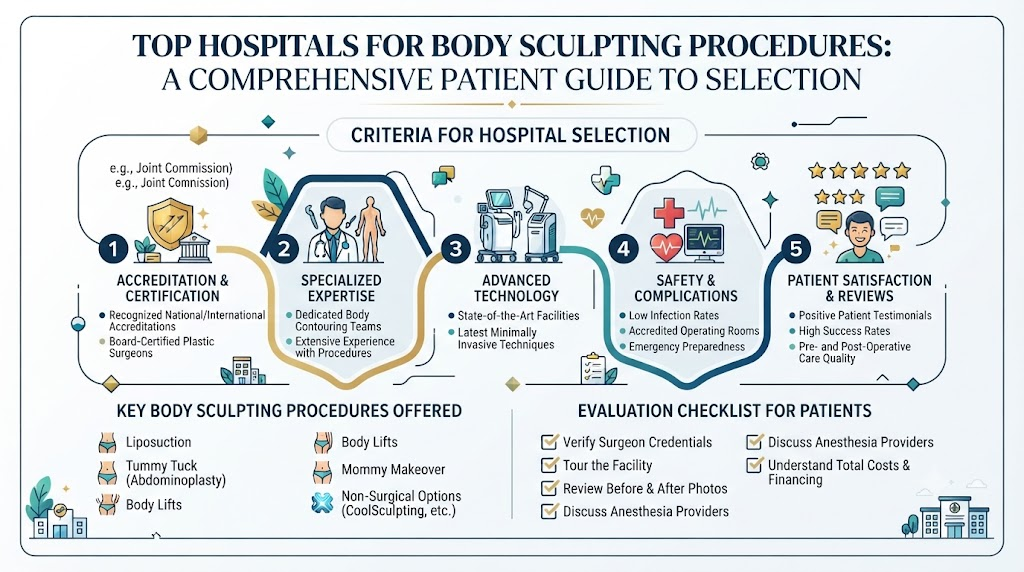
Hospital Selection Checklist
| System Feature | Core Clinical Significance | Specific Indicators to Look For |
| Qualified Cosmetic Surgeons | Ensures advanced surgical skill, aesthetic balance, and safe technique | Active board certifications; specialized training in body contouring |
| Modern Surgical Facilities | Provides a highly sterile environment that minimizes procedural risks | Full facility accreditation; advanced monitoring and life-support tools |
| Advanced Technology | Allows for more precise contouring and customizable treatment plans | Availability of PAL, UAL, RF tightening, and 3D imaging systems |
| Comprehensive Follow-Up | Provides professional guidance through every phase of tissue healing | Scheduled post-op visits; clear protocols for scar and drain care |
| Patient Safety Protocols | Lowers the risk of infection and prepares for rare medical emergencies | Thorough pre-operative screening; board-certified anesthesiologists |
Maintaining Results After Body Sculpting
Body sculpting procedures are highly effective at reshaping your contours, but they do not stop the body’s natural capacity to store fat or adapt to lifestyle changes. Maintaining your aesthetic results long-term requires a commitment to a healthy, balanced lifestyle.
       [ Core Pillars of Long-Term Contour Stability ]
  ==========================================================
   Nutrient Control | Muscle Tone | Weight Tracking | Skin Care
  ==========================================================
   Whole foods and  | Resistance  | Keep a stable   | Hydration
   lean proteins;   | exercises;  | weight range;   | and solar
   avoid sugar spikes| active steps | avoid fluctuations| protection
  ==========================================================
- Prioritize a Balanced Nutrition Plan: Center your meals around whole foods, including lean proteins, vegetables, fruits, whole grains, and healthy fats. Keeping a balanced diet helps prevent significant fluctuations in body fat that can alter your contour results.
- Incorporate Regular Physical Movement: Combine moderate aerobic exercises (like walking, swimming, or cycling) with regular strength training. Building and maintaining lean muscle tone supports a healthy metabolism and complements your reshaped proportions.
- Focus on Weight Maintenance: While a minor weight change will not reverse the structural improvements of your procedure, significant weight gain or loss can cause remaining fat cells to expand or alter skin laxity, impacting your long-term outcome.
- Commit to Consistent Skin Care: Keep your skin healthy by protecting healing incisions from direct sunlight using clothing or high-SPF sunscreen to minimize scar discoloration. Keep the skin hydrated with appropriate moisturizers to support natural elasticity.
- Maintain Adequate Daily Hydration: Drink plenty of water throughout the day to support normal cellular metabolism, aid tissue healing, and maintain healthy skin texture.
- Cultivate Sustainable, Long-Term Habits: View your body contouring procedure as an investment in your well-being. Using your refined proportions as motivation to maintain healthy, daily routines helps protect your results for years to come.
Common Myths vs Facts
Myth: Body sculpting procedures are an effective alternative for systemic weight loss or treating obesity.
Fact: Body contouring treatments are specifically designed to reshape localized areas of tissue and refine body proportions. They are most effective for individuals who are already close to their target weight but struggle with stubborn fat pockets or loose skin that do not respond to diet and exercise.
Myth: The final aesthetic results of a body contouring surgery are immediately visible as soon as the operation is complete.
Fact: While initial changes can be seen early on, your final contours will emerge gradually. Post-operative swelling, fluid retention, and tissue settling are a normal part of the healing process. It typically takes several months for swelling to fully resolve and for incisions to mature into faint scars.
Myth: Once you undergo a fat-removal procedure like liposuction, it is impossible to gain weight in those treated areas again.
Fact: Liposuction permanently removes a specific number of fat cells from the targeted region, but the remaining fat cells in that area and throughout the body can still expand if a person experiences significant weight gain. Maintaining a stable weight is key to preserving your contours.
Myth: The recovery experience and healing timeline are practically identical for every body contouring procedure.
Fact: Recovery timelines vary significantly depending on the scope and type of treatment. Non-surgical options require little to no downtime, whereas major surgeries like a tummy tuck or circumferential body lift involve a structured healing period of several weeks to allow deep tissues to repair safely.
Common Mistakes Patients Make
Navigating an aesthetic treatment plan requires active communication and careful attention to medical instructions. Recognizing and avoiding common pitfalls helps support a safer healing process and protects your long-term results.
Expecting Unrealistic Anatomical Results
A frequent mistake is entering treatment with expectations that do not align with your natural anatomy, such as hoping to replicate a specific public image or achieve absolute perfection. This mindset can lead to disappointment. A professional cosmetic surgeon focuses on enhancing your unique proportions and creating a balanced, natural-looking silhouette.
Rushing Back to Intense Physical Activities Too Soon
Some patients feel eager to resume heavy lifting, intense workouts, or demanding sports too early in their recovery, often because they feel good or want to maintain their fitness routine. Exercising before your tissues have healed can increase swelling, cause fluid to pool under the skin, or place stress on healing incisions, which can lead to widened scars or wound separation.
Choosing a Surgical Provider Based Solely on Lower Costs
Selecting a surgeon or facility based primarily on low prices or promotional discounts can compromise your safety. High-quality aesthetic care requires advanced facilities, specialized medical staff, and certified surgeons. Choosing non-accredited clinics or uncertified providers increases the risk of facing serious complications or requiring corrective surgeries later.
Neglecting Healthy Lifestyle Habits Post-Procedure
Assuming that body sculpting permanently protects you from future weight changes can compromise your long-term results. Significant weight gain after treatments like liposuction or a tummy tuck can distort your new proportions. Commitment to a balanced diet and regular exercise is essential for keeping your contours stable and maintaining your investment.
Practical Solutions
To support your care journey:
- Have an open, honest discussion with your surgeon during your consultation, using detailed 3D imaging to establish clear, grounded goals.
- Follow your post-operative activity plan closely, and always get explicit medical clearance from your surgeon before returning to strenuous workouts.
- Prioritize safety by choosing accredited hospitals and board-certified specialists who value your health and well-being over commercial trends.
Real-Life Patient Scenarios
Scenario A: Structural Contouring Following Major Weight Loss
An individual achieved a significant milestone by losing over 100 pounds through dedicated lifestyle changes and bariatric support. While they felt much healthier, they were left with large amounts of loose, hanging skin around their lower torso and thighs, which caused physical discomfort and skin chafing during daily movement.
The patient consulted a board-certified surgeon at a specialized cosmetic hospital. After a thorough medical evaluation, the surgeon performed a comprehensive body lift to excise the redundant tissue and elevate the remaining contours. Supported by specialized compression garments and a structured post-operative care team, the patient healed safely over several weeks, gaining a comfortable, functional physical form that fully reflected their hard work.
Scenario B: Targeted Refinement for Localized Tissue Areas
A 38-year-old individual maintained a balanced diet and ran regularly, but struggled with persistent pockets of fat around their flanks and abdomen that did not improve with exercise. They felt frustrated that their active lifestyle was not reflected in their physical proportions.
Seeking a solution, they visited an accredited cosmetic facility for a professional assessment. The surgeon used 3D body imaging to map out the targeted areas and performed power-assisted liposuction to refine the contours of their midsection. Because the patient had good skin elasticity and was near their target weight, they recovered quickly. They returned to light daily activities within a week and successfully maintained their refined proportions by continuing their fitness routine.
Scenario C: Restoring Midsection Support Post-Pregnancy
A mother of two children wanted to address structural changes in her midsection following her pregnancies. She noticed that despite core exercises, her lower abdomen remained stretched, and she experienced lower back discomfort due to a separation of her abdominal muscles (diastasis recti).
She scheduled a detailed consultation at a specialized cosmetic hospital to discuss her options. The surgeon recommended a full tummy tuck to remove the stretched, excess skin and surgically repair the separated muscle wall. Following the operation, the patient wore her compression garments consistently and adhered closely to her physical activity restrictions. Over the next few months, her core strength improved, her abdominal contours settled naturally, and she regained the physical comfort needed to manage her busy lifestyle confidently.
FAQs (15 Questions)
1.What is body sculpting?
Body sculpting includes a range of surgical and non-surgical procedures designed to reshape specific areas of the body by removing stubborn fat, tightening loose skin, and refining overall physical proportions.
2.Is body sculpting a valid treatment for weight loss?
No. Body contouring is not a weight-loss treatment or a solution for obesity. It is a reshaping procedure designed for individuals who are already near a stable target weight but want to address localized areas of stubborn tissue or loose skin.
3.Who is considered a good candidate for body contouring?
An ideal candidate is an adult in good general health, who maintains a stable weight, does not smoke, has realistic expectations about their results, and has specific areas of loose skin or stubborn fat that do not respond to diet and exercise.
4.What is the main difference between liposuction and a tummy tuck?
Liposuction focuses strictly on removing localized fat deposits from beneath the skin using a specialized suction cannula. A tummy tuck is a more comprehensive surgery that removes excess skin and physically tightens stretched or separated abdominal muscles.
5.How long does the recovery process take after a body contouring surgery?
Recovery timelines depend on the specific procedure performed. Non-surgical options require minimal downtime, while major surgeries like a tummy tuck or body lift typically involve a structured recovery period of 2 to 4 weeks before returning to light work, and several months for complete tissue settling.
6.Are non-surgical body sculpting treatments effective?
Yes, non-surgical options can be effective for individuals who require minor, focal fat reduction and have good skin elasticity. However, their results emerge gradually over several weeks and are more subtle than surgical contouring.
7.How should I prepare for a surgical body sculpting procedure?
Preparation includes completing all pre-operative medical testing, stopping smoking for several weeks as advised, pausing blood-thinning supplements under medical supervision, arranging for a driver to assist you after surgery, and following hospital fasting instructions.
8.What are the standard risks associated with body contouring surgery?
As with any major operation, potential risks include localized bleeding, fluid accumulation under the skin (seroma), infection, delayed wound healing, temporary asymmetry, altered skin sensation, or adverse reactions to anesthesia.
9.How long do the aesthetic results of body sculpting last?
The results of surgical body contouring can be long-lasting, as fat cells are permanently removed and excess skin is excised. However, maintaining your new proportions depends on avoiding significant weight fluctuations and keeping a healthy lifestyle.
10.Can multiple body contouring procedures be combined safely?
Yes, certain procedures can be combined—such as performing liposuction alongside a tummy tuck or fat transfer—if the surgeon determines it is safe based on the patient’s general health, medical history, and overall operative time.
11.How do I identify and choose a reputable cosmetic hospital?
Look for accredited medical centers staffed by board-certified cosmetic or plastic surgeons, equipped with modern operating suites, and offering transparent consultations and structured post-operative care programs.
12.When is it safe to return to work after surgery?
Your return-to-work timeline depends on the complexity of your surgery and the physical demands of your job. Desk-based work can often be resumed within 1 to 2 weeks, while physically demanding roles may require 4 to 6 weeks of rest.
13.Will there be noticeable scars after a body sculpting procedure?
Surgical contouring requires incisions, which will result in permanent scars. However, qualified surgeons place incisions in natural body creases or areas easily hidden by swimwear and clothing, and provide detailed guidelines to help scars fade over time.
14.What is the best way to maintain my contour results long-term?
The most effective way to protect your results is to maintain a stable weight by eating a balanced, nutrient-dense diet, staying hydrated, engaging in regular physical exercise, and keeping consistent healthy habits.
15.When should I schedule a consultation with a qualified cosmetic surgeon?
You should schedule a consultation when you are near your target weight, in good general health, and feel ready to explore evidence-based options for addressing stubborn fat deposits or loose skin with the guidance of a professional medical team.
Final Thoughts
Undergoing a body sculpting procedure is a personal journey that requires a thoughtful balance of professional medical advice, advanced technology, and realistic expectations. Whether you are exploring surgical choices like liposuction and a tummy tuck to address structural changes, or considering non-surgical options to firm specific areas, the primary focus should always be on clinical safety and whole-person wellness. These procedures are highly effective tools for refining physical proportions, but they work best when tailored to your unique anatomy and health history.Choosing a specialized, accredited cosmetic hospital ensures that your treatment is managed by experienced, board-certified surgeons within a safe, sterile environment. From your initial diagnostic consultation through your surgical recovery and follow-up care, an expert clinical team provides the guidance and monitoring necessary to reduce risks and support proper tissue healing. Ultimately, the long-term success of any contouring treatment depends on your commitment to maintaining a stable weight and keeping healthy daily habits.