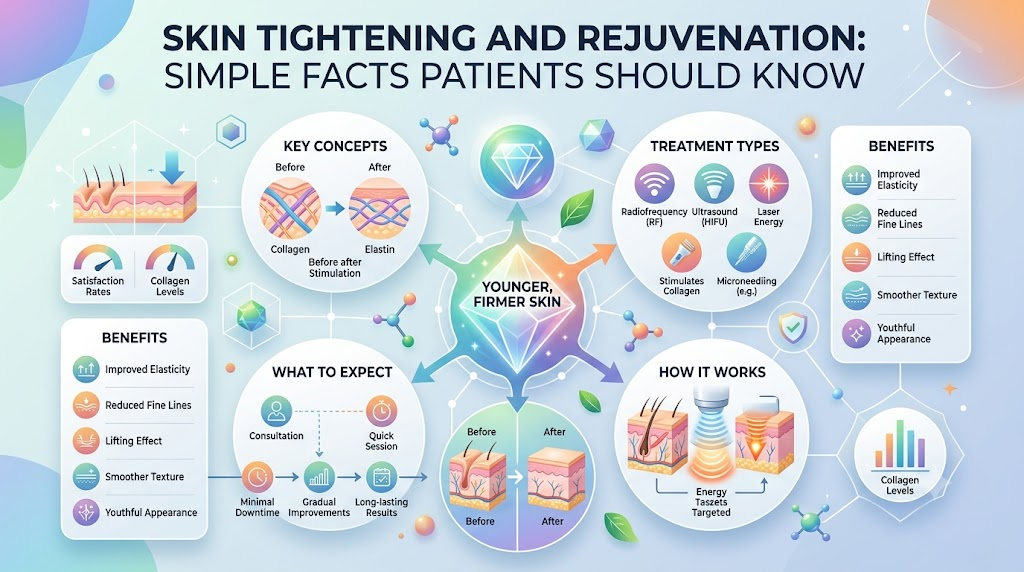
Skin changes are a normal part of life. Skin can lose firmness and stretch over time. Fine lines, wrinkles, loose skin, and uneven texture may appear. Sun exposure can also change skin tone and texture. Skin tightening and rejuvenation offer different cosmetic options. BestCosmeticHospitals helps patients learn about cosmetic hospitals and services. Patients should always discuss treatment choices with a qualified professional.
What Are Skin Tightening and Skin Rejuvenation?
Skin tightening focuses on the look of loose skin. It aims to improve skin firmness and support. Skin rejuvenation focuses on skin texture and overall appearance. It may help with fine lines, marks, or uneven texture.
These terms describe many different treatments. They do not mean one single procedure. Some options use devices or controlled energy. Others use professional skin treatments or surgery. Each option has different goals, risks, and recovery needs.
Why Do People Consider These Treatments?
People may consider cosmetic skin treatments for many reasons. Some notice sagging skin or fine lines. Others notice wrinkles, dull skin, or uneven texture. Sun-related changes may also affect the skin’s appearance.
Some people also want to improve certain surface marks. Scars can sometimes change how skin looks. However, not every skin concern needs treatment. Cosmetic goals also differ from person to person.
How Skin Changes With Age
Natural aging can change the way skin looks. The skin may become less firm over time. It may also lose some of its natural stretch.
Collagen is a protein that supports skin structure. Collagen helps skin look firm and supported. Collagen levels can change with age. Sun exposure and other environmental effects can also affect skin.
Common Skin Tightening Options
Several skin tightening treatments are available today. Radiofrequency treatments use controlled energy to heat skin tissue. Ultrasound treatments use sound energy in targeted areas.
Laser treatments use focused light for skin concerns. Other energy-based treatments also exist. Surgical lifting procedures use a different approach. They may remove or reposition loose skin.
These treatments work in different ways. They also have different risks and recovery needs. No single method works best for everyone.
Common Skin Rejuvenation Options
Skin rejuvenation treatments focus on the look of skin. Laser resurfacing can target certain texture concerns. Microneedling uses tiny controlled skin injuries.
Chemical peels use special solutions on the skin. Light-based treatments use controlled light for certain concerns. Other professional treatments may also be available.
Each treatment has a different purpose. Some focus more on texture. Others may target surface changes or fine lines. A qualified professional can explain the differences.
Non-Surgical and Surgical Options
Non-surgical skin tightening does not involve traditional surgery. Many non-surgical options use devices or professional treatments. They may have less downtime than surgery.
Surgical procedures involve a different level of treatment. Some surgical procedures lift or remove excess skin. Surgery can involve more recovery and possible risks.
Both types need careful discussion before treatment. Patients should understand the expected benefits and limits. A professional can explain which options may fit the treatment goal.
How Doctors Choose a Treatment
A qualified professional looks at several factors. These can include skin type and skin condition. The treatment area also matters.
Medical history can affect treatment choices. Previous cosmetic procedures may also matter. Your goals and expected recovery are important too.
A proper consultation helps review these factors. It also gives patients time to ask questions. The final choice should come after professional assessment.
What Happens During a Cosmetic Consultation?
A cosmetic consultation starts with a discussion. The professional may ask about your main concern. They may review your health history.
They may also ask about past procedures. Next, they may examine the skin and treatment area. They can then explain possible treatment choices.
The discussion may include risks and recovery needs. It may also cover realistic cosmetic results. Patients should ask questions before making a decision.
Comparing Common Treatment Types
| Treatment Type | Main Goal | General Feature |
|---|---|---|
| Radiofrequency | Improve skin firmness | Uses controlled energy |
| Ultrasound | Support skin tightening | Uses sound energy |
| Laser treatment | Improve skin texture | Uses focused light |
| Microneedling | Improve skin texture | Uses tiny controlled skin injuries |
| Surgical lifting | Address loose skin | Requires surgery |
What Results Can Patients Expect?
Cosmetic results can vary from person to person. The treatment type can affect the outcome. Skin condition and treatment area also matter.
Age and individual healing can affect changes. The number of treatments may also vary. Lifestyle and follow-up care can play a role.
Some treatments may create gradual changes. Others may create different types of visible changes. Results should always be discussed before treatment. No cosmetic treatment can promise the same result for everyone.
Understanding Treatment Limits
Skin tightening cannot solve every skin concern. Skin rejuvenation also has limits. These treatments cannot stop natural aging.
Some treatments may improve the skin’s appearance. They may not remove every wrinkle or mark. Severe loose skin may need another type of assessment.
Realistic expectations are important before treatment. A qualified professional can explain what the procedure may achieve. They can also explain what it cannot do.
Possible Risks and Side Effects
Cosmetic procedures can have side effects. The risks depend on the treatment used. Redness and swelling may occur after some treatments.
Temporary discomfort or skin sensitivity can also happen. Some treatments may cause pigment changes. Infection and scarring are possible with certain procedures.
Energy-based treatments can have other risks. These may include burns or tissue injury. A professional should explain the risks before treatment. Patients should also ask about warning signs after care.
Skin Type and Treatment Safety
Skin type can affect treatment safety. Some energy treatments may affect skin pigment differently. This risk can vary between people.
That is why professional assessment matters. A qualified provider can review your skin before treatment. Training and experience are also important factors.
Patients should ask about the provider’s relevant training. They can also ask about experience with similar skin types. This can support a safer treatment discussion.
Preparing for a Cosmetic Treatment
Good preparation starts with honest health information. Tell the professional about medical conditions and allergies. Also share current medicines and supplements.
Mention previous cosmetic procedures and skin conditions. Explain your main treatment goals clearly. Ask about expected downtime before deciding.
Follow the preparation advice given by your treating professional. Do not stop medicines without medical advice. Good communication can help prevent avoidable problems.
Recovery and Downtime
Recovery depends on the treatment used. Some non-surgical treatments may need little downtime. Other treatments can cause temporary skin changes.
Redness, swelling, or peeling may occur. Surgical treatments often need more recovery time. There is no single recovery period for every procedure.
Ask about normal recovery before treatment. Also ask when normal activities may resume. Your treating professional should explain the expected recovery process.
Skin Care After Treatment
Aftercare depends on the procedure. Your provider may give specific skin care advice. This may include skin protection and gentle cleansing.
Moisturizing may also be part of aftercare. Sun protection can be important after some treatments. Follow-up visits may also be advised.
Do not use a routine made for someone else. Follow the instructions given by your treating professional. Ask questions if any aftercare step seems unclear.
Choosing a Cosmetic Hospital
Choosing a cosmetic hospital needs careful thought. Start by checking doctor qualifications and training. Relevant treatment experience can also matter.
Look at hospital safety standards and infection control. Check the treatment options available at the facility. Emergency support can also be useful.
Ask about follow-up care and consultation quality. Clear pricing information can help avoid confusion. Equipment and medical supervision are also worth comparing.
BestCosmeticHospitals.com can help patients research cosmetic hospitals. However, patients should confirm important details directly. No hospital or treatment is right for everyone.
Questions to Ask Before Skin Treatment
Good questions can help you make an informed choice. Ask why the treatment is being suggested. Ask what concern the treatment may address.
You can ask about other available options. Ask about the main risks and expected downtime. Also ask how many sessions may be needed.
Ask when changes may become visible. Ask how long results may last. You can also ask who will perform the procedure. Clear answers can help you decide with greater confidence.
When Cosmetic Treatment May Not Be Suitable
Some situations may affect treatment suitability. Active skin conditions can sometimes require extra care. Certain medical conditions may also affect treatment choices.
Some medicines can also matter. Recent procedures may change the timing of treatment. Pregnancy or breastfeeding can also affect some options.
Unrealistic expectations can be another concern. A qualified professional should assess each situation. Patients should not decide suitability based only on advertisements.
How BestCosmeticHospitals.com Can Help
BestCosmeticHospitals.com can help patients research cosmetic care options. The site can provide information about cosmetic hospitals and specialists. Patients can explore different treatment categories and services.
These may include cosmetic dermatology and skin rejuvenation. Information may also cover skin tightening and laser treatments. Cosmetic surgery and non-surgical procedures can also be explored.
Patients should still confirm details with the medical facility. This includes provider credentials and treatment availability. Patients should also ask about risks, recovery, and costs.
Educational Example
A person notices loose skin and fine lines. They decide to learn about possible cosmetic options. Instead of choosing from an advertisement, they arrange a consultation.
The professional reviews their skin and health history. They also discuss goals and available treatment choices. This can help the person understand realistic options.
This is an educational example only. It does not describe a real patient or outcome.
Frequently Asked Questions
1. What does skin tightening mean?
Skin tightening refers to treatments for less firm skin. These treatments aim to improve the appearance of loose skin. Some use energy-based devices. Others involve surgery. The right option depends on the skin, treatment area, health history, and cosmetic goals.
2. How is skin rejuvenation different from skin tightening?
Skin rejuvenation focuses on the look and texture of skin. It may target fine lines, marks, or uneven texture. Skin tightening mainly focuses on skin firmness. Some treatments may address both concerns, but their goals can differ.
3. Which treatments may improve skin firmness?
Several options may target skin firmness. These include radiofrequency, ultrasound, laser-based treatments, and surgery. Each option works differently. They also have different risks and recovery needs. A qualified professional can explain which choices may suit a specific cosmetic goal.
4. Are skin tightening treatments always non-surgical?
No, skin tightening can involve surgical or non-surgical options. Non-surgical treatments may use devices or controlled energy. Surgical procedures may lift or remove loose skin. Each approach has different risks, recovery needs, and expected results.
5. How do professionals choose a skin rejuvenation treatment?
Professionals consider several factors before choosing an option. They may review skin type, skin condition, health history, and treatment area. Previous procedures and cosmetic goals may also matter. A consultation helps the professional explain suitable options and their possible limits.
6. Can skin tightening treatments have side effects?
Yes, cosmetic treatments can have risks. Some may cause redness, swelling, discomfort, or skin sensitivity. Other risks may include pigment changes, infection, or scarring. Energy treatments can have additional risks. A qualified professional should explain these risks before treatment.
7. How long can cosmetic treatment results last?
Results can vary greatly between treatments and people. Skin condition, age, treatment type, and healing can affect results. Natural aging also continues after treatment. Some changes may last longer than others. A professional can explain realistic expectations before treatment.
8. How much recovery time might be needed?
Recovery depends on the procedure. Some treatments may cause little downtime. Others may cause redness, swelling, or peeling. Surgical procedures often need more recovery. There is no universal recovery period. Your treating professional should explain the expected recovery for your procedure.
9. What should patients ask before cosmetic treatment?
Ask what the treatment is meant to improve. Ask about other options and possible risks. You can also ask about downtime and aftercare. Ask who will perform the procedure. Clear answers can help you understand the choice before treatment.
10. How can patients choose a safe cosmetic hospital?
Start by checking doctor qualifications and relevant training. Look at safety standards and infection control. Consider treatment experience, medical supervision, and follow-up care. Ask about available services and emergency support. Patients should also confirm important information directly with the facility.
Final Thoughts
Skin tightening and rejuvenation include many treatment options. The right choice depends on skin, goals, and health. Professional assessment is important before any cosmetic procedure.
Focus on qualified care and realistic expectations. Ask about risks, recovery, and aftercare before deciding. BestCosmeticHospitals.com can help patients research cosmetic hospitals and treatment options. Always discuss personal treatment choices with a qualified professional.