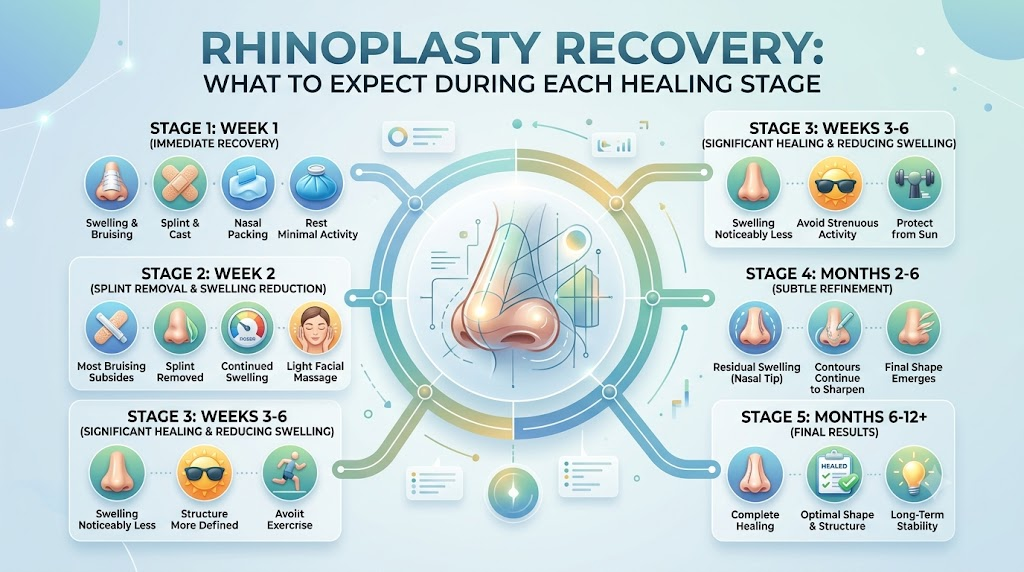
Rhinoplasty recovery continues well after surgery. The nose may feel swollen, blocked, or sore at first. Bruising can also appear around the nose and eyes. These changes can happen as the body heals. Recovery often happens in stages. Each person may heal at a different pace. The surgeon’s own instructions should always come first. For more cosmetic care information, visit BESTCOSMETICHOSPITALS/.
What Happens After Rhinoplasty Surgery?
The first days can feel uncomfortable. Swelling is common after nose surgery. Bruising may appear around the nose. Some people also feel tired after surgery.
Nasal congestion can make breathing feel harder. This may happen because tissues inside the nose swell. A splint may also be used during early healing. The care team will explain how to protect it.
Mild pain or discomfort may also occur. Patients should follow their surgeon’s care plan. Recovery needs can differ based on the procedure.
Why Does Rhinoplasty Recovery Take Time?
The nose has bone, cartilage, skin, and soft tissue. These parts need time to heal after surgery. The body also needs time to reduce swelling.
Rhinoplasty healing does not happen all at once. Some changes may improve quickly. Other changes can take much longer to settle.
The nose may look different during early recovery. This does not show the final result. Swelling can also change from one day to another.
Good rhinoplasty surgery recovery guidelines focus on safe healing. They do not promise a fixed recovery time. BESTCOSMETICHOSPITALS.COM can help readers learn about cosmetic hospital factors before surgery.
Rhinoplasty Recovery During the First Few Days
The early recovery period is often the most sensitive. Rest is important during this stage. Patients may have swelling, bruising, congestion, and tiredness.
The nose may feel tender or blocked. Some normal daily tasks may also feel harder. Help from family can make this period easier.
The surgical team gives specific rhinoplasty aftercare guidelines. These instructions depend on the procedure performed. Patients should follow those instructions closely.
Avoid changing the care plan without medical advice. This includes adding new products or home remedies. When unsure, ask the surgical team first.
Managing Swelling After Rhinoplasty
Rhinoplasty swelling is common during healing. Swelling can affect the nose and nearby areas. It may also change in amount from day to day.
The surgeon may advise keeping the head raised. Follow the exact advice given by the medical team. Do not place cold packs directly on the nose unless advised.
Swelling can take time to settle. Early swelling does not show the final nose shape. Patience is an important part of rhinoplasty recovery.
Managing Bruising After Rhinoplasty
Rhinoplasty bruising can appear around the nose and eyes. The color may change as the body heals. Bruising may also look different on each side.
People often compare their recovery with others. This can cause needless worry. Every body heals in its own way.
Follow the care plan from the surgical team. Ask about any bruising that seems unusual. This is safer than trying an unapproved home remedy.
Sleeping After Rhinoplasty
Sleeping after rhinoplasty may need extra care. Pressure on the nose can disturb the healing area. The surgeon may give specific sleep advice.
Follow that advice rather than using a general rule. A comfortable sleep space can also help. Keep needed items close by to reduce extra movement.
Good rest supports normal recovery. However, sleep needs can vary between patients. Ask the surgical team if sleep feels difficult.
Nasal Congestion During Recovery
Rhinoplasty congestion can feel frustrating. Swelling inside the nose may reduce normal airflow. A splint or other surgical material may also affect breathing.
Nasal care after rhinoplasty should follow medical instructions. Do not start sprays or rinses without advice. The same applies to other nasal products.
Temporary breathing changes can happen during healing. However, serious breathing trouble needs prompt medical attention. Contact the surgical team when breathing becomes concerning.
Eating and Drinking During Recovery
Good food and fluids support general recovery. Drink enough fluids unless the care team says otherwise. Water can also help prevent dehydration.
Choose easy-to-eat foods when the face feels sore. Balanced meals can include protein, fruits, vegetables, and whole grains.
Food after rhinoplasty does not need to be highly restrictive. Avoid creating a special diet without medical advice. A simple, balanced diet is often easier to manage.
Activity and Movement After Rhinoplasty
Activity usually returns slowly after surgery. Gentle movement may be allowed when the surgical team agrees. Follow the activity advice given for the procedure.
Hard exercise may need to wait during early healing. Strenuous activity can increase swelling or discomfort. Contact sports can also create injury risks.
Walking after rhinoplasty may be allowed at a suitable stage. However, timing varies between patients. Ask the surgeon before increasing activity.
Protecting the Nose From Accidental Injury
A healing nose needs protection from pressure and bumps. Be careful around children and pets. Crowded places may also increase the chance of accidental contact.
Clothing can also touch the nose during dressing. Loose, front-opening clothes may make dressing easier. Follow the surgeon’s advice about glasses or sunglasses.
Small changes can reduce accidental pressure. Keep the healing area protected during daily tasks. Ask the surgical team about any activity that feels risky.
Sun Protection During Recovery
Healing skin may feel more sensitive after surgery. Too much sun exposure can also irritate the skin. Follow the medical team’s advice about sun protection.
Use only products approved for the healing area. Do not place products on healing wounds without advice. Protect the face from strong sun when possible.
Sun care is part of safe cosmetic surgery recovery. However, no product can prevent every skin change. Follow the surgeon’s specific instructions.
Keeping Rhinoplasty Follow-Up Appointments
Rhinoplasty follow-up visits are an important part of recovery. The surgeon can check how the nose is healing. The team may also check swelling and incisions.
They may review nasal structure and breathing. They can also discuss recovery progress. Follow-up needs differ from person to person.
Keep all planned visits when possible. Share new concerns during these appointments. BESTCOSMETICHOSPITALS.COM can help readers understand why follow-up care matters when researching cosmetic hospitals.
Rhinoplasty Recovery Timeline
Rhinoplasty recovery happens in broad stages. Early recovery focuses on rest and protection. The first weeks often involve continued swelling and healing.
Several months may bring gradual changes. Visible swelling can improve before all swelling settles. Longer-term healing may continue after the nose looks much better.
There is no single recovery timeline for everyone. The procedure and healing process both matter. Your surgeon can explain what to expect.
Returning to Work or School
Return time depends on the person and activity. Desk work may feel easier than physical work. Swelling and bruising may also affect social comfort.
Some people may need more rest than others. Do not use another person’s timeline as a rule. Follow your surgeon’s advice before returning.
A calm return can make recovery easier. Plan transport and basic support when needed. This can reduce stress during the early stage.
Returning to Exercise
Exercise after rhinoplasty should increase only with medical approval. Early hard activity may increase swelling. It may also raise the risk of accidental injury.
Contact sports need special care because the nose can be hit. Even normal exercise may need gradual changes. Ask the surgical team before increasing activity.
There is no fixed exercise schedule for every patient. Your procedure and healing progress both matter.
Emotional Changes During Rhinoplasty Recovery
Recovery can feel hard at times. Swelling may make the nose look different early on. This can feel surprising after surgery.
The early appearance may not show the final result. Healing takes time and can change slowly. Avoid judging the final result too soon.
Talk with the surgical team when concerns continue. Clear information can make recovery easier to understand. Support from family can also help.
Common Rhinoplasty Recovery Mistakes
Some recovery mistakes can make healing harder. Common examples include:
- Ignoring surgeon instructions
- Touching the nose too often
- Returning to hard activity too soon
- Missing follow-up visits
- Comparing recovery with others
- Trying unapproved home remedies
- Putting pressure on the healing nose
- Ignoring warning signs
Safe rhinoplasty post surgery care starts with clear instructions. When something seems unclear, ask the medical team. Avoid guessing about care.
Warning Signs After Rhinoplasty
Some symptoms need prompt medical attention. These can include heavy or persistent bleeding. Severe or increasing pain also needs medical review.
Other warning signs may include fever or increasing redness. Pus or unusual drainage can also be concerning. Trouble breathing should not be ignored.
Sudden major changes also need medical attention. Contact the surgical team when symptoms seem unusual. For severe or sudden problems, seek urgent medical care.
These signs do not prove a complication. Only a healthcare professional can assess the problem.
When Should a Patient Contact the Surgeon?
Patients should contact the surgeon when recovery feels abnormal. This includes increasing pain or new bleeding. Worsening swelling can also need review.
Other concerns include fever and unusual drainage. Breathing problems should also be reported. Accidental injury to the nose needs medical advice.
The surgeon knows the procedure and recovery plan. This makes the surgical team the best contact for recovery questions.
Rhinoplasty Recovery for Cosmetic and Functional Surgery
Rhinoplasty may have cosmetic or functional goals. Cosmetic goals relate to the nose’s appearance. Functional goals relate to problems such as airflow.
Recovery can depend on what was done during surgery. Not every rhinoplasty procedure is the same. Therefore, general recovery advice may not fit every patient.
Ask the surgeon about the specific procedure. Follow the instructions given for that surgery.
Recovery After Revision Rhinoplasty
Revision rhinoplasty is another type of nose surgery. It may involve a nose that had earlier surgery. Previous surgery can affect the nasal structure.
Healing needs may therefore differ. Recovery instructions can also vary. Patients should not compare revision recovery with other procedures.
The surgeon can explain the expected healing process. Follow-up care remains important during recovery.
How Family Members Can Help
Family support can make recovery easier. Someone can help with meals and transport. A calm home can also support rest.
Family members can help remember appointments. They can also watch for concerning changes. This support can be useful during the early days.
Patients should still follow medical instructions themselves. Family help should not replace medical advice.
Rhinoplasty Recovery Comparison
| Recovery Stage | Common Focus |
|---|---|
| Early recovery | Rest and follow-up care |
| First weeks | Protect the healing nose |
| Later recovery | Gradual return to activities |
| Long-term healing | Monitor ongoing changes |
Questions to Ask Before Leaving the Hospital
Clear questions can make recovery easier. Patients can ask:
- What should normal swelling look like?
- How should the nose be protected?
- When is the first follow-up?
- When can normal activities resume?
- Which symptoms need a call?
- Who should be contacted after hours?
- When can exercise resume?
- How should sleep be managed?
Write down the answers if needed. Keep important contact numbers nearby.
How to Prepare Your Home for Recovery
A simple home setup can help. Prepare a comfortable place for rest. Keep water and easy meals nearby.
Loose front-opening clothing may make dressing easier. Arrange transport for follow-up visits when needed. Keep important medical contact numbers easy to find.
These steps do not replace medical care. They simply make daily recovery more manageable.
How BESTCOSMETICHOSPITALS.COM Can Help
BESTCOSMETICHOSPITALS.COM can help readers research cosmetic hospitals. It also provides information about cosmetic care and surgeon factors.
Readers can use the platform when learning about rhinoplasty care. Hospital and surgeon details should still be checked directly. Procedure and recovery questions should go to the healthcare team.
The platform does not replace medical advice. It is an information resource for cosmetic healthcare research.
Practical Example
A person has rhinoplasty and notices swelling during early recovery. They follow their surgeon’s instructions and attend follow-up visits.
Their recovery continues gradually. The care team checks healing during follow-up visits. This example shows why patience and follow-up care matter.
Frequently Asked Questions
1. How long does rhinoplasty recovery take?
Recovery happens in stages and varies between people. Some changes improve early. Other healing may continue for much longer.
2. Is swelling normal after rhinoplasty?
Swelling can be common during healing. It may change from day to day. Follow the surgeon’s advice about swelling care.
3. How should someone sleep after rhinoplasty?
Patients should follow their surgeon’s sleep advice. Protecting the nose from pressure is important during healing.
4. When can normal activities resume after rhinoplasty?
This depends on the person and activity. Follow the surgeon’s advice before returning to normal activities.
5. Can patients exercise after rhinoplasty?
Exercise should increase only after medical approval. Hard activity may affect swelling and healing.
6. What foods can support recovery after rhinoplasty?
Balanced food can support general recovery. Include protein, fruits, vegetables, whole grains, and fluids.
7. When should someone contact the surgeon after rhinoplasty?
Contact the surgeon for heavy bleeding, increasing pain, fever, unusual drainage, or breathing problems. Severe symptoms need urgent medical care.
8. Can rhinoplasty swelling last for months?
Some swelling may take time to settle. Healing speed differs between patients and procedures.
9. How can patients protect their nose during recovery?
Avoid pressure, bumps, and risky activities. Follow the surgeon’s advice about glasses, clothing, pets, and exercise.
10. Can BESTCOSMETICHOSPITALS.COM help with rhinoplasty hospital research?
Yes. BESTCOSMETICHOSPITALS.COM can help readers research cosmetic hospitals and care information. Medical decisions should still be discussed with the healthcare team.
Final Thoughts
Rhinoplasty healing takes time and patience. Swelling, bruising, congestion, and discomfort may happen. Recovery can also change from one stage to another.
Good rhinoplasty recovery tips start with careful aftercare. Follow-up visits can help the surgical team check healing. Patients should also protect the nose during recovery.
Always follow your surgeon’s own instructions first. Contact the surgical team when recovery seems unusual. Seek urgent medical care for severe or sudden symptoms.
BESTCOSMETICHOSPITALS.COM can support informed cosmetic hospital research. It can help readers understand important questions before care. Medical guidance should always come from the patient’s healthcare team.