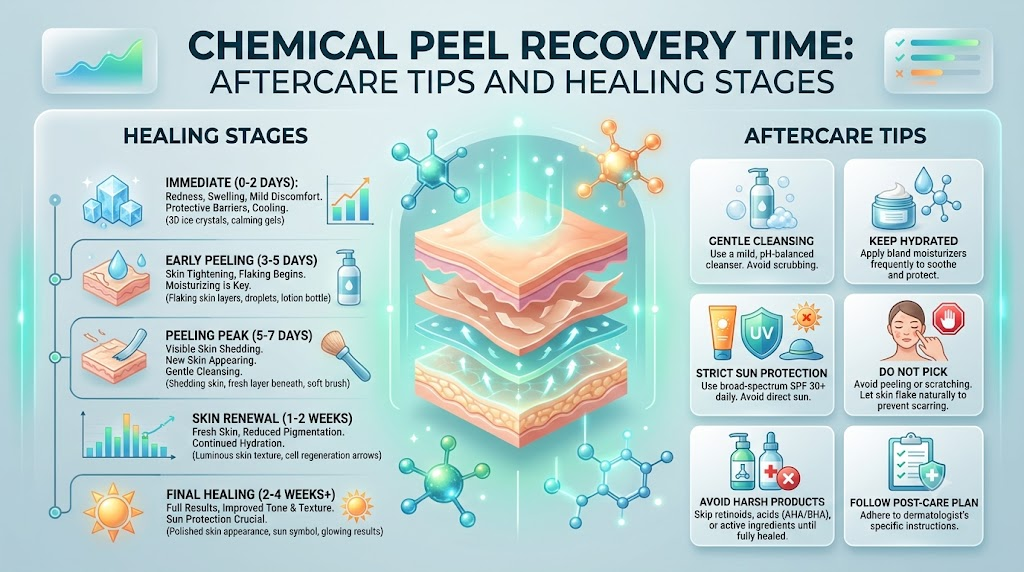
Chemical peels can help improve some skin concerns, such as uneven tone, rough texture, and fine lines. The treatment uses a chemical solution to remove controlled layers of skin. Afterward, the skin needs time and care to heal.
Chemical peel recovery depends on the depth of the peel, the products used, and your skin’s response. You may notice redness, dryness, tightness, or flaking. Deeper peels can cause more swelling and need longer care.
Good aftercare helps protect healing skin and may lower the risk of problems. Follow the instructions given by your dermatologist or treating professional. If you are comparing care options, BESTCOSMETICHOSPITALS may be a starting point for your research. Always check a provider’s qualifications and services before booking treatment.
What Is Chemical Peel Recovery?
Chemical peel recovery is the time your skin needs to heal after treatment. The peel removes some surface skin cells, and the skin then repairs itself.
During this time, your skin may look red or feel tight. It may also become dry or start to peel. These effects can be expected, depending on the treatment.
As the skin heals, new skin forms in the treated area. The process may take only a few days after a light peel. Medium and deep peels often need more time and closer care.
Proper aftercare is important. Gentle cleaning, suitable moisturising, and sun protection can help protect the skin. Avoid picking at loose skin or using products that your clinician has not approved.
Not every symptom is part of normal healing. Severe pain, worsening swelling, pus, or other signs of infection need medical attention.
How Long Does Chemical Peel Recovery Take?
Healing time depends mainly on the type and depth of the peel. Your skin type, health, and treatment plan can also affect recovery.
A light peel usually has a shorter recovery period. A medium peel affects deeper layers and may cause more redness or swelling. A deep peel requires more careful wound care and may need several follow-up visits.
The table below shows general healing estimates for different peel types.
| Peel type | General healing time | What patients may notice |
|---|---|---|
| Light or superficial peel | Around 1–7 days | Mild redness, dryness, and flaking |
| Medium peel | Around 7–14 days | Redness, swelling, crusting, and peeling |
| Deep peel | Around 14–21 days or longer | More intensive wound care and longer recovery |
These time ranges are estimates, not guarantees. Redness or changes in skin colour may last longer than the initial healing period. Follow the timeline given by your treating dermatologist, as your skin may need more time.
What to Expect During Each Stage of Recovery
Chemical peel recovery can look different from one person to another. The following stages offer a general idea of what may happen.
The First 24–48 Hours
Your skin may feel warm, tight, sensitive, or mildly swollen. Some people notice redness or a stinging feeling. Deeper peels may cause more discomfort and require special ointments or dressings.
Clean your skin only as directed by your treating professional. Use the recommended moisturiser or ointment. Do not apply ice directly to the treated area or try unapproved products.
Contact your clinician if the pain becomes severe or symptoms worsen quickly.
Days 3–7
Dryness and flaking may become more noticeable during this stage. This is common after many light peels. Medium peels may cause stronger redness, swelling, or crusting.
Let loose skin fall away naturally. Do not pull, scratch, or rub it off. Picking at the skin can delay healing and increase the risk of scars or colour changes.
Keep following your aftercare instructions, even if your skin starts to look better.
Days 7–14
Many light peels have healed by this stage. Some medium peels may still need care, and the skin may remain pink or sensitive.
Do not assume your skin is ready for every skincare product or cosmetic activity. Ask your dermatologist before using makeup, retinoids, exfoliating acids, or facial scrubs again.
If healing seems slower than expected, contact your treating professional for advice.
After Two Weeks
Some people who have had deeper peels need more time to heal. They may also need extra appointments and continued skin protection.
The skin may remain pink, dry, or sensitive after the surface has healed. Follow-up visits help your clinician check progress and address concerns.
Do not judge the final result too early. Your treating professional can explain what changes are expected and when your skin should be reviewed.
Essential Aftercare Tips Following a Chemical Peel
Good aftercare protects your skin while it heals. The right routine depends on the type and depth of your peel.
Clean the Skin Gently
Use the cleanser and washing method recommended by your dermatologist. Wash gently and avoid rubbing the treated area.
Do not use harsh soaps, rough towels, or scrubbing brushes. If your skin feels painful when washed, ask your clinician what to do.
Keep the Skin Moisturised
Your dermatologist may recommend a gentle moisturiser or a special ointment. These products can help protect the skin and reduce dryness.
Use only products that are suitable for your treatment. Deep peels may need a different care plan from light peels. Do not add new creams or oils without checking first.
Do Not Pick or Scratch Peeling Skin
Loose skin may be tempting to pull away, but let it shed naturally. Picking at the skin or removing scabs can slow healing.
It may also increase the risk of infection, scarring, or dark and light patches. If peeling causes severe discomfort, ask your treating professional for advice.
Protect the Skin From Sunlight
Freshly treated skin is more sensitive to sunlight. Too much sun may increase irritation and the risk of uneven skin colour.
Stay in the shade and avoid unnecessary sun exposure while your skin heals. A wide-brimmed hat can offer extra protection outdoors. Use a suitable broad-spectrum sunscreen when your dermatologist says it is safe for your healing skin.
Sunscreen does not make long periods in strong sunlight safe during early recovery.
Avoid Harsh Skincare Products
Retinoids, exfoliating acids, scrubs, and some acne products may irritate healing skin. Do not restart them until your dermatologist approves.
Avoid trying new skincare products during recovery. Even products that worked well before treatment may cause discomfort on sensitive skin.
Follow Dressing and Medication Instructions
Medium and deep peels may require special dressings, ointments, or prescribed medicines. Use them exactly as directed.
Do not start antibiotics, antiviral medicines, or steroid creams on your own. Ask your clinician before using any medicine that was not included in your care plan.
What Should You Avoid During Chemical Peel Recovery?
Some activities and products can irritate healing skin. Avoid them until your treating professional says they are safe.
- Do not pick, scratch, or pull away peeling skin.
- Avoid facial scrubs and exfoliating brushes.
- Do not use retinoids or strong acids without approval.
- Avoid tanning beds and deliberate tanning.
- Limit direct sunlight and follow your sun-protection plan.
- Do not try unapproved home remedies on the treated area.
- Wait for approval before wearing makeup.
- Do not book another peel or cosmetic treatment without medical advice.
Exercise, heavy sweating, swimming, and shaving may also need temporary limits. The right timing depends on the treatment and your skin’s condition.
Ask your dermatologist when you can return to these activities. Do not follow a general timeline if your clinician has given different instructions.
Hospital Recommendations for Safe Chemical Peel Recovery
Choosing a suitable provider is an important part of chemical peel safety. A qualified professional can assess your skin, explain possible risks, and guide you through recovery.
When comparing hospitals or dermatology clinics, look for these features:
- Suitable qualifications: Check that the clinician has appropriate medical training and experience.
- Experience with chemical peels: Ask about their experience with the planned peel depth and your skin concerns.
- A careful skin assessment: The provider should review your skin type, medical history, medicines, and treatment goals.
- Clear aftercare instructions: You should receive practical advice about cleaning, moisturising, sun protection, and activities to avoid.
- Follow-up access: Ask how and when your healing will be checked.
- A plan for complications: Find out whom to contact if you develop severe pain, swelling, or signs of infection.
- Honest information: The provider should explain possible risks, recovery time, and realistic results.
Do not choose a provider based only on low prices, advertisements, or before-and-after photos. Photos cannot show every risk or prove that a treatment is suitable for you.
You can use BestCosmeticHospitals.com as a starting point for research, but verify a provider’s credentials, treatment options, and follow-up process directly. Do not assume that a listing alone confirms the quality of care.
Before treatment, ask who will perform the peel and who will manage your recovery. You should feel comfortable asking questions and discussing your concerns.
Why Follow-Up Appointments Matter
Follow-up visits allow a healthcare professional to check how your skin is healing. They can also help identify problems that need attention.
The schedule depends on the depth of the peel and your individual needs. Some light peels may not need a routine review. Medium peels often require follow-up, while deep peels may need an early review and several visits during the first week.
These are general patterns, not fixed rules. Your treating professional should decide the right schedule for you.
Keep your follow-up appointments even if your skin looks better. Contact your clinic sooner if symptoms worsen or healing does not progress as expected.
Normal Recovery Signs and Possible Complications
Knowing what to expect can help you decide when to seek advice. Your clinician should explain which effects are normal for your treatment.
Common Recovery Effects
Depending on the peel, common effects may include:
- Mild redness.
- Temporary stinging or tightness.
- Dryness and flaking.
- Some swelling.
- Temporary skin sensitivity.
These effects should follow the pattern explained by your treating professional. They should not become much worse without a clear reason.
Warning Signs
Contact your treating clinician promptly if you notice:
- Increasing or severe pain.
- Redness or swelling that keeps getting worse.
- Pus or other signs of infection.
- Fever or feeling unwell along with skin symptoms.
- Blisters or wounds that look worse than expected.
- Persistent burning or irritation.
- Unexpected dark or light patches.
- Healing that takes longer than your clinician expected.
Severe symptoms, rapidly spreading swelling, or signs of a serious allergic reaction need urgent medical assessment. If peel chemicals enter your eyes, seek immediate medical advice.
Do not try to diagnose a complication yourself. A healthcare professional can assess the symptoms and advise you on the next steps.
The table below links common recovery concerns with practical actions and signs that need professional advice.
| Recovery concern | Recommended action | When to contact a professional |
|---|---|---|
| Dry or tight skin | Use the recommended moisturiser or ointment | If the skin cracks or symptoms worsen |
| Peeling skin | Allow it to shed naturally | If severe irritation develops |
| Sun sensitivity | Limit sun exposure and follow protection advice | If significant burning or unusual skin changes occur |
| Persistent redness | Follow the prescribed aftercare plan | If redness worsens or lasts longer than expected |
| Increasing pain or swelling | Do not rely on home remedies alone | Contact the treating clinician promptly |
| Possible infection | Seek medical assessment | Promptly, especially with pus, fever, or spreading redness |
The main lesson is to follow your care plan and watch for changes. When symptoms worsen, contact a professional rather than trying new products at home.
Chemical Peel Recovery for Different Skin Types
Skin type, skin tone, and medical history can affect chemical peel recovery. A suitable treatment plan should take these factors into account.
People with darker skin tones may have a higher risk of dark or light patches after some medium or deep peels. This does not mean that darker skin is unsuitable for chemical peels. It means the treatment should be chosen with care.
Tell your dermatologist if you have a history of dark marks after skin irritation. Also mention sensitive skin, active skin inflammation, unusual scarring, or a history of cold sores.
Some medicines and health conditions may affect treatment choices or healing. Share your current medicines and medical history before the procedure.
A clinician with experience treating your skin tone can help explain the risks and available options. Ask how the treatment may affect your skin colour and what steps can reduce that risk.
When Can You Return to Normal Activities?
The time needed to return to normal activities depends on the peel’s depth and your healing progress. Light peels often allow a quicker return to daily tasks than deeper treatments.
Consider these common activities:
- Work or school: You may return sooner after a light peel. More visible redness or peeling may affect comfort after deeper treatments.
- Makeup: Wait until your skin has healed enough and your clinician approves its use.
- Exercise: Ask when it is safe to resume activity, especially if sweating causes irritation.
- Shaving: Avoid shaving treated skin until your clinician says it is safe.
- Swimming: Wait until the skin has healed and your provider approves swimming.
- Regular skincare: Restart active ingredients slowly, and only when approved.
- Outdoor events: Plan for shade and suitable sun protection. Consider whether your skin will tolerate heat and sunlight.
Do not use one fixed recovery date for every activity. Deeper peels may require more time away from work and social events. Follow the advice given for your specific treatment.
How to Prepare for a Smooth Recovery Before Your Peel
Recovery planning should begin before the procedure. Preparing early can help you understand the care needed at home.
Before treatment:
- Tell your dermatologist about medical conditions and current medicines.
- Mention any history of cold sores, scarring, allergies, or pigmentation problems.
- Ask how much time you may need away from work or outdoor activities.
- Arrange help if you expect discomfort or need support after treatment.
- Buy only the skincare products recommended by your clinician.
- Read the aftercare instructions before the procedure.
- Confirm how to contact the clinic if a problem develops.
- Ask whether you need any special preparation before the peel.
Some patients may need pre-treatment skincare or medicines. These decisions depend on the treatment and the person’s medical history. Follow your clinician’s instructions instead of starting products or medicines on your own.
Frequently Asked Questions
1. How long does it take to recover from a chemical peel?
Recovery may take around 1–7 days after a light peel, 7–14 days after a medium peel, and 14–21 days or longer after a deep peel. These are general estimates. Redness and skin colour changes may last longer. Follow your dermatologist’s advice for your specific treatment.
2. What should I apply to my skin after a chemical peel?
Use the cleanser, moisturiser, or ointment recommended by your treating professional. The right product depends on the peel’s depth and your skin’s condition. Avoid adding new creams, oils, or home remedies without approval. If a product causes strong burning or worsening irritation, contact your clinician for advice.
3. Is peeling skin normal after a chemical peel?
Yes, dryness and peeling can be normal after many chemical peels. The amount depends on the treatment. Let loose skin fall away naturally instead of pulling or scratching it. Contact your clinician if peeling comes with severe pain, worsening swelling, pus, or other signs that concern you.
4. How can I protect my skin from the sun after a chemical peel?
Limit direct sunlight while your skin heals. Stay in the shade, wear a wide-brimmed hat, and follow your clinician’s advice about sunscreen. Use suitable broad-spectrum sunscreen when approved for your healing stage. Avoid tanning beds and long periods in strong sunlight, especially during early recovery.
5. When can I wear makeup after a chemical peel?
The timing depends on the peel’s depth and how well your skin has healed. Makeup may irritate skin that is still peeling, raw, or sensitive. Ask your dermatologist when it is safe to start again. Do not cover open or unhealed areas unless your treating professional specifically advises you.
6. When should I contact a doctor after a chemical peel?
Contact your treating clinician if you develop increasing pain, worsening redness or swelling, pus, fever, persistent burning, or unexpected skin changes. Seek urgent medical assessment for severe symptoms, rapidly spreading swelling, or signs of a serious allergic reaction. If peel chemicals enter your eyes, seek immediate medical advice.
7. Can I use retinol after a chemical peel?
Do not restart retinol until your dermatologist confirms that your skin has healed enough. Retinol can irritate sensitive skin and may worsen dryness or redness during recovery. The safe timing varies with the peel and your skin’s condition. Ask before restarting retinol or other active skincare ingredients.
8. Do medium and deep chemical peels need hospital follow-up?
Medium and deep peels often need follow-up care, but the schedule depends on the treatment and the patient’s needs. Deep peels may require early checks and several visits. Your clinician should explain how to care for the skin, what changes to expect, and whom to contact if healing problems occur.
9. Can chemical peels cause dark spots during recovery?
Yes, some people develop dark or light patches after a chemical peel. The risk can be higher with certain peel depths and in skin that is prone to pigmentation changes. Sun exposure and irritation may also contribute. Discuss your skin history with your dermatologist and follow the recommended skin protection plan.
10. How do I choose a qualified provider for a chemical peel?
Look for a qualified professional with suitable training and experience in the type of peel you plan to have. Ask about risks, aftercare, follow-up visits, and how complications are handled. Check credentials directly and avoid choosing based only on price or advertising. Make sure you understand the treatment before agreeing to it.
Conclusion
Chemical peel recovery takes time, and the healing process differs from person to person. Light peels often heal faster, while medium and deep peels may need more care and follow-up.
Gentle cleaning, suitable moisturising, sun protection, and avoiding harsh products can help protect healing skin. Do not pick at peeling skin or restart active skincare without approval.
Choose a qualified provider who explains the risks and gives clear aftercare instructions. Follow the recommended recovery plan and contact your clinician if symptoms worsen. With the right guidance, you can better protect your skin while it heals.