Introduction
The growing interest in body contouring procedures reflects an increasing desire for targeted physical enhancement and refined body proportions. When considering aesthetic interventions, selecting the right healthcare facility is a critical step toward ensuring safety, precision, and dependable clinical oversight. Researching top hospitals for liposculpture surgery helps patients understand what distinguishes well-equipped medical institutions from standard clinics.Successful aesthetic outcomes rely heavily on the expertise of qualified plastic surgeons, accredited facility standards, and comprehensive postoperative care. Establishing realistic expectations prior to surgery is equally essential for a satisfying patient experience. For reliable resources, hospital comparisons, and educational guidance, patients can explore BESTCOSMETICHOSPITALS, a platform dedicated to supporting informed healthcare decisions.
What Is Liposculpture Surgery?
Liposculpture is a specialized cosmetic body-contouring procedure designed to remove localized fat deposits and artfully reshape specific areas of the human body. While traditional liposuction primarily focuses on extracting larger volumes of fat, liposculpture emphasizes artistic precision, anatomical harmony, and defining muscular contours.
Common treatment areas include:
- Abdomen: Addressing stubborn lower or upper belly fat to create a smoother profile.
- Waist: Defining the flanks and creating a balanced waistline.
- Thighs: Reshaping outer saddlebags or inner thigh areas.
- Arms: Reducing localized fat deposits along the upper arms.
- Back: Smoothing out bra-line or lower back bulges.
- Chin and Neck Sub-mental Areas: Refining the jawline and neck profile.
As noted by the Cleveland Clinic, liposculpture focuses on refining body contours by removing targeted fat deposits rather than treating obesity or replacing healthy lifestyle habits.
Who May Consider Liposculpture Surgery?
Body contouring is not a universal solution, and appropriate patient selection is vital for safety and satisfaction. Ideal candidates generally share several characteristics:
- Maintaining a relatively stable body weight close to their personal fitness goal.
- Possessing realistic expectations regarding the extent of physical transformation.
- Being in good overall health without uncontrolled medical conditions.
- Having localized deposits of stubborn fat that do not respond to diet and exercise regimens.
- Possessing good skin elasticity to help the skin conform smoothly to newly refined contours.
Liposculpture Procedure Overview
Consultation Process
The journey begins with an in-depth clinical consultation, which includes:
- Medical History Review: Evaluating past surgeries, current medications, and general health status.
- Body Assessment: Examining skin quality, fat distribution, and underlying muscle structure.
- Discussion of Goals: Aligning patient aesthetic desires with anatomical realities.
- Treatment Planning: Determining the precise techniques and areas to be addressed.
Surgical Process
During the procedure:
- Anesthesia Options: Administered via local anesthesia with sedation or general anesthesia, depending on the extent of the treatment.
- Fat Removal Techniques: Utilizing specialized micro-cannulas to gently suction out targeted fat deposits while preserving surrounding structures.
- Body Contouring Approach: Sculpting the transition zones to ensure a smooth, natural-looking aesthetic result.
Recovery Process
Postoperative recovery involves:
- Swelling and Bruising: Managing normal inflammatory responses as the body heals.
- Compression Garments: Wearing specialized supportive garments to minimize swelling and support skin retraction.
- Follow-up Visits: Scheduled appointments with the plastic surgeon to monitor healing progress.
- Gradual Return to Activities: Slowly reintroducing light movement and daily routines as advised by the clinical team.
Liposculpture Surgery Comparison Table
| Procedure Aspect | Details |
| Purpose | Body contouring, proportional shaping, and artistic refinement of targeted areas. |
| Treatment Areas | Abdomen, waist, thighs, arms, back, flanks, and chin/neck regions. |
| Procedure Type | Elective cosmetic surgical procedure requiring specialized technical precision. |
| Main Goal | Improving body proportions and smoothing stubborn fat deposits resistant to lifestyle measures. |
| Recovery | Varies depending on the treatment area, volume removed, and individual healing capacity. |
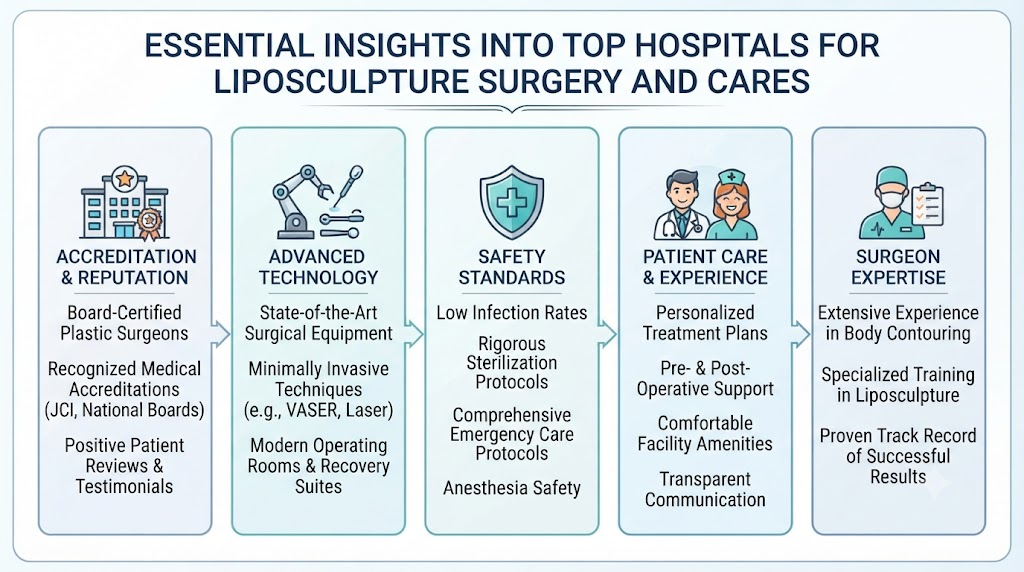
Factors to Consider When Choosing Liposculpture Hospitals
Evaluating medical facilities for aesthetic procedures requires examining several core pillars of safety and clinical excellence:
Experienced Plastic Surgeons
The skill of the operating surgeon is the single most important factor in achieving safe, balanced outcomes:
- Board Certification: Ensuring the surgeon holds recognized credentials in plastic and reconstructive surgery.
- Surgical Training: Specialized fellowship training focusing on aesthetic body contouring.
- Consultation Approach: Transparent communication, realistic expectation setting, and thorough physical evaluations.
Hospital Safety Standards
Accredited facilities provide essential safeguards, including:
- Accredited Facilities: Operating rooms meeting strict national healthcare and surgical standards.
- Qualified Anesthesia Team: Board-certified anesthesiologists monitoring patient safety throughout the operation.
- Emergency Support: Robust infrastructure capable of handling unexpected complications.
- Infection Prevention: Rigorous sterilization protocols and clean-air operating suites.
Advanced Cosmetic Surgery Technology
Modern equipment enhances precision and safety:
- Modern Surgical Equipment: High-grade cannulas, energy-assisted devices, and precise aspiration systems.
- Advanced Imaging: Digital planning and 3D simulation tools used during preoperative consultations.
- Patient Monitoring Systems: State-of-the-art telemetry and vital sign tracking during surgery.
Comprehensive Patient Care
Holistic care encompasses every stage of the medical journey:
- Pre-Surgery Evaluation: Comprehensive health screenings and clearance checks.
- Surgery Planning: Customized surgical mapping tailored to individual anatomy.
- Recovery Guidance: Detailed instructions on wound care, garments, and activity limits.
- Follow-up Consultations: Long-term monitoring of aesthetic results and tissue healing.
How to Choose the Right Cosmetic Surgery Hospital
Navigating the hospital selection process involves looking at objective indicators of quality:
- Surgeon Credentials: Verify board certification, years of experience in body contouring, and professional memberships.
- Hospital Facilities: Inspect operating room standards, safety protocols, and dedicated recovery suites.
- Patient Communication: Ensure the medical team provides clear explanations of risks, limitations, and realistic outcomes without high-pressure sales tactics.
Hospital Selection Checklist
| Factor | Why It Matters |
| Qualified Plastic Surgeons | Ensures expert anatomical assessment and safe surgical execution. |
| Safety Standards | Guarantees sterile operating environments and accredited facility protocols. |
| Advanced Equipment | Supports precision fat removal and modern body contouring techniques. |
| Consultation Quality | Fosters realistic expectations and transparent communication about goals. |
| Aftercare Support | Provides structured postoperative monitoring and recovery guidance. |
| Patient Reviews | Offers qualitative insights into staff attentiveness and facility comfort. |
Benefits of Liposculpture Surgery
For suitable candidates, liposculpture offers several distinct advantages:
- Improved Body Contour: Smoother lines and enhanced definition in treated areas.
- Better Body Proportions: Restoring aesthetic balance between different regions of the physique.
- Removal of Localized Fat Deposits: Eliminating persistent fat pockets that resist diet and exercise.
- Enhanced Confidence: Supporting a positive body image for individuals who have achieved stable weight goals.
Risks and Considerations
As with any surgical procedure, liposculpture carries potential risks that must be carefully considered. According to the Acibadem Hospitals Group, safety depends on appropriate patient selection, experienced surgical care, and proper aftercare.
Possible risks include:
- Swelling and bruising
- Postoperative infection
- Uneven skin contours or asymmetry
- Fluid accumulation (seroma)
- Temporary or permanent changes in skin sensation
- Anesthesia-related complications
Recovery After Liposculpture Surgery
Navigating recovery requires patience and adherence to clinical guidelines:
- Compression Garment Use: Wearing prescribed garments continuously for several weeks to reduce swelling and assist skin contraction.
- Follow-up Appointments: Attending all scheduled wound checks and suture removal visits.
- Managing Swelling: Understanding that residual swelling can take several months to fully resolve before final contours emerge.
- Returning to Exercise: Gradually reintroducing light walking and refraining from strenuous workouts until cleared by the surgeon.
- Maintaining Healthy Habits: Sustaining a balanced diet and regular physical activity to preserve long-term body contouring results.
Common Mistakes Patients Should Avoid
- Choosing Only Based on Low Cost: Prioritizing price over facility accreditation and surgeon qualifications can compromise safety.
- Ignoring Surgeon Qualifications: Failing to verify board certification and specialized training in body contouring.
- Expecting Weight-Loss Results: Believing liposculpture is a substitute for weight management or bariatric interventions.
- Skipping Consultations: Rushing into surgery without an adequate preoperative discussion of risks and anatomical limitations.
- Not Following Recovery Instructions: Discontinuing compression garments early or resuming heavy exercise too soon against medical advice.
Myths vs Facts Table
| Myth | Fact |
| Liposculpture is a weight-loss procedure. | It is a body contouring technique designed to remove localized fat, not to treat generalized obesity. |
| Anyone can undergo liposculpture. | Candidacy depends on overall health, stable weight, skin elasticity, and medical evaluation. |
| Results are visible immediately after surgery. | Final appearance takes time to emerge as postoperative swelling and bruising gradually subside. |
| Choosing the cheapest option is best. | Surgeon expertise, facility safety standards, and sterile infrastructure are far more critical. |
| Fat removed by liposculpture can grow back in the same spot. | Removed fat cells do not regenerate, but remaining fat cells in the body can expand with significant weight gain. |
| Liposculpture completely removes cellulite and loose skin. | The procedure targets subcutaneous fat and does not correct severe skin laxity or surface cellulite. |
| Recovery is instantaneous with zero downtime. | Healing requires rest, compression wear, and a gradual return to normal physical activities over several weeks. |
How BESTCOSMETICHOSPITALS Helps Patients
Navigating aesthetic surgery options requires access to trustworthy, objective information. Platforms like BESTCOSMETICHOSPITALS assist individuals by providing:
- Comprehensive cosmetic hospital discovery resources
- Treatment awareness and educational guides on body contouring
- Plastic surgeon background information and credential insights
- Hospital comparison support to evaluate facility capabilities
- Guidance to help patients understand aesthetic procedures and prepare for consultations
FAQs
1.What is liposculpture surgery?
Liposculpture is a cosmetic body-contouring procedure that removes localized fat deposits and artfully reshapes specific areas to improve overall body proportion and contour.
2.How is liposculpture different from liposuction?
While traditional liposuction focuses primarily on extracting larger volumes of fat, liposculpture emphasizes artistic precision, muscular definition, and fine contouring.
3.Who is a good candidate for liposculpture?
Good candidates are near their ideal body weight, possess good skin elasticity, have realistic expectations, and struggle with stubborn fat pockets resistant to diet and exercise.
4.Which body areas can be treated?
Common treatment areas include the abdomen, waist, flanks, thighs, upper arms, back, and sub-mental chin/neck region.
5.Is liposculpture a weight-loss procedure?
No, it is a body-shaping technique intended for localized fat reduction rather than treating obesity or replacing healthy lifestyle habits.
6.How do I choose a liposculpture hospital?
Evaluate facility accreditation, safety standards, operating room infrastructure, anesthesia support, and the qualifications of the plastic surgery staff.
7.Why is surgeon experience important?
Experienced plastic surgeons possess the technical skill and aesthetic judgment required to achieve smooth, symmetrical contours while minimizing surgical risks.
8.What happens during liposculpture consultation?
The surgeon reviews your medical history, assesses your physical anatomy, discusses your aesthetic goals, and formulates a customized treatment plan.
9.How long does recovery take?
Initial recovery typically spans one to three weeks, though residual swelling can take several months to fully resolve.
10.What are the possible risks?
Risks include swelling, bruising, infection, asymmetry, fluid accumulation, and temporary changes in skin sensation.
Final Conclusion
Selecting the appropriate healthcare facility is a vital step for individuals considering body contouring procedures. Evaluating the top hospitals for liposculpture surgery involves careful consideration of plastic surgeon expertise, accredited facility safety standards, advanced technology, and comprehensive postoperative care. Prioritizing institutions that emphasize realistic expectations and patient safety helps support positive treatment experiences.