Introduction
Significant structural shifts in our bodies—whether resulting from a profound weight-loss milestone, the beautiful journey of pregnancy, or the natural timeline of aging—often leave behind physical reminders that diet and exercise alone cannot address. When stretched abdominal skin loses its structural elasticity and underlying core muscles separate, conventional fitness regimens hit a hard wall. For individuals seeking to reclaim their pre-pregnancy form or complete a major body transformation, tummy tuck surgery offers an impactful, permanent surgical answer. However, because this is a highly detailed, major structural procedure, finding a top-tier facility with specialized plastic surgeons is the single most critical factor in ensuring your safety and aesthetic success.
Navigating the global landscape of elective clinical care requires access to transparent, unbiased, and comprehensive healthcare resources. Dedicated informational platforms like BestCosmeticHospitals serve as a vital tool during this research phase. The platform helps users discover cosmetic surgery hospitals, compare treatment options, explore surgeons, review procedures such as tummy tucks, body contouring, facial surgery, and aesthetic treatments, and make informed cosmetic care decisions. By understanding the different surgical variations, technological choices, and institutional safety standards available, you can confidently choose a center equipped to provide excellent care.
Why Choosing the Right Hospital for Tummy Tuck Surgery Matters
An abdominoplasty is a complex surgical procedure that requires modifying multiple tissue layers, including the skin, subcutaneous fat, and the deep abdominal wall fascia. Because it involves wide structural modification and meticulous closure techniques, your choice of medical center directly impacts your surgical outcome, scar quality, and overall safety. High-performing best cosmetic surgery hospitals stand out by consistently maintaining lower complication rates, such as minimized risks of seromas, hematomas, and wound-healing delays, while delivering symmetrical, natural-looking aesthetic results.
Furthermore, an elite hospital looks past basic marketing claims, prioritizing absolute patient safety by housing state-of-the-art operative infrastructure and employing specialized medical support teams. Complications during an invasive procedure can happen at any time, making it essential to have access to board-certified anesthesia providers, fully equipped surgical suites, and advanced post-operative recovery units. Choosing an accredited hospital ensures that if any surgical or anesthetic issue arises, the facility has the immediate resources, personnel, and emergency protocols in place to protect your well-being.
What Is Tummy Tuck Surgery (Abdominoplasty)?
To build realistic expectations, patients must understand what an abdominoplasty actually entails. A tummy tuck is a major corrective surgical procedure designed to reshape the midsection by removing excess skin and fat while permanently repairing weakened or separated core muscles.
Procedure Overview
During a standard tummy tuck, a plastic surgeon makes a precise horizontal incision across the lower pubic region. Through this opening, the surgeon lifts the abdominal skin and fat away from the underlying tissue wall, exposing the abdominal muscles. The surgeon then pulls these stretched muscles together and tightens them using durable, permanent sutures, creating a firm internal foundation. Finally, the redundant, loose skin is pulled down, trimmed away, and the remaining tissue is carefully re-anchored, which often includes repositioning the belly button to ensure a natural-looking result.
Who May Benefit and Common Goals
This procedure is specifically designed for individuals dealing with structural issues that cannot be resolved through targeted core exercises or strict dieting. The primary goals of a tummy tuck include:
- Removing stretched, redundant apron-like skin (panniculus) from the lower midsection.
- Repairing diastasis recti (the physical separation of the left and right abdominal walls).
- Sculpting a smoother, flatter, and more proportionate waistline contour.
- Eliminating lower abdominal stretch marks that sit within the targeted excess tissue zone.
Types of Tummy Tuck Procedures
Abdominal anatomy varies significantly from person to person. As a result, leading plastic surgeons do not use a one-size-fits-all approach. Instead, they choose from several distinct variations of abdominoplasty surgery to tailor the procedure to each patient’s specific tissue characteristics and structural goals.
                  ┌─── Mini Tummy Tuck (Lower skin focus only)
                  ├─── Full Tummy Tuck (Muscle repair + full midsection skin)
Abdominoplasty ───┼─── Extended Tummy Tuck (Targets abdomen + love handles)
                  ├─── Circumferential (360-degree belt lift after massive weight loss)
                  └─── Fleur-de-lis (Vertical + horizontal skin removal)
Full Tummy Tuck
The standard or full abdominoplasty is the most frequently performed variation. It addresses the entire abdominal region, from the pubic area up to the ribcage. It requires a hip-to-hip horizontal incision and a second incision around the navel. This approach allows for comprehensive muscle tightening across the upper and lower abdomen, alongside significant loose skin removal surgery.
Mini Tummy Tuck
A minimally invasive tummy tuck or mini-abdominoplasty is designed for patients with good muscle tone who only have a small amount of loose skin located below the belly button. It uses a shorter horizontal incision, similar to a C-section scar, and does not require an incision around the navel. While it offers a faster recovery path, it does not allow for upper abdominal muscle tightening.
Extended Tummy Tuck
The extended abdominoplasty expands on the standard approach by lengthening the horizontal incision past the hip bones toward the lower back. This addition allows the surgeon to address and trim away excess skin and fat along the flanks (love handles) and outer upper thighs, providing comprehensive body contouring surgery across the entire midsection.
Circumferential Tummy Tuck (Belt Lipectomy)
Often referred to as a 360-degree belt lift, this extensive procedure is ideal for patients who have experienced massive weight loss. The incision extends completely around the circumference of the waist. This allows the surgical team to lift and tighten the buttocks and outer thighs while simultaneously flattening the front of the abdomen.
Fleur-de-lis Tummy Tuck
When a patient has a significant amount of loose, hanging skin that stretches both horizontally and vertically—a common occurrence after bariatric weight-loss milestones—a standard horizontal pull is not enough. The Fleur-de-lis approach uses both a traditional lower horizontal incision and a long vertical midline incision, allowing the surgeon to tighten the skin from side-to-side and top-to-bottom for comprehensive abdominal contouring.
Table 1: Types of Tummy Tuck Procedures
| Procedure Type | Primary Benefits | Average Recovery Time | Ideal Candidate Profile |
| Mini Tummy Tuck | Shorter incision; no navel scar; quicker recovery; lower tissue trauma. | $1 – 2$ weeks | Patients with isolated lower abdominal laxity, good upper muscle tone, and minimal fat. |
| Full Tummy Tuck | Comprehensive upper/lower muscle repair; extensive skin removal; repositioned navel. | $2 – 4$ weeks | Women post-pregnancy or individuals with significant muscle separation and loose skin. |
| Extended Tummy Tuck | Contours front abdomen while smoothing out the flanks and lateral lower back. | $3 – 5$ weeks | Patients needing midsection correction alongside lateral tissue tightening. |
| Circumferential (360 Lift) | Lifts the buttocks and outer thighs while completely flat-sculpting the entire trunk. | $4 – 6$ weeks | Massive weight-loss patients with extensive, hanging tissue rings around their midsection. |
| Fleur-de-lis | Trims maximal skin volume along both vertical and horizontal directions. | $4 – 5$ weeks | Individuals with significant horizontal and vertical skin redundancy post-bariatric surgery. |
Signs You May Be a Good Candidate for Tummy Tuck Surgery
While an abdominoplasty can deliver transformative aesthetic results, it is a major surgical procedure that requires candidates to meet specific health and lifestyle criteria before moving forward:
- Stable Baseline Weight: You have maintained a stable, healthy weight for at least six consecutive months, and are close to your long-term body mass index (BMI) goal.
- Good Physical Health: You are free from poorly managed chronic conditions, such as unmanaged type-2 diabetes, severe cardiovascular disease, or active autoimmune disorders that could compromise your body’s healing response.
- Non-Smoker Status: You do not smoke or use nicotine products, or are willing to quit completely for at least 4-6 weeks before and after surgery, as nicotine restricts blood vessels and increases the risk of skin necrosis and wound complications.
- Completed Family Planning: If you are seeking a post-pregnancy tummy tuck, it is highly recommended that you wait until you are finished having children. Future pregnancies can restretch repaired core muscles and skin, reversing the benefits of the surgery.
- Realistic Expectations: You understand that while an abdominoplasty can dramatically improve your body shape, its primary goal is structural contouring rather than serving as a tool for primary weight loss.
Common Reasons Patients Choose Abdominoplasty
Most patients seek out an abdominoplasty because they are facing structural changes in their midsection that cannot be resolved through lifestyle changes alone.
Post-Pregnancy Body Changes
Pregnancy causes significant structural changes in the abdominal wall. As the uterus expands, the abdominal skin and connective tissues stretch to their limits, which can permanently break down collagen and elastin fibers. This stretching often causes the rectus abdominis muscles to separate along the vertical midline—a condition known as diastasis recti. Once this separation occurs, the core loses its structural support, resulting in a persistent post-pregnancy belly poof that cannot be flattened through exercise alone.
Major Weight Loss
Losing a substantial amount of weight through diet, exercise, or bariatric surgery is a major milestone for your health. However, because skin can only shrink so much after being stretched for a long time, massive weight loss often leaves behind large folds of redundant skin around the midsection. This hanging skin can cause physical discomfort, make finding clothes that fit difficult, and cause chronic skin irritation or rashes in the tissue folds, making cosmetic body reshaping a practical next step for comfort and confidence.
[Stretched Tissue Over Time] ──> Broken Collagen/Elastin ──> Permanent Loose Skin Fold ──> Requires Surgical Excision
What Makes the Best Hospitals for Tummy Tuck Surgery Stand Out?
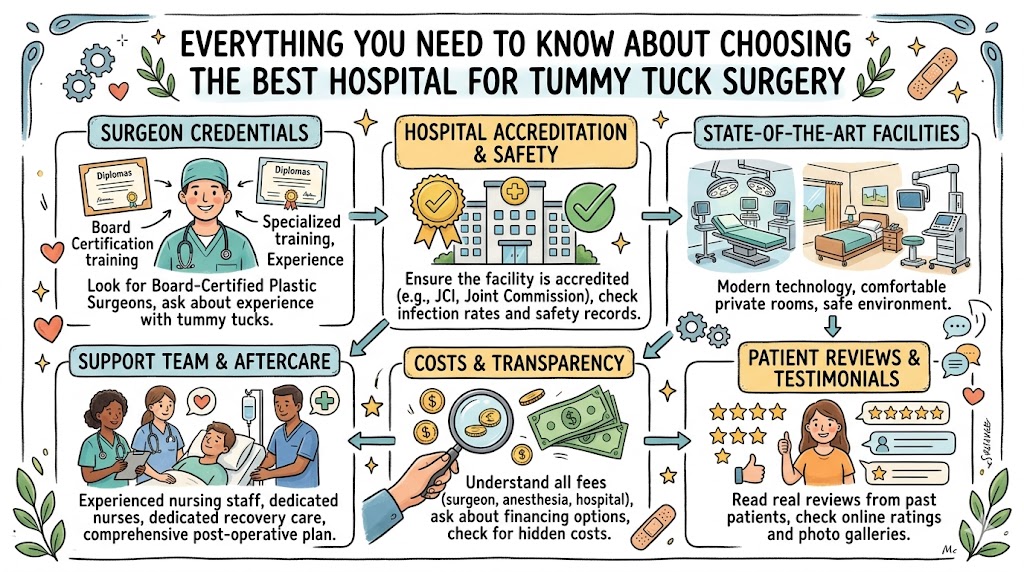
When searching for the best hospitals for tummy tuck surgery, look beyond basic clinic advertisements. Elite cosmetic and plastic surgery hospitals stand out through their strict commitment to international safety standards, surgeon selection, and comprehensive care.
Board-Certified Plastic Surgeons
Top facilities employ specialized tummy tuck specialists who hold active board certifications from recognized medical boards (such as the American Board of Plastic Surgery or equivalent international regulatory bodies). These specialists have completed rigorous, accredited residencies and fellowships dedicated exclusively to plastic and reconstructive surgery.
Advanced Surgical Infrastructure
The best hospitals operate out of fully accredited, state-of-the-art surgical suites that maintain strict sterile controls. Look for facilities that utilize board-certified physician anesthesiologists (MD/DO) rather than relying solely on nurse anesthetists without direct physician supervision, ensuring expert management of your safety throughout the procedure.
Comprehensive Post-Operative Care
Excellent outcomes depend heavily on organized, detail-oriented care during early recovery. Top hospitals provide specialized post-anesthesia units staffed by nurses trained in plastic surgery care, direct access to your surgical team for any questions, and structured scar-management therapies to ensure optimal healing.
Advanced Technologies Used in Modern Tummy Tuck Procedures
Modern cosmetic centers combine classic surgical skill with advanced technological tools to improve precision, shorten recovery times, and optimize scar healing.
- 3D Body Imaging and Simulations: Using high-definition 3D camera systems like Vectra, surgeons can create an accurate digital model of your current body shape. This allows them to simulate potential surgical outcomes during your consultation, helping to align aesthetic goals and plan precise incision lines.
- Internal Progressing Sutures (Drainless Techniques): Traditional tummy tucks require placing flexible plastic drains under the skin to prevent fluid buildup. Advanced centers often use a drainless technique, applying rows of internal tension-holding sutures to secure the lifted tissue to the muscle wall. This eliminates the need for uncomfortable external drains and simplifies early recovery.
- Advanced Liposuction Integration (Lipoabdominoplasty): Combining traditional muscle repair with power-assisted or VASER ultrasound liposuction allows surgeons to safely thin out fat layers across the upper abdomen and flanks while preserving crucial blood vessels, resulting in a more sculpted, natural waistline contour.
- Laser and Energy-Based Scar Therapy: To optimize scar healing, leading hospitals introduce advanced laser treatments (such as fractional CO2 or vascular lasers) early in the recovery process to minimize redness, flatten scar tissue, and improve long-term skin texture.
Benefits of Choosing Leading Cosmetic Surgery Hospitals
Entrusting your body transformation to an established, top-tier medical center offers several key clinical and practical advantages:
- Minimized Wound-Healing Risks: High-volume, specialized hospitals maintain low rates of skin separation, infection, and seroma formation.
- Access to Multi-Specialty Support: If you have minor underlying health conditions, top-tier hospitals have internal medicine specialists readily available to manage your health safely around the time of surgery.
- Higher Rates of Long-Term Satisfaction: Expert surgeons ensure accurate muscle tightening and precise scar placement, leading to natural-looking contours that age gracefully.
- Comprehensive, All-Inclusive Care: Leading hospitals bundle pre-operative testing, post-surgical support garments, follow-up appointments, and scar treatments into a clear, unified care path.
Risks and Complications of Tummy Tuck Surgery
While an abdominoplasty is a highly reliable procedure when performed by an expert, it is an invasive surgery that carries inherent risks. Patients should review and consider these potential complications before moving forward:
- Seroma and Hematoma Formation: Fluid or blood can occasionally collect beneath the skin layer during early healing, requiring a brief in-office needle aspiration to clear the fluid safely.
- Wound Healing Delays or Necrosis: The tissue at the edge of the lower horizontal incision requires excellent circulation to heal. If blood flow is compromised—a risk that is significantly higher among smokers—the wound edge can experience delayed healing or small areas of skin loss, which require specialized wound care.
- Asymmetry or Positioning Shifts: Natural variations in muscle tone or uneven skin tension can occasionally cause minor asymmetry along the scar line or slight shifts in the final position of the belly button.
- Deep Vein Thrombosis (DVT): Because patients are less mobile during the first few days of recovery, blood clots can potentially form in the deep leg veins. Hospitals counter this risk by using pneumatic compression boots during surgery and encouraging gentle walking starting on Day 1.
- Altered Skin Sensation: The tiny nerve fibers that provide feeling to the lower abdominal skin are naturally divided during the surgery. It is common to experience temporary numbness or altered sensation across the midsection, which typically resolves gradually over 6 to 18 months as the nerves heal.
Factors Patients Should Consider Before Choosing a Hospital
Selecting the right hospital requires evaluating key safety credentials, procedural numbers, and logistical factors against your personal health needs.
Table 2: Factors to Consider Before Choosing a Cosmetic Surgery Hospital
| Selection Factor | Clinical Importance | Essential Questions to Ask the Hospital |
| Facility Accreditation | Ensures the operating suites meet strict national and international sterile safety guidelines. | “Is your surgical facility fully accredited by the AAAASF, Joint Commission, or an equivalent body?” |
| Surgeon Fellowship & Volume | High annual volumes in body sculpting surgery ensure refined technique and fewer errors. | “How many abdominoplasty procedures does my surgeon perform each year?” |
| Anesthesia Provider Type | Having a physician-led team reduces risks and improves safety during deep sedation. | “Will my anesthesia be provided and managed directly by a board-certified physician anesthesiologist?” |
| Emergency Preparedness | Provides peace of mind that emergency resources are available on-site if an issue arises. | “What emergency monitoring equipment and protocols are in place if a complication happens during surgery?” |
Questions Patients Should Ask Their Cosmetic Surgeon
Your initial consultation is a valuable opportunity to evaluate your surgeon’s communication style, technical expertise, and approach to safety. Use this practical checklist to help guide your discussion:
- “Am I an ideal candidate for a full, mini, or extended tummy tuck based on my tissue laxity?”
- “Do you recommend a traditional drained approach, or am I a candidate for a drainless tummy tuck?”
- “Can I review a comprehensive portfolio of your before-and-after photos for patients with a body shape similar to mine?”
- “Where exactly will my final horizontal scar sit, and will it be easily concealed within standard swimwear or underwear?”
- “What is your clinic’s clear policy regarding revision surgeries if we encounter significant asymmetry or wound healing issues?”
- “How many weeks of total downtime must I arrange with my employer before I can safely return to work?”
Cost Factors Associated With Tummy Tuck Surgery
Because an abdominoplasty is typically an elective cosmetic procedure, its costs are generally not covered by traditional health insurance plans. The total financial investment can vary widely based on several key factors:
Geographic and Facility Variations
Surgical pricing often reflects local economic factors and the reputation of the medical center. Elite, high-volume cosmetic hospitals in major metropolitan areas naturally maintain higher facility fees due to their specialized infrastructure, advanced safety equipment, and premium post-operative care options.
Breakdown of Primary Expenses
- Surgeon’s Fee: Reflects the surgeon’s years of specialized training, technical skill, and individual success rates.
- Anesthesia Fees: Covers the medications used and the specialized monitoring provided by your anesthesiologist during the procedure.
- Operating Room Facility Costs: Includes the specialized tools, sterile supplies, and nursing support utilized during your surgery.
- Post-Op Necessities: Covers mandatory surgical compression garments, pain management medications, and follow-up care visits.
Recovery Timeline After Tummy Tuck Surgery
Recovering from a tummy tuck is a phased process that requires patience and a commitment to protecting your healing tissue layers. Following your surgical team’s guidance during this window is essential for ensuring proper muscle healing and achieving a refined final scar line.
Table 4: Recovery Timeline After Tummy Tuck Surgery
| Recovery Stage | What to Expect Post-Operative | Recommended Actions & Patient Guidelines |
| Days 1–3 | Peak tightness; localized soreness; walking with a natural forward bend to protect the skin closure. | Rest comfortably; take short, gentle walks every two hours; stay on top of your prescribed pain management schedule. |
| Weeks 1–2 | Surgical drains are typically removed (if used); bruising and swelling peak; able to gradually stand straighter. | Wear your compression garment 24/7; avoid driving while taking prescription pain medications; perform light office work from home. |
| Weeks 2–4 | Energy levels begin to return to normal; incision line closes completely; minimal residual pain. | Start gentle scar massage therapies if cleared by your doctor; avoid lifting anything heavier than 10 pounds. |
| Weeks 4–6 | Internal muscle walls continue to strengthen; swelling decreases noticeability. | Gradually transition out of your compression garment; return to low-impact cardiovascular exercises like walking on a flat surface. |
| Months 2–6 | Residual deep tissue swelling resolves; the shape of the waistline continues to refine. | Return to full fitness routines, including core exercises; protect your healing scar from direct sunlight using SPF 50+. |
Lifestyle Tips for Maintaining Your Results
An abdominoplasty permanently alters your abdominal structure, but maintaining your new contour over the long term requires consistent, healthy daily habits:
- Prioritize Core Muscle Stability: Once your surgeon clears you for full physical activity, introduce targeted core exercises like planks and bird-dogs to support your repaired abdominal wall.
- Maintain a Balanced Nutrition Plan: Focus on a diet rich in lean proteins, whole grains, and fresh vegetables to help maintain a stable weight and prevent new visceral fat accumulation.
- Stay Consistently Hydrated: Drink plenty of water throughout the day to support skin health, maintain tissue elasticity, and aid long-term fluid balance.
- Protect Healing Incisions from the Sun: Keep your scar covered or apply high-factor sunscreen (SPF 50+) whenever it is exposed to the sun during the first year, as UV rays can cause permanent darkening or hyperpigmentation of healing scar tissue.
Common Myths vs. Facts About Tummy Tuck Surgery
- Myth: A tummy tuck is a quick and effective alternative to weight-loss surgery.
- Fact: A tummy tuck is designed for body contouring, not weight loss. It is intended to remove loose skin and tighten stretched muscles for patients who are already close to their long-term weight goal.
- Myth: The scars from a tummy tuck will completely disappear after a few months.
- Fact: Abdominoplasty scars are permanent and can take 12 to 18 months to fully mature, fade, and soften. Skilled surgeons carefully place incisions low on the hip line so they are easily hidden by standard swimwear or underwear.
- Myth: You can achieve identical contouring results through intensive abdominal exercise alone.
- Fact: While exercise can strengthen and build muscle, it cannot shrink permanently stretched skin or repair physically separated fascia (diastasis recti), making surgical correction necessary for these structural issues.
- Myth: A tummy tuck is a minor, simple procedure that carries very little downtime.
- Fact: An abdominoplasty is a major surgical procedure that requires modifying multiple tissue layers, typically requiring 2 to 4 weeks of dedicated downtime before you can return to normal daily routines.
Latest Innovations in Body Contouring and Cosmetic Surgery
The field of aesthetic plastic surgery continues to innovate, introducing newer techniques designed to improve safety, refine contours, and simplify recovery.
High-Definition Liposculpture Integration
Modern body reshaping frequently combines standard skin tightening with high-definition liposculpture. This advanced approach allows surgeons to precisely sculpt the natural vertical lines of the abdominal muscles, avoiding a flat look and creating an athletic, natural-looking three-dimensional contour.
High-Retention Micro-Fat Grafting
Surgeons are increasingly using a patient’s own fat cells, harvested during the liposuction phase of a tummy tuck, to refine surrounding areas. This purified fat can be strategically transferred to the hips or buttocks to correct volume deficits or smooth out irregularities, providing comprehensive, balanced contouring across the entire lower body.
Future Trends in Cosmetic Body Reshaping
Looking forward, the future of cosmetic surgery is moving toward combining traditional surgical skills with innovative biological therapies to accelerate healing and minimize scarring.
Cold Atmospheric Plasma (CAP) Therapies
Researchers are evaluating the use of cold atmospheric plasma devices during tissue closure. This next-generation technology aims to sterilize the surgical site instantly, stimulate rapid cellular regeneration at the incision line, and improve early wound healing to help minimize long-term scar width.
Bio-Absorbable Internal Suspension Scaffolds
The development of advanced, bio-absorbable internal mesh matrices offers an exciting glimpse into the future of core repair. These specialized scaffolds are designed to provide temporary reinforcement to weakened abdominal muscles during early healing, gradually dissolving over several months as the body’s natural collagen matures to create a strong, durable foundation.
Expert Recommendations
Clinical guidance from leading international plastic surgery societies emphasizes a cautious, safety-focused path to body reshaping:
Clinical Consensus: “An abdominoplasty can deliver excellent, life-changing aesthetic benefits, but it should always be approached with safety as the top priority. True success relies on matching the right procedure type to the patient’s specific tissue characteristics and structural needs, rather than pursuing the shortest incision or the lowest price. Patients achieve the most reliable, natural-looking outcomes when they choose board-certified plastic surgeons operating within fully accredited hospitals, where advanced tools and dedicated support teams are readily available to ensure safety throughout the entire care path.”
Common Mistakes Patients Should Avoid
Achieving your ideal aesthetic result relies on making well-informed decisions before your procedure and practicing good judgment during recovery.
- Rushing into Surgery Too Soon After Giving Birth: It is highly recommended to wait at least 6 to 12 months after childbirth before undergoing a tummy tuck. This allows your hormones to balance, your weight to stabilize, and your tissues to naturally contract, ensuring a safer and more accurate procedure.
- Hiding Your Full Medical History: Always provide your surgical and anesthesia teams with an honest, complete list of your medical history, current medications, vitamins, and tobacco use. Concealing health details can increase your risk of avoidable complications during anesthesia and early recovery.
- Returning to Heavy Physical Activity Prematurely: Do not engage in strenuous lifting, running, or intensive core exercises until your surgeon gives you explicit clearance. Pushing your body too hard too early can strain healing muscle repairs, cause internal bleeding, or widen your final scar.
- Failing to Arrange Help for Early Recovery: During the first 3 to 5 days after surgery, your mobility will be limited, and you will not be able to lift heavy items safely. It is important to arrange for a trusted family member or caregiver to assist you with daily tasks and household logistics during this early window.
Patient Safety Checklist
Proper preparation helps reduce stress, protects your health during the procedure, and sets a strong foundation for smooth healing.
Pre-Operative Preparation
- Verify Board Certifications: Confirm that your operating surgeon holds active certifications from an accredited, national plastic surgery board.
- Complete Clearance Testing: Complete all required laboratory blood work, mammograms, or EKGs requested by your care team in a timely manner.
- Adjust Medications: Stop taking blood-thinning supplements, aspirin, and NSAIDs exactly when directed by your doctor to reduce bleeding risks.
- Maintain Sterile Routine: Wash with prescribed chlorhexidine antibacterial soap before arriving at the surgical center to lower skin infection risks.
Post-Operative Safety Arrangements
- Confirm Transport: Arrange for a responsible adult to drive you home from the hospital and stay with you for at least the first 24 hours.
- Set Up Your Living Space: Arrange your bed with plenty of pillows to help you rest comfortably with your head and knees slightly elevated, which helps reduce tension on your healing midsection.
- Organize Your Compression Wear: Keep your post-surgical compression garments clean, well-fitted, and ready to wear exactly as directed by your surgeon.
- Keep Emergency Contacts Ready: Place your clinic’s emergency numbers and follow-up schedule in an easily accessible spot on your phone or refrigerator.
Key Takeaways
- A Complete Repair: A tummy tuck focuses on three key areas: removing excess hanging skin, eliminating stubborn fat deposits, and permanently tightening separated core muscles.
- Prioritize Board Certification: Always choose a surgeon who holds active board certifications in plastic surgery and maintains a high volume of body contouring procedures.
- Plan Around Personal Milestones: For the best long-term results, schedule your procedure after you have completed family planning and reached a stable baseline weight.
- Respect the Healing Window: Plan for 2 to 4 weeks of dedicated downtime, and wear your compression garments consistently to support your tissue layers as they heal.
- Invest in Safety Infrastructure: Choose accredited hospitals that utilize physician anesthesiologists and feature fully equipped recovery units to protect your safety throughout the process.
Frequently Asked Questions
1. What is the difference between a tummy tuck and a panniculectomy?
A tummy tuck is an aesthetic and functional procedure that removes excess skin and fat while permanently tightening separated abdominal muscles to reshape the waistline. A panniculectomy is a reconstructive procedure focused solely on removing a large, hanging apron of excess skin (panniculus) that causes chronic irritation or rashes, without tightening the underlying core muscles.
2. How much pain should I expect after a tummy tuck?
Because a tummy tuck involves repairing abdominal muscles, you will experience noticeable soreness and tightness during the first 3 to 5 days. Your surgical team will provide a comprehensive pain management plan, which may include long-acting local nerve blocks during surgery and prescription medications to keep you comfortable during early recovery.
3. Can I get a tummy tuck if I plan to have children in the future?
While it is physically possible, it is highly recommended to wait until you are finished having children before undergoing an abdominoplasty. A future pregnancy will restretch the repaired abdominal muscles and skin layers, which can reverse the aesthetic benefits of the procedure.
4. Will a tummy tuck remove all of my abdominal stretch marks?
A tummy tuck will remove stretch marks that are located within the section of excess skin being trimmed away, which typically covers the area below the belly button. Any stretch marks located on the upper abdomen will be pulled lower but will remain visible.
5. What is diastasis recti, and can it be corrected without surgery?
Diastasis recti is the physical separation of the left and right sides of the rectus abdominis muscle, often caused by the intense internal pressure of pregnancy. While physical therapy can help improve deep core stability, it cannot pull permanently stretched connective tissues back together. A tummy tuck uses durable sutures to surgically bring the muscles back into alignment.
6. How long must I wait to return to work after surgery?
If your job is sedentary or desk-based, you can typically return to work within 2 weeks, provided you avoid heavy lifting or long commutes. If your work involves physical labor, standing for long periods, or heavy lifting, you will need to arrange for 4 to 6 weeks of recovery time before returning.
7. Why do I need to walk with a slight forward bend during early recovery?
During a full tummy tuck, a significant amount of loose skin is removed, and the remaining tissue is pulled down tightly. Walking with a slight forward bend for the first 5 to 10 days helps protect the lower horizontal incision line from excessive tension, ensuring optimal healing and a thinner scar.
8. What are the benefits of a drainless tummy tuck?
A drainless tummy tuck uses multiple rows of advanced internal sutures to gently secure the lifted skin layer directly to the underlying muscle wall. This eliminates the open space where fluid could accumulate, removing the need for uncomfortable external plastic bulbs and tubes, which helps simplify wound care during early recovery.
9. Will a tummy tuck help me lose a large amount of weight?
No. A tummy tuck is a structural body contouring procedure designed to remove excess skin and tighten muscles, not a primary tool for weight loss. Ideal candidates should already be close to their stable, long-term weight goal before scheduling surgery.
10. How long do I need to wear the post-surgical compression garment?
Most plastic surgeons recommend wearing a specialized compression garment or abdominal binder 24/7 for the first 4 to 6 weeks, removing it only to shower. The compression helps minimize fluid buildup, supports your healing muscles, and helps the skin conform smoothly to your new body shape.
11. Can a tummy tuck be safely combined with a breast lift?
Yes, combining a tummy tuck with a breast lift or breast augmentation is a common approach frequently referred to as a “Mommy Makeover.” Combining these procedures allows you to achieve comprehensive upper and lower body rejuvenation under a single anesthesia session and recovery window, provided you meet all safety criteria.
12. Are the aesthetic results of a tummy tuck permanent?
The structural changes made during a tummy tuck—including the removal of excess skin cells and the tightening of the abdominal wall—are permanent. However, experiencing significant weight fluctuations or a future pregnancy can restretch the remaining tissue, making a stable lifestyle essential for preserving your results.
13. What steps can I take to ensure my surgical scar heals as thinly as possible?
Once your horizontal incision has fully closed and your surgeon gives clear authorization (usually around week 3 or 4), you can begin using medical-grade silicone gel sheets, performing regular scar massage, and keeping the area protected from direct sunlight using SPF 50+ sunscreen for the first year.
14. What are the early warning signs of a blood clot or DVT?
Warning signs of a deep vein thrombosis (DVT) include sudden swelling, persistent cramping, warmth, or deep redness in one calf or thigh. If a clot travels to the lungs (a pulmonary embolism), it can trigger sudden shortness of breath, chest pain, or coughing. Seek emergency medical care immediately if you notice any of these symptoms.
15. How do I determine if a hospital’s surgical facility is fully accredited?
You can confirm a facility’s credentials by checking public registration databases provided by recognized healthcare accreditation bodies, such as the Joint Commission International (JCI), the American Association for Accreditation of Ambulatory Surgery Facilities (AAAASF), or local government medical registries, which ensure the facility meets strict sterile safety guidelines.
Conclusion
Tummy tuck surgery is a highly effective, transformative procedure that can address loose skin, stubborn fat deposits, and separated core muscles to restore a firm, proportionate midsection. Because an abdominoplasty requires a high degree of technical precision and careful recovery management, achieving a safe, beautiful outcome relies on making well-informed choices throughout your care journey.Rather than focusing on marketing promotions or chasing the lowest price, prioritize long-term safety and artistic expertise. Utilizing trusted healthcare research platforms like BestCosmeticHospitals.com allows you to verify facility accreditations, compare treatment options, and connect with board-certified plastic surgery specialists. By working closely with an expert team, matching the procedure to your unique anatomy, and following structured recovery guidelines, you can protect your health and enjoy a confident, active future with results that last.