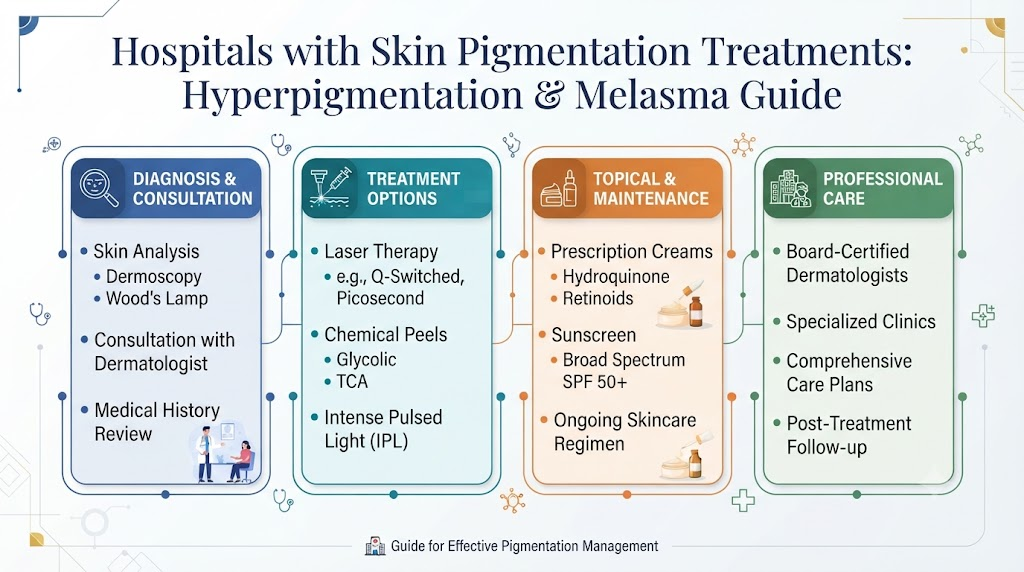
Introduction
Discoloration, dark spots, and uneven skin tone are among the most common aesthetic and clinical skin concerns worldwide. Changes in skin coloration can develop quietly over time due to sun exposure, hormonal fluctuations, inflammation, or underlying health conditions. Because the human skin is a complex organ with multiple layers, pigmentation changes can exist at varying depths, making one-size-fits-all retail products ineffective or even irritating. Navigating your care with trusted medical resources empowers you to make proactive, well-informed choices for your skin. For reliable educational tools, hospital discovery resources, and cosmetic dermatology guidance, BESTCOSMETICHOSPITALS provides valuable information to help you locate qualified clinical facilities and understand modern treatment options.
What Are Skin Pigmentation Disorders?
Skin pigmentation refers to the natural coloring of human skin tissue, which is primarily determined by a specialized pigment called melanin. Melanin is produced by cells known as melanocytes, located in the lower layer of the epidermis (the skin’s outermost layer). Once produced, melanin is transferred to neighboring skin cells (keratinocytes) to absorb ultraviolet (UV) radiation and protect underlying cellular structures from DNA damage.
When melanocytes become overactive, damaged, or unevenly distributed, skin pigmentation disorders develop. These disorders typically fall into two major categories:
Skin Pigmentation Dynamics
 ├── Hyperpigmentation (Melanin Overproduction)
 │    ├── Epidermal (Superficial - Brown/Tan)
 │    ├── Dermal (Deep - Blue/Grey/Ash)
 │    └── Mixed (Layered Pigment Depth)
 └── Hypopigmentation (Melanin Depletion)
      ├── Localized Loss (e.g., Post-Inflammatory, Vitiligo)
      └── Generalized Loss
- Hyperpigmentation: Characterized by the overproduction or abnormal accumulation of melanin, resulting in darkened patches, spots, or generalized uneven skin tone.
- Hypopigmentation: Characterized by a reduction or complete loss of melanin, causing localized patches of skin to appear lighter than the surrounding tissue.
Because the depth of excess pigment varies—ranging from superficial epidermal deposits to deeper dermal accumulations—dermatological evaluation is essential. Treatment strategies that work well for superficial sun spots may prove ineffective or cause irritation when applied to deep dermal pigmentation. A thorough clinical assessment ensures that therapies are matched precisely to the depth and characteristics of the pigment.
Common Causes of Skin Pigmentation
Understanding what triggers excess melanin production is essential for both treatment and prevention. Pigmentation changes rarely stem from a single factor; they often arise from a combination of internal biological pathways and external environmental exposures.
- Sun Damage (Solar Lentigines): Chronic exposure to ultraviolet (UV) radiation stimulates melanocytes to produce extra melanin as a protective response. Over time, this leads to localized flat, brown spots often referred to as sun spots, age spots, or liver spots.
- Melasma: A common, chronic skin condition characterized by symmetrical brown or gray-brown patches, most frequently appearing on the forehead, cheeks, bridge of the nose, chin, and upper lip. Melasma is heavily driven by hormonal shifts—such as pregnancy, oral contraceptive use, or hormone replacement therapy—and is triggered by UV light and heat.
- Post-Inflammatory Hyperpigmentation (PIH): Darkened flat spots that remain after a skin injury, wound, or inflammatory condition heals. PIH frequently occurs following acne breakouts, eczema flares, insect bites, or aggressive cosmetic procedures.
- Acne Marks: A specific type of post-inflammatory hyperpigmentation that lingers after papules, pustules, or cystic acne lesions clear. These marks can range from pinkish-red to deep brown depending on skin tone.
- Hormonal Changes: Variations in estrogen and progesterone levels alter systemic melanocyte-stimulating pathways, making the skin significantly more sensitive to sun exposure.
- Skin Injuries and Trauma: Thermal burns, friction, superficial cuts, or aggressive chemical exposure can disrupt the epidermal junction, causing melanocytes to leak pigment into surrounding tissue layers.
- Certain Medications: Specific prescription drugs—including nonsteroidal anti-inflammatory drugs (NSAIDs), antimalarials, psychotropic medications, and certain antibiotics—can increase photosensitivity or deposit pigment directly within skin structures.
Types of Pigmentation Treatments
Advanced hospital dermatology departments employ a tiered range of clinical interventions to manage pigmentation, tailored to the patient’s skin type, pigment depth, and overall treatment goals.
Clinical Intervention Spectrum
 ├── Phase 1: Topical Inhibitors (Hydroquinone, Retinoids, Azelaic Acid)
 ├── Phase 2: Surface Exfoliation (Medical Chemical Peels)
 ├── Phase 3: Energy-Based Targeting (Q-Switched, Pico, & Fractional Lasers)
 └── Phase 4: Collagen Renewal & Maintenance (Microneedling & Medical Skincare)
Topical Prescription Medications
Topical therapies serve as the foundation for most pigmentation management plans. These medical formulations work by inhibiting tyrosinase—the primary enzyme responsible for melanin production—or by accelerating cellular turnover to shed existing surface pigment. Common active agents include hydroquinone, topical retinoids (such as tretinoin), azelaic acid, kojic acid, tranexamic acid, and vitamin C formulations.
Chemical Peels
Medical-grade chemical peels involve applying precise acid solutions—such as glycolic acid, salicylic acid, lactic acid, or trichloroacetic acid (TCA)—to exfoliate controlled layers of damaged skin. As the outer epidermal layers peel away, underlying skin with more uniform pigmentation is revealed, while cellular turnover is simultaneously stimulated.
Laser Therapy
Laser procedures deliver concentrated wavelengths of light targeted specifically at melanin chromophores within the skin. The pigment absorbs the light energy, breaks into smaller micro-particles, and is naturally cleared away by the body’s lymphatic system over the following weeks. Options range from non-ablative Q-switched and pico lasers to fractional resurfacing platforms.
Microneedling
Microneedling utilizes fine, sterile needles to create micro-channels in the skin. This triggers a controlled wound-healing cascade that stimulates collagen synthesis and facilitates deeper absorption of topical pigment-lightening serums, making it particularly useful for post-acne marks and texture irregularities.
Medical-Grade Skincare and Combination Therapy
To sustain procedural improvements, dermatologists design customized daily regimens incorporating non-irritating cleansers, potent antioxidants, barrier-repairing moisturizers, and broad-spectrum sunscreens. Most comprehensive hospital protocols combine multiple approaches—such as pairing low-strength chemical peels with targeted topical agents—to address pigment at different skin depths while minimizing irritation.
Pigmentation Treatment Comparison Table
The following summary compares common clinical modalities used in hospital dermatology settings:
| Treatment Option | Primary Purpose | Best Suited For | Expected Process |
| Topical Medications | Inhibits melanin synthesis and accelerates cell turnover. | Mild, superficial hyperpigmentation and early melasma. | Daily home application over several weeks to months. |
| Chemical Peels | Exfoliates outer skin layers to clear surface pigment. | Epidermal sun spots, superficial PIH, and dull texture. | Series of 3–6 clinical applications spaced weeks apart. |
| Laser Therapy | Micro-shatters targeted pigment deposits deep in tissue. | Deep dermal pigment, stubborn sun spots, selected melasma. | Specialized outpatient sessions guided by skin evaluation. |
| Microneedling | Improves skin texture while aiding topical delivery. | Post-acne pigmentation and superficial scarring. | Session series using controlled micro-injury techniques. |
| Medical Skincare | Maintains treatment results and protects the skin barrier. | Long-term care and daily photo-protection for all types. | Ongoing daily morning and evening care routine. |
| Combination Therapy | Addresses pigment across multiple tissue layers simultaneously. | Complex, deep, or resistant hyperpigmentation cases. | Multi-stage plan tailored by your dermatologist. |
Services Offered by Leading Hospitals
Choosing a hospital-based dermatology department ensures access to comprehensive clinical services before, during, and after your procedures.
Comprehensive Dermatology Care Journey
 ├── Step 1: In-Depth Diagnostic Analysis (Digital Imaging & Wood's Lamp)
 ├── Step 2: Individualized Treatment Planning (Topicals, Peels, Lasers)
 ├── Step 3: Clinical Procedure Execution (Sterile & Controlled Setup)
 └── Step 4: Long-Term Maintenance & Sun Safety Counseling
- Specialized Dermatology Consultation: A thorough initial evaluation with a board-certified dermatologist to review your medical history, current skincare habits, medication use, and underlying health factors.
- Comprehensive Skin Assessment: A hands-on clinical examination to identify skin type, assess barrier function, and classify your specific type of hyperpigmentation.
- Digital Skin Analysis: Utilization of advanced spectral imaging systems to view pigment distribution beneath the visible surface, measuring depth and tracking progress over time.
- Laser Pigmentation Procedures: Laser treatments performed in controlled medical suites with precise parameter settings matched to your skin tone.
- Medical Chemical Peel Treatments: Formulated chemical exfoliation procedures administered under medical supervision to ensure consistent application and safety.
- Structured Medical Skincare Programs: Tailored daily routines designed to prepare your skin before procedures and support recovery afterward.
- Follow-Up and Progress Tracking: Regular clinical checkups to evaluate healing, monitor pigment clearance, and adjust treatment parameters as needed.
- Sun Protection Counseling: Patient education on broad-spectrum UV protection, proper application techniques, and strategies to prevent rebound pigmentation.
Advanced Technologies Used
Modern hospital dermatology departments rely on advanced diagnostic and therapeutic technology to deliver accurate, non-invasive, and effective care.
- Digital Skin Imaging Systems: High-definition spectral imaging platforms capture cross-sectional photographs of the skin using polarized and UV light filters, revealing sub-surface pigment deposits and vascular patterns.
- Wood’s Lamp Examination: A diagnostic tool emitting long-wave ultraviolet light that helps dermatologists distinguish between superficial (epidermal) and deep (dermal) pigmentation based on fluorescence patterns.
- Q-Switched Laser Systems: High-intensity lasers that deliver light in ultra-short nanosecond pulses, effectively breaking down dark pigment spots without damaging surrounding skin tissue.
- Pico Laser Technology: Advanced lasers operating in picosecond (trillionths of a second) bursts, delivering photo-acoustic energy to shatter deep pigment particles into fine micro-dust for easier natural clearance.
- Fractional Laser Resurfacing: Systems that target micro-thermal zones within the skin, accelerating natural cellular turnover and collagen production while leaving surrounding tissue intact to speed up healing.
- Medical-Grade Skin Diagnostics: Specialized sensors that measure transepidermal water loss (TEWL), sebum levels, and baseline melanin indexes to ensure treatments protect skin barrier health.
How to Choose the Right Hospital for Skin Pigmentation Treatments
Selecting an appropriate clinical facility is essential when seeking treatment for skin discoloration. Because improper laser settings or unmonitored chemical peels can cause post-inflammatory hyperpigmentation—particularly in deeper skin tones—evaluating a hospital’s clinical standards is critical.
                      ┌─────────────────────────────────────────┐
                      │   Hospital Evaluation Criteria          │
                      └────────────────────┬────────────────────┘
                                           │
         ┌─────────────────────────────────┼─────────────────────────────────┐
         ▼                                 ▼                                 ▼
┌──────────────────┐              ┌──────────────────┐              ┌──────────────────┐
│ Clinical Expertise│             │ Advanced Tech    │              │ Safety Standards │
├──────────────────┤              ├──────────────────┤              ├──────────────────┤
│• Board-certified │              │• Digital skin    │              │• Customized test │
│  dermatologists  │              │  analysis platforms              spots for lasers  │
│• Experience with │              │• Diverse laser   │              │• Comprehensive   │
│  all skin tones  │              │  wavelengths     │              │  aftercare tracking│
└──────────────────┘              └──────────────────┘              └──────────────────┘
When evaluating potential medical centers, consider the following clinical priorities:
- Board-Certified Dermatologists: Ensure procedures are overseen or directly performed by qualified dermatologists with specialized training in cosmetic and medical skin conditions.
- Experience with Diverse Skin Tones: Confirm that the hospital’s clinical team has extensive experience treating dark or pigment-rich skin tones (Fitzpatrick Types IV–VI), which require specific lower-fluence laser protocols and careful chemical selection.
- Comprehensive Diagnostic Tools: Choose facilities that utilize objective digital imaging and light diagnostic tools rather than relying solely on visual examination.
- Modern Equipment Options: Verify that the hospital maintains up-to-date, multi-wavelength laser systems to treat different pigment depths safely.
- Strict Safety Protocols: Look for centers that emphasize pre-treatment skin prep, perform spot tests prior to full laser sessions, and provide clear emergency support if unexpected irritation occurs.
- Structured Follow-Up Care: Select clinics that schedule mandatory follow-up evaluations to monitor skin healing and adjust long-term care plans.
Hospital Selection Checklist
Use this checklist when researching medical centers and discussing care options with clinical staff:
| Feature | What to Look For | Why It Matters |
| Board-Certified Dermatologists | Physician credentials in medical and cosmetic dermatology. | Ensures accurate diagnosis and safe treatment selection. |
| Advanced Laser Technology | Availability of Q-switched, pico, or fractional systems. | Provides appropriate wavelength options for your specific pigment depth. |
| Diagnostic Imaging Capabilities | On-site spectral digital skin imaging and Wood’s lamp diagnostics. | Accurately identifies underlying causes and measures progress over time. |
| Experience with All Skin Types | Proven history of treating darker skin tones safely. | Reduces the risk of post-treatment hyperpigmentation or scarring. |
| Safety and Testing Protocols | Mandatory spot testing and pre-procedure skin preparation regimens. | Helps prevent adverse reactions and tests skin tolerance before full treatments. |
| Structured Aftercare Programs | Clear guidelines, follow-up visits, and access to supportive products. | Protects your investment and maintains treatment results over time. |
What to Expect During Treatment
Understanding the clinical process can help you prepare effectively for your hospital visits and align your expectations with realistic outcomes.
Initial Consultation and Medical Review
Your journey begins with a comprehensive consultation. Your dermatologist will review your medical history, past cosmetic treatments, current prescription medications, lifestyle habits, and sun exposure levels.
Comprehensive Examination and Digital Analysis
Next, your doctor conducts a detailed physical examination of your skin, often utilizing a Wood’s lamp or digital spectral imaging system. This step determines whether your pigment resides in the upper epidermis, deeper dermis, or across both layers.
       Step 1: Consultation & Health History Review
                            │
                            ▼
       Step 2: Digital Imaging & Pigment Depth Analysis
                            │
                            ▼
       Step 3: Diagnosis & Customized Care Plan
                            │
                            ▼
       Step 4: Clinical Treatment Sessions (Peels / Lasers / Topicals)
                            │
                            ▼
       Step 5: Follow-Up Progress Tracking & Photo-Protection
Diagnosis and Personalized Plan Creation
Based on diagnostic findings, your dermatologist establishes a clear diagnosis (such as melasma, solar lentigines, or post-inflammatory hyperpigmentation) and outlines a personalized care plan. This plan detailed the recommended sequence of treatments, expected session counts, associated costs, and home preparation steps.
Treatment Sessions and Progress Evaluation
Clinical procedures—such as laser sessions or chemical peels—are typically scheduled several weeks apart. During each session, your provider carefully monitors your skin’s reaction and adjusts settings as needed. Progress photographs are recorded periodically to track pigment clearance over time.
Recovery and Aftercare
Post-treatment care is just as important as the clinical procedure itself. Proper aftercare protects your skin barrier, supports healing, and prevents secondary discoloration.
- Use Gentle Skincare Products: For several days following a procedure, wash your face with mild, non-foaming, fragrance-free cleansers. Avoid scrub brushes, rough sponges, or physical exfoliants.
- Prioritize Daily Sun Protection: Sun exposure is the primary trigger for pigment recurrence. Apply broad-spectrum, water-resistant sunscreen with an SPF of 30 or higher every morning, even on cloudy days or indoors. Mineral formulations containing zinc oxide or titanium dioxide are often ideal for sensitive, post-procedure skin.
- Moisturize Regularly: Keep treated skin well-hydrated with gentle, barrier-repairing moisturizers containing ceramides, hyaluronic acid, or fatty acids to support cellular repair.
- Avoid Active Acids and Irritants: Pause the use of retinoids, alpha-hydroxy acids (AHAs), beta-hydroxy acids (BHAs), and alcohol-based toners until your dermatologist confirms your skin barrier has fully recovered.
- Do Not Pick or Scratch Healing Skin: If light flaking or micro-crusting occurs after a chemical peel or laser session, allow the skin to shed naturally. Picking at peeling skin significantly increases the risk of scarring and post-inflammatory hyperpigmentation.
- Attend Scheduled Follow-Up Visits: Complete all planned follow-up evaluations so your dermatologist can assess progress, verify barrier recovery, and guide you on when to safely resume your regular skincare routine.
Possible Risks and Side Effects
While hospital-based pigmentation treatments are safe when performed by experienced dermatologists, mild, temporary side effects can occur. Understanding these potential reactions helps you manage recovery with confidence.
- Temporary Redness (Erythema): Mild redness at the treatment site is common following chemical peels or laser sessions and typically resolves within a few hours to days.
- Mild Swelling (Edema): Slight puffiness around sensitive areas, such as the eyes or upper cheeks, may develop after laser therapy but usually subsides within 24 to 48 hours.
- Post-Procedure Skin Irritation: Sensations similar to a mild sunburn, including warmth, tightness, or temporary stinging, are common as the outer skin layers heal.
- Transient Pigment Fluctuations: In some cases, treated spots may temporarily darken before sloughing off or lightening. Occasionally, temporary lighter patches (hypopigmentation) can develop if the skin responds strongly to treatment.
- Need for Multiple Treatment Sessions: Deep or complex pigmentation conditions like melasma rarely resolve after a single session. Achieving noticeable improvement typically requires a series of treatments combined with consistent home care.
Communicating promptly with your healthcare team if unexpected irritation occurs ensures that your care plan is adjusted safely.
How BESTCOSMETICHOSPITALS Helps Patients
Navigating hospital options and understanding cosmetic dermatology procedures can feel overwhelming. Platform resources help simplify your search and provide clear, reliable guidance.
- Hospital Discovery Tools: Access organized information about specialized cosmetic dermatology centers, hospital clinics, and skin care facilities.
- Dermatology Program Insights: Learn how different medical centers structure their skin care programs, treatment technologies, and clinical teams.
- Patient-Centered Education: Read clear, medically accurate explanations of hyperpigmentation, melasma, laser options, and post-procedure recovery.
- Cosmetic Procedure Resources: Explore educational guides covering chemical peels, laser therapy, microneedling, and daily barrier protection.
- Empowered Decision-Making: Utilize practical tools, checklists, and expert insights to prepare for consultations and choose facilities that meet your specific needs.
Common Mistakes People Make
Achieving clearer skin involves avoiding common pitfalls that can delay progress or worsen existing discoloration:
Common Skincare Pitfalls
 ├── Self-Treating With Unverified Home Remedies
 ├── Skipping Daily Broad-Spectrum Sunscreen
 ├── Combining Multiple High-Strength Active Products
 ├── Expecting Overnight or Single-Session Cure
 └── Abruptly Stopping Treatment Once Skin Clears
Self-Treating Without an Accurate Diagnosis
Applying aggressive over-the-counter creams, high-strength acids, or abrasive home remedies without knowing your pigment depth can irritate the skin barrier and trigger severe post-inflammatory hyperpigmentation.
Skipping Daily Sunscreen
Failing to apply broad-spectrum sunscreen daily is one of the most common reasons pigmentation returns. Even brief, unmonitored UV exposure can reactivate melanocytes and undo gains made during clinical treatment.
Overusing Active Ingredients
Combining multiple strong active products—such as retinoids, glycolic acid, and vitamin C—at high concentrations can compromise your skin barrier, leading to redness, flaking, and inflammation that ultimately darkens pigment spots.
Expecting Immediate or Permanent Results
Skin cellular turnover takes time. Expecting instant clearance after a single session can lead to premature frustration. Most pigmentation care plans require gradual, multi-month approaches to achieve steady improvement.
Discontinuing Care Prematurely
Stopping your recommended maintenance routine as soon as dark spots fade often leads to pigment recurrence, particularly with conditions like melasma. Long-term skin balance requires ongoing sun protection and maintenance habits.
Common Myths vs. Facts
Clearing up common misunderstandings helps patients approach skin pigmentation care with realistic expectations:
| Myth | Fact |
| All skin pigmentation can be treated with the exact same laser. | Different types and depths of pigment require specific laser wavelengths, light energies, or alternative non-laser approaches. |
| A single laser session will permanently erase all dark spots. | Most pigmentation conditions require a structured series of treatments alongside consistent home care to achieve steady improvement. |
| Sunscreen is only necessary on bright, sunny summer days. | Ultraviolet A (UVA) rays penetrate clouds and glass year-round, making daily broad-spectrum sun protection essential. |
| Aggressive scrubbing and physical exfoliation fades dark spots faster. | Vigorous scrubbing damages the skin barrier and induces inflammation, which can worsen hyperpigmentation. |
| Natural home remedies are completely safe for all types of discoloration. | Undiluted kitchen ingredients like lemon juice or raw baking soda can cause severe chemical irritation, phytophotodermatitis, and worsened dark spots. |
Real-Life Educational Scenarios
Scenario 1: Managing Melasma with a Tiered Strategy
A patient in their thirties notices symmetrical gray-brown patches across their cheeks and forehead that darken each summer. Recognizing these symptoms, they consult a dermatologist who diagnoses melasma. The specialist prescribes a topical regimen paired with low-strength chemical peels and emphasizes strict daily mineral sunscreen application. Over several months, the patches fade gradually while skin stability is maintained.
Scenario 2: Addressing Post-Acne Marks in Darker Skin Tones
An individual with a deep skin tone seeks help for dark marks left behind by past acne breakouts. Wary of post-inflammatory hyperpigmentation risks, they choose a hospital dermatology clinic experienced in treating diverse skin types. The dermatologist performs a digital skin analysis and initiates a gentle protocol using low-concentration azelaic acid topicals alongside targeted, low-fluence Pico laser sessions, achieving noticeable improvement without skin irritation.
Scenario 3: Restoring Sun-Damaged Skin Through Laser Therapy
A retired individual notices flat, brown sun spots scattered across their face and hands from years of outdoor activities. After an evaluation using a Wood’s lamp to confirm the spots are superficial, a dermatologist performs targeted Q-switched laser treatments. The dark spots lighten progressively over three short sessions, complemented by daily broad-spectrum sun protection habits.
Scenario 4: Preventing Rebound Pigmentation Through Maintenance
A patient completes a successful series of chemical peels for sun-induced freckles. To prevent the spots from returning, their dermatologist outlines a long-term maintenance plan that includes daily antioxidant serums, broad-spectrum SPF 50 sunscreen, and seasonal follow-up checkups. By adhering to this routine, the patient keeps their skin tone even over time.
FAQs (15 Questions)
1. What causes skin pigmentation?
Skin pigmentation is caused by the overproduction or uneven distribution of melanin—the natural pigment produced by skin cells called melanocytes. Common triggers include UV sun exposure, hormonal changes, skin inflammation, acne, injuries, and certain medications.
2. What is hyperpigmentation?
Hyperpigmentation is a broad term for conditions that cause patches or spots of skin to become darker than the surrounding tissue due to excess melanin accumulation.
3. How is melasma treated?
Melasma is typically managed through a multi-faceted approach that includes topical pigment-inhibiting medications, gentle chemical peels, low-fluence laser therapy, strict daily sun protection, and avoiding known heat or hormonal triggers.
4. Are laser treatments for pigmentation safe?
Yes, laser treatments are safe when performed by qualified dermatologists using appropriate wavelengths and parameters tailored to your specific skin tone and pigment depth.
5. How many treatment sessions are usually needed?
The number of sessions varies depending on the type, depth, and cause of your pigmentation. While superficial sun spots may respond in 1 to 3 sessions, complex conditions like melasma often require a series of treatments alongside ongoing maintenance.
6. Is sunscreen necessary during and after treatment?
Yes. Sunscreen is an absolute necessity. UV exposure activates melanocytes and can quickly trigger new or recurring pigmentation, undoing treatment progress.
7. Can pigmentation return after successful treatment?
Yes. Pigmentation can return if the skin is exposed to UV radiation, thermal heat, hormonal shifts, or new inflammatory events. Consistent sun protection and maintenance routines help prevent recurrence.
8. What is post-inflammatory hyperpigmentation (PIH)?
PIH is localized darkening of the skin that develops after an injury, burn, rash, or inflammatory skin condition (such as acne or eczema) heals.
9. Which clinical treatments work best for dark acne marks?
Acne-related dark marks are commonly managed with topical retinoids, azelaic acid, chemical peels (such as salicylic or glycolic acid), microneedling, or non-ablative laser therapy.
10. Are chemical peels effective for skin discoloration?
Yes. Medical-grade chemical peels accelerate the shedding of hyperpigmented surface cells and stimulate fresh skin cell production, helping to improve skin tone and clarity.
11. How do dermatologists diagnose pigmentation disorders?
Dermatologists diagnose pigmentation using physical examinations, Wood’s lamp examinations, digital spectral skin analysis, medical history reviews, and occasionally small skin biopsies to evaluate pigment depth.
12. Which advanced technologies improve pigmentation care?
Key technologies include Q-switched nanosecond lasers, picosecond lasers, fractional resurfacing platforms, multi-spectral digital skin analyzers, and Wood’s lamp diagnostics.
13. How do I choose the right cosmetic dermatology hospital?
Look for facilities with board-certified dermatologists, experience treating diverse skin tones, advanced diagnostic imaging platforms, modern laser technology, and clear follow-up care protocols.
14. What should I expect immediately after a laser or peel session?
You may experience mild redness, slight swelling, skin warmth, or temporary darkening of pigment spots before they naturally flake off over the following days.
15. How does BESTCOSMETICHOSPITALS help patients find pigmentation treatment centers?
BESTCOSMETICHOSPITALS offers educational guidance, insights into qualified dermatology departments, and tools to help patients locate experienced medical centers and explore suitable treatment options.
Final Thoughts
Addressing skin pigmentation is a journey that combines clinical expertise, advanced technology, and consistent daily skin care. While dark spots, melasma, and uneven tone can be persistent, seeking care from qualified hospital dermatology departments ensures that your treatment plan is rooted in accurate diagnosis and safe medical practices.Partnering with a board-certified dermatologist allows you to explore tailored treatment combinations—from prescription topicals and chemical peels to targeted laser therapies—while protecting your skin barrier and preventing rebound discoloration.