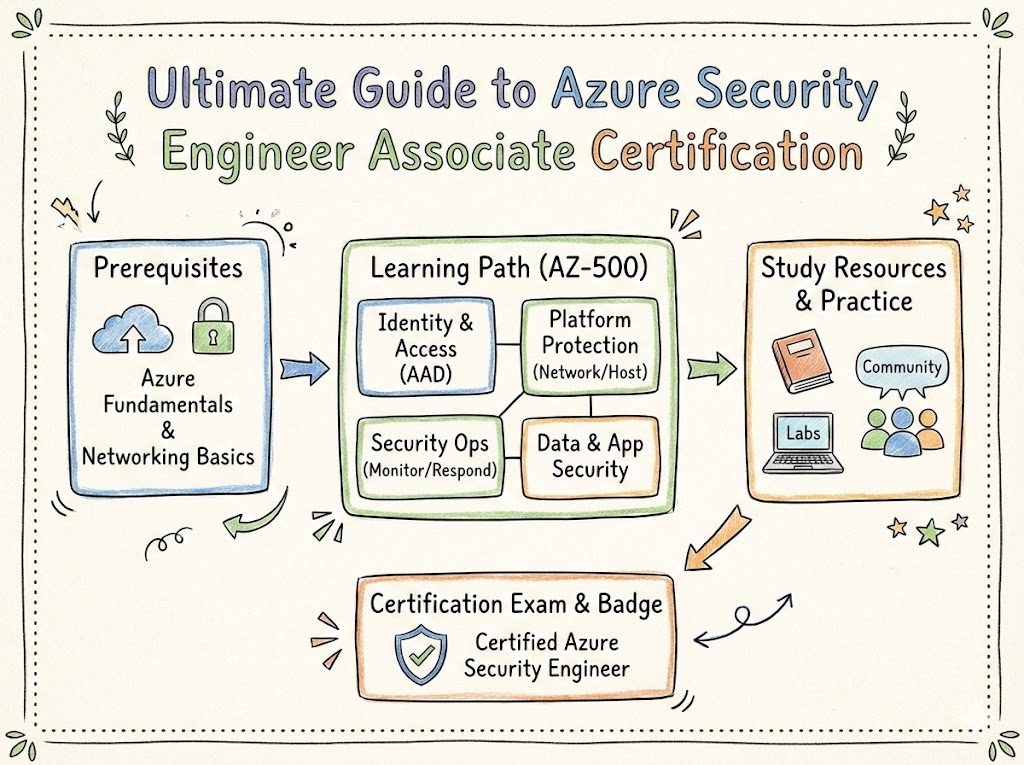
Introduction
As businesses continue to adopt cloud technologies, securing cloud environments has become a top priority. Microsoft Azure, one of the leading cloud platforms, offers a wide array of services. However, with these services come significant security challenges that require skilled professionals to mitigate risks. The Azure Security Engineer Associate (AZ-500) certification is tailored to equip professionals with the necessary skills to secure Azure environments.This guide is your comprehensive resource for understanding the AZ-500 certification, from what it entails to how to prepare for the exam. Whether you’re an experienced IT professional, a cloud engineer, or someone looking to specialize in cloud security, this guide will help you navigate the path to earning the Azure Security Engineer Associate certification.
What is the Azure Security Engineer Associate (AZ-500)?
The Azure Security Engineer Associate (AZ-500) certification is designed to validate the skills required to secure Azure cloud environments. This certification demonstrates your ability to implement and manage security controls, monitor Azure environments, identify security threats, and respond effectively to incidents.
Key topics covered in the AZ-500 exam include:
- Identity and Access Management: Securing access to Azure resources using Azure Active Directory (Azure AD) and role-based access control (RBAC).
- Platform Protection: Implementing security controls for Azure Virtual Machines, networking, and securing data in Azure.
- Security Operations: Monitoring security incidents and implementing threat detection tools.
- Data Protection: Configuring encryption and securing data storage on Azure.
- Cloud Security Best Practices: Designing and implementing security policies and compliance standards for Azure workloads.
This certification is critical for any security engineer, cloud architect, or IT professional who works with Microsoft Azure or is involved in managing the security of cloud environments.
Comparison Table: Azure Security Engineer Associate (AZ-500)
| Track | Level | Who It’s For | Prerequisites | Skills Covered | Recommended Order |
|---|---|---|---|---|---|
| Azure Security Engineer Associate | Associate | Security Engineers, Cloud Engineers, IT Professionals | Basic understanding of Azure and security | 1. Identity and Access Management (Azure AD, RBAC, MFA) 2. Platform Protection (Securing VMs, networks, etc.) 3. Data Security (Encryption, Key Vault) 4. Security Operations (Azure Sentinel, Security Center) 5. Cloud Security Best Practices (Compliance, Governance) | 1. Learn basics of Azure 2. Study IAM and Platform Protection 3. Focus on Data Security 4. Dive into Security Operations and monitoring tools |
Who Should Take the Azure Security Engineer Associate Certification?
The AZ-500 certification is ideal for professionals who:
- Security Engineers who are responsible for securing cloud environments.
- Cloud Engineers or Azure Administrators who wish to specialize in cloud security.
- Platform Engineers who need to understand how to integrate security measures into cloud infrastructure.
- Software Engineers who are looking to gain expertise in securing applications and services deployed on Azure.
- IT Professionals aiming to build a career in cloud security.
Skills You’ll Gain
By obtaining the Azure Security Engineer Associate certification, you will gain in-depth knowledge and hands-on experience in:
- Identity and Access Management (IAM): Understanding how to configure and manage Azure Active Directory (Azure AD), manage identities, implement multi-factor authentication (MFA), and configure access controls for resources.
- Platform Protection: Learning how to secure networking resources (e.g., Azure Firewall, Network Security Groups), configure and manage virtual networks, and protect virtual machines and containers.
- Data Security: Gaining expertise in implementing encryption techniques, managing encryption keys using Azure Key Vault, and securing Azure storage accounts, databases, and virtual machine disks.
- Security Operations: Utilizing Azure Security Center and Azure Sentinel to monitor and respond to security incidents, configure security alerts, and perform threat detection and remediation.
- Compliance and Governance: Configuring Azure Policy, Blueprints, and role-based access controls to ensure security policies are enforced and the system complies with industry standards.
Real-World Projects You Should Be Able to Do After It
After completing the AZ-500 certification, you will be able to handle various real-world tasks, including:
- Securing Virtual Machines: Configuring security groups, firewalls, and network access control to safeguard virtual machine infrastructure in Azure.
- Implementing Data Security: Applying encryption at rest and in transit, securing Azure Blob Storage, SQL Database, and configuring role-based access controls for sensitive data.
- Building Security Monitoring Solutions: Using Azure Security Center to monitor cloud security health and set up Azure Sentinel for advanced threat detection and incident response.
- Managing Security for Multi-Tenant Environments: Implementing Azure AD for managing identities and access in multi-tenant environments and ensuring secure access to critical applications.
- Incident Management and Response: Responding to security breaches by using Azure’s security tools like Azure Sentinel and Azure Security Center to investigate and remediate incidents.
Preparation Plan (7–14 Days / 30 Days / 60 Days)
7–14 Days Plan
- Day 1-3: Understand core Azure security principles, especially Azure Active Directory, and role-based access control (RBAC).
- Day 4-7: Focus on securing Azure platforms (VMs, networks, storage), and understand how Azure services interact with security policies.
- Day 8-10: Dive deep into data protection strategies, including encryption and key management within Azure.
- Day 11-12: Study monitoring and threat detection mechanisms provided by Azure Security Center and Sentinel.
- Day 13-14: Review security best practices for securing cloud environments, and take practice exams.
30 Days Plan
- Week 1: Cover all foundational Azure Security concepts, focusing on IAM and platform protection.
- Week 2: Dive into more advanced topics like data security, encryption, key management, and securing cloud storage.
- Week 3: Focus on monitoring tools (Azure Sentinel, Security Center) and response strategies for security incidents.
- Week 4: Final exam preparation, mock tests, and revising any difficult topics.
60 Days Plan
- Week 1-3: In-depth study of Azure services, security configurations, and incident response tools.
- Week 4-6: Focus on complex topics, such as advanced threat detection, managing security for multi-cloud environments, and compliance.
- Week 7-8: Final revision and taking mock exams for exam readiness.
Common Mistakes to Avoid
- Lack of Hands-On Experience: Azure Security concepts are best learned by doing. Avoid skipping hands-on labs and exercises.
- Ignoring Networking Fundamentals: Networking plays a huge role in security. Lack of understanding of network security can hinder your ability to secure cloud environments.
- Relying Too Much on Theory: The AZ-500 exam focuses on practical skills and real-world application. Ensure you spend enough time practicing with Azure security tools.
- Not Reviewing Azure Security Logs: Azure Security logs provide valuable insights during threat detection and incident response. Make sure to analyze and interpret logs effectively.
Best Next Certifications After AZ-500
- Microsoft Certified: Azure Security Engineer Expert: An advanced certification for security engineers looking to further specialize in Azure security.
- Certified Information Systems Security Professional (CISSP): A broader certification for those looking to strengthen their overall cybersecurity skills beyond Azure.
- Microsoft Certified: Azure Solutions Architect Expert: If you want to move into cloud architecture alongside security.
Choose Your Path
Based on your career goals, the following learning paths are available:
- DevOps: Automate security in the DevOps pipeline using security-as-code practices.
- DevSecOps: Focus on integrating security practices into the software development lifecycle.
- SRE (Site Reliability Engineering): Integrate security with site reliability and operations.
- AIOps/MLOps: Secure AI models and machine learning infrastructure.
- DataOps: Secure the data pipelines used in Azure for analytics and data processing.
- FinOps: Ensure security and compliance in the financial operations of cloud resources.
Role → Recommended Certifications Mapping
| Role | Recommended Certifications |
|---|---|
| DevOps Engineer | Microsoft Certified: Azure DevOps Engineer Expert, AZ-500 |
| SRE | Microsoft Certified: Azure DevOps Engineer, AZ-500 |
| Platform Engineer | Microsoft Certified: Azure Solutions Architect, AZ-500 |
| Cloud Engineer | Microsoft Certified: Azure Fundamentals, AZ-500 |
| Security Engineer | Microsoft Certified: Azure Security Engineer Associate (AZ-500) |
| Data Engineer | Microsoft Certified: Azure Data Engineer Associate, AZ-500 |
| FinOps Practitioner | Microsoft Certified: Azure Cloud Adoption Framework, AZ-500 |
| Engineering Manager | Microsoft Certified: Azure Architect Expert, AZ-500 |
Top Training Providers for Azure Security Engineer Associate (AZ‑500)
FinOpsSchool
FinOpsSchool offers training tailored to both cost optimization and security in cloud environments. Their Azure security sessions cover risk‑based security planning, cost‑aware compliance, and resource governance. Learners explore how to design secure systems without unnecessary cost overheads. Training includes exercises on secure policy enforcement and tracking compliance. This provider is suited for professionals who manage both financial and security aspects of cloud systems.
DevOpsSchool
DevOpsSchool is one of the most recognized training providers for Azure security and cloud certifications. Their courses are designed for working professionals and include structured lessons, hands‑on labs, and real‑world scenarios. Trainers are experienced practitioners who explain complex concepts in simple language. They also focus on exam readiness with mock tests and revision sessions. Many learners find the practical exercises especially helpful for mastering Azure security topics.
Cotocus
Cotocus offers Azure security and cloud training with an emphasis on clear explanation and real practice. Their curriculum covers identity and access management, threat protection, and compliance controls in Azure. Trainers support students in understanding difficult areas like security monitoring and encryption. The classes include live demos and lab exercises to reinforce learning. Cotocus also provides doubt‑clearing sessions for exam preparation confidence.
ScmGalaxy
ScmGalaxy is known for its hands‑on and practical approach to cloud security training. Their AZ‑500 preparation includes real Azure projects, which helps learners translate theory into real skills. Trainers provide step‑by‑step guidance so even those new to Azure can follow along. ScmGalaxy also emphasizes security best practices, not just exam topics. Their training includes mock tests and performance assessments to track progress.
BestDevOps
BestDevOps focuses on delivering high‑quality Azure security training with real industry context. The trainers bring their working experience into the classroom, helping learners understand how Azure security works in live environments. Their sessions include lab work, scenario‑based tasks, and security setup exercises. BestDevOps also provides curated study material and practice questions that align with the AZ‑500 exam structure. Support beyond class hours is available for additional help.
DevSecOpsSchool
DevSecOpsSchool specializes in combining security with DevOps practices. Their Azure Security Engineer training extends beyond basic certification topics to include secure development practices. Students learn about cloud security in CI/CD pipelines, secure configuration, and automated compliance checks. Training includes several hands‑on labs and interactive sessions. For professionals aiming at DevSecOps roles, this provider reinforces both security and automation skills.
SRESchool
SRESchool offers training that blends reliability engineering with security. Their AZ‑500 syllabus covers core Azure security areas, incident response practices, and proactive threat mitigation. Trainers emphasize systematic security thinking and alignment with operational best practices. Learners work through exercises that reflect real operational challenges. The program is beneficial for those who want to integrate security and reliability in cloud systems.
AIOpsSchool
AIOpsSchool’s training integrates security engineering with automation and intelligent operations. Their Azure security sessions include threat detection using automated tools and security analytics. Learners explore how to use Azure’s native security services to build proactive monitoring systems. Training includes labs that simulate real‑world security incidents and responses. This provider is helpful for engineers who want to combine security skills with automation expertise.
DataOpsSchool
DataOpsSchool focuses on securing data platforms in the cloud. Their AZ‑500 training includes modules on data encryption, secure storage practices, and governance. Students learn how to protect data assets using Azure services like Key Vault and storage security features. Training is delivered with hands‑on labs and structured examples. It’s especially useful for those whose roles intersect with data security and cloud compliance.
FAQs
- How difficult is the AZ-500 exam?
- The AZ-500 exam is moderately difficult, requiring both theoretical knowledge and practical skills in Azure security.
- How much time should I allocate for preparation?
- You should allocate between 30 to 60 days depending on your experience level.
- What are the prerequisites for the AZ-500 exam?
- While not mandatory, prior knowledge of Azure fundamentals and networking concepts will be beneficial.
- What sequence should I follow for preparation?
- Begin with core concepts like identity management, move to platform protection, and finish with security operations.
- What is the value of the AZ-500 certification?
- It significantly enhances career prospects for cloud security engineers, making you highly sought after by employers.
- What are the career outcomes after completing the AZ-500 certification?
- You can pursue roles such as Azure Security Engineer, Cloud Security Consultant, and IT Security Specialist.
- Is hands-on experience necessary?
- Yes, hands-on practice is crucial as the exam requires knowledge of practical Azure security configurations.
- Can I take the exam online?
- Yes, you can take the AZ-500 exam online through Pearson VUE or at an authorized testing center.
- How many questions are there in the AZ-500 exam?
- The exam consists of 40–60 questions, including multiple-choice and case study-based questions.
- What is the passing score for the AZ-500 exam?
- The passing score is 700 out of 1000.
- Do I need to renew my certification?
- Yes, Microsoft certifications are valid for 2 years.
- Is there a retake policy for the exam?
- You can retake the exam after 24 hours if you don’t pass on the first attempt.
FAQs
- How difficult is the AZ-500 exam?
- The AZ-500 exam is considered moderately difficult. It tests both your theoretical knowledge and practical skills in Azure security. Expect a mix of multiple-choice questions and case study scenarios that assess real-world security skills.
- How much time should I allocate for preparation?
- The preparation time depends on your prior experience. If you’re new to Azure or cloud security, plan for about 60 days of study. If you’re already familiar with Azure, 30 days may suffice. However, ensure you dedicate sufficient time to hands-on practice, as it is crucial for success.
- What are the prerequisites for the AZ-500 exam?
- While the exam does not have formal prerequisites, it’s recommended to have some background knowledge in Azure administration and basic security concepts. Familiarity with Azure services, networking, and identity management will significantly ease the learning process.
- What sequence should I follow for preparation?
- Start with understanding Identity and Access Management (Azure AD, RBAC), followed by Platform Protection (securing networks and virtual machines). Then, dive into Data Security (encryption and storage security) and conclude with Security Operations (monitoring with Azure Sentinel and Security Center).
- What is the value of the AZ-500 certification?
- The AZ-500 certification is highly valued in the industry, particularly by employers looking for skilled security professionals. It demonstrates your expertise in securing Azure environments, which is essential as more businesses migrate to the cloud. The certification can lead to roles like Azure Security Engineer or Cloud Security Consultant.
- What are the career outcomes after completing the AZ-500 certification?
- With the AZ-500 certification, you can pursue roles such as Azure Security Engineer, Cloud Security Architect, Security Consultant, or even work in compliance and regulatory roles focused on cloud security. The certification opens doors to advanced career opportunities in cloud security across various industries.
- Is hands-on experience necessary?
- Yes, hands-on practice is critical for success in the AZ-500 exam. The exam is designed to test your practical skills, so you should familiarize yourself with Azure’s security tools, configurations, and incident response techniques. Utilizing the Azure portal and completing labs will significantly help in reinforcing your knowledge.
- Can I take the exam online?
- Yes, the AZ-500 exam can be taken online through Pearson VUE or in-person at a certified testing center. Online testing provides convenience, but ensure you have the required system setup to take the exam from your location.
Conclusion
The Azure Security Engineer Associate (AZ-500) certification is an excellent choice for professionals looking to build a career in cloud security. As the demand for cloud services continues to rise, the need for skilled security engineers to protect Azure environments grows.With the right preparation strategy, hands-on practice, and a clear understanding of the exam objectives, you can confidently pursue the AZ-500 certification and become an expert in securing Azure cloud environments. This certification not only boosts your technical skillset but also opens up numerous career opportunities, making you a valuable asset to any organization.