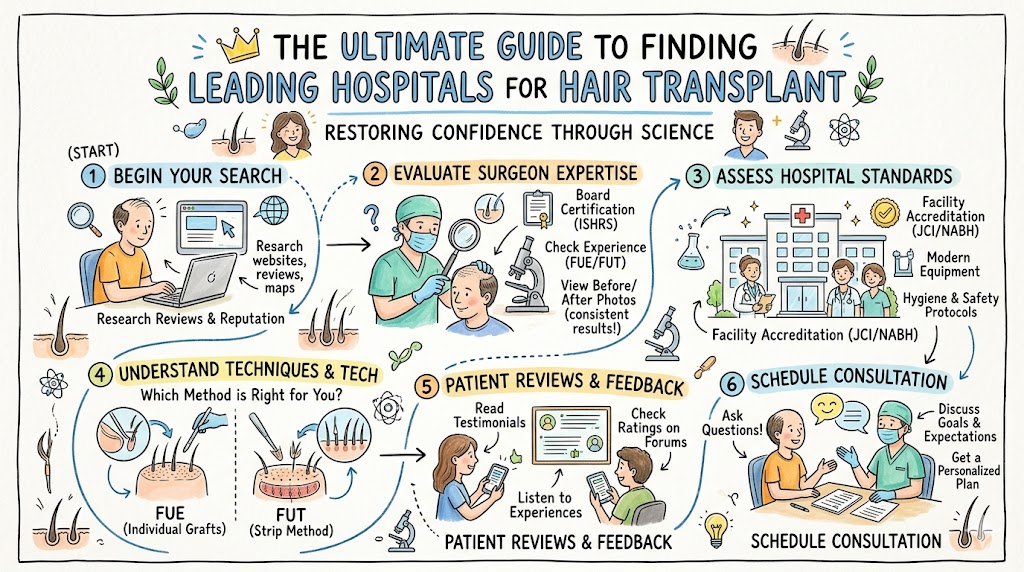
When you begin the journey to address hair loss, the sheer volume of information can be overwhelming. Finding the right medical facility is the most critical step toward achieving natural-looking, permanent results. At BESTCOSMETICHOSPITALS, we provide a comprehensive platform designed to help patients navigate this complex landscape. By allowing you to compare cosmetic hospitals, evaluate hair restoration services, research renowned specialists, and understand diverse treatment options, we empower you to make informed decisions for your hair health.
Understanding Hair Loss
Hair loss, or alopecia, is a condition that affects millions globally. It is not merely a cosmetic concern; for many, it significantly impacts self-esteem and quality of life. Understanding that hair loss is a medical condition rather than just a sign of aging is the first step toward effective treatment. Whether you are experiencing thinning or complete baldness, modern medicine offers sophisticated solutions to restore your hairline permanently.
Common Causes of Hair Loss
Hair loss stems from a variety of biological and environmental factors. Recognizing the root cause is essential for selecting the appropriate hair regrowth procedures.
Table 2: Common Causes of Hair Loss
| Cause | Symptoms | Possible Solutions |
| Genetics | Receding hairline, thinning crown | FUE/FUT surgery, Minoxidil |
| Hormonal Changes | Diffuse thinning, PCOS, Thyroid issues | Hormone therapy, PRP |
| Stress | Sudden hair shedding (Telogen Effluvium) | Stress management, Supplements |
| Medical Conditions | Patchy hair loss (Alopecia Areata) | Steroid injections, Immunotherapy |
| Nutritional Deficiencies | Brittle, thinning hair | Balanced diet, Biotin/Iron |
What Is Hair Transplant Surgery?
Hair transplant surgery is a minimally invasive medical procedure where hair follicles are extracted from a donor area (usually the back or sides of the scalp) and transplanted into balding or thinning areas. Because the hair taken from the donor site is genetically resistant to DHT (the hormone responsible for pattern baldness), the transplanted hair continues to grow for a lifetime.
Types of Hair Transplant Procedures
Modern clinics offer several techniques to cater to different patient needs.
Table 1: Hair Transplant Techniques Comparison
| Procedure | Benefits | Recovery Time | Ideal Candidate |
| FUE | Minimal scarring, quick recovery | 5–7 days | Small to medium coverage |
| FUT | High yield of follicles | 10–14 days | Advanced hair loss |
| DHI | Precise control, high density | 5–7 days | Hairline refinement |
| Robotic | Unmatched accuracy/speed | 7 days | Precision-focused cases |
Who Is a Good Candidate for Hair Transplant?
Not every individual experiencing hair loss is an immediate candidate. Ideal candidates typically possess:
- Stable Donor Area: Sufficient hair density at the back of the head.
- Realistic Expectations: An understanding that full density may require multiple sessions.
- Good General Health: No underlying conditions that hinder healing.
- Progressive Loss Management: If hair loss is active, you may need medication to stabilize it before surgery.
What Makes Leading Hospitals for Hair Transplant Stand Out?
When you search for leading hospitals for hair transplant, you should look for specific benchmarks of excellence:
- Surgeon Expertise: Board-certified surgeons with a portfolio of successful cases.
- Safety Protocols: Sterile operating theaters and emergency equipment.
- Advanced Technology: Use of high-definition magnification and precision tools.
- Patient-Centric Approach: Comprehensive preoperative and postoperative care.
Hair Transplant Procedure Step-by-Step
- Consultation & Design: Mapping the hairline to ensure facial symmetry.
- Anesthesia: Local anesthesia ensures the process is virtually painless.
- Extraction: Removing healthy follicles from the donor zone.
- Implantation: Carefully placing the follicles into the recipient site at the correct angle and depth.
Table 3: Factors to Consider Before Choosing a Hospital
| Factor | Importance | Questions to Ask |
| Surgeon Credentials | Critical | Are you board-certified in plastic surgery? |
| Clinic Reputation | High | Can I see before/after photos of similar patients? |
| Technology | Moderate | Do you use FUE, DHI, or Robotic tech? |
| Aftercare | Essential | What support is provided during the recovery phase? |
Table 4: Hair Transplant Recovery Timeline
| Recovery Stage | Expected Changes | Recommended Care |
| Days 1–3 | Mild swelling/redness | Keep head elevated, sleep upright |
| Days 4–10 | Scabs form and fall off | Gentle washing, no touching |
| Weeks 2–4 | “Shock loss” (shedding) | Avoid harsh hair products |
| Months 3–6 | New hair growth begins | Follow-up with clinic |
Checklist 1: Preparing for Hair Transplant Surgery
- Stop smoking at least two weeks before the procedure.
- Avoid blood-thinning medications (aspirin, NSAIDs) as advised.
- Arrange for a ride home from the clinic.
- Wear comfortable button-down clothing.
- Avoid alcohol for 72 hours before surgery.
Checklist 2: Long-Term Hair Care
- Utilize mild, pH-balanced shampoos.
- Follow the prescribed maintenance medication (Finasteride/Minoxidil).
- Maintain a protein-rich diet.
- Protect the scalp from extreme UV exposure.
Frequently Asked Questions (FAQs)
- Is a hair transplant permanent?
Yes, transplanted hair is resistant to pattern baldness. - What is the most popular surgery?
FUE is currently the most popular due to minimal scarring. - Does it hurt?
Only the initial numbing injections; the procedure itself is pain-free. - How many grafts do I need?
This depends on the surface area and density goals. - Can I hide the surgery?
Many patients return to work within 7–10 days. - Will I lose my donor hair?
Surgeons harvest carefully to keep the donor area looking natural. - Is age a factor?
It is better to wait until hair loss pattern stabilizes (usually 25+). - Are there risks?
As with any surgery, infection or scarring are possibilities if done poorly. - Can women get transplants?
Yes, female pattern hair loss is treated with specialized techniques. - How soon is the final result?
Usually, 12–18 months. - Do I need anesthesia?
Yes, but only local anesthesia. - What is shock loss?
Temporary shedding of existing hair due to trauma. - Can I use my own hair for the surgery?
Yes, synthetic hair is not recommended. - How much do surgeries cost?
Costs vary based on graft count and clinic location. - What is DHI?
Direct Hair Implantation, a variation of FUE
Conclusion
Choosing one of the leading hospitals for hair transplant is the most significant investment you can make in your hair restoration journey. This article has detailed the necessity of aligning yourself with facilities that prioritize patient safety, surgical precision, and long-term results. We have explored the nuances between FUE, FUT, and DHI techniques, underscored the importance of medical credentials, and provided a roadmap for recovery that ensures your new growth remains healthy and vibrant.The distinction between a standard clinic and a premier institution lies in the details: the sterilization of instruments, the artistic design of the hairline, the experience level of the surgical team, and the depth of the aftercare program. By utilizing resources like BESTCOSMETICHOSPITALS.COM, you gain the ability to strip away the marketing noise and focus on factual data—surgeons’ success rates, clinical safety records, and actual patient testimonials.