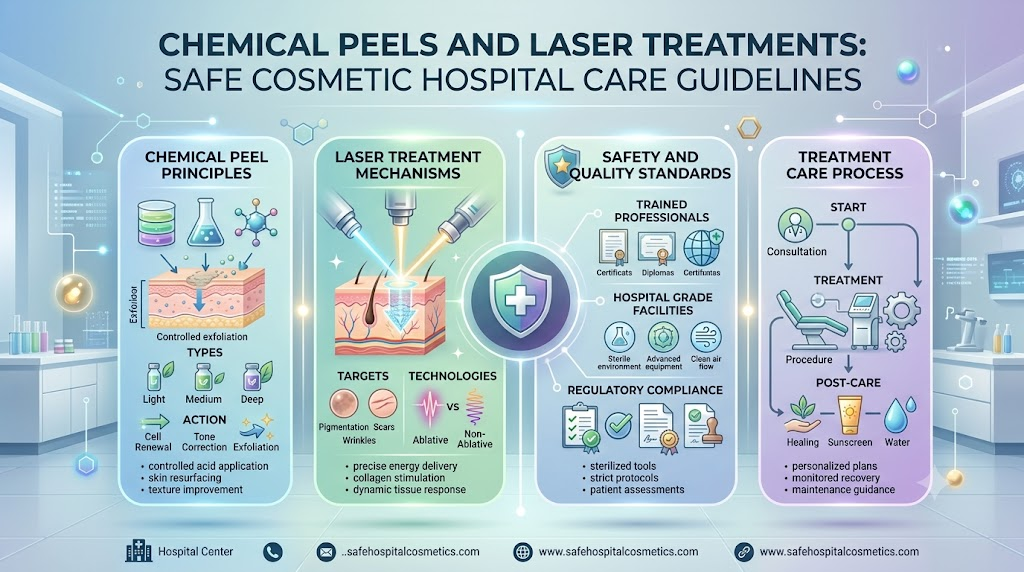
Chemical peels and laser skin treatments can help improve several common skin concerns. People may consider them for uneven skin tone, acne marks, sun damage, fine lines, or rough skin texture. These procedures work in different ways, so their risks and healing needs can also differ. Choosing a suitable professional and safe facility is an important part of cosmetic skin care.A qualified professional should assess the skin before treatment. The assessment may include skin type, sensitivity, past reactions, medical history, and treatment goals. A suitable facility should also have trained staff, clean treatment rooms, safe equipment, and clear aftercare support. BestCosmeticHospitals can help readers explore cosmetic hospital information and treatment options. The website BESTCOSMETICHOSPITALS can be used as a starting point before confirming details directly with a chosen facility.
What Are Chemical Peels?
Chemical peels are cosmetic treatments that use a chemical solution on selected skin layers. A trained professional chooses the type of peel after checking the person’s skin and treatment goals. Peels may help improve some concerns such as uneven skin tone, sun damage, acne marks, and rough texture. The depth of the peel can affect both results and healing needs.Superficial chemical peels mainly affect the outer layer of skin. Medium-depth peels reach deeper layers and may need more recovery time. Deep chemical peels affect deeper skin layers and can have greater risks. A deeper peel is not automatically better because stronger treatment can also create greater healing needs and possible complications.The professional should consider skin sensitivity, past reactions, previous treatments, and medical history before choosing a peel. Patients should ask why a certain peel may be considered and what other options exist. They should also understand the possible risks before giving consent. Treatment choice should always follow a proper professional assessment.
What Are Laser Skin Treatments?
Laser skin treatments use focused light energy to target selected skin concerns. Different laser devices work at different depths and serve different purposes. Some mainly affect the surface of the skin, while others work deeper. This difference can affect treatment goals, healing needs, and possible risks.Ablative lasers affect and remove controlled areas of the outer skin. Non-ablative lasers work below the surface without removing the same amount of skin. Fractional lasers treat small sections within a larger treatment area. These types are not interchangeable, so the device must match the treatment purpose and the patient’s skin needs.Laser treatment may be considered for some concerns involving skin texture, acne scars, selected pigmentation, redness, or sun damage. However, one laser cannot treat every skin concern. Results and risks can depend on the device, treatment plan, skin characteristics, and operator skill. Patients should ask which type of laser is being considered and why.
Chemical Peels vs. Laser Treatments
Chemical peels and laser treatments can both change the appearance and texture of skin, but they work in different ways. A chemical peel uses a solution, while a laser uses focused light energy. The depth and type of treatment can affect how much skin is changed. These differences can also affect redness, healing time, and possible risks.A peel may be considered for some surface concerns, while certain lasers may target deeper skin changes. Some laser treatments may focus on texture or selected scars. Others may address certain pigment or redness concerns. A qualified professional should explain which concerns the planned treatment is designed to address.Neither procedure is automatically better for everyone. A professional should review the patient’s skin, health history, treatment goals, and risk factors before discussing options. Patients should also ask about alternatives. This helps them make a decision based on their own needs instead of advertisements or popular treatment trends.
Why a Professional Skin Assessment Matters
A skin assessment is an important part of the first consultation. The professional may ask about skin concerns, allergies, previous procedures, medicines, supplements, past skin reactions, and healing problems. They may also look at skin sensitivity and other visible concerns. This information can help them understand possible risks before treatment.Medical history can affect cosmetic treatment choices. Some medicines or health conditions may affect healing or skin reactions. Recent procedures may also matter when considering another cosmetic treatment. Patients should provide complete and accurate information because small details can sometimes affect treatment safety.The consultation should also give patients time to ask questions. They can ask what the procedure aims to improve and what risks may occur. They can ask about other treatment options and possible healing needs. A good consultation should help patients understand their choices without pressure to book immediately.
Professional Qualifications and Experience
Patients should know who will assess their skin and who will perform the procedure. Relevant medical training helps professionals understand skin health and possible complications. Dermatology qualifications can provide additional knowledge about skin conditions and cosmetic procedures. Patients should ask about qualifications that are relevant to the treatment being considered.Laser treatments also require suitable training with the device. However, device training alone does not replace appropriate medical knowledge. The person using the equipment should understand possible skin reactions and follow proper safety procedures. Patients can ask who will manage their care if an unexpected reaction occurs.Experience with the planned procedure can also matter. Patients may ask how familiar the professional is with that type of treatment. They can ask how complications are handled and what follow-up support is available. They should not judge quality only by awards, advertising, expensive machines, or claims of being the best.
Hospital and Treatment Room Guidelines
A suitable cosmetic dermatology hospital should have a clean and appropriate treatment room. Staff should follow clear hygiene and infection prevention practices. Equipment and supplies should be stored and handled safely. The facility should also have clear procedures for dealing with unexpected reactions.These points matter because cosmetic procedures still affect living skin. Poor hygiene can increase the chance of infection. Poor safety planning can also increase avoidable risks. Patients should feel comfortable asking how the facility keeps the treatment area clean and safe.Laser procedures need additional safety controls. The treatment room may need warning signs, controlled access, and suitable protective eyewear. Staff should follow safety rules for the specific device being used. The exact requirements can vary by procedure and local rules, so patients should ask how the facility manages safety for their planned treatment.
Laser Safety and Equipment Checks
Laser safety depends on the device, treatment room, trained operator, and patient protection. A modern or expensive device does not automatically make treatment safer. Equipment should be used only for its intended purpose and according to suitable safety procedures. Staff should also understand the risks linked to the device they use.Protective eyewear may be needed during laser treatment. Patients can ask what eye protection is used and how it protects them. They can also ask how access to the laser room is controlled. Warning signs and suitable room controls can help protect patients and staff from accidental exposure.Equipment should receive suitable maintenance and safety checks. Patients can ask who is responsible for equipment care and laser safety. They do not need to understand technical settings themselves. Device settings and operating steps should remain under the control of trained professionals.
Patient Screening and Treatment Suitability
Not every person is suitable for every chemical peel or laser treatment. Skin sensitivity, active infection, previous scarring, healing problems, and recent procedures can affect treatment choices. Certain medicines and health conditions may also matter. Proper screening helps the professional identify these factors before treatment begins.Skin tone can also be an important part of the assessment. People with darker skin tones may have a higher risk of some pigment changes after certain procedures. This does not mean that every treatment is unsuitable for darker skin. It means that careful treatment selection and professional assessment are important.Patients should tell the professional about medicines and supplements. They should also mention past burns, unusual healing, strong skin reactions, or previous cosmetic procedures. Only the treating professional can decide whether treatment should continue, be delayed, or be changed to another option. General online information cannot replace this personal assessment.
Informed Consent and Realistic Expectations
Informed consent means understanding a procedure before agreeing to it. Patients should know why the treatment is being considered and what it may aim to improve. They should also understand possible benefits, risks, healing needs, and other options. They should have enough time to ask questions before signing consent.Results can vary between people. Skin type, treatment depth, device choice, healing, and the condition being treated can all affect results. Some treatments may involve more than one session. However, patients should not be promised perfect skin, complete scar removal, or permanent results.Patients can ask what may happen if the result differs from their expectations. They can also ask whether additional treatment might be discussed later. It is useful to understand possible extra visits and costs before starting. Clear information helps patients make decisions based on realistic expectations.
Possible Risks and Side Effects
Chemical peels and laser treatments may cause redness, dryness, swelling, irritation, or skin sensitivity. These effects can vary depending on the procedure and the person’s skin. Some reactions may settle during normal healing, while others may need medical review. Patients should ask what reactions are expected after their specific treatment.Other cosmetic treatment risks may include burns, infection, scarring, or changes in skin color. Risk can depend on treatment depth, device type, skin characteristics, and professional skill. A deeper treatment can have different risks from a superficial treatment. Patients should understand these differences before giving informed consent.Patients should also know which warning signs need prompt attention. Severe pain, worsening swelling, blistering, signs of infection, or eye symptoms should not be ignored. Patients should ask whom they should contact if a problem develops. Serious reactions may need prompt medical assessment instead of home treatment.
Preparing for a Consultation
Patients can prepare for a consultation by writing down their main skin concerns. They can also note previous cosmetic procedures, allergies, medicines, supplements, and unusual skin reactions. Sharing this information gives the professional a clearer picture of the patient’s needs. It can also help prevent important safety information from being missed.Patients can prepare questions about treatment goals, possible risks, healing, alternatives, and follow-up. They can ask whether the treatment may require more than one session. They can also ask for a clear explanation of the total cost and possible extra charges. These questions can make the consultation more useful.Patients should follow advice from their qualified treating professional. They should not stop prescribed medicines without medical advice. They should also avoid changing their skin routine based only on general online information. Personal preparation should depend on the planned procedure and professional advice.
Aftercare and Follow-Up Support
Aftercare needs can differ between chemical peels and laser treatments. They can also change based on peel depth and laser type. The professional should explain how to care for the treated skin. They should also explain which products or activities may need to be avoided during healing.Patients should know what reactions may be expected and when follow-up may be needed. A follow-up appointment can allow the professional to review healing and discuss concerns. Patients should follow the follow-up plan given by their treating professional because recovery can vary between procedures.If symptoms become worse or cause concern, patients should contact the treating professional. Severe pain, blistering, infection signs, or eye problems need prompt medical assessment. Patients should not try home procedures to treat serious complications. Clear aftercare advice helps patients understand what to expect and when to seek help.
How to Compare Cosmetic Hospitals
Choosing a cosmetic hospital requires more than looking at appearance or advertising. Patients should review the professional’s qualifications and relevant experience. They should also consider the quality of the skin assessment and how clearly the provider explains risks. Good communication can be an important part of safe cosmetic care.Patients can use this hospital selection checklist:
- Check relevant professional qualifications and experience.
- Ask who will assess the skin.
- Confirm who will perform the procedure.
- Check treatment room hygiene and infection prevention.
- Ask about laser safety and equipment maintenance.
- Ask about protective eyewear for laser procedures.
- Review risks, alternatives, and informed consent.
- Ask about aftercare and follow-up.
- Request a clear breakdown of treatment costs.
- Ask how complications or concerns are handled.
These factors provide a better basis for comparison. Patients should not choose a facility only because it has expensive equipment. They should also avoid choosing only because of a low price. Safety, professional skill, communication, and follow-up all deserve attention when choosing a cosmetic hospital.
Costs and Practical Questions
Treatment costs can vary for several reasons. The treatment type, peel depth, device, treatment area, number of sessions, and professional fees can all affect the total cost. Follow-up appointments may also involve separate costs. Patients should ask for a clear cost breakdown before agreeing to treatment.A low price does not automatically mean poor care. A high price also does not prove better safety or better results. Patients should ask whether the consultation, follow-up reviews, and additional care have separate charges. They should also ask whether unexpected problems could create extra costs.Cost should be compared with safety and quality of care. Patients can ask similar questions at different facilities before deciding. This makes it easier to compare services fairly. The final decision should not be based on price alone.
How BestCosmeticHospitals Can Help
BestCosmeticHospitals can help readers explore information about cosmetic hospitals and skin treatment services. Readers can use available information to learn about different treatment areas and provider options. They should still confirm professional qualifications, equipment, treatment availability, pricing, and safety procedures directly with the chosen facility.Not every listed hospital will provide every chemical peel or laser skin treatment. Availability can also vary between facilities. Patients should therefore confirm the exact service before making an appointment. The main goal should remain safe care and an informed treatment decision.
Common Safety Mistakes to Avoid
One common mistake is choosing a cosmetic procedure before having a proper skin assessment. Another is focusing only on price or attractive advertising. Patients may also forget to ask about professional qualifications, treatment risks, laser safety, and follow-up care. These details can matter more than the appearance of a clinic.Some people may believe that a stronger peel or more powerful treatment will always produce better results. This is not true for every patient. Deeper procedures can also bring greater risks and healing needs. The safest choice depends on the person’s skin and professional assessment.Another mistake is hiding medical information. Patients should mention medicines, supplements, allergies, previous procedures, unusual healing, and past skin reactions. They should also understand warning signs before leaving the facility. Good communication can help the professional make safer treatment decisions.
Questions to Ask a Dermatologist
Patients can ask what the treatment is designed to improve. They can ask why the professional is considering that option and whether other choices exist. They can also ask about possible risks, healing needs, expected changes, and follow-up care. These questions can help patients understand the full process.For laser treatments, patients can ask about laser room safety and eye protection. They can ask how equipment is maintained and who performs the treatment. For chemical peels, they can ask how the peel depth may affect healing and risk. These questions can help patients understand what they are agreeing to.Patients should also ask what happens if a problem develops. They can ask who to contact and when medical review may be needed. Clear answers can help patients feel informed before making a decision. They can also help patients compare providers on safety and communication.
Fictional Example
Fictional example: Riya wanted help with uneven skin texture and old acne marks. She compared two cosmetic treatment providers instead of choosing the first one she found. She asked who would assess her skin and what qualifications the provider had. She also asked how the provider handled treatment risks.Riya asked about laser room safety, eye protection, hygiene, total costs, and follow-up care. One provider explained the assessment process and possible risks more clearly. Riya took time to understand both options before making her choice. This example is fictional and does not show a guaranteed treatment result.
Frequently Asked Questions
What is the difference between chemical peels and laser treatments?
Chemical peels use a chemical solution to affect selected skin layers. Laser treatments use focused light energy. Their uses, risks, healing needs, and suitable patients can differ.
What should I check before choosing a hospital for a chemical peel?
Check professional qualifications, skin assessment, hygiene, treatment information, consent, aftercare, and follow-up support. Ask about risks and total costs before agreeing to treatment.
Why should a qualified dermatologist assess my skin first?
A qualified professional can review skin type, sensitivity, medical history, past reactions, and treatment goals. This helps identify possible risks before treatment.
What safety measures should a laser treatment room have?
The room should have suitable safety controls, warning signs, protective eyewear when needed, and trained staff. Equipment should also receive suitable maintenance and safety checks.
Can chemical peels and lasers cause skin color changes?
Yes, some procedures can cause changes in skin color. The risk can depend on the procedure, skin characteristics, treatment choice, and healing.
What risks should patients discuss before skin resurfacing?
Patients should ask about redness, irritation, swelling, burns, infection, scarring, and pigment changes. They should also ask which symptoms require prompt medical review.
How can I check a provider’s qualifications and experience?
Ask who will assess and perform the treatment. Ask about relevant medical training, dermatology qualifications, and experience with the planned procedure.
What should I ask during a cosmetic treatment consultation?
Ask about the treatment goal, risks, other options, healing, aftercare, follow-up, and total cost. Also ask who will manage problems if they occur.
Why are aftercare instructions important after peels or lasers?
Aftercare helps patients understand the healing process and expected reactions. It also explains when they should contact the treating professional about concerns.
How can I compare cosmetic hospitals for skin treatments?
Compare professional qualifications, assessment quality, safety, hygiene, equipment care, consent, aftercare, follow-up, and clear pricing. Do not judge a facility by advertising alone.
Final Thoughts
Chemical peels and laser treatments can address different skin concerns. They also have different risks, treatment methods, and healing needs. Safe care starts with a proper skin assessment and a qualified professional who understands the planned procedure.Patients should look beyond price, appearance, and modern equipment. They should ask about qualifications, safety procedures, possible risks, aftercare, and follow-up support. BestCosmeticHospitals can help readers explore cosmetic hospital information, but important treatment details should always be confirmed directly with the chosen facility. Taking time to understand the options can support a safer and more informed decision.