Introduction
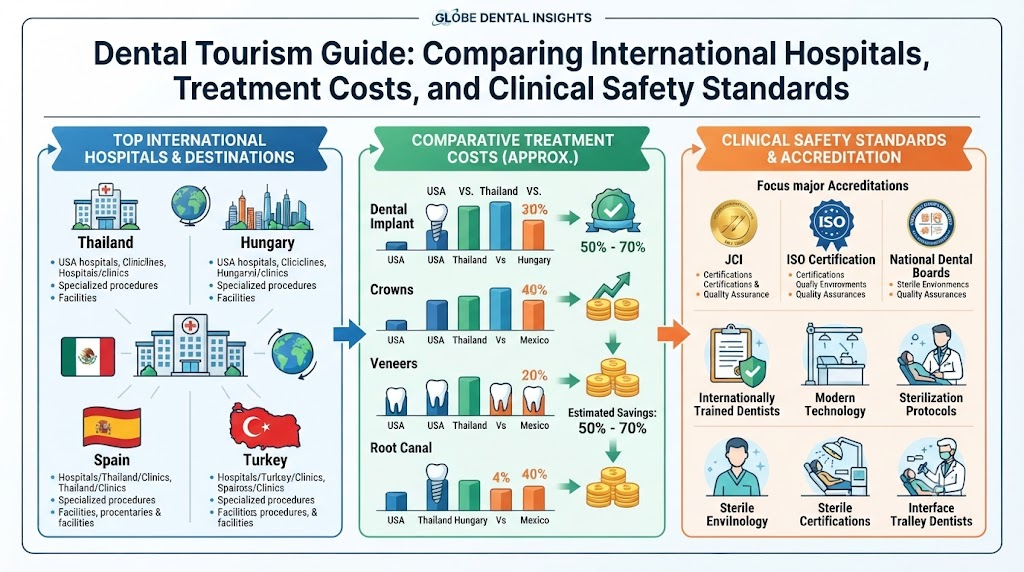
Cross-border healthcare has experienced a significant shift over the past decade. What once was an opportunistic choice for budget-conscious travelers has evolved into a structured international market: Dental tourism. Every year, hundreds of thousands of patients from the United States, Canada, the United Kingdom, Europe, and Australia travel abroad to receive oral healthcare services. These range from routine restorative care and cosmetic smile redesigns to complex full-mouth surgical rehabilitations.This comprehensive guide serves as an educational resource to help you objectively evaluate dental tourism options. By focusing on patient safety, clinical transparency, objective hospital assessment, and full-cost accounting, this guide equips you with the necessary tools to navigate international dental care effectively.
Medical & Clinical Disclaimer
The information provided in this guide is for educational, informational, and research purposes only and does not constitute medical, dental, or clinical advice. Diagnosis, treatment suitability, and clinical planning must be performed by a qualified, licensed dental professional following an in-person examination, comprehensive diagnostic imaging (such as 3D CBCT scans), and a thorough evaluation of your medical history. Treatment outcomes cannot be guaranteed, and all surgical procedures carry inherent risks.
What is Dental Tourism?
Dental tourism, a specialized segment of medical tourism, involves individuals traveling outside their local healthcare jurisdiction or native country to receive dental care. This practice encompasses a wide spectrum of motivations, medical requirements, and clinical interventions.
+-------------------------------------------------------------------+
|                        DENTAL TOURISM                             |
+-------------------------------------------------------------------+
                                  |
    +-----------------------------+-----------------------------+
    |                                                           |
    v                                                           v
+-----------------------------------+       +-----------------------------------+
|      NON-SURGICAL & COSMETIC      |       |      SURGICAL & RESTORATIVE       |
+-----------------------------------+       +-----------------------------------+
| • Teeth Whitening                 |       | • Single/Multiple Implants        |
| • Composite/Porcelain Veneers     |       | • All-on-4 / All-on-6 Arch Rest.  |
| • Single Crowns & Bridges         |       | • Bone Grafting & Sinus Lifts     |
| • Clear Aligner Therapy           |       | • Full-Mouth Reconstruction       |
+-----------------------------------+       +-----------------------------------+
How Dental Tourism Operates
The process typically begins with remote digital consultations. Patients submit diagnostic materials—such as panoramic X-rays, Cone Beam Computed Tomography (CBCT) 3D scans, and clinical intraoral photographs—to overseas clinics. Multi-disciplinary teams evaluate these records to propose provisional treatment plans, cost estimates, and estimated stay durations.
Once agreed upon, the patient travels to the host country for clinical evaluations, diagnostic verifications, and treatment execution. Depending on procedure complexity, care may be delivered in a single visit or across multiple visits separated by several months of healing.
Primary Categories of Overseas Dental Travel
- Routine Dental Travel: Focuses on preventive, diagnostic, or minor restorative care, such as hygiene appointments, simple fillings, or basic root canal treatments. Often combined with leisure travel.
- Cosmetic Dental Tourism: Includes elective aesthetic enhancements, such as porcelain veneers, composite bonding, teeth whitening, or minor orthodontic aligners, aimed at improving smile aesthetics.
- Implant Tourism: Involves surgical placement of endosteal implants, abutment connections, and permanent crown restorations to replace missing teeth.
- Full-Mouth Rehabilitation: Involves complex surgical and prosthodontic care to address extensive tooth loss, severe jawbone resorption, or advanced periodontal disease. Examples include All-on-4, All-on-6, or full-arch implant-supported bridges.
- Complex Restorative & Maxillofacial Care: Focuses on advanced interventions requiring hospital-grade operating theaters, oral-maxillofacial surgeons, and general anesthesia, such as corrective jaw surgery, extensive bone block grafting, or sinus lift procedures.
Why Do People Seek Dental Treatment Abroad?
Understanding why patients seek dental treatment abroad helps clarify both its benefits and potential risks. While cost is often the primary driver, several interconnected factors contribute to this choice.
+-----------------------------------------------------------------------+
|                    DRIVERS OF DENTAL TOURISM                          |
+-----------------------------------------------------------------------+
|  [Cost Savings]     -->  Lower overhead, favorable exchange rates     |
|  [Specialist Access]-->  Direct access to multi-specialty teams        |
|  [Scheduling]       -->  Immediate treatment without waitlists        |
|  [Advanced Tech]    -->  In-house CAD/CAM, 3D CBCT, surgical guides   |
|  [Integrated Care]  -->  Consolidated travel packages & logistics     |
+-----------------------------------------------------------------------+
1. Financial Disparities and Healthcare Economics
Dental care pricing varies significantly between countries due to several economic factors:
- Operating Overhead: Operational costs—such as real estate rent, clinical staff wages, malpractice insurance, and administrative fees—are substantially lower in developing or emerging economies compared to North America or Western Europe.
- Cost of Living and Labor: Lower regional labor costs allow clinics to offer competitive pricing without necessarily compromising material quality or clinician compensation.
- Exchange Rates: Favorable currency exchange rates can significantly increase purchasing power for international patients.
2. Direct Access to Clinical Specialists
In countries with centralized public healthcare systems (such as the UK, Canada, or Australia), accessing specialist care—like prosthodontists, periodontists, or oral surgeons—often requires long referral chains and extended wait times. Overseas private dental centers frequently offer direct access to multi-specialty teams under one roof, allowing for immediate comprehensive consultations.
3. Integrated Advanced Technology
Top-tier international dental centers often invest heavily in modern technology to attract international patients. These clinics frequently feature:
- In-house 3D CBCT imaging centers.
- Intraoral digital optical scanners.
- CAD/CAM (Computer-Aided Design / Computer-Aided Manufacturing) dental laboratories.
- 3D surgical guide printing facilities.
- Operating suites equipped for intravenous (IV) sedation or general anesthesia.
4. Comprehensive Service Packages
International patient departments in major hospitals often streamline care by offering comprehensive packages. These may include airport transfers, multilingual patient coordinators, local transportation assistance, and coordinated hotel accommodations.
Key Takeaway: Lower costs should not be the sole decision factor. Highly discounted rates can sometimes indicate compromised clinical time, lower-grade material components, or inadequate post-operative support.
How to Choose the Best Dental Hospital
Selecting an overseas provider requires a structured evaluation process. To identify the best dental hospitals, patients should look beyond marketing materials and conduct a thorough, evidence-based review.
+--------------------------------------------------------------------+
|                  HOSPITAL EVALUATION CHECKLIST                     |
+--------------------------------------------------------------------+
| [ ] Dentist Board Certifications & Specialist Credentials          |
| [ ] International Clinical Accreditations (JCI, TEMOS, ISO)        |
| [ ] Strict Infection Control & Sterilization Protocols             |
| [ ] Diagnostic Equipment (In-house 3D CBCT, CAD/CAM)               |
| [ ] Authentic Material Traceability (Recognized Implant Brands)    |
| [ ] Transparent Costing & Comprehensive Warranty Policies         |
| [ ] Multilingual Coordination & Emergency Protocol Standards       |
+--------------------------------------------------------------------+
Clinical and Structural Criteria Checklist
1. Specialist Qualifications and Credentials
- Ensure the attending doctor is a recognized specialist in the required field (e.g., an Oral and Maxillofacial Surgeon or Periodontist for surgical implants, or a Prosthodontist for complex restorations), rather than a general practitioner performing complex procedures without post-graduate training.
- Verify memberships in established international bodies, such as the International Team for Implantology (ITI), the International Congress of Oral Implantologists (ICOI), or regional specialist boards.
2. Institutional Accreditation and Safety Standards
Look for third-party clinical accreditations that evaluate safety, sterilization, and operational management:
- JCI (Joint Commission International): Represents rigorous gold-standard hospital safety and operational standards.
- TEMOS (Trust in Quality Healthcare): Focuses specifically on international patient management, clinical services, and medical tourism infrastructure.
- ISO Certifications (e.g., ISO 9001): Validates quality management systems within the facility and its affiliated laboratories.
3. Sterilization and Infection Protocols
Facilities should adhere to strict international hygiene guidelines, such as those established by the US Centers for Disease Control and Prevention (CDC) or the World Health Organization (WHO):
- Use of class-B autoclave sterilizers with monitored biological indicator testing logs.
- Single-use disposable surgical drapes, tubing, and sterile barrier sets for all invasive procedures.
- Clear policies regarding cross-contamination controls in dental laboratory environments.
4. Implant Systems and Material Transparency
- Confirm that the hospital uses internationally recognized implant systems with published, peer-reviewed clinical data (e.g., Straumann, Nobel Biocare, Dentsply Sirona, Zimmer Biomet, BioHorizons).
- Avoid clinics that use generic or non-traceable implant components. Reputable manufacturers provide an official Implant Passport containing batch numbers, serial codes, and component specifications.
5. Transparent Guarantees and Warranty Terms
- Request written documentation detailing warranty coverage for implants, abutments, and prosthetics.
- Understand what invalidates a warranty (e.g., failure to maintain bi-annual cleanings, smoking, or systemic disease progression).
- Clarify who covers financial costs—including travel, accommodation, and clinical labor—if a procedure fails or requires revision care.
Best Countries for Dental Tourism
Selecting the best countries for dental tourism depends on your geographical location, budget, travel preferences, and specific clinical needs. Regions vary in their primary areas of expertise, regulatory environments, and logistical accessibility.
+-----------------------------------------------------------------------+
|                    GLOBAL DENTAL TOURISM HUBS                         |
+-----------------------------------------------------------------------+
| NORTH AMERICA / LATAM | EUROPE & MIDDLE EAST | ASIA-PACIFIC            |
| • Mexico              | • Turkey             | • India                |
| • Costa Rica          | • Hungary            | • Thailand             |
| • Colombia            | • Poland / Croatia   | • Malaysia             |
+-----------------------------------------------------------------------+
Regional Breakdown of Major Destinations
Mexico and Central America
- Key Destinations: Los Algodones, Tijuana, Cancún, Mexico City (Mexico); San José (Costa Rica).
- Primary Patient Base: United States and Canada.
- Clinical Focus: Highly accessible border towns specialize in high-volume restorative procedures, single implants, and full-arch rehabilitation. Larger metropolitan areas offer accredited hospital settings catering to complex cases.
Central and Eastern Europe
- Key Destinations: Budapest (Hungary), Warsaw/Kraków (Poland), Zagreb (Croatia), Bucharest (Romania).
- Primary Patient Base: United Kingdom, Ireland, Germany, Scandinavia, Western Europe.
- Clinical Focus: Hungary has long served as a key dental hub in Europe, known for its focus on prosthodontics and implantology. These destinations adhere to European Union health regulations and clinical directives.
Turkey and the Middle East
- Key Destinations: Istanbul, Antalya, Izmir (Turkey).
- Primary Patient Base: UK, Western Europe, Middle East, North Africa.
- Clinical Focus: Known for large-scale clinic infrastructures, combined cosmetic-travel packages, full-mouth reconstructions, and porcelain veneer transformations.
Asia-Pacific
- Key Destinations: Bangkok, Phuket (Thailand); Mumbai, New Delhi, Bangalore (India); Kuala Lumpur (Malaysia).
- Primary Patient Base: Australia, New Zealand, UK, Middle East, North America.
- Clinical Focus: Known for JCI-accredited tertiary hospital facilities, English-proficient clinical teams, complex oral-maxillofacial surgeries, and affordable advanced healthcare options.
Comparative Country Matrix
| Country | Popular Clinical Treatments | Comparative Cost Level | Specialist Availability | Travel Accessibility | Key Clinical Considerations |
| Mexico | Implants, All-on-4, Crowns, Veneers | Low to Moderate | High in border cities & major centers | Excellent for North Americans | Varying clinic sizes; verify board certifications and sterilization protocols. |
| Hungary | Full-Mouth Restorations, Implants, Bridges | Moderate | High across accredited clinics | Excellent for European travelers | Strictly regulated under EU healthcare frameworks; strong focus on prosthodontics. |
| Turkey | Cosmetic Veneers, Crowns, Implants, All-on-4 | Low to Moderate | High in dedicated dental hubs | Excellent from Europe & UK | High volume of commercial packages; verify conservative treatment planning. |
| India | Complex Maxillofacial, Implants, Full-Mouth | Very Low | Highly specialized hospital departments | Long-haul travel for Westerners | Offers large tertiary hospital care; ensure travel itineraries account for adequate healing time. |
| Thailand | Cosmetic Dentistry, Implants, Restorative | Moderate | High in internationally accredited facilities | Long-haul for US/EU; convenient for AU/NZ | Well-established medical tourism infrastructure; verify surgeon qualifications. |
| Costa Rica | Implants, Cosmetic Restorations, Full-Arch | Moderate | High in major urban centers | Short flights from the US | Strong English proficiency; solid private healthcare infrastructure. |
Dental Implants Abroad
A dental implant is a biocompatible titanium or zirconia screw surgically placed into the jawbone. It acts as an artificial root to support a crown, bridge, or full-arch prosthesis. Planning dental implants abroad requires a complete understanding of clinical timelines, biological healing requirements, and necessary diagnostic steps.
+-------------------------------------------------------------------+
|               TWO-STAGE DENTAL IMPLANT TIMELINE                   |
+-------------------------------------------------------------------+

  VISIT 1: SURGICAL PHASE
  +--------------------+    +--------------------+    +--------------------+
  |  3D CBCT Scan &    | -> |  Surgical Placement| -> |  Temporary Crown / |
  | Clinical Eval      |    |  of Implant Fixture|    | Protective Healing |
  +--------------------+    +--------------------+    +--------------------+
                                                                |
  OSSEOINTEGRATION PERIOD (3 TO 6 MONTHS HEALING AT HOME)       |
                                                                v
  VISIT 2: PROSTHETIC PHASE
  +--------------------+    +--------------------+    +--------------------+
  |  Uncovering &      | -> |  Digital Optical   | -> | Placement of Final |
  |  Abutment Placement|    |  Impression/Scan   |    | Zirconia/E-Max Crn |
  +--------------------+    +--------------------+    +--------------------+
The Biological Reality of Osseointegration
Dental implant placement relies on osseointegration—the process where living bone tissue integrates directly with the surface of the titanium implant.
- Standard Osseointegration Duration: Typically requires 3 to 4 months in the lower jaw (mandible) and 4 to 6 months in the upper jaw (maxilla) due to differences in bone density.
- Immediate Loading Constraints: While immediate-load implants (“Teeth-in-a-Day”) are an option for select clinical cases, they require high initial primary stability ($>35\text{ Ncm}$ insertion torque) and sufficient bone volume. They are not suitable for every patient.
Step-by-Step Clinical Sequence for Overseas Implants
Stage 1: Preliminary Remote Evaluation
- The patient submits a recent 3D CBCT scan (DICOM files) or panoramic X-ray (OPG) for review.
- The clinical team evaluates bone density, bone height, proximity to nerve pathways, and sinus cavities.
- A preliminary, conditional treatment strategy is established.
Stage 2: Initial In-Person Surgical Visit (Typically 3–7 Days)
- Day 1: In-clinic clinical assessment, 3D imaging confirmation, medical history review, and physical impression/scanning.
- Day 2–3: Surgical placement of implant fixtures under local anesthesia or IV sedation. Bone grafting or sinus lifts are completed if required.
- Day 4–7: Post-operative monitoring, suture management, insertion of a provisional temporary prosthesis, and travel authorization clearance.
Stage 3: Healing Phase (3–6 Months at Home)
- The patient returns home while osseointegration takes place.
- The temporary restoration protects the surgical site while maintaining basic function and aesthetics.
Stage 4: Final Prosthetic Placement Visit (Typically 7–10 Days)
- The patient travels back to the clinic.
- The doctor confirms osseointegration, exposes the implant top, and places the healing abutment.
- Digital impressions or optical scans are sent to the laboratory to fabricate custom crowns or bridges (e.g., Zirconia or Porcelain-fused-to-Zirconia).
- The final restoration is fitted, adjusted for proper bite alignment, and permanently attached.
Dental Implant Cost Comparison
Conducting a accurate dental implant cost comparison requires understanding what causes pricing variations across different countries.
+----------------------------------------------------------------------+
|                 COMPONENTS OF A DENTAL IMPLANT QUOTE                 |
+----------------------------------------------------------------------+
|  [Implant Fixture] + [Abutment] + [Final Crown] = Base Implant Cost  |
|                                                                      |
|  PLUS (If Clinically Necessary):                                     |
|  + 3D CBCT Scans & Diagnostics      + Bone Grafting / Sinus Lift     |
|  + Surgical Placement Guides        + Provisional Temporary Teeth    |
|  + Sedation / Anesthesia Fees       + Extraction Procedures          |
+----------------------------------------------------------------------+
Factors Influencing Overall Pricing
- Implant Brand & Component Tier: Premium international systems (such as Straumann or Nobel Biocare) carry higher base manufacturing costs than regional alternative brands.
- Supplemental Surgical Interventions: Bone resorption often requires bone grafting, sinus lifts, or ridge expansion, which adds to the initial base estimate.
- Prosthetic Materials: Standard Porcelain-Fused-to-Metal (PFM) crowns are generally less expensive than high-translucency monolithic Zirconia or layered E-max porcelain.
- Laboratory Infrastructure: Custom CAD/CAM milled restorations produced by certified master dental technicians increase upfront costs while improving long-term precision and fit.
Comparative Regional Cost Ranges
Disclaimer: The pricing figures below represent estimated market averages gathered across international dental providers. Final fees depend on individual diagnostic findings, surgical complexity, selected materials, and specific provider rates.
| Country | Single Dental Implant (Fixture Only) | Complete Single Implant (Fixture + Abutment + Crown) | All-on-4 Restoration (Per Arch – Complete) |
| United States | $\$1,500 – \$3,000$ | $\$3,000 – \$6,000$ | $\$18,000 – \$30,000+$ |
| United Kingdom | $£1,200 – £2,500$ | $£2,000 – £4,000$ | $£12,000 – £22,000$ |
| Mexico | $\$700 – \$1,200$ | $\$1,200 – \$2,200$ | $\$7,500 – \$13,000$ |
| Hungary | $€600 – €1,100$ | $€1,000 – €1,800$ | $€6,500 – €11,000$ |
| Turkey | $€450 – €900$ | $€800 – €1,500$ | $€4,500 – €9,000$ |
| India | $\$400 – \$800$ | $\$700 – \$1,300$ | $\$4,000 – \$8,000$ |
| Thailand | $\$800 – \$1,400$ | $\$1,400 – \$2,500$ | $\$7,000 – \$12,000$ |
How to Compare Dental Implant Quotes
A common mistake in dental tourism is comparing quotes based solely on the final advertised number. Clinics often format estimates differently, which can make low headline figures misleading if essential procedures are left out.
  INCOMPLETE QUOTE (Red Flag)            ITEMIZED TRANSPARENT QUOTE
+--------------------------------+     +--------------------------------+
| "Full Dental Implant: $599"    | VS. | • Implant Fixture:       $550  |
|                                |     | • Custom Abutment:        $200  |
| Hidden Extra Fees at Clinic:   |     | • Monolithic Zirconia Crn: $350  |
| + Diagnostic 3D CBCT Scan      |     | • 3D CBCT Diagnostic Scan:$100  |
| + Surgical Abutment Connection |     | • Surgical Placement Guide:$100  |
| + Permanent Crown Fabrication  |     | • Local Anesthesia & Meds: $50   |
| + Surgical Anesthesia Fees     |     |--------------------------------|
| REAL TOTAL: $1,400+            |     | TOTAL GUARANTEED COST:   $1,350 |
+--------------------------------+     +--------------------------------+
Essential Line-Item Breakdown Verification
When requesting formal estimates, insist on an itemized itemization detailing:
- Diagnostic Services: Are 3D CBCT scans, panoramic X-rays, and intraoral scans included in the quote, or billed separately on arrival?
- Surgical Placement Fees: Does the surgical fee cover guide fabrication, local anesthesia, surgical consumables, and post-operative medications?
- Implant Hardware Breakdown: Is the cost split clearly between the implant fixture (titanium screw), abutment, and final prosthetic crown?
- Provisional Restorations: Is a temporary crown or provisional denture provided during the healing phase, and is it included in the base fee?
- Supplemental Procedures: If bone grafting, sinus lifts, or tooth extractions are required, are these listed with clear unit prices?
- Laboratory Fees: Are custom CAD/CAM milling and lab technician adjustments covered without additional charges?
Best Dental Implant Hospitals
Identifying the best dental implant hospitals requires looking closely at surgical capability, facility infrastructure, and long-term care management.
+--------------------------------------------------------------------+
|               IMPLANT CENTER EVALUATION PILLARS                    |
+--------------------------------------------------------------------+
|  [Surgeon Expertise]   --> Specialist degree in Oral Surgery/Perio |
|  [Advanced Surgical]   --> Dedicated sterile suites & guided surgery|
|  [Material Origin]     --> Fully verifiable implant passports      |
|  [Lab Integration]     --> In-house CAD/CAM technician oversight   |
|  [Emergency Care]      --> Complete protocols for revisions & fixes |
+--------------------------------------------------------------------+
Essential Assessment Standards
- Surgical Specialization: Ensure procedures are led by accredited Oral and Maxillofacial Surgeons, Periodontists, or Prosthodontists with documented advanced training in implantology.
- Dedicated Surgical Suites: Complex procedures should be performed in sterile, dedicated surgical suites rather than standard hygiene operatories, minimizing cross-contamination risks.
- In-House Dental Laboratories: Hospitals with integrated CAD/CAM milling labs allow prosthodontists and lab technicians to work together directly. This ensures precise shade matching, custom fits, and quick adjustments while you are in the clinic.
- Revision and Management Protocols: Ask how the clinic handles complications (such as peri-implantitis or screw loosening). Top hospitals provide clear, documented policies for managing post-treatment adjustments or repairs.
All-on-4 Dental Implants Abroad
The All-on-4 concept is a surgical and restorative technique designed for completely edentulous (toothless) arches, or patients with severely decayed, non-salvageable teeth. Evaluating All-on-4 dental implants abroad requires an understanding of the mechanics, ideal clinical conditions, and limitations of this approach.
+-------------------------------------------------------------------+
|               ALL-ON-4 SURGICAL & PROSTHETIC DESIGN               |
+-------------------------------------------------------------------+

     [ Anterior / Front ]              [ Posterior / Back ]
    Vertical Placement (2)            Angled Placement (2)
         (90 Degrees)                  (Up to 45 Degrees)
             ||                               //
             ||                              //
      +--------------+                +--------------+
      |  Bone Site   |                |  Bone Site   |
      +--------------+                +--------------+
             ||                              //
             ||                             //
   ======================================================  <-- Rigid Fixed
   [         FULL ARCH PROSTHETIC / BRIDGES             ]      Full Bridge
   ======================================================
How the Procedure Works
- Strategic Implant Placement: Four implants are surgically placed per arch. The two front implants are positioned vertically, while the two rear implants are angled up to 45 degrees.
- Bypassing Anatomical Structures: Angling the rear implants makes the most of available bone density while helping to avoid sensitive structures, such as the sinus cavities in the upper jaw or the inferior alveolar nerve in the lower jaw. This often reduces the need for extensive bone grafting.
- Immediate Provisional Arch: If the implants achieve sufficient primary torque ($>35\text{–}45\text{ Ncm}$), a rigid provisional bridge can often be attached within 24 to 72 hours. This allows for immediate function during the osseointegration period.
Candidate Assessment Criteria
+-------------------------------------------------------------------+
|                ALL-ON-4 SUITABILITY MATRIX                        |
+-------------------------------------------------------------------+
| CLINICAL INDICATORS              | CONTRAINDICATIONS & RISKS      |
+----------------------------------+--------------------------------+
| • Complete arch tooth loss       | • Severe bruxism (teeth grind) |
| • Failing terminal dentition     | • Active uncontrolled diabetes |
| • Moderate bone resorption       | • Heavy smoking history        |
| • Preference for fixed bridges   | • Inadequate bone width/height |
+----------------------------------+--------------------------------+
Clinical Reality Check: All-on-4 is a highly effective treatment, but it is not universally suitable for every patient. Heavy jawbone loss, severe teeth grinding (bruxism), or specific systemic health issues may require alternative approaches—such as an All-on-6 restoration, zygomatic implants, or traditional bone augmentation.
Full Mouth Dental Implants Abroad
Restoring an entire upper or lower arch is often categorized under the term full mouth dental implants abroad. However, this phrasing covers several distinct treatment methods rather than a single standardized procedure.
+-------------------------------------------------------------------+
|              FULL MOUTH RESTORATION CATEGORIES                    |
+-------------------------------------------------------------------+
  |
  +--> Option A: Fixed Arch Bridges (All-on-4 / All-on-6 / All-on-8)
  |    • Screw-retained, non-removable ceramic/zirconia bridges.
  |    • Requires high primary bone stability.
  |
  +--> Option B: Implant-Supported Overdentures (Snap-On Dentures)
  |    • Removable prosthetic securing to 2–4 implant locators.
  |    • Cost-effective, easier hygiene access, lower bone needs.
  |
  +--> Option C: Multiple Segmented Bridges
       • Multiple independent dental bridges anchored to individual implants.
       • Requires substantial natural bone mass across all arch segments.
Full-Mouth Treatment Variations
- Fixed Full-Arch Screw-Retained Bridges (e.g., All-on-4, All-on-6, All-on-8):
- A complete arch of 10 to 14 synthetic teeth attached to 4, 6, or 8 strategically placed implant posts.
- Constructed from materials like Monolithic Zirconia, Titanium-Acrylic hybrids, or Porcelain fused to Zirconia.
- Non-removable by the patient; offers high stability and natural chewing function.
- Implant-Supported Removable Overdentures (“Snap-On Dentures”):
- The prosthesis connects securely to 2 to 4 implants using locator attachments or a metal bar framework.
- Can be removed by the patient for easy cleaning and oral hygiene maintenance.
- Offers a practical option for patients with reduced bone density or lower treatment budgets.
- Multiple Segmented Implant Bridges:
- Uses individual 2-unit, 3-unit, or 4-unit bridges placed on individual implants throughout the jaw.
- Offers a natural appearance and feel, but requires significant healthy jawbone structure across all regions.
Cosmetic Dentistry Abroad
Cosmetic dental treatments range from minor aesthetic enhancements to comprehensive smile redesigns. When evaluating best cosmetic dentistry hospitals, patients should look for conservative treatment planning that preserves natural tooth structure whenever possible.
+-------------------------------------------------------------------+
|               COSMETIC RESTORATIVE OPTIONS                        |
+-------------------------------------------------------------------+
  |
  +--> Porcelain Veneers (Ultra-Conservative Preparation)
  |    • Minimal tooth reduction (0.3mm - 0.7mm enamel removal).
  |    • Ideal for discoloration, minor gaps, and light chipping.
  |
  +--> Full Porcelain / Zirconia Crowns (Invasive Preparation)
  |    • Significant tooth reduction (1.5mm - 2.0mm circumference).
  |    • Intended for structurally damaged, broken, or endodontic teeth.
  |
  +--> Direct Composite Bonding / In-Clinic Whitening
       • Non-invasive surface modifications without enamel removal.
Conservative Planning vs. Aggressive Over-Preparation
- Porcelain Veneers: Thin ceramic shells bonded directly to the front surface of teeth. High-quality veneers require minimal surface enamel reduction ($0.3\text{ mm}$ to $0.7\text{ mm}$). This preserves internal tooth structure and long-term pulp vitality.
- Over-Preparation Risks: Be cautious of clinics that aggressively shave healthy teeth down to small pegs (“prep pegs”) to fit full crowns when less invasive veneers would achieve the desired cosmetic outcome. Irreversible over-preparation increases the risk of tooth sensitivity, root canal requirements, and future structural failure.
+-----------------------------------------------------------------------+
| WARNING: Avoid aggressive preparation of healthy teeth for short-term |
| cosmetic goals. Preserve natural tooth enamel whenever possible.     |
+-----------------------------------------------------------------------+
Dental Treatment Abroad: Complete Process
Navigating dental treatment abroad successfully requires a organized, step-by-step approach. Following a structured pathway helps protect patient safety, manage expectations, and maintain clinical quality at every stage.
+-------------------------------------------------------------------+
|                11-STEP DENTAL TOURISM WORKFLOW                    |
+-------------------------------------------------------------------+
  [01] Identify Clinical Needs & Local Diagnostics
   ↓
  [02] Gather X-Rays, 3D Scans, & Medical Records
   ↓
  [03] Research Accredited Destinations & Hospitals
   ↓
  [04] Shortlist Clinics & Verify Specialist Qualifications
   ↓
  [05] Schedule Virtual Clinical Consultations
   ↓
  [06] Receive & Compare Itemized Treatment Plans
   ↓
  [07] Calculate Total Expenses (Travel + Medical + Contingency)
   ↓
  [08] Confirm Booking, Warranties, & Clinical Logistics
   ↓
  [09] Travel, Undergo In-Person Diagnostic, & Receive Treatment
   ↓
  [10] Complete Immediate Recovery Phase & Post-Op Checks
   ↓
  [11] Return Home & Execute Ongoing Local Aftercare Plan
Comprehensive Step-by-Step Guide
- Step 1: Obtain Primary Diagnostics Locally: Visit a local dentist to get a accurate picture of your oral health, including current diagnostic X-rays or 3D CBCT scans.
- Step 2: Collect Complete Records: Secure digital copies of your diagnostic files (OPG, CBCT in DICOM format, intraoral pictures) to share during consultations.
- Step 3: Research Destinations: Select potential host countries based on clinical standards, regulatory frameworks, travel convenience, and total budget.
- Step 4: Shortlist Accredited Providers: Identify facilities with recognized credentials (e.g., JCI, TEMOS, ISO) and verified specialist clinicians.
- Step 5: Hold Remote Virtual Consultations: Discuss proposed treatment approaches directly with treating dentists, asking detailed questions about procedures and materials.
- Step 6: Request Detailed Quotes: Secure itemized written treatment plans detailing all hardware brands, laboratory fees, and potential add-on costs.
- Step 7: Perform Full Financial Accounting: Factor in treatment fees, flights, accommodation, local travel, meals, and emergency reserve funds.
- Step 8: Finalize Logistics and Guarantees: Confirm travel dates, hotel arrangements, airport transfers, and written warranty documents before flying.
- Step 9: Clinical Execution Abroad: Undergo initial in-person diagnostic checks, confirm treatment strategies, and begin your planned care.
- Step 10: Post-Operative Management: Allow time to recover locally before flying home, attending all post-op checks and suture removals.
- Step 11: Long-Term Local Continuity: Keep detailed medical records of your treatment for your home dentist to ensure consistent ongoing care and hygiene maintenance.
Risks of Dental Tourism
Understanding the potential risks of international care is essential for making informed, objective decisions. Being aware of these issues allows you to plan effectively and take steps to reduce potential complications.
+-------------------------------------------------------------------+
|                    DENTAL TOURISM RISK FACTORS                    |
+-------------------------------------------------------------------+
  |
  +--> Biological & Clinical Risks
  |    • Infection, implant integration failure, nerve damage, pulpitis.
  |
  +--> Logistical & Communication Constraints
  |    • Language barriers, short travel windows leading to rushed work.
  |
  +--> Continuity-of-Care & Legal Challenges
  |    • Difficulty securing local follow-up care for international work.
  |    • Limited legal recourse across international jurisdictions.
Potential Challenges and Risk Mitigation
- Rushed Treatment Timelines: Completing complex restorative work within narrow travel windows can restrict necessary healing periods, increasing the risk of mechanical or biological complications.
- Continuity of Care Issues: Local dentists may hesitate to adjust, repair, or take liability for complex implant work performed overseas using unfamiliar hardware systems.
- Communication and Language Barriers: Miscommunications regarding treatment goals, risks, or post-operative instructions can lead to mismatched expectations or care errors.
- Regulatory and Legal Differences: Medical malpractice laws and patient protection frameworks vary significantly by country, making legal recourse difficult if care fails.
- Flight Risks After Surgery: Flying soon after extensive oral surgery or sinus lifts can increase post-operative bleeding, tissue swelling, or discomfort due to cabin pressure changes.
Aftercare After Dental Treatment Abroad
Proper post-operative care is critical to the long-term success of any dental procedure. Having a clear recovery plan helps ensure long-term stability and protects your clinical investment.
+--------------------------------------------------------------------+
|                   AFTERCARE RESPONSIBILITY PIPELINE                |
+--------------------------------------------------------------------+
  [OVERSEAS CLINIC]                [PATIENT]               [HOME DENTIST]
  • Complete surgery               • Follow post-op instructions   • Perform bi-annual cleanings
  • Provide full records & serials • Maintain strict oral hygiene  • Monitor bone levels via X-rays
  • Issue prescriptions & guidelines • Report warning signs early  • Provide ongoing preventive care
Key Recovery Protocols
- Immediate Post-Op Instructions: Take prescribed antibiotics and pain relief as directed. Avoid heavy physical exertion, hot liquids, alcohol, and smoking during initial healing.
- Dietary Adjustments: Stick to a soft-food diet during the initial healing phase to avoid placing undue pressure on unintegrated implants or provisional crowns.
- Hygiene Routines: Keep the surgical area clean using prescribed chlorhexidine anti-septic mouthwashes, soft surgical toothbrushes, and specialized interdental cleaners as instructed.
- Warning Signs Needing Immediate Attention: Contact your clinic promptly if you experience severe persistent pain, uncontrolled bleeding, worsening swelling after day 3, loss of sensation, or prosthetic movement.
- Coordinating Local Maintenance: Arrange for a local dental professional to handle regular cleanings, yearly diagnostic X-rays, and routine maintenance after returning home.
Dental Tourism Travel Checklist
Proper travel preparation helps ensure a smooth, well-organized trip for medical care. Use this checklist to organize essential documentation and logistics before departing.
+-------------------------------------------------------------------+
|                      TRAVEL DOCUMENT CHECKLIST                    |
+-------------------------------------------------------------------+
| [ ] Valid Passport (With at least 6 months remaining validity)    |
| [ ] Medical Travel Visas (If required by host country)            |
| [ ] Physical copies of local Dental Records, X-Rays, & 3D CBCTs   |
| [ ] Written, itemized Treatment Plan & Confirmation Quote         |
| [ ] Prescription medications in original labeled containers       |
| [ ] Specialized Medical Travel Insurance policy documents          |
| [ ] Local currency & international credit/debit payment cards     |
| [ ] Hospital emergency contacts & patient coordinator details     |
| [ ] Flexible flight tickets allowing date adjustments if needed   |
+-------------------------------------------------------------------+
Dental Tourism Cost Checklist
Calculating the true financial cost of receiving dental treatment abroad requires factoring in all associated travel, accommodation, and support expenses alongside primary clinical fees.
+-----------------------------------------------------------------------+
|                    TOTAL DENTAL TOURISM COST FORMULA                  |
+-----------------------------------------------------------------------+
|                                                                       |
|   TOTAL COST = [Clinical Base Fees] + [Diagnostic & Supplemental]    |
|                + [Flights & Travel]  + [Hotels & Local Transit]       |
|                + [Meals & Incidentals] + [Emergency Contingency Fund]  |
|                                                                       |
+-----------------------------------------------------------------------+
Budget Planning Breakdown
- Direct Clinical Costs:
- Pre-op diagnostic imaging (3D CBCT, OPG scans).
- Primary treatment procedures (implants, abutments, crowns, veneers).
- Adjunctive surgeries (bone grafts, sinus lifts, tooth extractions).
- Anesthesia, sedation, and post-operative medications.
- Travel and Accommodation Expenses:
- Round-trip international flights (accounting for multiple trips if required).
- Hotel or apartment stays covering required healing periods.
- Airport transfers and daily transportation between hotel and clinic.
- Logistical and Personal Expenses:
- Travel insurance covering medical complications.
- Daily meals and incidentals.
- Companion travel expenses if accompanied by a family member or caregiver.
- Emergency Reserve Fund: Set aside a financial buffer ($10\%\text{–}20\%$ of total budget) to cover unexpected delays, extended hotel stays, or secondary adjustments.
Dental Tourism: Price vs Quality
Navigating international dental care requires balancing cost savings with high standards of clinical care. Prioritizing low prices over proper clinical standards can lead to treatment failures that are far more costly to fix over time.
HIGH QUALITY / FAIR VALUE              LOW COST / HIGH RISK
+------------------------------+     +------------------------------+
| • Verified Specialist Team   | VS. | • General Practice Clinicians|
| • Internationally Accredited |     | • Unaccredited Small Clinics |
| • Major Implant Hardware     |     | • Generic Unlabeled Implants |
| • In-House 3D Diagnostics    |     | • Basic 2D X-Rays Only       |
| • Transparent Warranties     |     | • No Written Guarantees      |
+------------------------------+     +------------------------------+
Balancing Cost and Quality
- Extremely Low Prices: Unusually cheap offers can indicate hidden compromises—such as lower-grade hardware, uncertified dental labs, hurried clinical schedules, or unbilled extra fees added upon arrival.
- Material Integrity: Reputable implant hardware and ceramic materials carry real manufacturing and production costs. Fair pricing reflects genuine material authenticity and precision laboratory work.
- Value-Focused Care: The real value of dental tourism comes from getting exceptional clinical expertise, advanced technology, and high safety standards at accessible international rates—not from choosing the absolute cheapest quote available.
Summary Comparison Table
Evaluating potential hospitals requires reviewing multiple operational, clinical, and financial factors before making a decision.
+-----------------------------------------------------------------------+
|                    CLINICAL EVALUATION SUMMARY MATRIX                 |
+-----------------------------------------------------------------------+
| Evaluation Factor | Key Elements to Verify | Why It Matters for Patient Care |
| Clinician Credentials | Board certification, specialized degrees, verified surgical experience. | Validates that your procedure is performed by a qualified specialist. |
| Institutional Standards | Third-party accreditations (e.g., JCI, TEMOS, ISO certifications). | Confirms adherence to international safety, hygiene, and operating standards. |
| Diagnostic Technology | In-house 3D CBCT imaging, intraoral optical scanners, CAD/CAM labs. | Enables precise anatomical planning and well-fitted prosthetic restorations. |
| Material Verification | Authenticated international implant brands with official serial documentation. | Ensures long-term hardware durability and component availability back home. |
| Financial Transparency | Itemized, transparent quotes covering diagnostics, surgery, hardware, and lab fees. | Prevents unexpected cost additions during treatment. |
| Patient Reviews | Independent third-party reviews and verifiable clinical case studies. | Provides objective insight into real patient experiences and overall satisfaction. |
| Aftercare Structure | Documented warranty policies, follow-up protocols, and emergency guidelines. | Secures guidance, adjustments, and financial protection during post-op recovery. |
How to Identify a Trustworthy Dental Provider
Distinguishing high-quality international hospitals from overly commercial sales outlets is critical for patient safety. Look for clear indicators of clinical transparency while being mindful of potential red flags.
+-------------------------------------------------------------------+
|               TRUSTWORTHY VS. QUESTIONABLE PROVIDERS              |
+-------------------------------------------------------------------+

  POSITIVE SIGNALS
  [✔] Detailed, itemized treatment quotes
  [✔] Complete transparency on doctor qualifications and credentials
  [✔] In-depth 3D CBCT diagnostic evaluations prior to surgery
  [✔] Clear disclosure of implant brand names and batch numbers
  [✔] Realistic treatment timelines that allow for proper healing
  [✔] Written policies for post-op care, warranties, and revisions

  WARNING FLAGS
  [✘] Aggressive high-pressure sales tactics pushing immediate bookings
  [✘] Guarantees of 100% treatment success or lifetime durability
  [✘] Extremely low prices that sound too good to be true
  [✘] Vague estimates lacking brand details or itemized breakdowns
  [✘] Unwillingness to share doctor credentials or registration numbers
  [✘] Rushed treatment plans that ignore biological healing times
Dental Tourism for Different Patient Needs
Treatment strategies should always be tailored to your specific dental conditions, bone density, aesthetic expectations, and medical background.
+-------------------------------------------------------------------+
|                 TAILORED CLINICAL STRATEGIES                      |
+-------------------------------------------------------------------+
  |
  +--> Single / Multiple Missing Teeth
  |    • Targeted local implants or short bridges; minimal disruption.
  |
  +--> Edentulous / Failing Full Arches
  |    • Comprehensive 3D planning; All-on-4, All-on-6, or overdentures.
  |
  +--> Aesthetic / Smile Rejuvenation
  |    • Conservative porcelain veneers; minimal enamel reduction.
  |
  +--> Complex Bone Resorption / Maxillofacial Needs
       • Advanced bone grafting, sinus lifts, or specialized zygomatic care.
Customizing Care by Need
- Single or Multiple Missing Teeth: Typically straightforward care involving single implants or short bridges. These usually allow for flexible travel scheduling without extensive disruption to surrounding teeth.
- Full-Arch Restorations (Edentulous Patients): Requires thorough structural planning, high-resolution 3D CBCT imaging, and multi-stage surgical trips to ensure proper integration and long-term stability.
- Aesthetic Smile Enhancements: Call for skilled prosthodontic evaluation, conservative enamel preparation, and careful shade-matching to achieve natural-looking, functional results.
- Complex Maxillofacial Cases: Severe bone loss requires experienced oral surgeons capable of performing advanced bone block grafts, sinus augmentations, or specialized zygomatic implant placements.
Common Mistakes to Avoid
Avoiding common planning mistakes helps protect your health, safety, and financial investment when seeking treatment abroad.
+-----------------------------------------------------------------------+
|                    TOP DENTAL TOURISM ERRORS                          |
+-----------------------------------------------------------------------+
|  [!] Choosing a provider based solely on the lowest price             |
|  [!] Traveling without a comprehensive 3D CBCT scan evaluation        |
|  [!] Overlooking doctor qualifications and surgical specialization   |
|  [!] Accepting vague quotes missing hardware and lab details          |
|  [!] Planning overly tight travel itineraries with no recovery buffer |
|  [!] Failing to establish a clear aftercare plan with a local dentist |
+-----------------------------------------------------------------------+
Expert Tips for Dental Tourists
- Prioritize 3D CBCT Imaging First: Never commit to a definitive surgical plan without an up-to-date 3D CBCT scan. Standard 2D panoramic X-rays lack the spatial depth needed to assess bone volume and nerve placement accurately.
- Verify Implant Brands and Hardware Passports: Request explicit written confirmation of the implant brand, model, and line before surgery. Ensure you receive an official Implant Passport listing serial numbers for your personal records.
- Build Buffer Days into Travel Schedules: Schedule extra days into your itinerary after surgical appointments. This allows your clinical team to monitor initial healing and handle early adjustments before you fly home.
- Secure Local Aftercare Support Early: Speak with a local dentist in your home town before traveling abroad. Confirm that they are open to providing ongoing maintenance, routine cleanings, and follow-up care.
- Request Fully Itemized Written Contracts: Ensure all costs—including diagnostics, hardware, lab fees, medication, provisional teeth, and follow-up adjustments—are clearly documented in writing before paying deposits.
- Keep Comprehensive Physical Records: Retain hard copies and digital files of all medical documents, operative notes, laboratory shade charts, prescriptions, and payment receipts from your overseas provider.
Frequently Asked Questions (FAQs)
1. What is dental tourism?
Dental tourism involves traveling outside your local area or native country to receive dental treatments, ranging from routine restorative work and cosmetic enhancements to advanced implant surgeries and full-mouth rehabilitations.
2. Is getting dental treatment abroad safe?
Dental care abroad can be safe provided you carefully select an accredited hospital, confirm doctor board certifications, verify strict infection control protocols, and ensure high-quality materials are used.
3. How much money can I save with dental tourism?
Cost savings typically range between $40\%$ and $70\%$ compared to private care costs in North America or Western Europe, depending on the destination, procedure complexity, host country economic factors, and chosen materials.
4. Why are dental procedures significantly cheaper in some countries?
Lower costs are primarily driven by reduced operational expenses, lower real estate rents, competitive labor costs, decreased malpractice insurance premiums, and favorable currency exchange rates—not necessarily lower clinical standards.
5. How do I verify an overseas dentist’s qualifications?
Check for specialist board certifications, official registration with host-country health authorities, memberships in international organizations (e.g., ITI, ICOI), and verified post-graduate specialty degrees in surgery or prosthodontics.
6. What institutional accreditations should I look for in an international dental hospital?
Key international accreditations include Joint Commission International (JCI), TEMOS, and ISO certifications (such as ISO 9001), which confirm adherence to established quality, hygiene, and safety protocols.
7. What is a 3D CBCT scan and why is it necessary for implants?
A Cone Beam Computed Tomography (CBCT) scan provides a detailed 3D image of jawbone volume, bone density, nerve pathways, and sinus locations. It is essential for accurate, safe dental implant planning.
8. How long does the dental implant process take abroad?
Standard implant care usually requires two separate visits over a period of 3 to 6 months. The initial visit involves surgical placement and provisional tooth fitting, followed by healing at home. The second visit focuses on custom fitting the permanent crowns or bridges.
9. What is the difference between an implant fixture, abutment, and crown?
The implant fixture is the titanium screw anchored in the jawbone; the abutment is the connector piece attached to the fixture; and the crown is the visible, custom ceramic tooth secured to the abutment.
10. What are All-on-4 dental implants?
All-on-4 is a full-arch rehabilitation technique where an entire arch of prosthetic teeth is supported by four strategically placed implants. The rear implants are angled up to 45 degrees to optimize available bone support.
11. Can I get immediate “Teeth-in-a-Day” implants abroad?
Immediate-load implants are possible if your jawbone density and initial surgical insertion torque ($>35\text{–}45\text{ Ncm}$) meet specific clinical requirements. However, they are not suitable for every patient.
12. Are advertised low prices complete treatment quotes?
Not always. Advertised headline prices often reflect only the base titanium implant fixture. Always request an itemized quote that includes the 3D CBCT scan, abutment, provisional tooth, final crown, laboratory fees, and anesthesia costs.
13. What happens if a dental implant fails after returning home?
Reputable clinics offer clear written warranty terms to cover replacement costs. However, travel, accommodation, and local emergency costs are generally the patient’s responsibility unless covered by specialized medical travel insurance.
14. What risks are associated with flying after oral surgery?
Flying soon after invasive oral surgery or sinus lift procedures can increase discomfort, bleeding, or swelling due to cabin pressure fluctuations. Always get clear travel clearance from your operating surgeon before flying.
15. How do I handle dental aftercare once I am back home?
Coordinate with a supportive local dentist who can provide ongoing cleanings, annual maintenance, and routine diagnostic X-rays to monitor your restorations over the long term.
Conclusion
Dental tourism offers a valuable avenue for individuals seeking high-quality restorative, surgical, and cosmetic care at accessible international rates. However, achieving successful outcomes requires looking beyond initial headline savings and taking a structured, safety-first approach.The key to navigating dental care abroad lies in thorough research, objective clinical evaluation, and transparent communication. By focusing on verified clinician qualifications, recognized hospital accreditations, strict sterilization standards, authenticated implant components, and complete cost transparency, you can make confident, informed choices about your care.