Introduction
Deciding to undergo cosmetic or reconstructive surgery is a personal choice that requires careful thought, thorough research, and realistic expectations. Among the various aesthetic procedures available, autologous fat transfer has gained significant attention for its ability to reshape, restore volume, or contour specific areas of the face and body using a patient’s own tissue.Patients should carefully evaluate surgical expertise, facility accreditation, emergency protocols, consultation quality, and comprehensive follow-up care rather than choosing a provider based on price alone. As highlighted by leading medical organizations, autologous fat grafting uses a patient’s own fat, typically harvested through liposuction, and transferred to another area, with reported complications that require careful risk assessment and experienced surgical management.To explore cosmetic surgery facilities, research procedural guidelines, and compare important hospital-selection criteria, visit BESTCOSMETICHOSPITALS.
What Is Fat Transfer?
Fat transfer, medically known as autologous fat grafting or lipomodeling, is a surgical procedure designed to move fat from one part of the body (known as the donor site) to another area that lacks volume or definition (the recipient site).
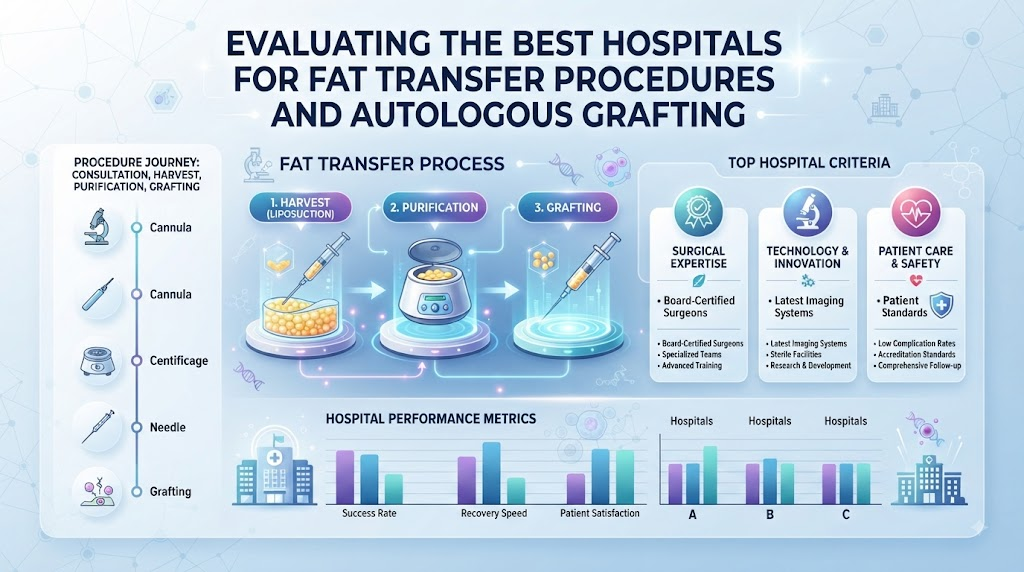
The process generally involves three core stages:
- Fat Harvesting: Excess fat is gently removed from a donor area—such as the abdomen, flanks, or thighs—using specialized liposuction techniques.
- Fat Processing: The harvested tissue is purified to separate intact fat cells from blood, fluids, and damaged cells.
- Fat Injection: The purified fat is carefully placed into the target treatment area using fine cannulas to rebuild natural contours.
Unlike synthetic dermal fillers or manufactured implants, fat transfer uses living tissue from the patient’s own body. However, it is important to understand that not all transferred fat survives once introduced to its new location; a portion of the graft is naturally reabsorbed by the body over time, meaning results can vary and are not always completely predictable.
Common Types of Fat Transfer Procedures
Facial Fat Transfer
Facial fat grafting is often utilized to restore age-related volume loss or enhance facial harmony. Common treatment areas include:
- Cheeks and midface volume restoration
- Under-eye hollows (tear troughs)
- Temples
- Lips for subtle contour enhancement
- Jawline and chin definition
Suitability depends entirely on individual facial anatomy, skin elasticity, and a thorough medical evaluation.
Breast Fat Transfer
Fat transfer to the breasts can be used for selected volume enhancement, symmetry correction, or smoothing contour irregularities following lumpectomies.
- Some patients may require more than one procedure to achieve their aesthetic goals due to graft survival limitations.
- Potential risks associated with breast fat transfer include cysts, localized infection, microcalcifications, fat necrosis, and the loss of some transferred volume. (American Society of Plastic Surgeons)
- Note: Fat transfer does not provide the same dramatic volumetric increase as synthetic breast implants and cannot promise a specific cup-size change.
Body Contouring Fat Transfer
Selected body areas can be contoured or augmented using autologous fat to correct asymmetries, smooth depressions, or restore volume following weight changes. Treatment goals and safety considerations vary significantly by anatomical location.
Gluteal Fat Grafting (Brazilian Butt Lift / BBL)
Gluteal fat grafting involves transferring harvested fat to the buttocks to improve shape and contour.
- Patient Safety Warning: Gluteal fat grafting carries significant safety concerns compared with many other elective aesthetic procedures. Major plastic surgery organizations have issued safety advisories concerning the risk of serious complications, including fat embolism. (ISAPS)
- Patients considering this procedure must prioritize a qualified surgeon, an accredited surgical facility with advanced emergency readiness, established safety protocols, and comprehensive informed consent.
How Fat Transfer Surgery Works
Understanding the procedural workflow helps patients set realistic expectations for their surgical journey:
- Step 1: Consultation: The surgeon reviews your medical history, cosmetic goals, available donor fat, and skin characteristics, discussing realistic outcomes and potential alternatives.
- Step 2: Fat Harvesting: Under appropriate anesthesia, fat is extracted from the predetermined donor site using gentle liposuction techniques designed to preserve cell integrity.
- Step 3: Fat Processing: The extracted material undergoes washing and centrifugation or filtration to prepare it for reinjection.
- Step 4: Fat Injection: The surgeon places micro-droplets of purified fat across multiple tissue planes to maximize blood supply contact and graft survival.
- Step 5: Recovery: Post-procedural swelling, bruising, soreness, and temporary changes in local shape are normal parts of the early healing phase.
Who May Be a Candidate for Fat Transfer?
Candidacy is determined through an individual consultation with a qualified plastic surgeon. Suitability depends on several key factors:
- Overall health and absence of untreated medical conditions that impair healing
- Realistic expectations regarding aesthetic outcomes
- Sufficient localized fat stores in potential donor areas to harvest the required volume
- Good skin tone and tissue quality in the recipient area
- Ability to safely undergo anesthesia and surgery
Not everyone is a suitable candidate for fat transfer, and a medical evaluation is required to confirm eligibility.
Potential Benefits of Fat Transfer
- Utilizes the patient’s own natural tissue, eliminating allergic reactions to foreign materials.
- Provides dual benefits by combining body contouring (liposuction) with volume enhancement in another area.
- Offers a softer, more integrated look and feel compared to certain synthetic options when performed successfully.
- Allows for highly customized, precise sculpting tailored to individual anatomy.
It is important to avoid unrealistic claims such as guaranteed permanent results, zero graft reabsorption, or complete freedom from complications.
Limitations of Fat Grafting
- Variable Survival Rate: Not all transferred fat establishes a new blood supply; a portion is reabsorbed by the body.
- Need for Multiple Sessions: Achieving desired volume may occasionally require staged secondary procedures.
- Weight Fluctuation Impact: Transferred fat behaves like natural fat elsewhere in the body; significant weight gain or loss can alter the treated contour.
- Donor Site Limitations: Patients with very lean body types may lack sufficient donor fat reserves.
As noted by the American Society of Plastic Surgeons (ASPS), outcomes depend heavily on surgical technique and surgeon expertise, and graft volume loss is a recognized variable.
Risks and Possible Complications
Like any surgical intervention, fat transfer carries inherent risks. Potential complications include:
- Infection at donor or recipient sites
- Bleeding, hematoma, or seroma formation
- Swelling, bruising, and prolonged tenderness
- Fat necrosis (death of transferred fat cells resulting in firm lumps)
- Cysts or oil cysts
- Contour irregularities or asymmetry
- Temporary or permanent changes in skin sensation
- Visible scarring at incision sites
- Loss of a portion of the transferred fat volume
- Rare but serious risks such as fat embolism or systemic complications
Risk levels vary according to the specific procedure, treatment location, patient health factors, and surgical technique employed. The ASPS explicitly identifies infection, bleeding, fat embolism, and graft-volume loss among reported complications of fat grafting.
Special Safety Considerations for Gluteal Fat Transfer
Because gluteal fat grafting involves deep tissue manipulation, it demands rigorous adherence to safety standards.
- Serious complications and fatalities linked to accidental intramuscular fat injection (leading to fat embolism) have been documented globally.
- Patients must thoroughly investigate surgeon qualifications, facility accreditation, and safety protocols before scheduling surgery.
- Multiple international plastic surgery organizations emphasize that strict adherence to anatomical safety guidelines is mandatory to minimize risk.
How to Choose a Hospital for Fat Transfer
Selecting a medical facility and surgical team requires a structured evaluation framework:
- Qualified Plastic Surgeon: Verify board certification or specialist registration in plastic and reconstructive surgery, along with extensive, documented experience performing fat transfer procedures.
- Accredited Surgical Facility: Ensure the procedure is performed in an accredited operating room or hospital equipped with advanced monitoring, sterile protocols, and immediate emergency life-support capabilities.
- Procedure-Specific Expertise: A surgeon skilled in facial fat grafting may require different specialized training for complex body or gluteal contouring.
- Consultation Quality: Look for honest discussions regarding potential risks, realistic limitations, alternative options, and transparent pricing.
- Postoperative Care & Follow-Up: Confirm that structured follow-up appointments, emergency contact channels, and clear revision-care policies are in place.
Hospital Comparison Checklist
| Factor | What Patients Should Check |
| Surgeon Qualifications | Board certification or specialist plastic surgery credentials |
| Procedure Experience | Documented expertise in the specific type of fat transfer required |
| Facility Accreditation | Accredited operating theater or hospital surgical suite |
| Anesthesia Support | Qualified board-certified anesthesiologists or nurse anesthetists |
| Safety Protocols | Strict adherence to evidence-based aesthetic surgery safety guidelines |
| Emergency Preparedness | On-site resuscitation equipment and emergency transfer pathways |
| Consultation Depth | Transparent discussion of risks, limitations, and alternatives |
| Recovery Guidance | Clear, written postoperative instructions and activity limits |
| Follow-Up Care | Scheduled monitoring appointments throughout the healing process |
| Cost Transparency | Detailed breakdown of surgeon, facility, anesthesia, and garment fees |
Fat Transfer vs Other Cosmetic Options
| Option | Main Concept | Important Consideration |
| Fat Transfer | Uses the patient’s own harvested fat tissue | Requires donor sites, liposuction, and surgical recovery |
| Dermal Fillers | Injectable biocompatible gel substances | Often temporary and focused on specific localized areas |
| Implants | Manufactured prosthetic silicone or saline devices | Involves implant-specific risks such as capsular contracture |
| Liposuction Alone | Removes unwanted localized fat deposits | Contours the body by reduction; does not add volume elsewhere |
| No Procedure | Non-surgical approach | Avoids all surgical risks and recovery downtime |
The best option depends entirely on individual treatment goals, anatomical needs, and medical assessment.
Recovery After Fat Transfer
Recovery varies depending on the extent of the procedure and the areas treated:
- Swelling and Bruising: Expect localized swelling, discoloration, and soreness at both the donor (liposuction) and recipient sites.
- Garment Wear: Patients are often required to wear compression garments over donor areas to minimize swelling and support tissue contouring.
- Activity Restrictions: Strenuous exercise, heavy lifting, and pressure on the treated recipient area (such as sitting restrictions following BBL) must be avoided during early healing.
- Gradual Settling: Final results emerge slowly over several weeks to months as residual swelling subsides and the transferred graft integrates.
Warning Signs After Surgery
Patients should contact their surgical team promptly or seek immediate medical evaluation if they experience concerning postoperative symptoms:
- Increasing severe pain unresponsive to prescribed medication
- Significant or uncontrolled bleeding from incisions
- A high fever or chills
- Worsening skin redness, warmth, or spreading discoloration around incision sites
- Unusual or foul-smelling drainage from wounds
- Shortness of breath, chest pain, or rapid heart rate
- Sudden neurological symptoms, confusion, or dizziness
- Any rapidly worsening or unexpected physical condition
Fat Transfer Results and Expectations
- Individual Variation: Healing responses and graft retention rates differ from person to person.
- Partial Reabsorption: Because a portion of the transferred fat cells naturally dissipates, surgeons often slightly overfill or plan staging.
- Weight Stability: Significant future weight fluctuations can expand or shrink the transferred fat cells, altering final contours.
- Symmetry: Perfect natural symmetry is rare, and minor variations may persist.
Maintaining realistic expectations is essential for patient satisfaction.
Cost of Fat Transfer Procedures
Cosmetic surgery fees are variable and typically unbundled. Patients should request an itemized cost estimate.
| Cost Component | Why It May Vary |
| Surgeon Fee | Surgeon’s experience, reputation, and complexity of the procedure |
| Facility Fee | Operating room overhead, equipment, and nursing staff |
| Anesthesia Fee | Type of anesthesia used and duration of the operation |
| Liposuction Volume | Amount of fat harvested and number of donor areas treated |
| Transfer Complexity | Specialized anatomical target areas and surgical time required |
| Diagnostic Testing | Preoperative blood work, medical clearances, or imaging |
| Garments & Medications | Post-surgical compression wear and prescription medications |
| Follow-Up & Revisions | Routine postoperative visits and policy regarding touch-up procedures |
Note: Exact prices vary by region, institution, and individual surgical plan.
Why the Cheapest Hospital May Not Be the Best Choice
Opting for bargain cosmetic surgery can introduce severe safety compromises.
- Surgery involves physiological stress and requires strict sterile environments, expert anesthesia management, and rigorous emergency preparedness.
- Low advertised headline prices frequently exclude essential components such as facility fees, anesthesia costs, surgical garments, and follow-up care.
- Prioritizing safety, surgeon credentials, and facility accreditation over cost ensures a more secure and reliable medical experience.
Common Mistakes When Choosing a Fat Transfer Hospital
- Selecting a facility based exclusively on low price or promotional discounts.
- Relying solely on social media popularity or unverified influencer endorsements.
- Failing to verify the surgeon’s board certification and specific procedural credentials.
- Not inquiring about where the surgery will take place or checking facility accreditation.
- Ignoring anesthesia arrangements and credentials.
- Assuming all fat transfer procedures (such as facial grafting versus gluteal grafting) carry identical risk profiles.
- Neglecting to discuss alternative treatment options with the surgeon.
- Expecting guaranteed, permanent, or flawless aesthetic results.
- Failing to establish what postnatal follow-up and complication management protocols are included.
Myths vs Facts
| Myth | Fact |
| Fat transfer is entirely risk-free because it uses your own body fat. | Autologous fat grafting remains a surgical procedure carrying risks of infection, bleeding, and graft loss. |
| All transferred fat stays permanently in place forever. | A percentage of transferred fat cells are naturally reabsorbed by the body during healing. |
| Fat transfer always creates perfectly symmetrical results. | Natural healing variations mean minor asymmetries can occur, and results vary individually. |
| One plastic surgeon is equally experienced in all types of fat transfer. | Expertise can vary widely between facial rejuvenation, breast enhancement, and body contouring. |
| A Brazilian Butt Lift has the same risk profile as facial fat grafting. | Gluteal fat grafting involves specific high-stakes safety concerns regarding fat embolism. |
| The cheapest surgical package represents the best overall value. | Facility standards, surgeon expertise, anesthesia safety, and follow-up care are paramount. |
| Injecting more fat guarantees a better aesthetic outcome. | Anatomical tissue limitations and safe grafting limits dictate safe volume boundaries. |
How BESTCOSMETICHOSPITALS.COM Can Help
Researching cosmetic surgery options and medical facilities can feel complex. Platforms like BESTCOSMETICHOSPITALS.COM help simplify this process by providing structured educational resources where readers can:
- Explore cosmetic and plastic surgery healthcare facilities.
- Research fat transfer procedures, surgical steps, and facility requirements.
- Understand safety standards, potential risks, and recovery expectations.
- Compare essential factors that matter when evaluating cosmetic surgery providers.
- Prepare thoughtful questions for consultations with board-certified plastic surgeons.
FAQs
1.What is a fat transfer procedure?
It is a surgical technique that harvests fat via liposuction from one part of the body, purifies it, and injects it into another area to restore or enhance volume.
2.What are the best hospitals for fat transfer procedures?
The right facility is an accredited surgical center featuring board-certified plastic surgeons, dedicated operating rooms, qualified anesthesia support, and robust emergency protocols.
3.How does fat transfer surgery work?
It involves three main steps: harvesting fat through liposuction, processing and purifying the fat tissue, and reinjecting it into the target recipient site.
4.Which areas can be treated with fat transfer?
Common areas include the face (cheeks, lips, under-eyes), breasts for volume enhancement or contouring, and the gluteal region.
5.Is facial fat transfer safe?
When performed by a qualified plastic surgeon in an accredited facility, facial fat grafting has a well-established safety profile, though risks like swelling, bruising, and graft loss exist.
6.Can fat transfer be used for breast augmentation?
Yes, it can provide moderate volume enhancement or contour correction, though it cannot match the dramatic increase possible with synthetic implants.
7.What are the risks of fat transfer surgery?
Risks include infection, bleeding, fat necrosis, cysts, contour irregularities, asymmetry, scarring, and variable graft retention.
8.How long do fat transfer results last?
The fat cells that successfully establish a blood supply can last indefinitely, though results can still be affected by natural aging and weight fluctuations.
9.Does all transferred fat survive?
No. A portion of the transferred fat is naturally reabsorbed by the body during the healing process.
10.Can fat transfer require more than one procedure?
Yes, staged procedures are sometimes necessary to achieve a patient’s ultimate volume and contour goals.
Final Conclusion
Fat transfer procedures offer a versatile way to utilize a patient’s own tissue for selected cosmetic and reconstructive enhancements. However, because grafting involves both surgical extraction and reinjection, outcomes and risks depend heavily on technique, anatomical factors, and the medical environment.Patients must evaluate surgeon credentials, procedure-specific experience, facility accreditation, anesthesia safety, emergency preparedness, and comprehensive postoperative care. Furthermore, procedures such as gluteal fat grafting carry specific safety considerations that require meticulous adherence to clinical guidelines. A thorough consultation with a qualified plastic surgeon remains essential before deciding whether any fat transfer procedure is appropriate.