Introduction
When exploring cosmetic procedures to reshape or refine physical proportions, navigating the available choices can feel complex. Modern body contouring has expanded far beyond traditional surgical methods, evolving to include a diverse spectrum of both surgical and non-surgical approaches designed to target localized fat deposits, loose skin, or overall body contours. However, treatment suitability varies considerably from person to person depending on individual anatomy, health history, and personal goals. Because these procedures involve either minor interventions or major surgery, finding a medical center that prioritizes safety, expertise, and comprehensive care is essential. Understanding what defines BESTCOSMETICHOSPITALS helps patients evaluate facilities thoughtfully, focus on safety standards, and make informed, confident healthcare decisions.Body contouring is not a substitute for weight loss or healthy lifestyle habits, but rather a way to refine body shape and proportions. Whether someone is considering options after major weight loss, pregnancy, or natural aging changes, professional evaluation by qualified specialists ensures that expectations remain realistic and that the chosen approach aligns with individual health needs. This article examines what body contouring involves, the differences between surgical and non-surgical procedures, what advanced facilities offer, and how to compare hospitals, surgeons, safety systems, and recovery requirements.
What Is Body Contouring?
Body contouring refers to a broad collection of medical and surgical procedures designed to alter the shape of different areas of the body. Unlike general weight loss, which reduces the overall size of fat cells throughout the body, body contouring focuses specifically on reshaping proportions, removing localized fat deposits that may resist diet and exercise, and tightening or smoothing excess skin.
Surgical vs. Non-Surgical Approaches
- Surgical Body Contouring: Involves operative procedures—such as liposuction, tummy tucks, or body lifts—that physically remove fat tissue, excise excess skin, and reposition underlying supportive structures.
- Non-Surgical Body Contouring: Utilizes specialized energy-based or cooling devices (such as laser, radiofrequency, ultrasound, or controlled cooling technology) to target localized fat cells or stimulate skin tightening without incisions.
Body contouring focuses primarily on body shape and proportions rather than overall scale weight. Individual anatomy, skin elasticity, and personal health goals dictate which path may be suitable, making professional clinical consultation a necessary first step.
Why People Consider Body Contouring
Individuals explore body contouring for various personal, aesthetic, and functional reasons. Understanding common motivations helps put these procedures into perspective without implying that cosmetic changes are necessary for health or self-worth.
- Localized Fat Deposits: Pockets of fat in areas like the abdomen, flanks, thighs, or chin that do not respond to regular exercise or nutrition.
- Loose or Excess Skin: Sagging skin resulting from natural aging or changes in skin elasticity.
- Changes After Major Weight Loss: Substantial weight loss often leaves behind loose, hanging skin folds that can impact comfort and personal care.
- Changes Following Pregnancy: Post-pregnancy physical changes, such as stretched abdominal skin or separated muscles, that persist despite recovery time.
- Age-Related Changes: Gradual shifts in muscle tone, fat distribution, and skin firmness over time.
- Desire for Proportional Balance: Seeking to harmonize body contours to match personal comfort and clothing fit.
Surgical vs. Non-Surgical Body Contouring
The landscape of body reshaping is divided into surgical and non-surgical modalities, each offering distinct benefits, limitations, recovery times, and risk profiles.
Surgical Body Contouring
Surgical interventions typically provide more dramatic and immediate changes in body shape because they allow surgeons to remove significant amounts of excess skin and fat directly. Examples include:
- Liposuction: A surgical procedure using a thin cannula to vacuum out localized fat deposits.
- Abdominoplasty (Tummy Tuck): Removal of excess lower abdominal skin and tightening of underlying abdominal wall muscles.
- Body Lift: Comprehensive reshaping addressing multiple regions, such as the lower torso, hips, and thighs.
- Arm Lift (Brachioplasty) & Thigh Lift: Procedures targeting loose skin and fat in the upper extremities.
Non-Surgical Body Contouring
Non-surgical body shaping uses external devices to freeze, heat, or target fat cells and stimulate collagen production. These methods generally involve minimal to no downtime, making them appealing for patients seeking subtle refinements without surgery. However, their results develop gradually over weeks or months, and they are typically suited for smaller areas of localized fat or mild skin laxity rather than major skin excess.
Table 1 – Body Contouring Options
| Body Contouring Option | General Purpose | Important Consideration |
| Traditional Liposuction | Surgical removal of localized fat deposits from targeted areas like hips, thighs, or abdomen. | Involves surgical downtime, anesthesia, bruising, swelling, and compression garment use. |
| Abdominoplasty (Tummy Tuck) | Removes excess abdominal skin and repairs separated muscles for a firmer profile. | Major surgery with a longer recovery period, permanent scarring, and surgical risks. |
| Cryolipolysis (Cooling Fat Reduction) | Non-surgical destruction of targeted fat cells using controlled cooling technology. | Results appear gradually over weeks; multiple sessions may be needed for desired refinement. |
| Radiofrequency Skin Tightening | Uses thermal energy to stimulate collagen production and improve skin firmness. | Suited for mild skin laxity; does not remove large fat volumes or excessive skin folds. |
| Massive Weight Loss Body Lift | Comprehensive surgical excision of redundant, hanging skin folds across the body. | Complex, staged surgical procedures requiring significant healing time and medical monitoring. |
What Makes a Body Contouring Hospital “Advanced”?
When patients search for advanced care, it is easy to assume that the newest or most expensive laser machine defines a superior hospital. In reality, true advancement in cosmetic healthcare encompasses a robust clinical ecosystem designed to maximize patient safety and outcomes.
- Qualified Specialists: Board-certified plastic and cosmetic surgeons with specialized training and extensive experience.
- Appropriate Surgical Facilities: Clean, accredited operating rooms equipped with modern surgical instruments and monitoring devices.
- Anesthesia Support: Certified anesthesiologists or nurse anesthetists managing patient safety throughout operative procedures.
- Infection-Control Systems: Strict sterilization protocols and sterile operating environments to minimize contamination risks.
- Emergency Preparedness: Immediate access to emergency equipment, medications, and protocols should unexpected complications arise.
- Post-Procedure Monitoring: Dedicated recovery rooms staffed by trained nursing professionals to observe patients immediately following treatment.
- Comprehensive Treatment Availability: Access to both surgical and non-surgical modalities, allowing surgeons to recommend the most appropriate option rather than pushing a single technique.
- Transparent Patient Education: Clear, honest communication regarding risks, limitations, and realistic expectations.
Role of the Cosmetic or Plastic Surgeon
The skill, judgment, and ethics of the treating surgeon are among the most critical determinants of a safe and successful outcome. When evaluating a surgeon, patients should consider:
- Medical Qualifications: Completion of recognized medical school training and formal residency in plastic and reconstructive surgery.
- Board Certification: Certification by recognized governing boards demonstrating rigorous peer review and ongoing competency testing.
- Clinical Experience: Demonstrated frequency and proficiency in performing the specific body contouring procedure being considered.
- Hospital Privileges: The standing to perform surgeries within accredited hospitals rather than unverified office suites.
- Communication Style: A willingness to listen to patient goals, explain anatomical limitations honestly, and discuss potential risks without pressure.
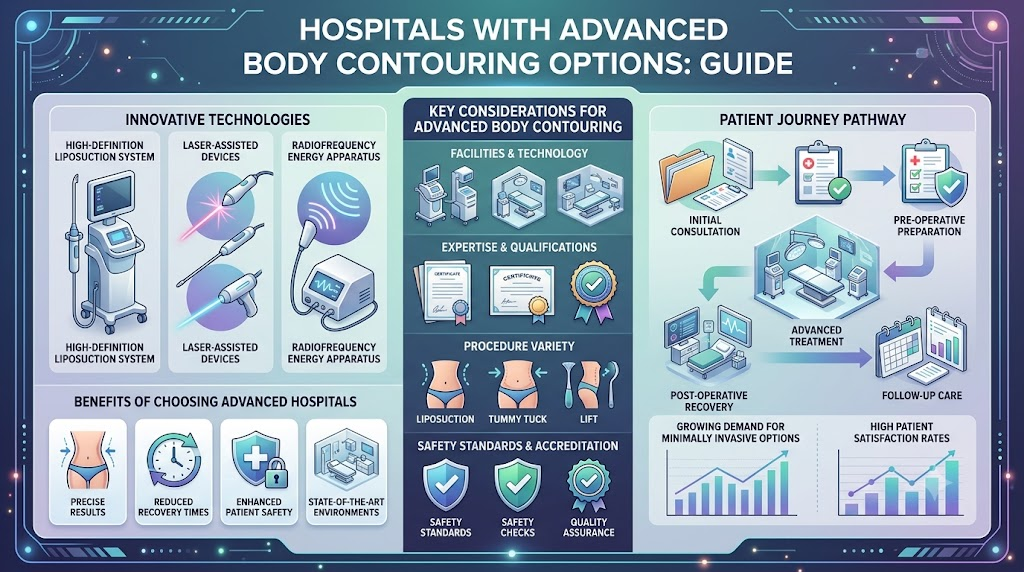
Technology Used in Modern Body Contouring
Advanced medical technology supports precision and safety in both surgical and non-surgical settings. Modern facilities utilize various technological categories:
- Power-Assisted and Ultrasound-Assisted Liposuction: Systems that help emulsify fat cells, making them easier to remove while reducing physical strain on the surgeon and minimizing tissue trauma.
- Radiofrequency Devices: Technologies delivering controlled thermal energy to remodel collagen and tighten skin laxity.
- Laser-Assisted Devices: Tools used for targeted fat disruption and skin contraction.
- Controlled Cooling Systems: Precision cooling applicators used in non-surgical fat reduction to freeze targeted adipocytes safely.
- Advanced Anesthesia & Patient Monitors: High-precision equipment tracking vital signs continuously throughout surgical procedures.
Technology should always serve to support qualified clinical judgment, never replace it.
Body Contouring After Major Weight Loss
Patients who have undergone massive weight loss—whether through bariatric surgery or lifestyle changes—often experience unique physical challenges. Substantial weight reduction frequently leaves behind extensive, inelastic skin folds that fail to retract naturally.
- Weight Stability: Surgeons generally look for stable weight maintenance over several months before proceeding with body contouring.
- Nutritional Assessment: Ensuring proper protein intake, vitamin levels, and overall metabolic health to support proper wound healing.
- Staged Procedures: Because major body lifts involve extensive areas, surgeons often recommend dividing operations into multiple stages (e.g., lower body lift first, followed later by arm or breast procedures) to minimize physical stress and promote safe recovery.
Body Contouring After Pregnancy
Pregnancy causes significant stretching of the skin and muscles of the abdominal wall, along with natural shifts in fat distribution. While many postpartum changes improve naturally over time, some structural changes—such as separated rectus muscles or persistent lower abdominal skin laxity—may remain.
- Timing: Surgeons typically advise waiting until weight stabilizes and family-planning decisions are finalized before pursuing surgical body contouring like an abdominoplasty.
- Individual Recovery: Postpartum recovery places unique demands on the body, making thorough medical evaluation vital. Cosmetic procedures should never be viewed as a substitute for natural postpartum healing.
Consultation and Patient Assessment
A comprehensive initial consultation forms the foundation of any safe cosmetic procedure. It is a two-way dialogue between the patient and the healthcare team.
- Medical History Review: Documenting past surgeries, chronic health conditions, bleeding disorders, and healing tendencies.
- Medication & Supplement Review: Identifying drugs or herbal products that could interfere with anesthesia or blood clotting.
- Physical Examination: Evaluating skin thickness, elasticity, fat distribution, and underlying muscle tone.
- Goal Alignment: Discussing what the patient hopes to achieve and determining whether those goals are realistic.
- Risk and Alternative Discussion: Outlining potential complications and exploring whether non-surgical options might achieve similar goals with less downtime.
Realistic Expectations and Cosmetic Outcomes
Maintaining realistic expectations is vital for emotional and psychological satisfaction following body contouring.
- Results vary significantly based on genetics, skin elasticity, age, and adherence to post-procedure instructions.
- Body contouring alters shape and removes localized tissue, but it does not guarantee anatomical perfection or halt the natural aging process.
- Surgical swelling can take several months to subside entirely, meaning final contours may not be visible immediately.
- Non-surgical treatments require patience as the body gradually processes targeted fat cells or remodels collagen.
Safety, Accreditation, and Facility Standards
Cosmetic surgery and advanced dermatological procedures carry inherent medical risks. Choosing a facility that adheres to rigorous safety standards significantly minimizes those risks.
- Accreditation: Facilities should be accredited by recognized national or international healthcare bodies (such as JCI, AAAASF, or national medical boards).
- Sterilization Protocols: Strict adherence to infection control prevents post-operative bacterial contamination.
- Emergency Infrastructure: Immediate availability of resuscitation equipment, backup power supplies, and transfer agreements to nearby acute-care hospitals.
- Qualified Support Staff: Registered nurses and surgical technicians trained in perioperative care and complication management.
Risks and Possible Complications
Every medical intervention involves potential risks. A responsible hospital ensures patients are fully informed about what could go wrong before consenting to treatment. Common and potential risks include:
- Temporary Side Effects: Bruising, swelling, soreness, numbness, and localized discomfort.
- Surgical Risks: Infection, hematoma (blood accumulation), seroma (fluid buildup), poor wound healing, and noticeable scarring.
- Aesthetic Imperfections: Asymmetry, surface irregularities, contour depressions, or skin laxity.
- Anesthesia Complications: Adverse reactions to sedative or general anesthetic medications.
- Systemic Risks: In rare cases, severe complications such as blood clots (deep vein thrombosis) or pulmonary embolism can occur, particularly with extensive surgical procedures.
Preparing for Body Contouring
Proper preparation supports smoother recovery and minimizes avoidable risks. Patients are generally advised to:
- Complete all recommended medical evaluations and lab tests.
- Discontinue smoking or nicotine use weeks before and after surgery, as nicotine impairs blood flow and wound healing.
- Avoid blood-thinning medications or supplements (as advised by the medical team) to reduce bleeding risks.
- Arrange for a trusted friend or family member to provide transportation home and assist during the initial recovery days.
- Prepare a comfortable home recovery space with necessary supplies, loose clothing, and prescribed medications ready.
Recovery and Follow-Up
Recovery timelines vary widely depending on the extent of the procedure performed. Non-surgical treatments often involve little to no downtime, allowing patients to resume normal activities immediately. Surgical procedures, however, require structured healing periods:
- Rest and Activity Restrictions: Strenuous exercise, heavy lifting, and intense physical work must be avoided for several weeks.
- Compression Garments: Wearing specialized elastic garments helps reduce swelling, supports healing tissues, and helps skin conform to new contours.
- Follow-Up Appointments: Attending scheduled check-ups allows the surgical team to monitor incision healing, remove sutures if necessary, and address emerging concerns promptly.
Choosing a Hospital with Advanced Body Contouring Options
Selecting the right hospital requires looking past marketing claims and evaluating core institutional strengths:
- Surgeon Credentials: Verify board certification and specialized training.
- Facility Safety: Confirm surgical accreditation and emergency support systems.
- Range of Modalities: Ensure the hospital offers diverse options, ensuring unbiased recommendations.
- Transparent Cost Structures: Look for clarity regarding surgeon fees, hospital charges, anesthesia, and follow-up care costs.
- Patient Communication: Assess whether the staff encourages questions and provides transparent, realistic information.
Medical Tourism and Body Contouring
Many patients explore international travel for cosmetic procedures to combine care with cost savings or specialized expertise. However, traveling for surgery introduces unique logistical and clinical considerations:
- Credential Verification: Independently verify the hospital’s accreditation and the surgeon’s specific board certifications.
- Regulatory Standards: Understand that medical oversight, malpractice laws, and patient rights vary significantly across countries.
- Recovery and Flying: Most surgeons advise remaining in the destination city for a specific post-operative recovery window (often 1 to 2 weeks) before taking a commercial flight to reduce blood clot risks.
- Continuity of Care: Plan in advance how local follow-up care will be handled once you return home, and know who to contact if a complication arises.
- Travel Insurance: Standard travel insurance rarely covers elective medical complications; specialized medical tourism insurance may be necessary.
Table 2 – Hospital Evaluation Checklist
| Evaluation Factor | Questions Patients Can Ask | Why It Matters |
| Surgeon Qualifications | Is the surgeon board-certified in plastic surgery with verified experience in this procedure? | Ensures you are treated by a formally trained specialist with demonstrated expertise. |
| Facility Accreditation | Is the operating facility accredited by a recognized national or international healthcare board? | Guarantees adherence to strict safety, hygiene, and emergency infrastructure standards. |
| Anesthesia Support | Who administers the anesthesia, and what monitoring equipment is utilized during surgery? | Safeguards vital functions and manages sedation safety throughout operative procedures. |
| Infection Control | What sterilization protocols and sterile environment measures does the hospital enforce? | Minimizes the risk of severe post-operative bacterial infections and complications. |
| Emergency Preparedness | What backup systems and hospital transfer agreements exist if an emergency occurs? | Ensures rapid, life-saving intervention should unexpected surgical complications arise. |
| Follow-Up & Aftercare | How are post-recovery check-ups and potential complication management structured? | Provides continuity of care and ensures healing progresses safely over time. |
Understanding the Cost of Body Contouring
The financial investment required for body contouring depends on multiple variables:
- Procedure Complexity: Surgical procedures generally cost more than non-surgical series due to operating room and anesthesia requirements.
- Extent of Treatment: Treating multiple anatomical zones increases operative time and resource utilization.
- Surgeon and Facility Fees: Highly experienced specialists and accredited hospital environments reflect higher overhead costs.
- Additional Expenses: Prescriptions, compression garments, diagnostic lab work, and follow-up visits.
- Travel Costs: For medical tourism patients, flights, extended hotel stays, and local transportation add to the overall budget.
Patients should always request a comprehensive, itemized cost estimate before committing to any treatment plan.
Common Mistakes When Choosing a Body Contouring Hospital
- Choosing Solely by Price: Selecting the cheapest provider often compromises facility standards, surgeon qualifications, and patient safety.
- Falling for Aggressive Advertising: Trusting promotional discounts or unrealistic guarantees rather than verified clinical credentials.
- Assuming Newer Means Better: Equating flashy marketing or expensive novelty devices with superior medical outcomes.
- Ignoring Facility Accreditation: Underestimating the importance of certified surgical suites and emergency support systems.
- Neglecting Post-Op Planning: Failing to arrange local recovery assistance or follow-up care, especially when traveling abroad.
- Hiding Medical History: Omitting vital details regarding smoking habits, medications, or past health issues from the surgical team.
When to Reconsider or Delay a Cosmetic Procedure
Elective cosmetic procedures should always be approached with careful reflection. Patients are encouraged to pause, re-evaluate, or delay treatment if:
- Underlying medical conditions are unstable or uncontrolled.
- Expectations are unrealistic or based on pressure from others rather than personal goals.
- They feel rushed or pressured by promotional discounts or limited-time offers.
- The surgeon or clinic cannot clearly explain potential risks and alternatives.
- Arrangements for follow-up care and emergency management remain unclear.
Step-by-Step Guide to Choosing the Right Hospital
- Step 1: Clarify your personal goals and identify the specific physical concern you wish to address.
- Step 2: Research reputable hospitals and specialized cosmetic centers known for high safety standards.
- Step 3: Verify the board certifications, training, and clinical background of the attending surgeons.
- Step 4: Confirm that the hospital operating facilities are fully accredited and equipped with proper emergency support.
- Step 5: Schedule an in-person or virtual consultation to discuss your health history and anatomical suitability.
- Step 6: Compare proposed treatment options, weighing surgical versus non-surgical risks, benefits, and recovery timelines.
- Step 7: Review itemized financial estimates, ensuring all aftercare and follow-up expenses are transparent.
- Step 8: Plan your recovery environment and time off work thoroughly.
- Step 9: Make your final decision based on safety, professional expertise, and realistic expectations rather than advertising alone.
Frequently Asked Questions
What is body contouring?
Body contouring refers to medical or surgical procedures designed to reshape specific areas of the body by removing localized fat, tightening skin, or improving proportions.
What types of body contouring procedures are available?
Available options include surgical procedures like liposuction, tummy tucks, and body lifts, as well as non-surgical treatments using laser, radiofrequency, or cooling technologies.
What is the difference between surgical and non-surgical body contouring?
Surgical options involve incisions and direct tissue removal for more dramatic changes, while non-surgical treatments use external devices to target fat or skin laxity with minimal downtime.
What should I look for in a body contouring hospital?
Look for board-certified surgeons, accredited surgical facilities, robust emergency support, infection-control standards, and transparent patient communication.
How do I choose a qualified body contouring surgeon?
Verify their board certification in plastic surgery, hospital operating privileges, extensive procedure-specific experience, and patient-centered communication style.
What technologies may be used for advanced body contouring?
Advanced facilities utilize power-assisted liposuction, radiofrequency devices, ultrasound systems, controlled cooling devices, and precise patient monitoring equipment.
Is body contouring a weight-loss treatment?
No, body contouring is designed for body reshaping and contour refinement, not as a treatment for generalized obesity or substantial weight reduction.
Can body contouring help after major weight loss?
Yes, surgical body contouring is frequently used to remove redundant, hanging skin folds left behind after massive weight loss.
What should I expect during a body contouring consultation?
Expect a review of your medical history, a physical examination, discussion of your goals, evaluation of risks, and exploration of suitable treatment alternatives.
What are the risks of body contouring procedures?
Risks include bruising, swelling, infection, poor scarring, asymmetry, anesthesia complications, and rare systemic events like blood clots.
How long does body contouring recovery take?
Recovery varies widely; non-surgical treatments require little downtime, whereas surgical procedures may require weeks of restricted activity and garment use.
How much does body contouring cost?
Costs depend on procedure complexity, number of treatment areas, surgeon fees, facility charges, anesthesia, and geographic location.
Is non-surgical body contouring safer than surgery?
Non-surgical treatments generally carry fewer risks and shorter recovery times than major surgery, though they offer more subtle results and are not suitable for major skin excess.
What should I consider before traveling abroad for body contouring?
Consider surgeon credentials, hospital accreditation, local medical regulations, recovery timelines before flying, and continuity of care upon returning home.
What are the most important factors when choosing a hospital for body contouring?
Surgeon expertise, facility safety standards, emergency infrastructure, realistic expectation-setting, and comprehensive follow-up care are the most critical factors.
Conclusion
Modern body contouring offers a variety of surgical and non-surgical pathways for individuals seeking to refine their physical proportions and address localized concerns. However, achieving safe and satisfying outcomes requires looking beyond promotional advertising and focusing on core healthcare fundamentals. By prioritizing board-certified specialists, accredited hospital facilities, rigorous infection control, and transparent patient communication, individuals can navigate their choices responsibly. Professional evaluation ensures that treatments align with personal health profiles, anatomical realities, and realistic expectations, supporting safe care and long-term well-being.