Introduction
After cosmetic or plastic surgery, good postoperative care is an important part of the recovery process. Most patients do not need intensive care, but people having longer, more complex or combined procedures may need closer monitoring after surgery. The right level of care can include careful observation after anesthesia, checking vital signs, managing pain and watching for possible complications. For patients and families researching surgical facilities, BestCosmeticHospitals can provide useful information about cosmetic and plastic surgery hospitals. This guide explains Cosmetic ICU Facilities, what intensive or postoperative care may involve, which facilities can support patient safety, and what patients should ask before choosing a hospital or surgical facility.
What Is a Cosmetic ICU or Intensive Postoperative Care Unit?
A Cosmetic ICU is a hospital area where patients who need a higher level of monitoring after surgery can receive close medical attention. However, not every cosmetic surgery patient needs ICU care.
Many patients recover in a post-anesthesia care unit, surgical recovery area or regular hospital room. The level of care depends on the type of procedure, length of anesthesia, medical history and the patient’s condition after surgery.
If a patient needs more intensive monitoring or medical support, the surgical team may recommend care in an ICU or another suitable hospital unit.
Why Is Postoperative Monitoring Important?
After surgery, healthcare professionals monitor important signs such as heart rate, blood pressure, breathing and oxygen levels. They may also check pain, bleeding, fluid balance, nausea and other signs of recovery.
Monitoring is especially useful after anesthesia because the body needs time to return to its normal state. Regular observation allows the medical team to identify changes and provide treatment when needed.
The amount of monitoring depends on the procedure and the patient’s condition. A simple procedure may need only a short period of observation, while a more complex surgery may require longer monitoring.
Which Cosmetic Procedures May Need Closer Monitoring?
The need for intensive postoperative care is not decided only by the name of a cosmetic procedure. The patient’s health, anesthesia, length of surgery and number of procedures performed at the same time can also matter.
Major body contouring procedures, extensive liposuction, combined cosmetic procedures and complex plastic or reconstructive surgery may sometimes require closer observation.
Patients with certain medical conditions may also need additional monitoring. The surgeon and anesthesia team assess these factors before and after surgery to decide the safest level of care.
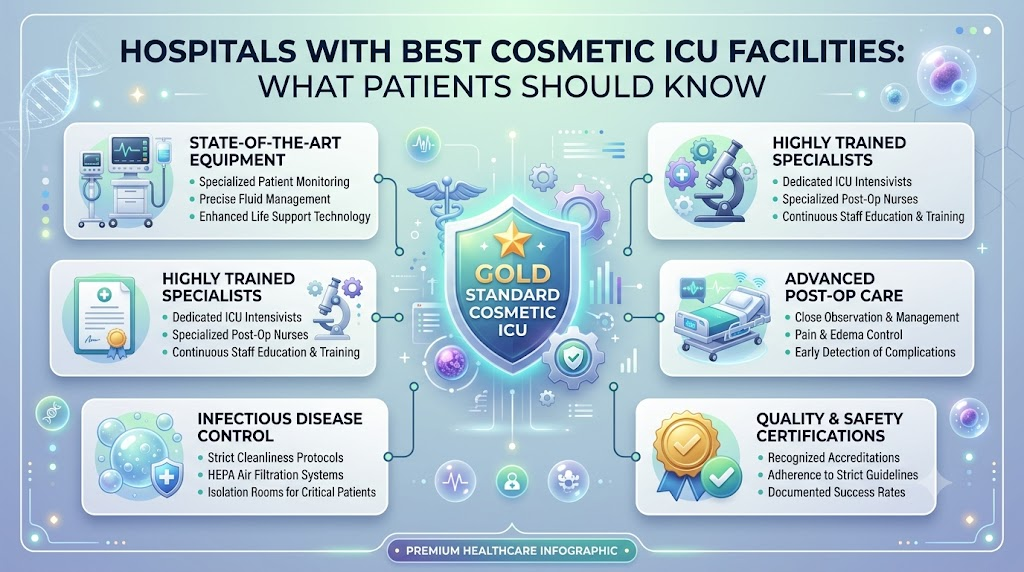
Important Cosmetic ICU Facilities
A hospital or surgical facility should have appropriate medical support for the type of surgery being performed.
Patient Monitoring
Monitoring equipment can track vital signs such as heart rate, blood pressure and oxygen levels. This gives the medical team regular information about the patient’s condition during recovery.
Anesthesia Support
Qualified anesthesia professionals are responsible for managing anesthesia and monitoring the patient during surgery and the early recovery period.
Oxygen and Airway Support
Oxygen equipment and airway support may be needed if a patient has difficulty maintaining normal breathing after anesthesia or surgery.
Emergency Equipment
A suitable surgical facility should have equipment and trained staff to respond to medical emergencies. The exact equipment depends on the type of facility and procedures performed.
Medication and Infusion Support
Medicines and fluids may be given through different methods during recovery. Infusion equipment can help healthcare professionals deliver certain medicines and fluids in a controlled way.
Diagnostic Services
Depending on the patient’s condition, blood tests and other diagnostic services may be required after surgery. Access to appropriate testing can help doctors investigate unexpected symptoms or changes.
Infection Control
Clean surgical areas, proper sterilization and infection-control procedures are important parts of safe surgical care. Hospitals should follow applicable safety and infection-control standards.
Cosmetic ICU Facilities at a Glance
| Facility or Support | What It Provides | Why It Matters |
|---|---|---|
| Patient monitoring | Tracks vital signs and recovery | Helps staff notice changes in the patient’s condition |
| Anesthesia support | Provides and monitors anesthesia care | Supports safe surgery and recovery |
| Oxygen and airway support | Provides oxygen and breathing assistance when needed | Supports patients who need respiratory help |
| Emergency equipment | Supports response to unexpected medical problems | Allows trained staff to respond quickly |
| Trained nursing staff | Provides observation and routine postoperative care | Supports continuous patient care |
| Diagnostic services | Provides tests when medically required | Helps investigate changes or concerns |
| Medication support | Provides medicines and fluids as prescribed | Supports pain control and other treatment needs |
| Emergency transfer capability | Allows transfer to higher-level hospital care when needed | Provides access to additional medical support |
The Medical Team in Cosmetic Postoperative Care
Safe recovery depends on a coordinated medical team. A plastic or cosmetic surgeon manages the surgical aspects of care and monitors the patient’s recovery.
An anesthesiologist or other qualified anesthesia professional manages anesthesia and helps assess the patient after the procedure. Nurses provide ongoing observation, medicines, pain care and other routine support.
For patients who become medically unstable or require intensive care, critical-care specialists and other healthcare professionals may become involved.
What Can Patients Expect After Cosmetic Surgery?
Immediately after surgery, patients are usually taken to a recovery area where healthcare professionals monitor them as they wake from anesthesia.
The team may check blood pressure, heart rate, breathing, oxygen levels, pain and nausea. They may also watch for bleeding or other concerns related to the procedure.
Some patients may be able to go home after an appropriate observation period. Others may need overnight hospital observation or more intensive monitoring because of the procedure or their medical condition.
The amount of equipment around a patient can vary. Being connected to monitors does not necessarily mean that a serious problem has occurred; monitoring is often a normal part of postoperative care.
How to Evaluate a Cosmetic Surgery Hospital
Patients should look at the overall level of medical care rather than focusing only on the surgical procedure.
Useful factors include qualified plastic or cosmetic surgeons, appropriate anesthesia services, trained nursing staff and suitable monitoring equipment. Patients should also ask about emergency procedures and access to hospital-level care if an unexpected medical problem occurs.
Infection-control practices, diagnostic services, postoperative observation and follow-up care are also worth discussing. Patients should confirm the exact services available directly with the hospital instead of relying only on advertising or general claims.
Accreditation, Licensing and Patient Safety
Before choosing a surgical facility, patients should check whether it is properly licensed and meets the healthcare and safety requirements that apply in their area.
It is also useful to ask whether qualified medical professionals are available during surgery and recovery and whether the facility has clear emergency procedures.
Accreditation systems can differ between countries and healthcare systems. Rather than relying on one label alone, patients should look at the facility’s licensing, medical staff, safety procedures and level of hospital support.
Cosmetic ICU vs General ICU vs Recovery Unit
A postoperative recovery unit is commonly used to monitor patients as they wake up from anesthesia. It is often the first place a patient goes after surgery.
A general ICU provides a higher level of monitoring and treatment for patients with serious medical problems of different types.
A Cosmetic ICU or intensive care setting may be used when a cosmetic or plastic surgery patient requires closer monitoring or more advanced support.
Not every cosmetic surgery patient needs ICU care. The appropriate level of monitoring depends on the patient’s condition, procedure and medical team’s assessment.
Frequently Asked Questions About Cosmetic ICU Facilities
1. Does every cosmetic surgery patient need ICU care?
No. Most cosmetic surgery patients do not require ICU-level care. The need for intensive monitoring depends on the procedure, anesthesia, medical history and the patient’s condition.
2. What is a Cosmetic ICU?
A Cosmetic ICU refers to an intensive care setting that can provide close monitoring and medical support for patients who need a higher level of care after cosmetic or plastic surgery. The exact services can vary between facilities.
3. What happens in the recovery area after cosmetic surgery?
Patients are monitored as they recover from anesthesia. Staff may check vital signs, oxygen levels, pain, nausea, bleeding and other signs of recovery.
4. Can a patient need overnight observation after cosmetic surgery?
Yes. Some patients may need overnight observation because of the procedure, anesthesia, medical history or recovery needs. The surgical team decides the appropriate level of observation.
5. What anesthesia support should a cosmetic surgery hospital provide?
The facility should have appropriately qualified anesthesia professionals who can manage anesthesia and monitor the patient during surgery and recovery. Patients can ask who will provide anesthesia care before the procedure.
6. What emergency facilities should a cosmetic surgery hospital have?
The facility should have appropriate emergency equipment, trained staff and clear emergency procedures. Depending on the situation, it should also have a way to access higher-level hospital care.
7. How important is nursing care after cosmetic surgery?
Trained nurses play an important role in monitoring patients, providing medicines, checking vital signs and supporting early recovery. Their availability is an important part of postoperative care.
8. Should I check whether a cosmetic surgery facility is licensed?
Yes. Patients should check whether the facility meets the licensing and safety requirements that apply in their area. They can also ask about medical staff qualifications and emergency procedures.
9. What should I ask before choosing a cosmetic surgery hospital?
Ask about the surgeon’s qualifications, anesthesia services, postoperative monitoring, emergency equipment, overnight care and follow-up support. It is also useful to ask what happens if an unexpected medical problem occurs.
10. Is intensive care always safer for cosmetic surgery patients?
Not necessarily. ICU care is intended for patients who need a higher level of monitoring or support. The appropriate level of care depends on the patient’s medical condition and the type of surgery.
Conclusion
Good Cosmetic ICU Facilities are part of a wider system of safe surgical and postoperative care. Appropriate monitoring, qualified medical professionals, anesthesia support, emergency equipment and access to higher-level hospital care can all be important when patients need closer observation. Not every cosmetic surgery requires ICU care, and the right level of monitoring depends on the individual patient and procedure. Before surgery, patients should discuss their medical history, anesthesia plan and recovery arrangements with a qualified plastic or cosmetic surgeon and confirm the available facilities with the surgical hospital.