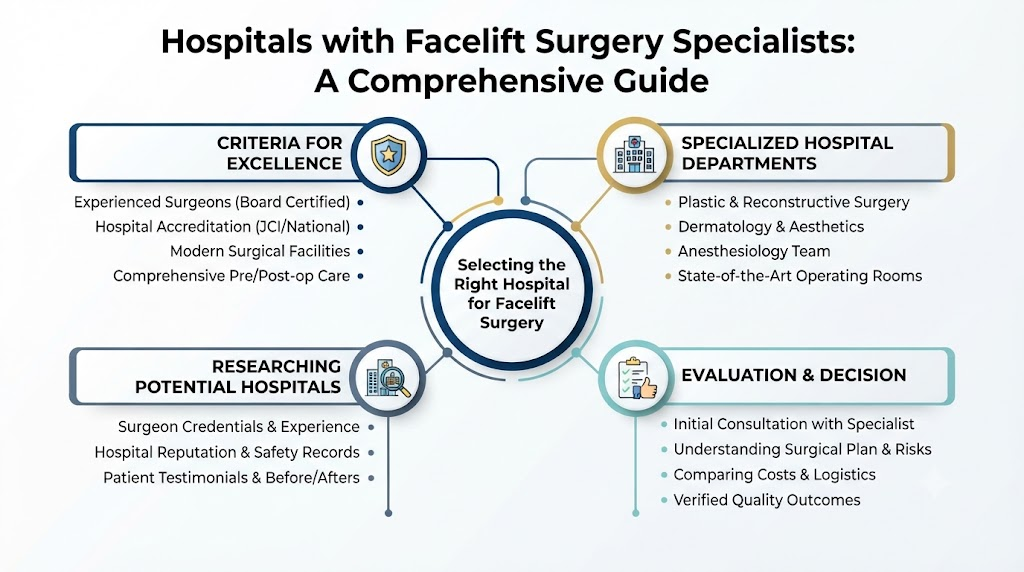
Introduction
Facelift surgery, or rhytidectomy, remains one of the most effective procedures for addressing the visible signs of facial aging. By tightening the skin and supporting deeper tissues, this surgery helps create a more rested and refreshed appearance. However, the quality of your outcome relies heavily on the technical skill of the surgeon and the safety standards of the facility where the procedure is performed.For those beginning their research, BestCosmeticHospitals offers valuable resources to help you compare leading institutions and understand the requirements for high-quality facial rejuvenation care.
Understanding Facelift Surgery
A facelift is a surgical procedure designed to improve visible signs of aging in the face and neck. Over time, factors such as sun exposure, gravity, and genetics cause the skin to lose elasticity and the underlying facial muscles to weaken. The goal of rhytidectomy is to lift and firm sagging tissues to improve the facial contour.
FACELIFT SURGERY OVERVIEW TABLE
| Aspect | Description |
| Procedure Name | Rhytidectomy (Facelift) |
| Specialty | Plastic & Reconstructive Surgery |
| Common Candidates | Adults with visible facial laxity/sagging |
| Anesthesia | General or IV sedation |
| Typical Recovery | 2–4 weeks for initial healing |
Types of Facelift Procedures
Different techniques are tailored to address specific areas of the face and the patient’s individual aging patterns.
FACELIFT PROCEDURES TABLE
| Procedure | Best For | Recovery | Key Benefit |
| Traditional Facelift | Extensive aging/neck sagging | Longer | Comprehensive improvement |
| Mini Facelift | Mild sagging in lower face | Shorter | Smaller incisions, faster return |
| Deep Plane Facelift | Deeper tissue sagging | Moderate | Long-lasting, natural-looking |
| Mid-Facelift | Cheek and under-eye area | Moderate | Improves mid-face volume |
| Neck Lift | Sagging neck/jowl area | Moderate | Defines jawline and neck |
Top Hospitals with Facelift Surgery Specialists
1. The Aesthetic & Reconstructive Institute
- Overview: A premier facility focusing on advanced facial aesthetics.
- Expertise: Board-certified surgeons specializing in deep plane and mini-facelift techniques.
- Consultation: Features a sophisticated digital simulation process to align expectations with potential outcomes.
- Why Patients Choose This Hospital: Renowned for its focus on natural-looking results and private, patient-centered aftercare suites.
2. Metropolitan Cosmetic Surgery Center
- Overview: Integrated hospital department with access to full surgical safety protocols.
- Advanced Tech: Utilizes high-definition 3D facial imaging for surgical planning.
- Why Patients Choose This Hospital: The safety of a full-scale hospital environment combined with the boutique-level care expected in cosmetic surgery.
HOSPITAL COMPARISON TABLE
| Hospital Name | Location | Facelift Specialists | Dept. | Tech | Int’l Patients |
| Aesthetic & Recon | Metro | Yes | Plastic Surgery | Advanced | Yes |
| Metropolitan Cosmetic | Metro | Yes | Plastic Surgery | High-Def | Yes |
Modern Technologies Used in Facelift Surgery
TECHNOLOGY TABLE
| Technology | Purpose | Patient Benefit |
| 3D Imaging | Virtual visualization | Better understanding of potential outcomes |
| Surgical Planning | Precise mapping | More accurate, customized results |
| Advanced Monitoring | Safety during anesthesia | Increased patient safety |
| Scar Reduction | Minimizing incisions | Less visible post-operative marks |
Recovery After Facelift Surgery
Recovery is a gradual process that requires patience and strict adherence to your surgeon’s aftercare plan.
RECOVERY TIMELINE TABLE
| Recovery Stage | What to Expect |
| First Day | Mild discomfort, bandages, rest |
| First Week | Swelling and bruising; initial stitches removed |
| 2–4 Weeks | Return to light activity; swelling subsides |
| Long-Term | Final healing and maturation of scars |
Future of Facial Rejuvenation
FUTURE OF FACELIFT SURGERY TABLE
| Innovation | Potential Benefit |
| AI Facial Planning | Enhanced surgical precision |
| 3D Simulation | Improved patient communication |
| Robotic Assistance | Higher accuracy in tissue handling |
| Regenerative Medicine | Faster healing and skin quality improvement |
Frequently Asked Questions (FAQs)
- What is a facelift?
Surgical lifting and tightening of facial skin and tissues. - Who is a candidate?
Healthy individuals with visible facial laxity. - How long is recovery?
Usually a few weeks of downtime. - Is it painful?
Discomfort is managed with medication. - What are the risks?
As with any surgery, risks include infection or scarring. - How long do results last?
Results vary but generally last years. - Can it be combined with other procedures?
Often combined with eyelid surgery or brow lifts. - Will scars show?
Specialists use techniques to hide them in hairline contours. - How do I choose a hospital?
Look for board-certified specialists and accredited facilities. - Better than non-surgical?
Surgery addresses loose skin more effectively than non-invasive treatments. - Do I need a hospital stay?
Often performed as an outpatient procedure. - When to return to work?
Usually 2–3 weeks. - Is smoking allowed?
No, smoking must be stopped to ensure healing. - How to maintain results?
Sun protection and a healthy lifestyle. - Are results immediate?
Swelling hides initial results; refinement takes months.
Final Thoughts
A successful facelift journey is built upon selecting a reputable hospital and a qualified facelift surgery specialist. By prioritizing board-certified expertise, modern surgical technology, and proper recovery protocols, patients can feel confident in their decision to pursue facial rejuvenation.For further information, hospital comparisons, and guidance on finding the right expert, visit BestCosmeticHospitals to start your journey toward informed and safe facial aesthetic care.