Introduction
Eyelid surgery, clinically known as blepharoplasty, is one of the most transformative procedures in the field of facial aesthetics. Whether you are looking to address the signs of aging around the eyes, such as drooping skin or persistent under-eye bags, or require surgery for functional reasons like vision obstruction, choosing the right medical environment is essential.The success of a blepharoplasty procedure depends heavily on the expertise of the surgeon and the quality of the hospital’s infrastructure. By selecting a specialized institution, patients ensure they receive care that prioritizes safety, precision, and aesthetic harmony. This guide is designed to provide you with a structured overview of what to expect, how to compare hospitals, and why professional care matters. For those beginning their research or seeking reliable comparisons of top institutions, BestCosmeticHospitals offers a wealth of information to guide your decision-making process.
Understanding Eyelid Surgery (Blepharoplasty)
Blepharoplasty is a surgical procedure focused on repairing droopy eyelids by removing excess skin, muscle, and fat. As we age, the tissues supporting the eyelids naturally weaken, leading to the sagging or “baggy” appearance that many people seek to correct.
The procedure can be performed on the upper eyelids, lower eyelids, or both. Beyond the cosmetic benefits, many patients undergo blepharoplasty because heavy, drooping upper eyelids can physically obstruct their field of vision. By restoring a more youthful and alert appearance, the surgery often provides both aesthetic satisfaction and practical functional improvements.
EYELID SURGERY OVERVIEW TABLE
| Aspect | Description |
| Procedure Type | Surgical removal/repositioning of eyelid tissue |
| Target Area | Upper and/or lower eyelids |
| Anesthesia Type | Local with sedation or general anesthesia |
| Recovery Time | 1–2 weeks for initial healing |
| Purpose | Aesthetic rejuvenation and/or vision correction |
Why Eyelid Surgery Is Performed
Droopy Eyelids (Ptosis)
When the muscle that lifts the eyelid weakens, the lid hangs lower, which can interfere with vision and give a tired appearance.
Under-Eye Bags
Puffy, prominent bags under the eyes are often caused by fat deposits that have migrated forward as the supporting skin stretches with age.
Excess Skin Around Eyes
Hooded upper eyelids can make the eyes look smaller and create a heavy, tired facial expression.
Vision Obstruction (Functional Cases)
In cases where excess skin drapes over the lashes, it can significantly limit a patient’s peripheral vision, necessitating a functional blepharoplasty.
Aging-Related Changes
The eyes are often the first area to show signs of aging, making blepharoplasty a popular choice for facial rejuvenation.
Cosmetic Facial Rejuvenation
Many patients combine eyelid surgery with other procedures, such as brow lifts or facelifts, to achieve a more balanced facial aesthetic.
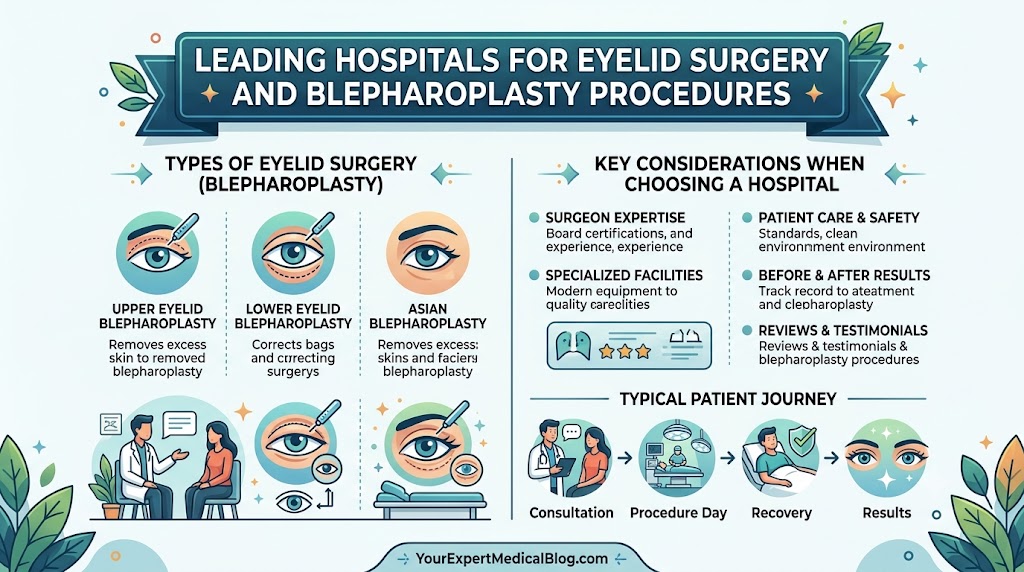
Types of Eyelid Surgery
Upper Eyelid Blepharoplasty
Focuses on removing excess skin and fat from the upper lid to eliminate hooding.
Lower Eyelid Blepharoplasty
Targets under-eye bags and skin laxity, often repositioning fat to create a smoother transition between the eye and cheek.
Combined Surgery
Involves treating both the upper and lower lids during a single surgical session for comprehensive rejuvenation.
Functional Eyelid Correction
A procedure performed specifically to remove obstructing skin that impacts the patient’s ability to see clearly.
EYELID SURGERY TYPES TABLE
| Type | Purpose | Best For |
| Upper Blepharoplasty | Remove hooding skin | Improving tired/heavy appearance |
| Lower Blepharoplasty | Eliminate under-eye bags | Refreshing the lower eye area |
| Combined Surgery | Total eye area rejuvenation | Comprehensive aesthetic goals |
| Functional Surgery | Correcting vision obstruction | Patients with limited peripheral view |
Top Hospitals for Eyelid Surgery (Blepharoplasty)
Metro Aesthetic Institute
- Hospital Overview: A world-class center dedicated to facial plastic surgery and reconstructive eye care.
- Cosmetic Surgery Department: Led by renowned oculoplastic surgeons with decades of experience.
- Blepharoplasty Expertise: Specializes in natural-looking, age-appropriate rejuvenation.
- Technology & Equipment: Utilizes state-of-the-art laser-assisted surgical tools.
- Surgeon Experience: Surgeons are board-certified in both ophthalmology and plastic surgery.
- Patient Care Services: Offers dedicated concierge coordination for out-of-town patients.
- Recovery Support: Provides post-operative kits and 24/7 access to surgical nursing staff.
- Why Patients Choose This Hospital: The hospital’s reputation for achieving subtle, non-surgical-looking results.
- Key Strengths: Exceptional surgical precision and personalized aesthetic planning.
Urban Facial Rejuvenation Center
- Hospital Overview: A hospital focusing on advanced aesthetic medicine and patient safety.
- Cosmetic Surgery Department: A multidisciplinary team of aesthetic specialists and anesthesiologists.
- Blepharoplasty Expertise: High proficiency in complex lower eyelid repositioning.
- Technology & Equipment: Advanced 3D imaging for pre-operative visualization.
- Surgeon Experience: A faculty of surgeons who actively contribute to medical research in aesthetics.
- Patient Care Services: Comprehensive psychological and physical preparation for surgery.
- Recovery Support: In-house physiotherapy for faster post-surgical comfort.
- Why Patients Choose This Hospital: The focus on evidence-based surgical protocols and patient safety.
- Key Strengths: Advanced safety protocols and patient-centered follow-up care.
HOSPITAL COMPARISON TABLE
| Hospital Name | Location | Blepharoplasty Expertise | Technology | Cosmetic Surgery Team | Patient Care |
| Metro Aesthetic | Metro City | Expert | Laser/Advanced | Oculoplastic Team | Excellent |
| Urban Facial | Capital City | Specialized | 3D Imaging | Multidisciplinary | Comprehensive |
Benefits of Eyelid Surgery
Younger Appearance
By removing sagging tissue, the eyes appear more open, refreshed, and alert.
Improved Eye Symmetry
Surgeons can correct minor natural imbalances between the two eyes, leading to a more harmonious facial structure.
Reduced Eye Bags
Removing or repositioning fat deposits effectively eliminates the tired, puffy appearance of under-eye bags.
Better Vision
For those with functional issues, the removal of heavy skin provides a clear, unobstructed field of view.
Boost in Confidence
Many patients report feeling significantly more confident and socially comfortable after rejuvenating their eyes.
BENEFITS TABLE
| Benefit | Explanation | Patient Impact |
| Youthful Look | Removes age-related hooding | Enhances confidence |
| Reduced Bags | Corrects fat displacement | Removes tired expression |
| Symmetry | Balances eye shape | More attractive facial features |
| Functional Improvement | Clears skin from line of sight | Better daily vision |
| Confidence Boost | Aligns look with inner vitality | Improved social engagement |
Risks and Considerations
While blepharoplasty is generally safe, patients must be aware of:
- Swelling and Bruising: Common during the first week and usually resolve on their own.
- Temporary Dryness: Eyes may feel dry; lubrication drops are usually prescribed.
- Scarring: While incisions are made in hidden areas (like the natural eyelid crease), some faint scarring is inevitable but usually invisible.
- Infection Risk: Minimized by strict adherence to surgical hygiene and aftercare.
Who Is an Ideal Candidate?
Ideal candidates are generally:
- Individuals noticing loose skin, puffiness, or vision-obstructing folds around the eyes.
- Healthy individuals without chronic conditions that impair healing.
- Non-smokers (or those willing to quit before surgery).
- People with realistic expectations about what surgery can and cannot achieve.
What Happens During the Procedure
- Anesthesia: You will be given medication to ensure you feel no pain.
- Incisions: The surgeon makes precise cuts along the natural lines of your eyelids.
- Correction: Excess fat, muscle, and skin are removed or repositioned.
- Closure: The incisions are closed with fine sutures, usually removed within a week.
- Recovery: The procedure typically lasts 1–2 hours depending on whether one or both eyelids are treated.
Recovery After Eyelid Surgery
First 24–48 Hours
Rest is critical. Swelling and bruising are normal; cold compresses are recommended to manage this.
First Week
Sutures are typically removed. Patients should avoid strenuous activity and protect their eyes from direct sunlight.
Full Recovery Phase
Most patients see the final results after 2–3 months as the skin fully heals and fine lines fade.
RECOVERY TABLE
| Phase | What Happens |
| Initial Recovery | Swelling/bruising peak; rest essential |
| First Week | Sutures removed; return to light work |
| 2–3 Weeks | Most swelling subsides; normal activity resumes |
| Full Healing | Final contouring settles; optimal results visible |
Future of Eyelid Surgery
The future of cosmetic surgery is focused on personalization and precision:
- AI Planning: AI helps simulate outcomes for more accurate communication.
- 3D Imaging: Allows patients to see a potential result before even starting.
- Minimally Invasive Techniques: Using laser tools for faster healing and less bruising.
FAQs
- What is blepharoplasty?
It is surgery to repair droopy or baggy eyelids. - Is eyelid surgery painful?
Patients are numbed during the procedure and typically experience only mild discomfort afterward. - How long does recovery take?
Initial healing is 1–2 weeks, but full results settle over months. - Who needs eyelid surgery?
Anyone experiencing vision obstruction or cosmetic concerns due to excess skin/fat. - Are results permanent?
The results are long-lasting, though they cannot stop the natural aging process. - What are the risks?
As with any surgery, risks include infection or dry eyes, though rare. - How much does it cost?
Costs vary based on the procedure complexity and facility location. - Is it cosmetic or medical?
Both; it depends on whether there is a functional need. - Can both eyelids be treated together?
Yes, it is common to do both in one session. - Will scars be visible?
They are hidden in the natural eyelid folds. - Do I need to stay overnight?
Usually, it is an outpatient procedure. - Can I wear contact lenses?
Not for the first few weeks; glasses are recommended. - Is bruising normal?
Yes, it is a standard part of the healing process. - How soon can I return to work?
Typically within 7–10 days. - Does insurance cover it?
If it is functional (vision correction), insurance might cover it.
Final Thoughts
Eyelid surgery is a highly effective way to refresh your appearance and, in many cases, improve your quality of life through better vision. The key to a successful outcome is a combination of choosing a highly skilled surgeon, selecting an accredited hospital, and strictly following post-operative care instructions. By prioritizing safety and expertise, you set the stage for a positive aesthetic journey. For more guidance on choosing the right facility and to compare top providers, visit BestCosmeticHospitals.