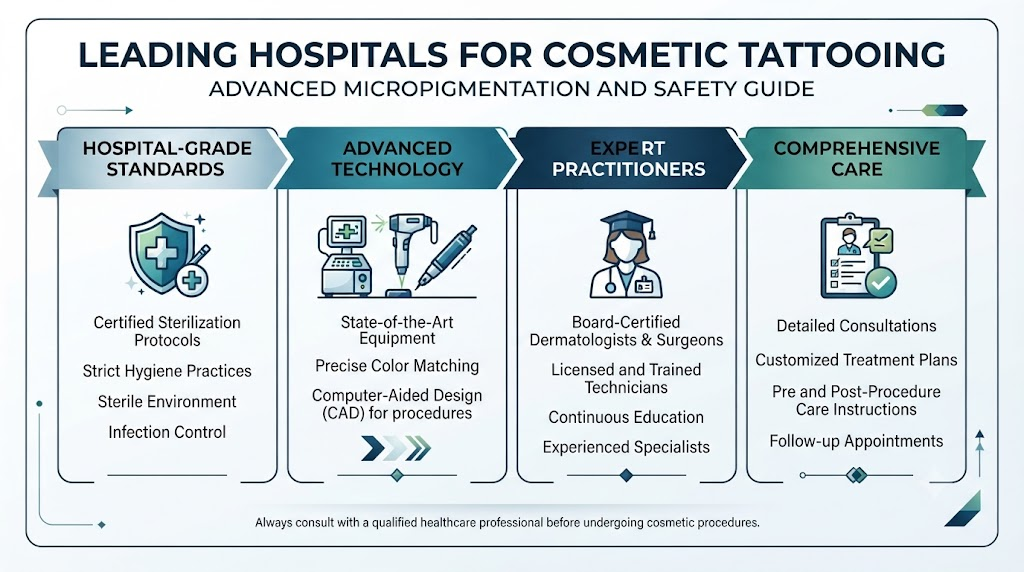
Introduction
Modern aesthetic medicine has advanced far beyond traditional topically applied cosmetics. Today, individuals seeking long-lasting symmetry, facial definition, or structural skin reconstruction are increasingly turning to advanced micropigmentation techniques. Cosmetic tattooing, commonly known as permanent makeup, has grown immensely popular due to its ability to streamline daily personal routines, restore defining facial lines, and provide profound restorative benefits for individuals navigating post-surgical skin changes.In this educational guide, readers will learn about the foundational science of micropigmentation, discover the diverse cosmetic and reconstructive procedures available, and gain a clear roadmap for selecting a premier clinical facility. To begin exploring highly rated cosmetic care options, verifying facility accreditations, and reading comprehensive specialist profiles, you can visit BESTCOSMETICHOSPITALS, a dedicated educational cosmetic dermatology and hospital guide engineered to assist your personal healthcare research.
What Is Cosmetic Tattooing?
Cosmetic tattooing, professionally referred to as micropigmentation or permanent makeup, is a highly refined aesthetic discipline that involves the precise implantation of microscopic particles of pigment into the upper layer of the skin’s dermis. This specialized technique is utilized to simulate the appearance of everyday cosmetics—such as eyebrow pencils, lip liners, or eyeliners—and to anatomically reconstruct tissue coloration variations resulting from surgeries, trauma, or congenital conditions.
Cosmetic Tattooing vs. Decorative Body Tattoos
It is a common misconception that cosmetic tattooing is identical to traditional decorative body tattooing. In clinical practice, the two methodologies differ dramatically across several core operational variables:
- Depth of Implantation: Traditional body tattoos place heavy ink matrices deep into the reticular layer of the dermis, creating dark, permanent lines. Cosmetic tattooing targets the more superficial papillary layer of the dermis, resulting in a softer, more natural diffusion of color that gracefully adapts to the natural aging changes of facial architecture.
- Pigment Composition: Body art relies on heavy inks that often contain dense metallic bases. Micropigmentation uses highly purified, medical-grade iron oxides or synthetic organic pigments that are explicitly engineered to remain stable, hypoallergenic, and bio-compatible within delicate facial tissues.
- Equipment Precision: Cosmetic specialists utilize specialized digital micropigmentation devices equipped with ultra-fine, single-use needle groups designed to work at low speeds, preventing tissue tearing and localized scarring.
Reconstructive and Medical Applications
Beyond purely aesthetic enhancements, cosmetic tattooing serves a profound role in reconstructive medicine. For individuals recovering from oncological surgeries, specialized medical tattooing can anatomically recreate the three-dimensional appearance of the areola complex. It is also highly effective for blending localized patches of vitiligo, masking hypopigmented surgical scars, or countering hair loss patterns. Because structural skin types, vascularity, and patient medical histories vary significantly, a comprehensive professional skin evaluation is always required to determine clinical suitability before any treatment is initiated.
Common Cosmetic Tattooing Procedures
Specialized cosmetic centers offer an extensive range of micropigmentation options designed to address distinct facial zones and post-operative tissue requirements.
Eyebrow Micropigmentation
Eyebrow micropigmentation utilizes diverse advanced mapping techniques—including microblading, powder shading, or digital hair-stroke simulation—to design fuller, balanced brows. This procedure is highly beneficial for individuals experiencing diffuse hair thinning, alopecia, or structural hair loss following chemotherapy treatments. The specialist carefully charts individual hair patterns to mimic the natural direction and flow of human brow hairs, creating a balanced, three-dimensional look.
Lip Blush
Lip blush treatments provide natural coloration, balance uneven borders, and restore structural definition to pale or aging lips. Rather than creating a harsh, artificial outline, modern clinical methods infuse a soft, translucent veil of custom-blended pigment throughout the mucosal tissue. This subtle enhancement can visually restore lost volume and correct structural asymmetries caused by minor scarring or natural changes in tissue elasticity.
Permanent Eyeliner
For individuals seeking long-lasting eye definition or those who struggle to apply standard cosmetics due to continuous hand tremors or visual impairments, permanent eyeliner provides a highly precise solution. The pigment can be applied as a ultra-thin, subtle lash enhancement directly within the lash line to give the appearance of thicker lashes, or styled into a defined eyeliner contour along the margins of the upper and lower eyelids.
Scar Camouflage
Medical scar camouflage is a complex parameter within reconstructive micropigmentation. It involves the careful blending of specialized flesh-toned pigments directly into healed, stable scars resulting from past surgeries, accidental trauma, or deep burns. By systematically matching the unique undertones of the surrounding healthy skin, the specialist reduces the stark visual contrast of the scar tissue, making it blend smoothly into the adjacent skin.
Scalp Micropigmentation (SMP)
Scalp micropigmentation is a non-surgical, highly specialized method for treating hair thinning and widespread pattern baldness in both men and women. Using an ultra-fine digital delivery system, the cosmetic specialist implants thousands of microscopic pigment dots into the epidermal-dermal junction of the scalp. This meticulously simulates the appearance of natural, short-shaved hair follicles, effectively reducing the bright contrast of an exposed scalp and creating the optical illusion of denser hair.
Areola Restoration
Areola restoration represents a vital, deeply emotional final milestone for patients who have undergone mastectomy and subsequent breast reconstruction surgery. By utilizing complex multi-tonal shading, custom color layering, and precise geometric mapping, specialized clinical tattooists can replicate a realistic, three-dimensional image of the natural areola and nipple complex, restoring structural balance to the tissue.
Beauty Marks & Freckle Tattooing
While less structurally intensive than medical procedures, the strategic placement of individual beauty marks or clusters of soft freckles remains a popular option for camouflaging minor surface blemishes or adding youthful asymmetry to the complexion. These pigments are placed shallowly into the skin to ensure they age naturally alongside the patient’s organic skin cells.
Cosmetic Tattooing Procedures Comparison Table
| Procedure | Primary Purpose | Suitable For | Clinical Depth & Goal |
| Eyebrow Micropigmentation | Creates fuller, highly defined brows | Sparse hairs, alopecia, post-chemotherapy loss | Superficial dermal shading or distinct stroke mapping |
| Lip Blush | Restores color, border symmetry, and tint | Pale, fading, or asymmetrical lip tissue | Translucent shading across mucosal layers |
| Permanent Eyeliner | Defines lash line and eye structure long-term | Physical tremors, cosmetic reductions, thin lashes | Ultra-precise line placement along eyelid margins |
| Scar Camouflage | Blends hyper- or hypopigmented scar tissue | Fully healed, stable post-surgical or traumatic scars | Multi-tonal flesh matching into non-vascular scar planes |
| Scalp Micropigmentation | Replicates appearance of dense hair follicles | Widespread thinning, pattern baldness, visible scars | Dot-matrix follicle simulation across the scalp |
| Areola Restoration | Recreates natural appearance of the breast complex | Patients following complete breast reconstruction | Advanced 3D structural shading and color mapping |
Services Offered by Leading Cosmetic Tattooing Hospitals
Dedicated medical centers treat micropigmentation as a specialized surgical-adjacent discipline, providing structured protocols from the initial baseline evaluation through long-term care management.
Comprehensive Consultations & Skin Assessments
Every procedure begins with a detailed, unhurried cosmetic consultation paired with a clinical skin evaluation. Experienced dermatologists or aesthetic specialists thoroughly evaluate the target skin zone, documenting vascularity, skin thickness, elasticity, and the presence of any active dermatological conditions like eczema, psoriasis, or localized cystic acne. This systematic review ensures that the underlying dermal structure is completely stable and healthy enough to accept and retain pigment particles long-term.
Digital Treatment Planning and Color Matching
Leading hospitals utilize digital modeling systems to map out your facial dimensions prior to treatment. This allows you to preview the proposed changes on a high-definition screen, ensuring complete agreement on shape and position before any physical work begins. Furthermore, specialists spend considerable time performing advanced color matching. By analyzing the warm or cool undertones of your natural skin, they custom-blend medical-grade pigments to ensure the color ages gracefully without shifting into undesirable blue, gray, or orange hues.
Medical-Grade Execution and Structured Follow-Up
The actual micropigmentation procedures are performed within dedicated, highly sterile clinical rooms. Hospitals maintain rigid infection-control standards, utilizing single-use, sterile needle cartridges and medical-grade topical anesthetics to manage patient comfort effectively. Following the procedure, the facility provides comprehensive post-procedure care programs, including detailed healing checklists and structured touch-up appointments scheduled several weeks later to refine color density and ensure even, stable healing.
Advanced Technologies Used
The superior safety margins and natural color results delivered by premier aesthetic hospitals are directly supported by continuous advancements in micropigmentation technology.
- Digital Micropigmentation Devices: Modern microprocessor-controlled handpieces automatically adjust needle frequency based on skin resistance, preventing excessive tissue damage and ensuring highly uniform pigment depth.
- Precision Pigment Implantation Systems: Specialized, laser-cut needle groups are manufactured to medical-grade standards, ensuring fluid entry into the skin with minimal mechanical friction or localized swelling.
- Highly Purified Medical-Grade Pigments: Leading facilities avoid standard commercial inks, using hypoallergenic pigments that are thoroughly tested for stability, toxicity, and compatibility with human skin cells.
- Digital Skin Assessment Grids: Advanced cross-sectional imaging tools allow dermatologists to visually measure structural skin density and hydration levels, optimizing the depth settings for individual patients.
- Sterile Single-Use Equipment: Every component that touches the patient is fully integrated into a disposable cartridge system, completely eliminating the risk of cross-contamination.
- Rigid Hospital Infection-Control Protocols: Operating within a fully regulated healthcare environment guarantees that all environmental surfaces undergo systematic medical sterilization between patient sessions.
How to Choose the Right Hospital for Cosmetic Tattooing
Achieving a safe and natural permanent makeup result requires selecting a facility that operates under strict healthcare guidelines. Because micropigmentation involves breaching the protective skin barrier, patients should evaluate several core clinical quality indicators.
Clinical Expertise and Dermatology Support
The ideal center integrates certified aesthetic specialists with an active, on-site dermatology department. Having board-certified dermatologists supervising the clinical team ensures that complex skin conditions, subtle allergic histories, and unexpected tissue responses are managed with high-level medical expertise. Always confirm the specialist’s active credentials, specialized training hours, and professional clinical backgrounds.
Medical-Grade Hygiene and Advanced Infrastructure
Look for institutions that maintain immaculate, dedicated procedure rooms rather than general multi-use aesthetic stalls. The facility must proudly exhibit compliance with regional healthcare sterilization standards. During your evaluation, verify that the center utilizes advanced digital implantation equipment, maintains strict single-use disposable protocols, and showcases an organized, professional environment.
Transparent Consultations and Ethical Case Documentation
A reputable hospital will never rush you through the planning phase. The treating clinician should clearly explain the physiological changes the skin will undergo, discuss the realistic lifespan of the pigments, and provide a clear, itemized financial breakdown. Furthermore, seek out institutions that maintain comprehensive, high-resolution before-and-after case documentation. Reviewing validated, real-world examples of past clinical outcomes can provide valuable insight into the hospital’s artistic precision and technical execution across diverse skin tones and reconstructive challenges.
Hospital Selection Checklist
| Feature | Why It Matters | What to Look For |
| Experienced Specialists | Ensures safe pigment depth and anatomical color balance | Certified clinical backgrounds, extensive procedure history |
| Dermatology Integration | Provides immediate medical oversight for sensitive skin | On-site board-certified dermatologists supervising care |
| Sterile Clinical Environment | Drastically minimizes the risk of bacterial cross-contamination | Dedicated procedure suites, clear sterilization markings |
| Medical-Grade Systems | Guarantees precise needle frequency and stable pigments | Digital delivery handpieces, certified non-toxic pigment blends |
| Transparent Planning | Establishes realistic expectations and custom mappings | Comprehensive digital previews, thorough intake questionnaires |
| Comprehensive Aftercare | Protects the pigment stability throughout active healing | Detailed post-op instructions, dedicated topical healing balms |
Preparing for Cosmetic Tattooing
Meticulous pre-operative preparation plays an essential role in optimizing pigment retention and reducing the risk of unexpected bruising or irritation during your procedure.
Medical Screening and Skin Evaluations
In the weeks leading up to your appointment, the clinical team conducts a thorough review of your medical history. It is vital to document any history of keloid scarring, bleeding disorders, auto-immune conditions, or seasonal allergies. If you have a history of cold sores (herpes simplex virus) and are planning a lip blush treatment, your physician will prescribe a preventative course of antiviral medication to start prior to the procedure, as the mechanical stimulation of the needle can trigger an active outbreak.
Skincare Adjustments and Routine Modifications
To ensure the skin is in optimal condition for treatment, certain behavioral modifications are recommended:
- Medication Reviews: Under direct medical guidance, avoid blood-thinning agents, including aspirin, ibuprofen, fish oil supplements, and high doses of Vitamin E for a few days before treatment to minimize localized bleeding.
- Skincare Restrictions: Stop using aggressive topical chemical products—such as retinol, glycolic acids, or prescription acne treatments—in the target zone for at least two weeks prior to the procedure to prevent baseline skin sensitivity.
- Avoid Environmental Damage: Protect the area from sunburn or windburn; irritated, peeling, or sun-damaged skin cannot safely undergo micropigmentation.
- Lifestyle Restrictions: Refrain from consuming alcohol or high amounts of caffeine for 24 hours before your session, as these substances can thin the blood and increase localized swelling.
What Happens During the Procedure?
While the exact operational parameters vary based on the specific anatomical zone being treated, the procedure across leading hospitals follows a structured, patient-centric methodology.
[Final Mapping & Shape Approval] ➔ [Skin Cleansing & Antiseptic Prep] ➔ [Topical Anesthetic Application] ➔ [Precise Pigment Implantation] ➔ [Layered Color Evaluation] ➔ [Soothing Balms & Aftercare Kit]
Step 1: Shape Definition and Final Geometry Mapping
The session begins with the specialist using specialized measuring tools to meticulously draw the intended contours directly onto your skin. This shape-mapping process accounts for your natural bone structure, muscular movements, and facial symmetry. The specialist will not proceed until you have carefully reviewed and formally approved this custom blueprint in a mirror.
Step 2: Skin Sanitization and Comfort Management
The target area is meticulously cleansed with a medical-grade, non-irritating antiseptic solution to clear all surface lipids, debris, and bacteria. Once the skin is fully prepared, a highly effective, prescription-strength topical anesthetic cream or gel is applied to the zone. This numbing layer is left to absorb for 20 to 30 minutes, ensuring you remain comfortable throughout the session.
Step 3: Precise Pigment Implantation
Using the calibrated digital handpiece, the specialist systematically implants the custom-blended pigment particles along the approved lines. The device gently places the pigment at a uniform depth within the shallow dermis. You may feel a mild scratching or vibrating sensation, but significant discomfort is uncommon due to the proactive application of the topical numbing gel.
Step 4: Quality Review and Immediate Aftercare
Once the primary passes are complete, the specialist gently cleanses away excess surface pigment to evaluate the color density and uniformity under balanced surgical lighting. Minor refinements are made if necessary. Finally, a soothing, medical-grade barrier ointment is applied over the area to protect the open skin, and a structured follow-up touch-up is scheduled for 4 to 6 weeks later to complete the enhancement.
Recovery and Aftercare
The long-term clarity and performance of your cosmetic tattoo depend heavily on how carefully you follow post-procedural hygiene instructions during the active 7-to-14-day healing window.
Immediate Post-Procedure Tissue Response
Immediately after your treatment, it is entirely normal to experience mild localized redness, subtle swelling, and slight skin tenderness. The color will also appear significantly darker, brighter, and sharper than your intended result. This intensity occurs because a small portion of the pigment remains in the outermost epidermal layer. As the epidermis naturally exfoliates over the first week, this excess color washes away, revealing a softer, natural tone underneath.
Essential Aftercare Protocols
To ensure stable healing and preserve the integrity of the implanted color matrix, integrate these practices into your daily routine:
- Keep the Zone Clean: Gently blot the treated skin with a clean, damp cotton pad and sterile water as instructed by your clinic to clear away clear lymphatic fluid, which helps prevent thick scabs from forming.
- Apply Prescribed Healing Balms: Use a very thin layer of the provided fragrance-free healing ointment to keep the tissue hydrated without smothering the skin.
- Do Not Pick or Scratch: As the skin heals, it may flake, peel, or itch lightly. It is essential that you never pick, scratch, or scrub these flakes away, as doing so can pull the pigment out of the deeper dermal layers, leaving uneven gaps in the final color.
- Avoid Submerging in Water: Postpone swimming in pools, oceans, or using hot tubs and saunas for at least two weeks. Keep your face out of the direct stream of water while showering.
- Limit Sun Exposure: Shield the healing skin from direct sunlight by wearing wide-brimmed hats outdoors. Once fully healed, always apply a broad-spectrum, fragrance-free SPF 30+ sunscreen over the area to prevent UV rays from prematurely fading the colors.
- Postpone Cosmetics: Do not apply standard foundations, concealers, or eye makeup directly onto or near the healing area until the skin has completely closed.
Possible Risks and Complications
While serious complications are uncommon when procedures are performed within accredited hospitals using sterile single-use systems, understanding the potential physiological risks is essential for informed consent.
- Localized Bacterial Infection: If non-sterile tools are used or if aftercare hygiene is neglected, bacteria can enter the open skin, presenting as increasing redness, painful swelling, heat, or yellowish drainage.
- Allergic Rejection Responses: Although rare with premium medical-grade iron oxides, some individuals can develop a localized hypersensitivity reaction to specific pigment compounds, resulting in persistent itching or small bumps.
- Undesirable Color Shifts: Low-grade inks can interact poorly with the natural chemicals in your body or face premature degradation from UV light, causing colors to shift over time into unnatural hues like blue-gray or orange.
- Uneven Healing or Spotty Retention: Individual differences in skin lipid production, bleeding levels during treatment, or accidental scratching during recovery can cause the pigment to heal unevenly, though this is typically corrected during a scheduled touch-up.
- Artistic Dissatisfaction: If the initial design was poorly planned or mapped incorrectly without accounting for facial symmetry, the final permanent shape can look unnatural or unbalanced.
Choosing qualified medical professionals who operate within pristine hospital spaces and meticulously following all aftercare instructions are the best ways to minimize these risks.
How BESTCOSMETICHOSPITALS Helps Patients
Navigating the vast array of aesthetic care centers can feel overwhelming. BESTCOSMETICHOSPITALS serves as an objective, educational platform designed to empower individuals with verified information for their cosmetic healthcare choices.
Simplified Hospital and Specialist Discovery
The platform provides a comprehensive directory of accredited medical centers featuring dedicated cosmetic dermatology and reconstructive micropigmentation departments. Patients can easily explore hospital locations, view lists of available advanced clinical technologies, and review the medical credentials of on-staff specialists without needing to search across unverified web sources.
Transparent Comparison and Comprehensive Education
Through easy-to-read guides and clear facility overviews, the platform allows you to evaluate aesthetic centers based on objective quality metrics, such as international healthcare accreditations, sterilization track records, and the availability of advanced digital delivery tools. This structured approach clarifies complex medical terms, ensuring you know exactly what options to discuss during your consultation.
Direct Access to Practical Logistics
Beyond serving as a trusted educational library, the platform allows users to submit formal requests for general treatment information and facility quotes. By streamlining communication between prospective patients and accredited medical systems, the platform helps you plan the logistical and financial details of your aesthetic care journey smoothly and confidently from home.
Common Mistakes People Make
Avoiding common behavioral errors when planning a permanent makeup procedure can save you from physical discomfort and unexpected correction expenses later on.
Selecting a Provider Based Solely on the Lowest Price
Opting for low-cost, non-regulated salons often leads to poor outcomes, including low-grade pigments, improper depth delivery, and elevated infection rates. Prioritizing clinical expertise and hospital safety standards is essential for protecting your face.
Ignoring the Specialist’s Professional Qualifications
Assuming that any beauty salon technician possesses the deep anatomical knowledge required for safe dermal pigment delivery is a significant mistake. Always verify that your practitioner holds recognized medical micropigmentation certifications and operates under medical supervision.
Neglecting Post-Procedure Aftercare Instructions
Treating a fresh cosmetic tattoo carelessly by scratching healing flakes, applying heavy makeup too early, or exposing the skin to direct sunlight can severely compromise pigment retention and lead to spotty, uneven results.
Expecting Identical Results to Online References
Assuming that a specific eyebrow style or lip shade seen on a model will look exactly the same on your skin is unrealistic. Natural skin variations, facial bone structures, and individual tissue tones heavily influence your unique healed outcome.
Skipping the Initial Custom Consultation Phase
Rushing straight into an implantation session without a dedicated shape-mapping and custom color-matching consultation prevents the creation of a truly balanced design tailored to your specific facial movements.
Common Myths vs. Facts
Myth: Cosmetic tattooing utilizes the exact same inks and equipment as traditional decorative body tattooing.
Fact: Micropigmentation uses highly specialized digital devices and ultra-refined, medical-grade pigments designed to fade softly over time, ensuring the design ages naturally alongside your facial features.
Myth: The visual results of a permanent makeup procedure will remain completely unchanged forever.
Fact: Because pigments are placed shallowly into the skin, they naturally fade over several years due to cellular exfoliation and UV exposure, meaning periodic touch-ups are required to maintain color clarity.
Myth: Every micropigmentation session is intensely painful and requires heavy general anesthesia.
Fact: Most procedures are highly manageable. The application of prescription-strength topical numbing gels significantly dulls the sensation, reducing it to a minor scratching or vibrating feeling.
Myth: Cosmetic tattooing is a frivolous procedure used exclusively for vanity and beauty enhancement.
Fact: Micropigmentation serves a profound medical role, helping to reconstruct the areola complex after cancer surgeries, camouflage stable traumatic scars, and restore natural skin tones for patients with vitiligo.
Real-Life Educational Scenarios
Scenario A: Reclaiming Confidence After Hair Thinning
A patient experienced significant eyebrow hair loss due to a long-standing thyroid condition, which made drawing symmetric brows daily a difficult routine. After consulting a cosmetic dermatology hospital, they underwent digital eyebrow micropigmentation. The specialist meticulously mapped out a natural brow structure that perfectly aligned with the patient’s facial movements, restoring balanced definition that dramatically simplified their daily care.
Scenario B: Post-Surgical Scar Balancing
An individual was left with a stark, bright hypopigmented scar across their jawline following emergency surgery from an accident. By visiting an accredited hospital, they underwent medical scar camouflage. The specialist custom-blended multi-tonal, flesh-matched pigments to blend the scar tissue seamlessly with the adjacent healthy skin, drastically reducing the visual contrast of the scar.
Scenario C: Complete Areola Restoration
Following a successful mastectomy and breast reconstruction journey, a patient sought to restore the natural appearance of the breast tissue. They chose a specialized hospital group featuring an interdisciplinary reconstructive medicine department. Using advanced three-dimensional shading techniques, a clinical tattooist recreated a realistic areola complex, helping the patient cross an important emotional milestone in their recovery.
Scenario D: Prioritizing Facility Safety Standards
A patient considered permanent eyeliner but felt concerned about the safety risks of working near the eyes. By utilizing educational resources to compare local providers, they selected a hospital that featured dedicated cosmetic procedure rooms, strict single-use cartridge systems, and direct supervision by board-certified dermatologists. The procedure was executed smoothly and safely, providing a balanced lash enhancement with minimal post-procedural swelling.
FAQs (Frequently Asked Questions)
1.What is cosmetic tattooing?
Cosmetic tattooing, also known as permanent makeup or micropigmentation, is a specialized aesthetic procedure where medical-grade pigments are implanted into the shallow dermal layers of the skin to enhance facial definition or reconstruct tissue color.
2.How long do the results usually last?
Results are long-lasting but semi-permanent, typically maintaining clarity for 1 to 3 years depending on your skin type, lifestyle, and UV exposure. Periodic touch-ups are recommended to refresh color density.
3.Is the micropigmentation procedure painful?
Most patients report only minor discomfort, describing the feeling as a light scratching or vibrating sensation. Hospitals routinely apply prescription-strength topical numbing creams prior to the procedure to maximize comfort.
4.Who is a suitable candidate for treatment?
Suitable candidates include healthy individuals seeking long-term facial definition or post-surgical reconstruction. Suitability depends heavily on your specific skin type, lifestyle factors, medical history, and a thorough professional evaluation.
5.What anatomical areas can be treated?
Common applications include the eyebrows (shading or hair-strokes), the upper and lower eyelids (eyeliner), the lips (lip blush), the scalp (follicle simulation), and the areola complex (post-mastectomy restoration).
6.What is medical scar camouflage?
It is a highly specialized reconstructive technique where custom flesh-toned pigments are carefully blended into stable, fully healed scars to reduce their visual contrast and help them match the surrounding skin.
7.How should I prepare for my session?
Avoid blood-thinning medications, alcohol, and caffeine for 24 to 48 hours prior to treatment. Stop using aggressive topical skincare products like retinols near the zone for at least two weeks, and protect the skin from sun damage.
8.What does the standard recovery process look like?
Initial healing takes about 7 to 14 days. Expect mild localized redness, subtle swelling, and an intensified dark color during the first few days, which naturally softens as the outermost layer of skin gently exfoliates.
9.Are follow-up touch-up appointments necessary?
Yes. A follow-up touch-up is typically scheduled 4 to 6 weeks after the initial session. This visit allows the specialist to review pigment retention, adjust any light spots, and ensure a beautifully uniform, balanced result.
10.What are the primary risks involved?
Potential complications include localized bacterial infections, rare allergic reactions to pigment components, slight color shifts, spotty pigment retention, or dissatisfaction with an asymmetric shape if planned poorly.
11.Can cosmetic tattooing assist after major reconstructive surgery?
Yes. It serves as an invaluable tool in reconstructive medicine, particularly for recreating a natural areola complex after breast reconstruction or blending hypopigmented surgical scars.
12.How do I choose the safest hospital for care?
Select fully accredited healthcare facilities that maintain dedicated sterile procedure rooms, employ certified specialists, operate under dermatological supervision, and utilize medical-grade disposable equipment.
13.What technologies improve modern cosmetic tattooing?
Key innovations include digital micropigmentation handpieces that maintain consistent needle frequency, ultra-fine laser-cut needles, highly purified hypoallergenic pigments, and computerized facial mapping grids.
14.How critical is following post-procedure aftercare instructions?
Aftercare is absolutely essential to your final result. Neglecting hygiene instructions, picking at healing skin flakes, or exposing the open skin to direct sunlight can cause premature fading and spotty color retention.
15.How does BESTCOSMETICHOSPITALS assist prospective patients?
The platform acts as an educational guide, providing verified directories of accredited hospitals, mapping specialist credentials, sharing treatment guides, and simplifying the process of requesting treatment quotes.
Final Thoughts
Making an informed decision regarding cosmetic tattooing requires balancing your personal aesthetic goals with a strict focus on medical safety. Micropigmentation is an exceptional clinical tool that offers lifelike definition and profound reconstructive benefits, but it must be treated with the same care as any procedure that breaks the skin barrier. By choosing specialized medical facilities that maintain sterile operating environments, implement advanced digital tools, and work under the direct supervision of experienced cosmetic dermatologists, you protect your health while ensuring a graceful, naturally balanced result.