Introduction
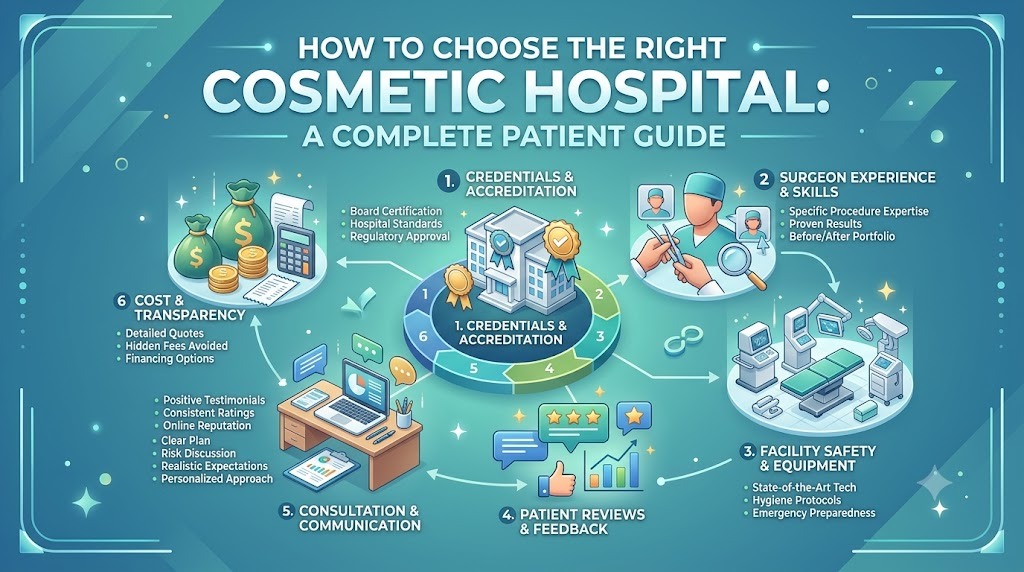
Choosing a cosmetic hospital is an important healthcare decision, not simply a beauty or price comparison. Whether considering a surgical procedure, a minimally invasive treatment, or skin rejuvenation, elective cosmetic care involves anesthesia, medical equipment, specialized surgical techniques, structured recovery periods, and potential medical risks. Because your health and safety are paramount, selecting the right hospital and medical team requires careful research and objective evaluation.The purpose of this article is to help readers evaluate cosmetic hospitals and surgeons using practical, verifiable criteria rather than relying solely on advertisements, unverified rankings, or promotional imagery. By understanding surgeon qualifications, hospital facilities, safety protocols, and realistic outcomes, you can make an informed choice tailored to your individual needs. To explore resources for researching cosmetic hospitals, surgeons, procedures, treatment destinations, and patient-selection information, visitors can explore Best Cosmetic Hospitals as a helpful informational guide.
Why Choosing the Right Cosmetic Hospital Matters
Cosmetic procedures are medical interventions that should always be approached within a structured healthcare framework. Attractive advertising, impressive websites, or discounted pricing should never replace rigorous clinical evaluation. Key elements that make hospital selection critical include:
- Qualified Medical Professionals: Ensuring that procedures are performed by board-certified or appropriately credentialed specialists.
- Appropriate Surgical Facilities: Access to sterile operating environments equipped for unexpected medical needs.
- Anesthesia Support: Qualified anesthesia professionals monitoring patient stability throughout procedures.
- Patient Monitoring: Rigorous postoperative observation to catch and address early signs of distress.
- Infection Control: Strict sterilization protocols that minimize the risk of surgical site infections.
- Emergency Preparedness: On-site emergency equipment and clear transfer protocols if higher-level intervention is needed.
- Recovery and Follow-Up Planning: Structured support during the healing process to ensure optimal recovery.
Understand the Procedure You Are Considering
Before selecting a hospital, it is essential to have a clear understanding of the specific procedure you are exploring, as different treatments require vastly different facilities and specialist expertise.
- Facial Procedures: Procedures such as rhinoplasty, facelifts, blepharoplasty (eyelid surgery), and facial contouring require precise surgical skill and detailed anatomical knowledge.
- Breast Procedures: Breast augmentation, reduction, and lifts involve specialized surgical techniques and implant management.
- Body Procedures: Liposuction, tummy tucks (abdominoplasty), and body lifts require robust surgical support and extended recovery oversight.
- Non-Surgical Procedures: Laser treatments, skin resurfacing, and injectables (such as fillers or neuromodulators) require dermatological or aesthetic expertise and appropriate clinical environments.
Understanding your procedure helps you identify hospitals and specialists equipped with the exact expertise needed for your care.
Cosmetic Surgery vs Plastic Surgery
Terminology in aesthetic medicine can sometimes cause confusion. While often used interchangeably, there are distinct differences:
- Plastic Surgery: A broad surgical specialty dedicated to both reconstructive surgery (repairing facial and body abnormalities caused by trauma, birth defects, burns, or disease) and cosmetic surgery.
- Cosmetic Surgery: Focused specifically on enhancing appearance, altering body contours, and improving aesthetic balance through surgical and medical techniques.
- Aesthetic Medicine and Dermatology: Focuses on non-surgical skin rejuvenation, injectables, and surface treatments.
Because licensing, terminology, and specialist training vary by country, patients should always verify the provider’s actual training background, board certifications, and verified scope of practice rather than relying on title alone.
Check the Cosmetic Surgeon’s Qualifications
The qualifications of the surgeon performing your procedure are among the most critical factors in your safety and results. When researching a surgeon, look for:
- Medical Degree: Earned from a recognized, accredited medical school.
- Specialist Training: Formal residency and fellowship training specifically in plastic surgery, reconstructive surgery, or an approved aesthetic specialty.
- Board Certification: Recognition by official national medical boards or recognized specialist bodies where applicable.
- Professional Registration: Active, good-standing license to practice medicine in their jurisdiction without disciplinary actions.
- Hospital Privileges: Verified privileges to perform the specific procedure within accredited hospitals.
- Continuing Education: Ongoing participation in professional medical education and training updates.
Membership in professional medical societies can provide additional context, though no single membership organization automatically guarantees superior clinical skill.
Look for Procedure-Specific Experience
General experience in cosmetic medicine is important, but experience with your specific procedure is even more critical. When consulting with a provider, inquire about:
- How frequently the surgeon performs the exact procedure you are considering.
- Their experience with patients sharing similar anatomical features or health profiles.
- Their background in managing potential complications related to that procedure.
- Their experience with revision procedures if you are seeking corrective work.
Asking targeted questions about procedure-specific volume helps ensure your surgeon has deep, practical familiarity with your planned treatment.
Evaluate Hospital Accreditation
Recognized accreditation offers valuable insight into an institution’s adherence to safety, hygiene, and governance standards. When evaluating a cosmetic hospital, check for:
- National healthcare accreditation.
- International accreditation standards (such as JCI or equivalent bodies).
- Institutional quality-management certifications.
- Rigorous internal audit and clinical governance processes.
While accreditation indicates that a facility meets established organizational benchmarks, it does not guarantee an individual surgical outcome. Always verify that accreditation is current and directly covers the facility where your procedure will take place.
Check the Hospital’s Surgical Facilities
Surgical cosmetic procedures require specialized medical infrastructure. Ensure the hospital or surgical center provides:
- Properly equipped operating rooms designed for sterile surgical procedures.
- Advanced patient monitoring equipment to track vital signs continuously.
- Dedicated recovery rooms staffed by trained nursing professionals.
- Emergency resuscitation equipment and medication carts.
- Laboratory and diagnostic support services.
- Access to intensive care support if higher-level monitoring becomes necessary.
Facility requirements vary depending on whether your procedure is performed under local anesthesia, sedation, or general anesthesia.
Anesthesia and Patient Monitoring
Anesthesia safety is a cornerstone of safe surgical care. When evaluating a hospital or surgical center, verify:
- That anesthesia is administered exclusively by qualified, licensed anesthesia professionals (such as anesthesiologists or certified nurse anesthetists).
- That a thorough pre-anesthesia health assessment is conducted prior to your procedure.
- That advanced monitoring equipment is actively utilized throughout the procedure and in recovery.
- That clear emergency protocols are in place to manage adverse anesthesia reactions.
Never undergo a procedure requiring sedation or general anesthesia in a facility that lacks qualified anesthesia staff and proper monitoring equipment.
Infection Control and Patient Safety
Infection prevention is vital in any surgical environment. Ask hospitals about their safety protocols, including:
- Strict sterilization standards for surgical instruments and equipment.
- Operating room air-filtration systems designed to reduce contamination risks.
- Standardized surgical safety checklists utilized by the entire operating team.
- Robust hand hygiene and staff infection-control compliance.
- Medication safety practices to prevent dosing errors.
- Clear patient identification systems throughout admission and recovery.
Table 1 – Cosmetic Hospital Selection Factors
| Selection Factor | What to Check | Why It Matters |
| Surgeon Qualifications | Board certifications, medical degree, and specialist training. | Verifies that your provider has undergone rigorous, verified medical education. |
| Procedure Experience | Frequency and familiarity with your exact planned procedure. | Ensures the surgeon has deep, practical expertise handling your specific anatomy. |
| Hospital Accreditation | Current national or international facility accreditations. | Indicates adherence to institutional safety, hygiene, and governance standards. |
| Surgical Facilities | Dedicated operating rooms, monitoring equipment, and recovery spaces. | Provides the physical infrastructure necessary for safe procedural care. |
| Anesthesia Support | Qualified anesthesia professionals and continuous monitoring. | Critical for patient safety during procedures requiring sedation or general anesthesia. |
| Emergency Support | On-site emergency equipment and hospital transfer agreements. | Essential for managing unexpected complications swiftly and safely. |
| Follow-Up Care | Postoperative monitoring schedule and direct access to your care team. | Supports healthy healing and timely management of recovery concerns. |
Evaluate the Consultation Experience
A thorough, unhurried consultation is one of the hallmarks of ethical, patient-centered cosmetic care. A quality consultation should provide ample opportunity to discuss:
- Your personal aesthetic goals and motivations.
- Your complete medical history, previous surgeries, allergies, and current medications.
- Realistic expectations regarding what the procedure can and cannot achieve.
- Potential risks, side effects, and possible complications.
- Alternative treatment options, including non-surgical alternatives where appropriate.
- Expected recovery timelines and postoperative care requirements.
- Transparent, itemized cost breakdowns.
An ethical provider will never pressure you into booking a procedure during your initial consultation.
Informed Consent and Realistic Expectations
Informed consent is an educational and legal process ensuring you fully understand your care before agreeing to treatment. Key components include:
- A clear explanation of the surgical technique and what it entails.
- Discussion of expected benefits alongside limitations.
- Detailed review of potential risks and complications.
- Understanding the recovery process and activity restrictions.
- Acknowledgment that cosmetic results can vary and that no ethical provider can guarantee a specific outcome.
Taking time to review informed consent documents ensures you make decisions based on facts rather than expectations of perfection.
Evaluating Before-and-After Photos
Before-and-after photographs are commonly used in cosmetic practices, but they should be reviewed with a discerning eye:
- Verify that the photographs represent the surgeon’s actual patients rather than stock promotional images.
- Check for consistency in lighting, camera angles, posture, and background between the “before” and “after” shots.
- Look for patients who share a similar anatomical build or age profile to yours.
- Understand that photographs highlight successful outcomes and do not represent guaranteed results for every individual.
Never rely solely on photographs when choosing a surgeon or hospital.
Technology and Equipment
Modern aesthetic medicine utilizes advanced technology to enhance precision and minimize recovery times, depending on the procedure:
- Digital 3D imaging for visual consultation and surgical planning.
- Specialized energy-based devices, lasers, and ultrasound systems.
- Advanced liposuction technologies (such as ultrasound-assisted or power-assisted devices).
- Endoscopic instruments that allow for smaller incisions.
While modern technology is helpful, it should be selected based on clinical suitability rather than marketing novelty. The skill and judgment of the surgeon remain paramount.
Emergency and Complication Management
Even when performed by highly skilled specialists in accredited facilities, cosmetic procedures carry inherent medical risks. Before choosing a hospital, ask:
- What specific emergency protocols are in place if a complication occurs during surgery?
- What postoperative monitoring is provided during the first 24 to 48 hours?
- How are unexpected bleeding, infection, or wound healing issues managed?
- What arrangements exist if a patient requires hospital admission or transfer to a critical care unit?
- What is the provider’s policy regarding revision surgery if initial healing is unsatisfactory?
Knowing that robust emergency protocols exist provides important peace of mind.
Recovery and Follow-Up Care
Recovery is a critical phase of any aesthetic procedure. High-quality cosmetic providers offer structured postoperative support:
- Immediate postoperative observation and nursing care.
- Clear, written instructions regarding wound care, medication schedules, and activity limitations.
- Scheduled follow-up appointments to monitor healing progress.
- Direct communication channels to reach your surgical team if urgent questions arise between visits.
- Guidance on scar management and gradual return to normal routines.
Always follow your surgeon’s postoperative instructions closely to support safe healing.
Location and Accessibility
Logistical planning plays an important role in your overall experience, particularly during recovery:
- Distance from Home: Traveling long distances immediately after surgery can be physically demanding and complicate follow-up visits.
- Transportation: Arrange for a responsible adult to drive you home after outpatient procedures.
- Accommodation: If traveling to another city, plan for comfortable nearby lodging during the initial postoperative days.
- Local Support: Ensure you have assistance at home for cooking, cleaning, and daily tasks during early recovery.
Cost of Cosmetic Surgery
Cosmetic procedures involve multiple cost components that should be transparently outlined before you commit:
- Surgeon fees based on experience and procedure complexity.
- Hospital or surgical facility fees, including operating room time and staff.
- Anesthesia fees for the anesthesia professional.
- Preoperative medical tests and lab work.
- Surgical garments, implants, or specialized medical devices.
- Postoperative medications and follow-up consultations.
- Potential costs associated with revision surgery or managing complications.
Always request a detailed, written itemized quotation and clarify what expenses are excluded. Avoid choosing a provider solely based on the lowest price tag.
Insurance and Financing Considerations
Because elective cosmetic procedures are performed primarily to enhance appearance rather than treat a disease, they are rarely covered by standard health insurance.
- Confirm your insurance policy’s exact terms regarding elective versus medically necessary reconstructive procedures.
- Inquire about third-party medical financing plans if offered by the hospital, while carefully reviewing interest rates, repayment terms, and fees.
- Understand the hospital’s cancellation policy, deposit requirements, and refund terms before signing agreements.
Medical Tourism and Cosmetic Surgery Abroad
Traveling internationally for cosmetic procedures has become increasingly common, but it requires rigorous planning and realistic risk assessment:
- Hospital and Surgeon Verification: Independently verify international accreditations and surgeon credentials through official medical boards.
- Remote Consultations: Ensure you have thorough virtual consultations and share complete medical records in advance.
- Travel Timeline: Plan for an adequate stay in the destination country to attend initial follow-up appointments before flying home. Air travel too soon after surgery increases the risk of blood clots and complications.
- Continuity of Care: Establish how postoperative concerns will be managed once you return home and whether local doctors are available to assist if needed.
Never choose an international destination solely because advertised prices are significantly lower than local options.
Table 2 – Comparing Cosmetic Hospitals
| Comparison Area | Questions to Ask | What to Verify |
| Surgeon | Who will personally perform my procedure? | Medical degree, board certification, and specialist training records. |
| Experience | How frequently does the surgeon perform this specific procedure? | Procedure-specific volume and familiarity with your anatomical profile. |
| Facility | Where will the procedure take place? | Accredited operating rooms with appropriate surgical infrastructure. |
| Anesthesia | Who administers anesthesia, and how is patient monitoring handled? | Qualified anesthesia specialists and continuous vital-sign monitoring. |
| Safety & Emergencies | What protocols exist if a medical complication arises? | On-site emergency equipment and clear hospital transfer agreements. |
| Recovery Support | What follow-up schedule and aftercare support are provided? | Postoperative appointment structure and access to the care team. |
| Cost Transparency | What is included in the quoted price? | Detailed, written itemized estimates and exclusion disclosures. |
| Medical Tourism | What logistical and follow-up support is available for traveling patients? | Travel coordination, accommodation planning, and return-care continuity. |
Red Flags When Choosing a Cosmetic Hospital
Exercise caution if you encounter providers or facilities exhibiting the following warning signs:
- Promising guaranteed 100% perfection or claiming procedures are completely risk-free.
- Pressuring you to book immediately with limited-time discounts or aggressive sales tactics.
- Offering unusually low package prices without clear explanations of what is excluded.
- Avoiding discussions about potential risks, side effects, or complication rates.
- Refusing to provide transparent, written itemized cost estimates.
- Using evasive language when asked about the surgeon’s specific board certifications or credentials.
- Discouraging second opinions or dismissing reasonable patient questions.
How to Compare Multiple Cosmetic Hospitals
When evaluating more than one provider, organize your comparison objectively:
- Compare the verified credentials, training backgrounds, and board certifications of the surgeons.
- Review procedure-specific experience and relevant before-and-after case portfolios.
- Examine facility accreditations and operating room safety standards.
- Confirm the qualifications of the anesthesia teams and emergency protocols.
- Compare the depth and quality of pre-surgical consultations and informed consent discussions.
- Evaluate postoperative follow-up schedules and accessibility of the medical team.
- Review itemized cost quotations and insurance or financing policies.
- Assess logistical convenience, travel distance, and recovery support availability.
Focus on verifiable clinical standards rather than marketing claims or popularity metrics.
Second Opinions and Taking Time to Decide
Because elective cosmetic surgery involves altering your body and carries medical risks, taking time to reflect before scheduling a procedure is a wise practice. Consider seeking a second opinion if:
- You are considering major surgery and feel uncertain about the recommended approach.
- Different surgeons offer conflicting recommendations for your treatment.
- You have complex underlying medical conditions that require specialized risk assessment.
- You feel pressured or rushed by a provider during your consultation.
An ethical, professional surgeon will always support your decision to take time and seek secondary perspectives.
Step-by-Step Process for Choosing the Right Cosmetic Hospital
- Step 1: Clearly identify your personal goals and research the specific procedure you are considering.
- Step 2: Search for licensed medical specialists who focus on that specific area of care.
- Step 3: Verify surgeon credentials, board certifications, and professional good standing.
- Step 4: Inquire about procedure-specific experience and review verified patient case outcomes.
- Step 5: Evaluate hospital and surgical facility accreditations and safety infrastructure.
- Step 6: Confirm the qualifications of anesthesia providers and emergency management protocols.
- Step 7: Schedule comprehensive consultations to discuss your health history, goals, and expectations.
- Step 8: Review informed consent documents, risks, alternatives, and recovery requirements thoroughly.
- Step 9: Request and review detailed, written itemized cost estimates.
- Step 10: Compare verified information objectively across multiple providers without rushing.
- Step 11: Consider seeking a second opinion if you have lingering questions or uncertainties.
- Step 12: Make a calm, informed decision in consultation with your chosen medical team.
FAQs
1. How do I choose the right cosmetic hospital?
Choosing the right cosmetic hospital requires evaluating surgeon credentials, procedure-specific experience, hospital accreditation, operating room facilities, anesthesia safety, emergency protocols, and transparent cost structures.
2. What should I look for in a cosmetic hospital?
Look for recognized facility accreditation, dedicated sterile operating rooms, qualified anesthesia professionals, robust infection control, and comprehensive postoperative follow-up support.
3. How do I check a cosmetic surgeon’s qualifications?
Check official medical board registrations, verify specialist board certifications, review completed residency and fellowship training, and confirm hospital operating privileges.
4. Why does procedure-specific surgical experience matter?
Procedure-specific experience ensures that your surgeon has deep, practical familiarity with the precise anatomy, techniques, and potential challenges associated with your specific treatment.
5. Does hospital accreditation matter for cosmetic surgery?
Yes, facility accreditation ensures that the hospital or surgical center adheres to strict institutional safety, hygiene, equipment maintenance, and clinical governance standards.
6. What surgical facilities should a cosmetic hospital have?
Essential facilities include sterile operating suites, advanced vital-sign monitoring equipment, recovery rooms, emergency resuscitation carts, and reliable medical gas supplies.
7. Why is anesthesia support important?
Qualified anesthesia professionals ensure patient comfort, manage physiological stability, and continuously monitor vital signs throughout procedures requiring sedation or general anesthesia.
8. How can I evaluate before-and-after photos?
Verify that photos belong to the surgeon’s actual patients, check for consistent lighting and angles, look for similar anatomical profiles, and remember that past results do not guarantee future outcomes.
9. What questions should I ask during a cosmetic surgery consultation?
Ask about the surgeon’s credentials and experience, facility accreditation, anesthesia safety, potential risks and complications, recovery timelines, follow-up care, and total itemized costs.
10. How can I compare cosmetic surgery costs?
Request a written, itemized quotation from each provider covering surgeon fees, facility charges, anesthesia, garments, lab work, and follow-up care to compare equivalent services accurately.
11. What should be included in a cosmetic surgery quotation?
A comprehensive quotation should include surgeon fees, facility/operating room fees, anesthesia charges, initial follow-up visits, and disclosures regarding any excluded expenses.
12. How important is postoperative follow-up?
Postoperative follow-up is vital for monitoring healing progress, managing swelling or discomfort early, and ensuring that any emerging issues are addressed promptly.
13. What should international patients consider when choosing a cosmetic hospital?
International patients should verify foreign credentials rigorously, plan adequate recovery time before flying, arrange local follow-up care continuity, and ensure comprehensive medical travel insurance.
14. What are common red flags when selecting a cosmetic provider?
Red flags include guaranteed perfection claims, high-pressure sales tactics, unusually low pricing with hidden exclusions, evasive answers regarding credentials, and refusal to discuss risks.
15. Should I get a second opinion before cosmetic surgery?
Seeking a second opinion is recommended if you are facing major surgery, receiving conflicting recommendations, or feeling uncertain about your proposed treatment plan.
Conclusion
Choosing a cosmetic hospital should involve much more than comparing photographs, promotional advertisements, online popularity, or low prices. By prioritizing surgeon credentials, procedure-specific experience, facility accreditation, anesthesia safety, emergency preparedness, informed consent, and transparent cost structures, patients can approach their aesthetic care safely and responsibly. Taking time to ask questions, verify facts, and consult qualified healthcare professionals remains the most reliable foundation for a safe and satisfying cosmetic healthcare journey.