Introduction
Digital services have become part of everyday life. People use online platforms for communication, learning, shopping, entertainment, banking, and work. These services often ask users to share personal information during registration or while using different features.
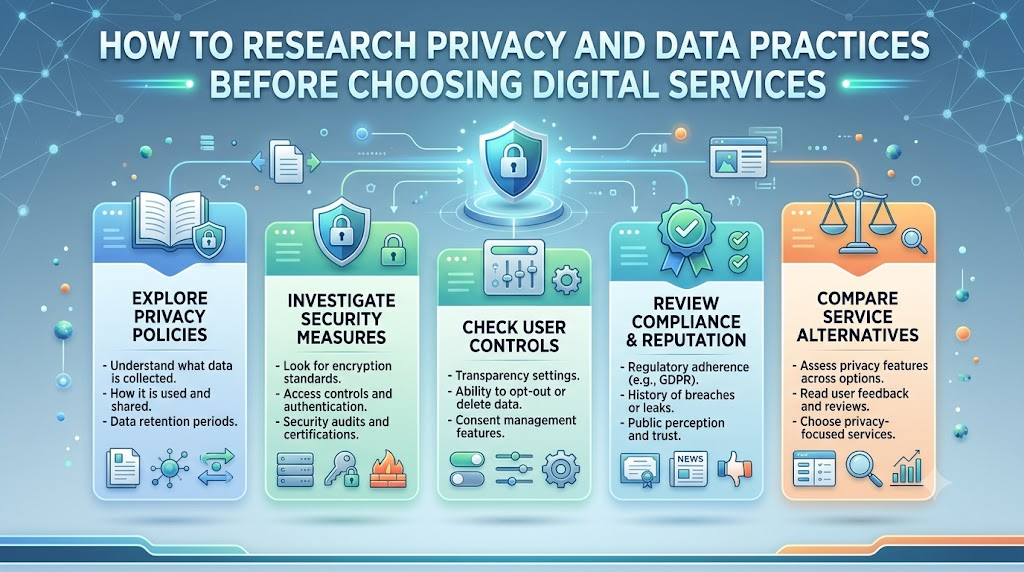
Before choosing a digital service, consumers should understand how their information may be collected, used, stored, and shared. A simple registration process does not always explain every detail of a service’s data practices.
Product Reviews India can help consumers explore general product experiences, while software-related feedback can provide additional context about digital platforms. On iReviewed, readers can research different services and compare available information.
Understanding privacy information does not require advanced technical knowledge. It starts with reading important policies, checking permissions, and recognising what information a service requests.
Understand What Personal Data Means
Personal data refers to information that can identify or relate to an individual. Digital services may collect different types of information depending on their purpose and features.
Common examples include:
- Name and contact details
- Email address
- Account information
- Location information
- Device information
- Usage activity
- Payment-related details
Not every service needs every type of information. A basic reading platform may require fewer details than a service that provides location-based features.
Consumers should understand why particular information is requested. Software Reviews and Comparisons can help readers explore how digital services work, but official privacy documents remain important sources for specific data practices.
Read the Privacy Policy Before Creating an Account
A privacy policy explains how a service handles information. It may describe the types of data collected, the reasons for collection, storage practices, and circumstances in which information may be shared.
Many users skip this document because it looks lengthy or difficult. However, reading the important sections can help them understand the service better.
Pay attention to these points:
- What information does the service collect?
- Why does it collect that information?
- How is the information used?
- Does the service share information with other parties?
- How can users manage their information?
- Where can users find privacy-related support?
Customer Reviews and Ratings may offer additional experiences, but they cannot replace the service’s official privacy policy.
Check App Permissions Carefully
Applications may request access to different parts of a device. These permissions can include the camera, microphone, contacts, photos, files, or location.
Some permissions are necessary for specific features. A video calling application may need microphone and camera access when users make calls.
However, consumers should consider whether each permission matches the service’s purpose.
A practical permission check includes:
- Read the permission request.
- Understand which feature needs it.
- Avoid granting access without a clear reason.
- Review permissions after installing the application.
- Change permissions when they are no longer needed.
Product Reviews India can help readers explore user experiences with applications and connected devices. Readers should still confirm permission details through their device settings and official documentation.
Understand Account Registration Requirements
Some digital services require only an email address, while others request additional information. The amount of information requested can differ according to the service’s purpose.
Before registering, examine the required fields carefully.
A first-time user should distinguish between mandatory information and optional details. Optional fields may provide extra convenience, but users should understand their purpose before filling them in.
A service may also offer different registration methods. Consumers should read the relevant privacy information for the method they choose.
Best Products in India can include digital tools and applications, but suitability should involve more than features and convenience. Privacy requirements also deserve attention.
Examine Data Sharing Information
Some digital services work with external providers to deliver their features. These providers may support payments, analytics, hosting, communication, or other technical functions.
A privacy policy may explain whether information is shared with these parties and for what purposes.
Consumers should look for clear explanations rather than assuming that every service follows the same approach.
| Privacy detail | What consumers should examine |
|---|---|
| Data collection | Types of information requested |
| Data usage | Reasons information is processed |
| Data sharing | Situations involving external parties |
| Storage | Published information about data retention |
| User controls | Available options for managing information |
| Contact details | How to raise privacy-related concerns |
A Product Comparison Website can organise general service features, but privacy practices should be checked separately for each provider.
Look for Account and Privacy Controls
Useful privacy controls can help people manage their accounts. Depending on the service, these options may include changing profile details, managing permissions, controlling notifications, or requesting account closure.
Consumers should understand where these settings are located.
Important areas to examine include:
- Profile visibility
- Password and sign-in settings
- Location permissions
- Notification preferences
- Connected accounts
- Account deletion instructions
The availability of these controls can vary between services. Service Reviews India may provide useful information about reported customer experiences, while official help pages explain the available settings.
Understand Data Retention Information
Data retention refers to how long information is kept by a service. Some information may be required while an account remains active. Other records may be retained for additional reasons explained in the provider’s policy.
Consumers should look for information about:
- Account information retention
- Records kept after account closure
- Backup and storage practices
- Published deletion procedures
- Information retained for operational purposes
Do not assume that closing an account automatically removes every record immediately. The provider’s privacy policy should explain its process and any stated exceptions.
Software Reviews and Comparisons can help readers evaluate digital platforms, but detailed retention questions should be confirmed through official documentation.
Check How the Service Explains Security
Privacy and security are related, but they are not the same.
Privacy concerns how information is collected and used. Security concerns the measures used to protect information from unauthorised access, misuse, or loss.
Consumers can examine whether a service publishes clear information about its security practices.
Useful information may include:
- Account protection options
- Sign-in alerts
- Security notifications
- Published encryption details
- Guidance for reporting suspicious activity
- Contact information for security concerns
Avoid assuming that a service is completely secure because it uses a particular feature. Security practices can change, and no single measure guarantees complete protection.
Use Customer Reviews for Additional Context
Official policies explain what a provider says about its practices. Customer feedback may describe how people experience the service.
For example, a user may report difficulty locating account settings or understanding privacy options. Another person may describe an unclear permission request.
Customer Reviews and Ratings can help readers discover these experiences. However, a personal report does not automatically establish a general privacy problem.
Verified User Reviews may provide additional context when a platform explains its verification method. Readers should still distinguish between a verified submission and an independently confirmed technical finding.
Recognise Privacy-Related Complaints Carefully
Privacy complaints can involve unwanted messages, confusing account settings, unexpected permissions, or concerns about information handling.
Readers should examine the exact issue described before forming an opinion.
Brand Reviews and Complaints may help consumers discover reported concerns about digital services. However, complaints should be treated as user-reported experiences unless supported by reliable evidence.
When evaluating a complaint, consider:
- What information was involved?
- What action did the user report?
- Was the situation explained clearly?
- Did the provider publish a relevant policy?
- Is there additional information from a reliable source?
A single complaint should not be treated as proof that an entire service is unsafe or dishonest.
Compare Privacy Information Across Digital Services
Consumers often compare digital services based on features, design, price, and ease of use. Privacy information should also be part of that process.
A useful comparison does not assume that one privacy policy suits every user. It examines the information each provider publishes.
For example, two communication services may offer similar features but explain data collection differently. Readers can compare the types of information requested, account controls, and available privacy explanations.
Product Reviews India can support general research, while Software Reviews and Comparisons can help organise information about digital tools.
A Product Comparison Website should make important differences easy to understand without suggesting that a simple score can measure every privacy concern.
Pay Attention to Subscription and Payment Information
Some digital services require recurring payments or paid subscriptions. These services may process billing details and other account information.
Before subscribing, consumers should understand the payment process and the information involved.
Check the following:
- Whether payment is one-time or recurring
- How subscription renewal works
- Where billing details are managed
- How cancellation instructions are provided
- Whether payment support is available
These details matter because billing information forms part of the wider account experience.
Service Reviews India can help readers explore reported subscription experiences. Official billing terms should always be checked before making a payment.
Avoid Common Privacy Research Mistakes
Consumers can misunderstand digital privacy when they rely on assumptions or read only a small part of the available information.
Avoid these common mistakes:
Ignoring policy updates: Privacy documents may change when services introduce new features or practices.
Granting every permission: Access should match the feature being used.
Assuming free services collect no information: A free service may still process information as explained in its policy.
Relying only on ratings: A high score does not explain every privacy practice.
Confusing privacy with security: These subjects are connected but describe different areas.
Believing every online complaint: Personal reports need context and careful examination.
Product Buying Guides India can help consumers develop better research habits, while Brand Reviews and Complaints can provide additional context about reported experiences.
How Review Platforms Can Improve Privacy Research
Review platforms can help consumers by presenting digital service information in an organised way.
Useful platform features may include separate review categories for account access, permissions, usability, and support. Clear labels can help readers understand whether a comment describes a personal experience or a specific technical claim.
Platforms should also explain verification and moderation practices.
An AI Product Comparison Tool is a possible future direction for organising information from different products and services. It could help users identify differences in published features and privacy information.
However, any future tool would need reliable source information and careful handling of sensitive subjects. It should not present automated conclusions as a guarantee of privacy or security.
How iReviewed Supports Digital Service Research
iReviewed is an independent review platform for Indian consumers. It helps readers explore product information, software feedback, service experiences, and brand-related opinions.
Consumers can use Product Reviews India to discover general product experiences. Software Reviews and Comparisons can support research into applications and digital platforms.
Service Reviews India and Customer Reviews and Ratings offer additional perspectives on customer experiences. Verified User Reviews may provide further context when the verification process is clearly explained.
The platform aims to make consumer research easier through accessible review information. Readers should combine review feedback with official privacy policies, security information, and service terms before choosing a digital platform.
Frequently Asked Questions
1. Why should consumers read a privacy policy before using a digital service?
A privacy policy explains how a service collects, uses, stores, and shares information. Reading its important sections helps consumers understand what happens to their data. It also helps them identify available controls and contact options before creating an account.
2. What types of information can digital services collect?
Depending on their purpose, digital services may collect names, contact details, account information, device information, location details, and usage activity. The information requested varies between services. Consumers should check the official policy to understand the specific practices of a provider.
3. Are app permissions important for privacy?
Yes. App permissions determine which device features an application can access. Some permissions are necessary for particular functions, while others may be optional. Consumers should understand why access is requested and review permissions through their device settings.
4. What is the difference between privacy and security?
Privacy concerns how personal information is collected, used, and shared. Security concerns how that information is protected from unauthorised access or misuse. Both areas matter when choosing a digital service, but they should be evaluated separately.
5. Does deleting an account remove all personal information immediately?
Not necessarily. A provider may explain that certain records remain for a stated period or for specific operational reasons. Consumers should read the account deletion policy and contact the provider when they need clarification about its process.
6. How can customer reviews help with privacy research?
Customer reviews may describe experiences with permissions, account controls, communication, or privacy settings. These details can help readers identify questions for further research. However, personal reports should not be treated as confirmed technical findings without supporting evidence.
7. Should I trust a digital service with a high review rating?
A high rating may indicate positive customer experiences, but it does not prove that every privacy practice is suitable. Consumers should examine the privacy policy, permissions, security information, and available account controls before choosing a service.
8. Why should I check data sharing information?
A service may work with external providers for payments, analytics, hosting, or other functions. Understanding its published data sharing information helps consumers learn how their information may be processed beyond the main platform.
9. What should I check before subscribing to a digital service?
Review the subscription price, renewal conditions, payment process, cancellation instructions, and privacy policy. Understand what account information is required and where billing settings are managed. Confirm important details through the provider’s official information.
10. Can iReviewed.in help consumers research digital services?
iReviewed.in provides an independent platform for exploring product, software, service, and brand-related feedback. Consumers can use relevant reviews and comparisons to understand reported experiences. They should also read official privacy policies and service terms before making a decision.
Final Thoughts
Privacy research is an important part of choosing digital services. Consumers should understand what information a service requests, why it needs that information, and which controls are available.
Online reviews can help readers discover practical experiences, but official policies provide important details about data handling. Both sources should be considered carefully.
By using Product Reviews India, Software Reviews and Comparisons, and other relevant research resources, consumers can develop better questions before creating accounts or subscribing to services. Clear information makes digital decisions easier to understand.