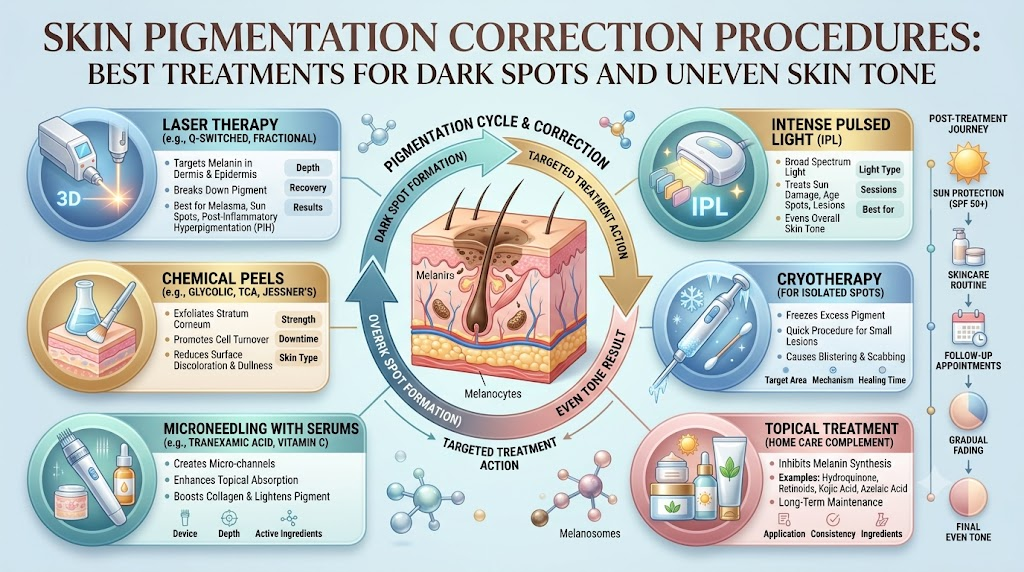
Skin pigmentation affects the color and appearance of the skin. It can cause dark spots, patches, and uneven skin tone. These changes may appear on the face, neck, hands, or other body areas.
Sun exposure is a common cause of dark spots. Hormonal changes, acne, skin injuries, and some medicines can also affect skin color. The right treatment depends on the cause and depth of pigmentation.
Skin Pigmentation Correction Procedures include chemical peels, laser treatments, and selected microneedling treatments. Some people may also benefit from creams and a simple skincare routine. However, no single treatment works for every person.
A dermatologist can examine the skin and suggest suitable options. This step is important because the wrong treatment may make dark patches worse. Readers exploring cosmetic hospital information can visit BESTCOSMETICHOSPITALS for related resources. The website is not presented here as a provider of procedures or appointments.
What Is Skin Pigmentation?
Melanin is the natural pigment that gives skin its color. Special skin cells make melanin and help protect the skin from sunlight.
Sometimes, these cells produce too much pigment in certain areas. This can create dark spots or patches. This condition is often called hyperpigmentation.
Some people also have natural differences in skin tone. These are not always a medical problem. Pigmentation can appear on the face, neck, arms, hands, and other areas.
Different conditions can look similar. However, they may need different treatments. A dermatologist should identify the cause before recommending a procedure.
Common Causes of Skin Pigmentation
Pigmentation can develop for several reasons. Finding the cause helps a dermatologist choose a safer treatment.
Common causes include:
- Sun exposure: Ultraviolet rays can increase melanin production. This may create new spots or darken existing patches.
- Hormonal changes: Changes linked to pregnancy or some medicines can trigger melasma.
- Acne and inflammation: Spots may remain after acne, eczema, or other skin irritation heals.
- Skin injuries: Cuts, burns, and repeated rubbing can leave dark marks.
- Certain medicines: Some medicines can cause changes in skin color.
- Genetic factors: Family traits can affect freckles and other pigment patterns.
- Age-related sun spots: Years of sun exposure can lead to flat brown spots.
Skin irritation can also make pigmentation worse. Strong products and unsuitable procedures may cause more inflammation. A medical review is useful when dark patches appear suddenly or change.
Different Types of Skin Pigmentation Problems
Several skin conditions can cause dark spots or uneven color. Their appearance may overlap, so a visual check alone may not confirm the cause.
The table below outlines common pigmentation concerns and their possible causes.
Table 1: Common Skin Pigmentation Problems and Their Causes
| Pigmentation Type | Common Appearance | Possible Cause |
|---|---|---|
| Melasma | Brown or gray-brown patches | Hormonal changes and sun exposure |
| Post-inflammatory hyperpigmentation | Dark marks after acne or irritation | Skin inflammation or injury |
| Sun spots | Flat brown spots | Long-term sun exposure |
| Freckles | Small brown spots | Genetic factors and sunlight |
| Periorbital pigmentation | Darker skin around the eyes | Multiple possible causes |
Melasma
Melasma often appears as brown or gray-brown patches. It commonly affects the cheeks, forehead, and upper lip.
Hormonal changes and sunlight can play a role. It may return even after treatment, so ongoing sun protection matters. American Academy of Dermatology+1
Post-Inflammatory Hyperpigmentation
Post-inflammatory hyperpigmentation, or PIH, means dark marks left after skin inflammation. It can follow acne, eczema, burns, or other irritation.
These marks may fade slowly. More irritation can make them darker.
Sun Spots
Sun spots are flat brown marks linked to long-term sun exposure. They often appear on the face, hands, shoulders, and arms.
A dermatologist should check a new or changing spot. Not every brown mark is a simple sun spot.
Freckles
Freckles are small, flat spots that may become darker after sun exposure. Family traits can affect how likely a person is to develop them.
They are usually harmless, but changing spots should be examined.
Periorbital Pigmentation
This term describes darker skin around the eyes. It may relate to family traits, rubbing, allergies, or other causes.
The treatment depends on the reason. The skin around the eyes is delicate, so strong products or procedures need extra care.
How Dermatologists Assess Skin Pigmentation
A dermatologist first checks the skin and asks about the person’s health. This helps identify the likely cause and avoid unsuitable treatment.
The consultation may cover:
- When the dark patches first appeared.
- Whether the marks have changed in size or color.
- Previous acne, rashes, or skin injuries.
- Sun exposure and sunscreen use.
- Current skincare products and medicines.
- Past pigmentation treatments and their results.
- Skin tone, sensitivity, and medical history.
The dermatologist may examine the skin closely. A special light or magnifying tool can help assess pigment depth. Sometimes, a skin sample is needed to check an unusual spot. American Academy of Dermatology
A spot that changes quickly, bleeds, forms a sore, or has an unusual shape needs medical review. It should not be treated as a cosmetic mark without an examination.
Topical Treatments for Skin Pigmentation
Creams and other products applied to the skin are often part of pigmentation care. They may be used alone or with selected procedures.
Common ingredients include:
- Hydroquinone: A pigment-reducing medicine that may be prescribed for selected conditions. It needs medical supervision.
- Azelaic acid: May help reduce dark marks and is used for some acne-related pigmentation.
- Retinoids: These vitamin A-based products help skin cell turnover. They may also reduce some dark marks.
- Kojic acid: An ingredient used in some products to help reduce excess pigment.
- Vitamin C: An antioxidant used in skincare to support a more even-looking tone.
- Sunscreen: Helps prevent sunlight from darkening existing marks and causing new ones.
Results often take weeks or months. Some products can cause dryness, burning, or peeling. A dermatologist can help select the right strength and routine. American Academy of Dermatology+1
Avoid unregulated skin-lightening creams. Some products may contain hidden steroids or mercury. Never apply household bleach to the skin.
Chemical Peels for Pigmentation Correction
A chemical peel uses a selected solution to remove some outer skin cells. This can help improve certain dark spots and uneven skin tone.
Superficial peels act mainly on the outer skin layer. Dermatologists may use ingredients such as glycolic acid or salicylic acid. The strength depends on the skin concern and skin type.
A peel may help with selected sun spots, acne marks, and some cases of melasma. It does not suit every type of pigmentation.
Possible side effects include:
- Redness and dryness.
- Peeling or temporary sensitivity.
- Irritation or burning.
- Temporary darkening.
- Infection or scarring in some cases.
Deeper peels are not automatically better. Darker skin tones may have a higher risk of lasting color changes after skin injury. A dermatologist experienced with different skin tones should select the peel and supervise recovery. DermNet®+2
Laser and Light-Based Pigmentation Treatments
Laser and light devices use controlled energy to target selected pigment in the skin. The choice depends on the type, depth, and location of pigmentation.
Common options include:
- Q-switched laser: Sends short pulses of energy to target selected pigment deposits.
- Picosecond laser: Uses very short pulses to target pigment. It may be considered for certain pigment concerns.
- Intense pulsed light (IPL): Uses broad pulses of light to target selected skin changes. It is not a laser.
Some people need more than one session. Others may not be suitable for these treatments. Melasma can return after laser or light treatment, and procedures may sometimes make it worse. DermNet®+1
Possible side effects include redness, swelling, burns, blisters, scars, and darker marks. Incorrect settings can increase these risks.
People with darker skin tones need careful assessment. The clinician should have experience treating the person’s skin type. Ask about the device, expected results, risks, and alternatives before starting.
Microneedling for Selected Pigmentation Concerns
Microneedling uses fine needles to create tiny, controlled punctures in the skin. The skin then begins its normal repair process.
A dermatologist may consider it for selected pigmentation concerns. It may also be used as part of a wider treatment plan. It is not suitable for every type of melasma or dark spot.
Possible side effects include redness, swelling, irritation, infection, and new dark marks. Poor technique or unclean equipment can increase the risk.
Treatment should use sterile equipment and proper clinical care. Avoid home devices for treating pigmentation without professional advice. American Academy of Dermatology+1
How to Choose the Right Pigmentation Correction Procedure
The right procedure depends on the diagnosis. A treatment that helps one person may worsen another person’s pigmentation.
Discuss these points with a dermatologist:
- Type of pigmentation: Melasma, acne marks, and sun spots need different care.
- Pigment depth: Some marks sit near the surface. Others reach deeper skin layers.
- Skin tone: Some procedures carry a higher risk of dark marks in darker skin.
- Skin sensitivity: Irritated or sensitive skin may need a gentler plan.
- Medical history: Medicines and past skin conditions can affect treatment choices.
- Previous treatments: Earlier reactions can help guide the next decision.
- Recovery time: Ask how long redness, peeling, or swelling may last.
- Cost and sessions: Understand the full cost and likely number of visits.
- Clinician experience: Choose a qualified dermatologist with relevant procedure experience.
Some treatment plans combine creams, sun protection, and procedures. The aim is gradual improvement with fewer side effects. No procedure can promise perfect or permanent results.
The table below gives a simple comparison of common options.
Table 2: Common Skin Pigmentation Correction Procedures
| Procedure | How It Works | Important Consideration |
|---|---|---|
| Chemical peel | Uses selected acids to remove surface skin cells | Peel strength must suit the skin |
| Q-switched laser | Targets selected pigment deposits | Incorrect settings may worsen pigmentation |
| Picosecond laser | Uses very short laser pulses to target pigment | Requires careful patient selection |
| Intense pulsed light | Uses light energy to target selected pigmentation | Not suitable for every skin tone or condition |
| Microneedling | Creates controlled tiny punctures in the skin | May cause irritation or dark marks |
Risks and Side Effects of Pigmentation Procedures
Every procedure has possible risks. The type and level of risk depend on the treatment, skin condition, and clinician’s technique.
Possible side effects include:
- Temporary redness or swelling.
- Dryness, peeling, or irritation.
- Burns or blisters.
- Infection.
- Scarring.
- Lighter or darker patches.
- Uneven skin tone.
- Pigmentation returning after treatment.
Post-inflammatory hyperpigmentation is a key concern. It means a treatment or injury causes new dark marks. This risk can be higher in people with darker skin tones. DermNet®+1
Incorrect settings, strong peels, and poor aftercare can increase the chance of problems. Ask the dermatologist about likely side effects and what to do if they occur.
Recovery and Aftercare After Pigmentation Treatment
Recovery depends on the procedure and the person’s skin response. A light peel may need less recovery time than a deeper procedure.
Follow the instructions given by the treating dermatologist. These steps may help protect the skin:
- Use a gentle cleanser and recommended moisturiser.
- Apply broad-spectrum sunscreen as advised.
- Avoid picking, rubbing, or scratching peeling skin.
- Pause harsh exfoliants until the skin has healed.
- Limit direct sun exposure.
- Avoid unapproved creams or home remedies.
- Attend follow-up appointments.
- Report severe pain, blisters, or worsening skin changes.
Do not use strong active products on healing skin unless your dermatologist approves them. Good aftercare can lower the risk of irritation and unwanted dark marks.
How to Maintain Results and Prevent New Dark Spots
Pigmentation may return, especially when the cause remains. Daily sun protection is an important part of long-term care.
Helpful habits include:
- Use broad-spectrum sunscreen with SPF 30 or higher.
- Reapply sunscreen as directed, especially after sweating or swimming.
- Wear a hat and protective clothing outdoors.
- Seek shade when sunlight is strong.
- Treat acne and skin irritation early.
- Avoid products that sting or burn.
- Follow a gentle skincare routine.
- Attend check-ups when your dermatologist recommends them.
People with melasma may benefit from tinted sunscreen containing iron oxides. This can help protect against visible light as well as sunlight. American Academy of Dermatology+1
Avoid tanning beds and unregulated skin-lightening products. Long-term care is often needed to keep pigmentation under control.
Frequently Asked Questions
1. What is the best procedure for skin pigmentation?
There is no single best procedure for everyone. The right choice depends on the type, depth, and cause of pigmentation. Some people need creams and sunscreen. Others may benefit from chemical peels or selected laser treatments. A dermatologist should examine the skin before recommending a procedure.
2. Can chemical peels help reduce dark spots?
Yes, selected chemical peels can help reduce some dark spots. They remove outer skin cells and may improve uneven tone. However, the peel must suit the person’s skin type. A strong or unsuitable peel can cause irritation and make pigmentation darker.
3. Is laser treatment effective for facial pigmentation?
Laser treatment may improve certain types of facial pigmentation. Results depend on the pigment depth, skin tone, and condition. Some people need several sessions. Laser treatment can also cause burns or darker marks. A qualified dermatologist should assess the skin first.
4. How many sessions may be needed for pigmentation correction?
The number of sessions depends on the treatment and skin condition. Some people may need several visits, while others may need a different approach. The dermatologist should explain the expected schedule before treatment. Results can take time and may need ongoing care.
5. Can pigmentation return after laser treatment?
Yes, pigmentation can return after laser treatment. Melasma is especially likely to come back when sunlight or other triggers remain. Laser treatment does not remove every cause of excess pigment. Daily sun protection and a suitable maintenance plan can help manage recurrence.
6. Is pigmentation treatment safe for darker skin tones?
Many pigmentation treatments can be used on darker skin, but careful selection matters. Some procedures may cause irritation and new dark marks. Choose a dermatologist experienced in treating darker skin tones. Discuss the risks, treatment settings, and safer alternatives before starting.
7. Does microneedling help with post-acne dark marks?
Microneedling may help selected skin concerns, but it is not suitable for every acne mark. It can also cause irritation or worsen pigmentation. A dermatologist should first check whether the marks are caused by pigment, scarring, or active acne before suggesting treatment.
8. How long does skin take to recover after a chemical peel?
Recovery depends on the peel’s strength and the person’s skin. A superficial peel may cause mild redness or peeling for a few days. Deeper peels can take longer to heal. Follow the dermatologist’s aftercare instructions and avoid picking or rubbing the skin.
9. Can sunscreen help prevent new pigmentation?
Yes. Broad-spectrum sunscreen helps protect skin from ultraviolet rays that can trigger dark spots. Use SPF 30 or higher and reapply as directed. Protective clothing and shade also help. Daily sun protection is especially important for people with melasma.
10. When should someone see a dermatologist for dark patches?
See a dermatologist when dark patches appear without a clear cause, spread, or do not improve. Get unusual spots checked if they change shape, color, or size, bleed, or form a sore. Early assessment helps identify the cause and rule out other skin conditions.
Conclusion
Skin pigmentation correction procedures can help improve selected dark spots and uneven skin tone. Common options include chemical peels, laser treatments, and microneedling. Creams and daily sun protection may also play an important role.
However, every pigmentation problem is different. A procedure that works for one person may not suit another. Some treatments can even make dark patches worse when used incorrectly.
Consult a qualified dermatologist before choosing a procedure. Discuss your skin type, treatment options, possible risks, recovery time, and cost. Protecting your skin from sunlight is also important after treatment.
The goal should be healthier-looking skin and gradual improvement. Safe treatment and realistic expectations matter more than quick results.