Introduction
Scars can form after injuries, burns, acne, or surgery. Some fade with time, while others remain easy to see. They may also cause itching, pain, tight skin, or trouble with movement. Scar removal surgery and other treatments can help improve these concerns.
The right treatment depends on the scar and your needs. Some scars respond well to creams or injections. Others may need laser treatment or surgery. However, no method can promise perfect skin or complete scar removal. Healing also differs from person to person.
People researching cosmetic care can explore bestcosmetichospitals while learning about their options. A qualified specialist can explain which treatments may help, what risks to expect, and how much care may be needed. Good advice can help you make a safe, informed choice.
What Is Scar Removal Surgery?
Scar removal surgery is a procedure that changes a scar’s appearance or effect on the body. It is often called scar revision surgery. A surgeon may change the scar’s shape, size, or position. In some cases, treatment can also help improve movement when tight skin limits motion.
The goal is usually to make the scar less noticeable or more comfortable. Surgery does not restore skin to its original state. Removing scar tissue creates a new wound, which can leave another scar as it heals.
Some scars need surgery, while others respond to less invasive care. A specialist will assess the scar before suggesting a method. The best choice depends on its type, size, location, and cause.
Common Types of Scars
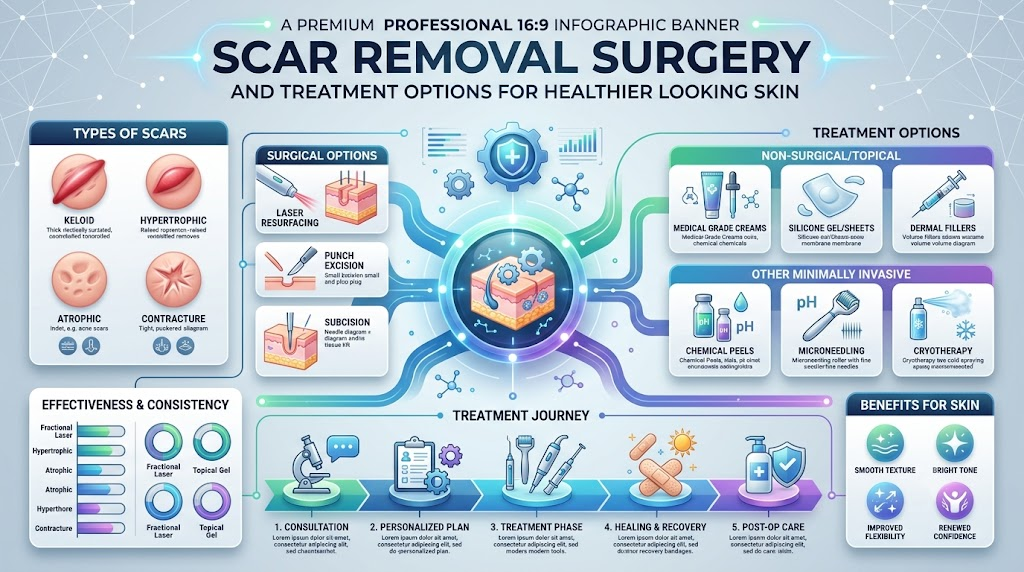
Scars can look and feel different. Knowing the type can help a specialist choose suitable care. However, a professional examination is often needed to tell similar scars apart.
- Flat scars: These lie level with the skin. Their color may be darker or lighter than nearby skin.
- Raised scars: These rise above the skin and may feel firm or itchy.
- Hypertrophic scars: These are raised scars that stay within the original wound’s edges.
- Keloid scars: These grow beyond the original wound. They may return after treatment.
- Depressed scars: These form dips or pits in the skin. Some acne scars have this shape.
- Acne scars: These may appear as pits, dents, or raised areas after acne heals.
- Contracture scars: These tighten the skin. After a burn, they may limit movement near a joint.
Scar age, location, size, skin type, and healing history all matter. Two scars that look alike may need different treatments.
When Might Scar Treatment Be Considered?
People may seek treatment because a scar affects their comfort or confidence. Some scars itch, hurt, or feel tight. Others may limit movement, especially near joints or on the hands. A specialist can assess whether treatment may improve these concerns.
Not every scar needs medical care. Many become softer or less noticeable over time. If a scar causes no problems, a person may choose to leave it alone. The choice should reflect personal needs and a clear understanding of likely results.
A new or changing skin mark also needs careful attention. This is especially important when there is no clear history of an injury, burn, acne, or surgery. A qualified clinician should check an unexplained mark before cosmetic treatment is considered.
Common Scar Treatment Options
There are several scar treatment options. Each works in a different way, and no single method suits every scar. A dermatologist or qualified surgeon can assess the skin and explain the choices.
Silicone gels or sheets may help soften and flatten some raised scars. Steroid injections can reduce swelling and thickness in selected scars. Laser or light treatments may improve redness, color, or texture. Some people need more than one session.
Microneedling may help selected depressed scars by supporting skin repair. Chemical peels may improve certain surface changes, including some acne marks. Cryotherapy uses cold to treat selected raised scars. Surgical revision may help when a scar’s shape, position, or tightness causes concern.
These treatments are not interchangeable. For example, a treatment used for a raised scar may not suit a deep acne scar. Some treatments may also change skin color or cause irritation. A specialist should explain the likely benefits, limits, risks, and number of visits before care begins.
How Scar Revision Surgery Works
Scar revision surgery aims to improve a scar’s appearance or function. Depending on the case, a surgeon may remove selected scar tissue, change the scar’s direction, or reposition it. The plan may also involve methods that reduce tension on healing skin.
The method depends on the scar’s shape, size, location, and cause. The surgeon will also consider the person’s health and past healing problems. Surgery may be performed alone or combined with other treatments.
A new scar will still form after surgery. The aim is to make it less noticeable or less troublesome, not to erase every sign of injury. The final appearance may take time to settle, and some scars need further care.
Who May Be Suitable for Scar Surgery?
Suitability depends on many factors. These include the scar’s age, type, size, location, symptoms, and effect on daily life. Skin characteristics and the person’s general health also matter.
A specialist may ask about earlier scar treatments, allergies, medicines, and healing problems. They may also review past surgery and any history of raised scars. People who form keloids need special care because another procedure may cause further scar growth.
Expectations are important, too. Someone seeking complete removal may need help understanding what treatment can realistically achieve. Only a qualified specialist can assess whether surgery is suitable or whether another option may be safer.
What Happens During a Consultation?
A consultation helps the clinician understand the scar and the person’s goals. They may ask how the scar formed, how long it has been present, and whether it causes pain, itching, or tightness. They may examine its size, color, texture, and position.
The clinician can explain suitable options and their possible limits. They should also discuss risks, recovery needs, costs, and the chance of further treatment. Photos may sometimes help record the scar before care begins.
Readers should ask who will perform the procedure and what training they have. It is also helpful to ask about other options and how complications are managed. A consultation does not mean surgery must follow. It should support a clear and informed decision.
Possible Risks and Side Effects
Every scar treatment has possible risks. These vary by procedure, scar type, health, and the clinician’s assessment. Possible problems include pain, bleeding, infection, swelling, skin color changes, and slow healing.
Surgery may leave another visible scar or produce a result that differs from the person’s hopes. Raised scars and keloids can return after treatment. Some people need several sessions or a mix of treatments to reach their goals.
Laser treatment, injections, and other methods also have their own risks. Skin irritation or changes in color may occur, depending on the method used. Before treatment, ask which risks apply to your case and what follow-up care may be needed. No responsible specialist can promise a risk-free result.
Recovery After Scar Treatment
Scar surgery recovery depends on the procedure and the treated area. Some treatments cause brief redness, swelling, tenderness, or skin sensitivity. Recovery after surgery may involve more wound care than recovery after a non-surgical treatment.
Follow the care plan given by your treating clinician. Attend follow-up visits and ask before changing dressings, removing stitches, or altering medicines. Contact the clinic if you notice worsening pain, spreading redness, fever, unusual discharge, or another worrying change.
Healing takes time, and a scar may look different at different stages. Avoid judging the final result too early. Your clinician can explain what changes to expect and when the area should be reviewed.
How to Care for Skin After Treatment
Safe aftercare supports healing and helps reduce avoidable irritation. Follow the instructions given by your treating clinician. Keep the area protected as directed, and do not pick at scabs or scratch healing skin.
Sun protection may help reduce unwanted color changes. Ask your clinician when it is safe to use sunscreen on the treated area. Silicone products may help some scars, but they should only be used when the wound has closed and the clinician advises them.
Avoid harsh home remedies or unapproved skin products. Do not start a new cream or treatment without checking whether it is suitable. If the area becomes more painful, swollen, or red, seek advice from your care team.
Expected Results and Limitations
Scar treatment may make a scar flatter, softer, less red, or less painful. It may also improve movement when tight scar tissue limits the skin. The result depends on the scar, treatment method, skin characteristics, and personal healing.
Complete removal is not guaranteed. Some scars remain visible, even after careful treatment. Keloids and other raised scars may return, while depressed scars may need more than one approach.
Ask your specialist what improvement is realistic for your scar. Discuss whether more sessions may be needed and how results will be reviewed. Clear expectations can help people judge the outcome fairly.
How to Choose a Qualified Scar Treatment Specialist
Choose a dermatologist or plastic surgeon with suitable training and experience in scar care. Check professional credentials and ask about experience with scars like yours. The specialist should explain options in clear language and welcome questions.
Ask who will perform the treatment and where it will take place. Find out how the clinic manages infection risks, follow-up visits, and possible complications. You should also understand the expected costs before agreeing to care.
Be cautious of claims that promise perfect skin or guaranteed results. A trustworthy specialist will discuss limits as well as benefits. They should explain alternatives and give you time to decide without pressure.
Understanding Scar Treatment Costs
The cost of scar treatment depends on the method and the scar itself. Size, location, number of sessions, clinician fees, facility charges, and follow-up care can all affect the total. Surgery may involve different costs from laser treatment or injections.
Ask for a written estimate before starting. Check whether it includes consultation fees, medicines, dressings, follow-up visits, and future sessions. A low starting price may not cover every part of treatment.
Insurance coverage depends on the policy and the reason for care. Cosmetic treatment may not be covered, while treatment for certain functional problems may be considered differently. Contact your insurer to confirm your own benefits. Do not assume that the most expensive option will give the best result.
Common Scar Types and Possible Treatment Options
The table below shows common scar types and treatments a specialist may consider. These are general examples, not personal treatment advice.
| Scar type | Common features | Possible treatment options |
|---|---|---|
| Flat scars | Level with skin; may change color | Observation, selected laser treatments |
| Raised scars | Thick or firm; may itch | Silicone products, injections, selected laser treatments |
| Keloids | Grow beyond the wound’s edges | Specialist injections, selected procedures, combined care |
| Depressed scars | Dips or pits in the skin | Microneedling, selected laser treatments, other specialist care |
| Contracture scars | Tight skin; may limit movement | Specialist therapy, surgery in selected cases |
A professional assessment is needed before choosing treatment. Not every method suits every scar, and some scars need combined care.
Scar Treatment Benefits, Risks, and Questions to Ask
Each option has possible benefits and limits. Use this table to prepare questions for your consultation, not to choose a treatment on your own.
| Treatment option | Possible benefit | Important consideration |
|---|---|---|
| Silicone products | May soften or flatten some raised scars | Use only as advised on suitable, closed skin |
| Injections | May reduce thickness in selected raised scars | May need repeat visits; side effects are possible |
| Laser treatment | May improve color, redness, or texture | Results vary; several sessions may be needed |
| Microneedling | May improve selected depressed scars | Not suitable for every scar or skin condition |
| Surgical revision | May improve scar shape or tightness | Creates a new wound and another scar risk |
Ask your specialist how each option fits your scar, what risks apply, and what follow-up may be needed.
How BestCosmeticHospitals.com Can Help Readers
BestCosmeticHospitals.com can be one resource to explore while researching cosmetic hospitals and scar treatment options. Use your research to prepare questions and compare the information available about care.
Before making a decision, verify the specialist’s credentials and the facility’s details directly. Ask about the clinician’s experience, treatment choices, safety practices, and follow-up plan. A website cannot replace a medical assessment. Your own suitability and care plan should be discussed with a qualified clinician.
Fictional Example: Understanding Scar Treatment Choices
Riya has a raised scar on her shoulder from an old injury. It sometimes itches, and she wants to know whether treatment could help. She visits a qualified dermatologist rather than choosing a procedure herself.
The dermatologist examines the scar and explains that silicone products, injections, and other treatments may be considered in some cases. They discuss possible benefits, risks, costs, and the chance that the scar could return. Riya uses this information to weigh her options and set realistic goals.
This example is fictional. The right choice for another person may be different. A specialist must assess each scar before recommending care.
Frequently Asked Questions (FAQs)
1. What is scar removal surgery?
Scar removal surgery, often called scar revision, changes a scar’s shape, position, or appearance. It aims to make the scar less noticeable or improve function, not erase it completely.
2. Can surgery remove a scar completely?
No. Surgery creates a new wound, which can leave another scar. Treatment may improve the appearance, but complete removal cannot be guaranteed.
3. What types of scars can be treated?
Flat, raised, keloid, depressed, acne, and contracture scars may be treated. The best option depends on the scar and a specialist’s assessment.
4. Is scar revision surgery painful?
Some discomfort may occur during recovery. The type of procedure and pain control plan affect the experience. Ask your surgeon what to expect.
5. Can keloid scars return after treatment?
Yes. Keloids may grow again after treatment. A specialist may discuss combined treatments and follow-up to help manage this risk.
6. What are the main risks of scar surgery?
Risks can include pain, bleeding, infection, color changes, slow healing, and another visible scar. Raised scars may return, too.
7. How long does scar treatment recovery take?
Recovery depends on the treatment, the area involved, and personal healing. Your clinician can explain the likely recovery needs for your procedure.
8. Can laser treatment make scars less noticeable?
It may improve redness, color, or texture in selected scars. Results vary, and several sessions may be needed. A specialist can assess whether it is suitable.
9. How much does scar removal treatment cost?
Costs vary by treatment type, scar size, clinician fees, and the number of sessions. Request a written estimate that includes follow-up care and other possible charges.
10. How can I choose a qualified scar treatment specialist?
Check professional credentials, relevant experience, facility safety, and follow-up arrangements. Ask about alternatives, risks, costs, and realistic results before agreeing to treatment.
Final Thoughts
Scar removal surgery and other scar treatments may improve appearance, comfort, or movement. The right choice depends on the scar, personal health, and treatment goals. Some scars need simple care, while others may need specialist procedures.
Choose a qualified clinician, compare options, and ask clear questions about risks and costs. Remember that every treatment has limits, and complete scar removal cannot be promised. BestCosmeticHospitals.com may help with early research, but a professional assessment is essential before deciding on care.