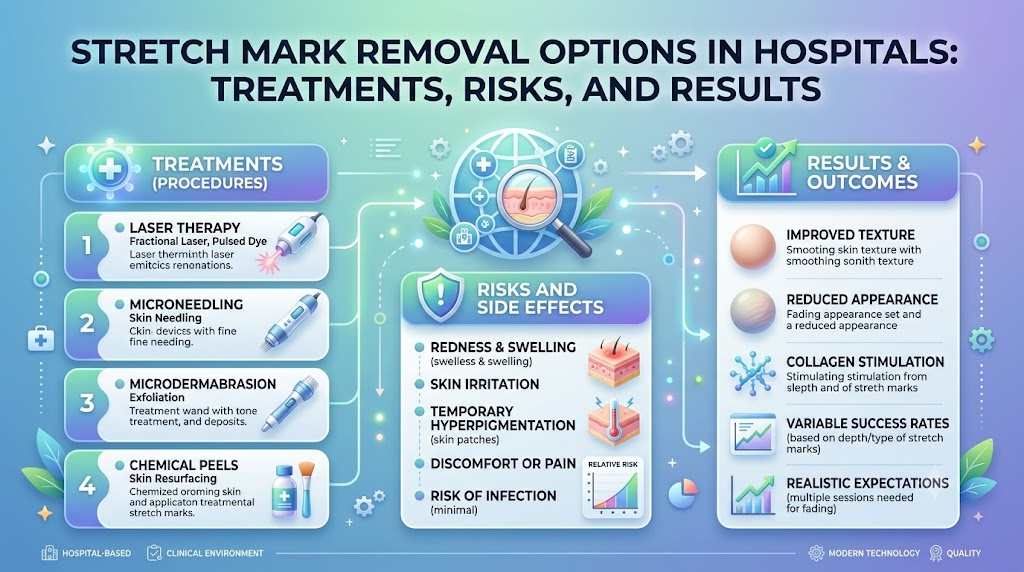
Stretch marks are common lines on the skin that can appear during pregnancy, puberty, or changes in body size. They are usually harmless, but some people want to make them less visible. Understanding stretch mark removal options in hospitals can help people make informed choices about their skin.
A qualified dermatologist can examine the skin, explain which treatments may help, and discuss possible risks. Some treatments can improve the look of stretch marks, but no procedure can promise to remove every mark completely. Results depend on the person’s skin, the age of the marks, and the treatment used.
BESTCOSMETICHOSPITALS, at , may help readers explore cosmetic care options and prepare questions before meeting a qualified skin specialist.
What Are Stretch Marks?
Stretch marks are lines or bands that form when the skin stretches or changes quickly. The skin has fibers that help it stay firm and flexible. When these fibers change or break down, marks may appear.
New stretch marks may look pink, red, purple, or brown, depending on the person’s skin tone. Older marks often become lighter or look like thin, pale lines.
Stretch marks commonly appear on the belly, breasts, hips, thighs, upper arms, or buttocks. They are not contagious and usually do not cause health problems.
Over time, many marks become less noticeable. However, they often do not disappear completely. Treatment is optional and is mainly used to improve appearance.
Why Do Stretch Marks Develop?
Stretch marks can form for many reasons. They are not a sign of poor hygiene or personal failure.
Common causes include:
- Pregnancy: The skin around the belly and breasts may stretch as the body changes.
- Puberty and rapid growth: Growth spurts can cause marks on the thighs, hips, back, or other areas.
- Quick weight changes: Gaining or losing weight quickly may contribute to stretch marks.
- Rapid muscle growth: Fast changes in muscle size can stretch the skin.
- Family history: Some people are more likely to develop stretch marks because of inherited skin traits.
- Hormonal changes: Changes in hormones can affect the skin’s structure.
- Steroid medicines: Long-term use of certain steroid creams or tablets may increase the risk of stretch marks, especially when used improperly.
If large or unusual stretch marks appear without a clear cause, a medical check may be helpful. This is especially important if they occur with other unusual changes, such as easy bruising or unexpected muscle weakness.
Can Hospitals Remove Stretch Marks Completely?
No. Hospital-based treatments cannot guarantee complete stretch mark removal. They may make the marks less noticeable, smoother, or closer in color to the surrounding skin.
Results vary from person to person. Several factors can affect the outcome:
- Whether the marks are new or old.
- Their size, color, depth, and location.
- The person’s skin tone and skin type.
- Medical history and current medicines.
- The treatment chosen and the body’s response.
- How well the patient follows professional aftercare advice.
Newer marks may respond differently from older, pale marks. Some treatments may help texture, while others may mainly target color.
A dermatologist should explain what improvement is realistic before treatment begins. Be careful with clinics that promise perfect skin or claim that one procedure works for everyone.
How Do Dermatologists Assess Stretch Marks?
A dermatologist starts by learning about the patient’s skin and health. This helps the clinician decide whether treatment is suitable and which options may be worth considering.
The consultation may include questions about:
- When the stretch marks first appeared.
- Whether they are spreading or changing.
- Any pregnancy or breastfeeding plans.
- Current medicines, allergies, and medical conditions.
- Past skin treatments and reactions.
- The patient’s goals, budget, and concerns.
The dermatologist may examine the marks and assess the skin’s color, texture, and sensitivity. They should explain possible benefits, risks, costs, alternatives, and follow-up needs.
Not everyone needs a procedure. Some people prefer to leave their marks alone or use simple skin care. The choice should be personal and free from pressure.
Common Hospital-Based Stretch Mark Treatment Options
Hospitals and specialist skin clinics may offer several treatments for stretch marks. Availability varies, and no single option suits everyone. A qualified dermatologist should assess the skin before recommending a procedure.
Laser and Light Treatments
Some laser and light-based treatments may improve the color or texture of stretch marks. Certain devices target visible color changes, while others aim to stimulate changes in the skin’s support fibers.
Possible side effects include redness, swelling, discomfort, burns, and changes in skin color. Results are not guaranteed, and more than one visit may be needed.
People with darker skin tones need careful assessment because some laser types and settings may raise the risk of unwanted dark or light patches. Ask the dermatologist about their experience treating skin tones similar to yours.
Microneedling
Microneedling uses fine needles to create tiny, controlled injuries in the skin. This may help the body make more collagen, a protein that supports skin structure. It may improve the appearance of some stretch marks.
Possible side effects include redness, swelling, pain, infection, scarring, and changes in skin color. Clean equipment and a trained professional are important for safety.
Do not try microneedling at home. Unsupervised use can damage the skin and increase the risk of infection or scars.
Microdermabrasion
Microdermabrasion gently removes some of the outer layer of the skin. It may offer limited improvement in the look of certain stretch marks, but it does not erase them.
Temporary redness, dryness, or irritation can occur. A dermatologist can explain whether this option is likely to help with the marks being treated.
Chemical Peels
A chemical peel uses a carefully selected solution to affect the skin’s surface or deeper layers. The strength and type of peel affect how it works.
Peels may have a limited role in improving some skin changes, but results for stretch marks vary. Poorly selected or incorrectly performed peels can cause burns, irritation, scarring, or changes in skin color.
A trained clinician should decide whether a peel is suitable. Strong peels should not be used at home without proper medical guidance.
Radiofrequency-Based Treatments
Some radiofrequency treatments use energy to heat deeper layers of the skin. This may support collagen changes and improve the texture of some stretch marks.
Results depend on the device, method, skin condition, and treatment plan. Possible risks include discomfort, redness, swelling, burns, and changes in skin texture or color.
Ask the clinic to explain the specific device, its expected benefits, and the evidence supporting its use for stretch marks.
Prescription Creams and Other Topical Products
Some creams may help certain early stretch marks look less noticeable, but their effects are limited. Most creams cannot remove established stretch marks.
A clinician may discuss ingredients such as hyaluronic acid or tretinoin in suitable cases. Tretinoin is a prescription retinoid that can irritate the skin. It must not be used during pregnancy. Anyone who is pregnant, planning pregnancy, or breastfeeding should seek advice from a qualified clinician before using retinoids or other active skin products.
Moisturizers can help keep skin soft, but they should not be presented as a way to erase stretch marks.
Surgical Options
Surgery is not a routine treatment for stretch marks alone. In some cases, marks on the lower belly may be removed as part of a separate operation, such as certain abdominal contouring procedures.
Surgery can leave new scars and carries risks such as infection, bleeding, and problems with healing. It may not remove marks outside the area being treated.
A specialist should explain the reasons for surgery, its limits, and other options. Surgery is not a guaranteed solution for stretch marks.
Comparison of Hospital Treatment Options
The best treatment depends on the person’s skin, the type of marks, medical history, and goals. The following comparison gives a general overview, not a personal treatment recommendation.
Hospital-Based Stretch Mark Treatment Options Compared
| Treatment option | Possible benefit | Important limitation or risk |
|---|---|---|
| Laser or light treatment | May improve color or texture | Burns and unwanted skin color changes are possible |
| Microneedling | May improve texture and support collagen changes | Infection, scarring, and irritation can occur |
| Microdermabrasion | May offer mild surface improvement | Benefits for stretch marks may be limited |
| Chemical peels | May improve some surface changes | Burns and pigmentation changes are possible |
| Radiofrequency treatment | May improve the look of some marks | Results vary; burns and discomfort are possible |
| Topical products | May help selected early marks | Limited effect, especially on older marks |
| Surgery | May remove marks within an area removed for another reason | Involves surgical risks and creates scars |
A dermatologist may recommend one treatment or discuss alternatives. Combining treatments is not always necessary and may increase cost or side effects. Ask why a particular option is being suggested.
Benefits and Limitations of Hospital-Based Treatment
Professional treatment offers several possible benefits. A dermatologist can assess the skin, consider medical risks, select suitable procedures, and provide help if side effects occur. Hospitals and specialist clinics may also have equipment that is not suitable for home use.
However, treatment has limits. Results can be modest, visits may need to be repeated, and stretch marks may remain visible. Procedures may cause temporary side effects and require time for recovery.
Costs vary by treatment type, the area being treated, the clinic, and the number of visits. Ask for a clear estimate before agreeing to treatment, including follow-up costs and any extra charges.
No treatment is required simply because stretch marks are present. Choosing not to treat them is also a reasonable option.
Possible Side Effects and Safety Precautions
Cosmetic skin procedures can cause redness, swelling, tenderness, dryness, or irritation. Some may also cause burns, infection, scarring, or changes in skin color.
Before treatment, tell the clinician about allergies, current medicines, medical conditions, active skin infections, past skin reactions, and any history of raised or unusual scars.
After treatment, follow the clinic’s instructions and attend recommended follow-up visits. Contact the treating team if you develop severe or worsening pain, spreading redness, pus, fever, blistering, or other concerning symptoms.
Do not begin additional skin products or treatments without checking whether they are safe for your healing skin. If you are pregnant or breastfeeding, discuss the risks of cosmetic procedures and active skin products before proceeding.
What Should Patients Know Before Treatment?
A good consultation should give you time to understand the choices and decide without pressure. Bring your questions and share your health history honestly.
Questions to Ask Before Stretch Mark Treatment
| Topic | Question to ask | Why it matters |
|---|---|---|
| Suitability | Is this treatment right for my stretch marks and skin type? | Helps match treatment to your needs |
| Expected results | How much improvement is realistic? | Sets clear expectations |
| Safety | What are the risks for my skin tone and health? | Helps you understand possible harm |
| Clinician qualifications | Who will perform the procedure, and what training do they have? | Helps you assess professional experience |
| Number of visits | How many sessions might I need? | Helps with time and planning |
| Costs | What is the full cost, including follow-up visits? | Reduces unexpected expenses |
| Follow-up care | What side effects should I report, and whom should I contact? | Helps you respond to problems |
Ask about alternatives, recovery time, and what happens if the results are limited. You can take time to think before making a decision. Avoid clinics that promise perfect results or pressure you to pay immediately.
How to Choose a Hospital for Stretch Mark Treatment
When comparing hospitals or specialist clinics, consider the following:
- Qualified skin specialists: Check that a suitably trained dermatologist is involved in assessing and planning treatment.
- Relevant experience: Ask whether the clinician has experience treating stretch marks and different skin tones.
- Clean facilities: Look for clear infection-control practices and appropriate equipment handling.
- Careful screening: The clinic should review your medical history, medicines, and skin condition.
- Clear explanations: Staff should discuss benefits, risks, alternatives, and realistic results.
- Transparent pricing: Request a written estimate and clear consent information.
- Follow-up support: Find out how the clinic handles side effects and concerns after treatment.
- Respectful care: You should feel free to ask questions and decline a procedure.
Do not rely only on advertisements, rankings, or claims of guaranteed results. Compare the information provided and ask for clarification when needed.
How BESTCOSMETICHOSPITALS.COM Can Help Readers
BESTCOSMETICHOSPITALS.COM may be a useful starting point for learning about cosmetic hospital options and preparing for a consultation. Readers can use hospital information platforms to identify questions about available treatments, specialist services, and patient support.
Before choosing a clinic, confirm its current services, clinician qualifications, and costs directly. A website cannot replace a personal assessment by a qualified dermatologist or guarantee the quality of an individual treatment.
Frequently Asked Questions
1. Can hospitals remove stretch marks completely?
No. Treatment may reduce their appearance, but complete removal cannot be guaranteed. Results vary from person to person.
2. Which hospital treatments may help reduce stretch marks?
Options may include laser treatments, microneedling, radiofrequency procedures, selected peels, and certain topical products. Suitability depends on the individual.
3. Is laser treatment effective for stretch marks?
Laser treatment may improve the color or texture of some marks. Results vary, and burns or skin color changes are possible.
4. Can microneedling improve the appearance of stretch marks?
It may improve the texture of some marks by supporting collagen changes. It can also cause irritation, infection, scarring, or pigmentation changes.
5. Are stretch mark removal procedures safe for darker skin?
Some treatments may be suitable, but careful selection is important because certain procedures can cause unwanted pigmentation. Seek a clinician experienced with darker skin tones.
6. Can stretch marks be treated during pregnancy?
Many cosmetic procedures are best postponed during pregnancy. Tretinoin must not be used during pregnancy. Ask a qualified clinician about safe options.
7. Do stretch mark creams remove old marks?
No cream can reliably erase old stretch marks. Some products may offer limited improvement, but results are often modest.
8. How many treatment sessions may be needed?
The number varies by procedure, the marks, and the patient’s response. Your dermatologist can discuss a likely treatment plan.
9. What side effects can stretch mark treatments cause?
Possible effects include redness, swelling, irritation, pain, burns, infection, scarring, and changes in skin color.
10. How can I choose a suitable hospital for stretch mark treatment?
Look for a qualified dermatologist, clean facilities, suitable equipment, clear pricing, honest advice, and reliable follow-up care.
Conclusion
Stretch marks are common, usually harmless, and nothing to be ashamed of. Treatment is a personal choice, and the right option depends on the marks, skin tone, medical history, and goals. Hospital-based procedures may improve their appearance, but complete removal is not guaranteed.
Speak with a qualified dermatologist, compare the benefits and risks, and understand the full cost before choosing treatment. Take your time, ask questions, and avoid promises that sound too good to be true. This article is for general education and does not replace advice from a qualified healthcare professional.