Non-surgical rhinoplasty changes the shape of the nose without surgery. It uses dermal fillers, which are soft gels injected under the skin. These fillers may smooth small bumps or improve the nose’s visible shape.
Non-surgical rhinoplasty recovery often involves mild swelling, redness, tenderness, or bruising. Many people return to daily tasks soon after treatment. However, recovery varies, and careful aftercare still matters.
Nose filler treatment also carries rare but serious risks. A blocked blood vessel can damage skin or affect vision. For more information about cosmetic care, visit Bestcosmetichospitals.
This article explains liquid rhinoplasty aftercare, common side effects, and safe daily habits. It also covers warning signs and when to seek medical help. Always follow the advice of your treating medical professional.
What Is Non-Surgical Rhinoplasty?
Non-surgical rhinoplasty is also called a liquid nose job. A trained medical professional injects filler into selected areas of the nose. The filler adds volume to change the nose’s visible shape.
It may help smooth a small bump or improve certain uneven areas. It cannot make the nose smaller. It also cannot fix every nose shape or breathing problem.
Results are temporary, and the length of time they last varies. The filler type, treatment area, and personal response can affect results. A qualified professional can explain what this treatment may achieve.
What Should You Expect Right After Nose Filler Treatment?
You may notice mild swelling, redness, tenderness, or bruising after treatment. These effects often improve over time. Some people see changes right away, but swelling can affect the early result.
Your nose may feel tender around the injection points. Keep your hands away from the treated area unless your provider says otherwise. Do not press the nose to check its shape.
Avoid judging the final result too soon. Follow your provider’s aftercare instructions and attend any recommended follow-up. Severe pain or unusual skin changes are not normal recovery signs.
How Long Does Non-Surgical Rhinoplasty Recovery Take?
Many people return to daily activities soon after nose filler treatment. Mild swelling and bruising may take several days to settle. Some effects may last longer, depending on the person and treatment.
There is no single recovery time for everyone. The filler, injection sites, and personal response can affect healing. Your treating clinician can explain what to expect after your procedure.
Do not assume that every symptom is part of normal recovery. Contact your provider if symptoms worsen or concern you. Seek emergency care for serious warning signs.
What Are the Best Non-Surgical Rhinoplasty Recovery Tips?
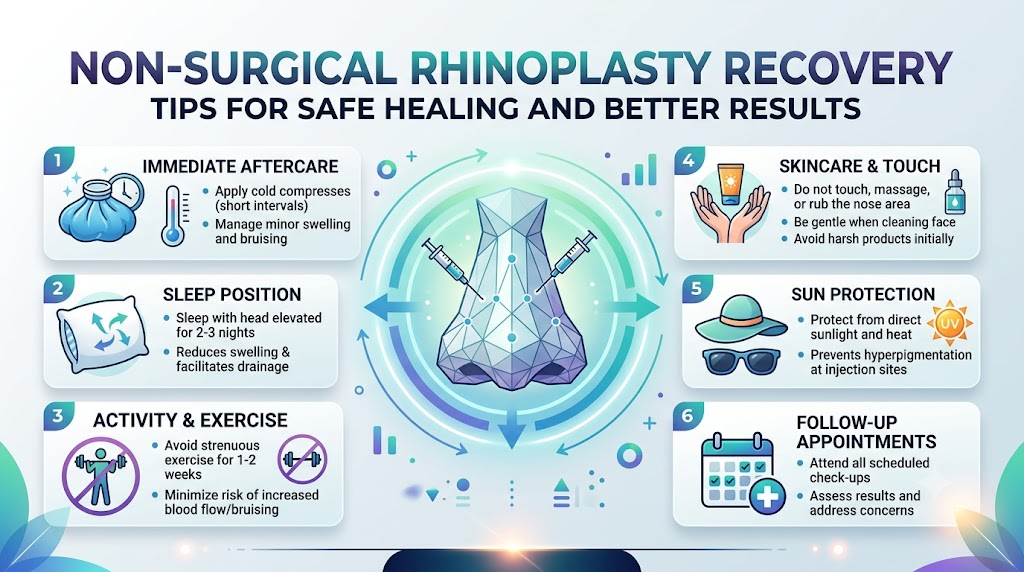
Good aftercare can help protect the treated area. It may also reduce avoidable irritation during early recovery. Follow these practical nose filler aftercare tips.
- Follow your provider’s instructions. Your care plan should match the treatment you received.
- Keep your hands away. Do not press, rub, squeeze, or reshape your nose.
- Use cold packs only when advised. Never press a cold pack hard against your nose.
- Keep the skin clean. Follow advice about washing and caring for the injection sites.
- Avoid harsh skin products when advised. Some products may irritate the treated area.
- Limit hard exercise as directed. Strenuous activity may increase swelling or bruising.
- Avoid excess heat if advised. Heat may worsen swelling for some people.
- Attend follow-up visits. These visits help your provider assess your recovery.
Aftercare instructions may differ by filler and treatment method. Do not massage the nose unless your treating clinician specifically tells you to. Contact the provider if you are unsure about any step.
Can You Wear Makeup After Nose Filler Treatment?
Your provider may ask you to wait before applying makeup near injection points. This helps limit pressure and irritation while the skin settles. Follow the timing advice given for your treatment.
Once your provider says makeup is safe, use clean hands and tools. Apply products gently around the nose. Do not press or rub the treated area.
Remove makeup with care, too. Avoid scrubbing the skin or pulling at the injection sites. Ask your provider before using new products if the skin feels sore.
When Can You Exercise After Non-Surgical Rhinoplasty?
Hard exercise can increase blood flow and may worsen early swelling or bruising. Your provider may advise avoiding strenuous activity for a short time. Follow their guidance before returning to your usual workout.
Light daily activities may be possible sooner for many people. However, your symptoms and treatment details matter. Do not rush back into intense exercise if your nose remains sore or swollen.
Avoid contact sports and activities that could injure your nose. Ask your provider when it is safe to return to them. Stop and seek advice if activity causes concerning symptoms.
What Should You Avoid During Recovery?
Your nose needs gentle care after filler injections. Avoid actions that could place pressure on the treated area. These steps may help reduce irritation and protect the early results.
During recovery, avoid:
- Rubbing, squeezing, or pressing your nose
- Trying to move or reshape the filler yourself
- Intense exercise before your provider allows it
- Activities that could cause a nose injury
- Unapproved massage or beauty treatments
- Home remedies that your provider has not approved
- Filler injections from untrained providers
Ask your clinician before using new skin products or having other facial treatments. Tell them about medicines and supplements you take. Never stop or change prescribed medicines without medical advice.
Do not try to treat severe pain or unusual skin changes at home. These signs may point to a serious problem. Seek medical help as soon as needed.
Common Recovery Effects and Safe Aftercare
Some effects are mild and short-lived. Others may signal a serious complication. The table below explains the difference and the next step.
| Recovery effect | What a person may notice | Recommended next step |
|---|---|---|
| Mild swelling | Slight puffiness near injection points | Follow aftercare advice and watch for changes |
| Redness | Mild redness around the treated area | Keep the skin clean and follow provider instructions |
| Tenderness | Mild soreness when the area feels sensitive | Avoid pressure and follow your care plan |
| Bruising | Small blue, purple, or dark marks | Monitor the area and ask your provider if concerned |
| Increasing pain | Strong or worsening pain in the nose | Seek immediate emergency medical care |
| Skin color changes | Pale, grey, dark, or mottled skin | Seek immediate emergency medical care |
| Vision problems | Blurred vision, loss of vision, or other sudden changes | Seek immediate emergency medical care |
Mild effects may occur after filler treatment, but symptoms can vary. Severe pain, unusual skin color changes, and vision problems need urgent attention. Do not wait to see whether these warning signs improve.
What Warning Signs Need Immediate Medical Help?
Nose filler injections can rarely block a blood vessel. This can reduce blood flow and damage the skin. In serious cases, the problem may affect vision.
Seek immediate emergency medical care if you notice:
- Sudden blurred vision or loss of vision
- Severe or increasing pain in the nose
- Skin that turns pale, grey, dark, or mottled
- Rapidly worsening swelling with unusual skin changes
- Sudden weakness, trouble speaking, or other stroke-like symptoms
These symptoms may signal a serious complication. Do not wait for your provider to reply before seeking emergency care. Do not try to massage the area or fix the problem yourself.
Contact your treating clinician promptly if you develop fever, spreading redness, pus, or worsening swelling. These signs may point to infection or another problem. A medical professional should assess them.
How Can You Reduce the Risk of Complications?
Choosing a properly trained medical professional is an important safety step. Nose filler treatment needs a strong understanding of facial anatomy. The nose has blood vessels linked to nearby areas, including the eyes.
Ask your provider these questions before treatment:
- What training and experience do you have with nose fillers?
- Which filler will you use, and why?
- What risks and limits should I understand?
- How would you manage a blocked blood vessel?
- How can I contact you after treatment?
- What follow-up and emergency advice will I receive?
A skilled provider can help assess whether filler treatment suits your goals. However, no provider or technique can remove every risk. Ask for clear information before deciding.
Make sure you understand the treatment plan and possible side effects. Tell the provider about your health history and medicines. Do not feel pressured to proceed if your questions remain unanswered.
How Can You Protect Your Results?
Careful aftercare may help limit avoidable irritation during early recovery. Avoid pressure on the nose and follow the instructions you receive. Do not try to change the filler shape yourself.
Filler results are temporary. How long they last depends on the product, treatment area, and individual factors. Results can also change as the body breaks down the filler.
Do not schedule repeat treatment automatically. Ask a qualified professional whether more filler is suitable. Too much filler can change the shape and may increase risk.
If you are unhappy with the result, contact your provider. Do not seek another injection before discussing your concerns. A proper review can help you understand the available options.
How Is Non-Surgical Rhinoplasty Different From Surgical Rhinoplasty?
Non-surgical rhinoplasty uses filler injections to change the nose’s visible shape. It may smooth small bumps or improve certain uneven areas. It does not involve the same structural changes as surgery.
Surgical rhinoplasty changes the structure of the nose. It may address concerns that fillers cannot treat. Some procedures may also help with certain breathing problems.
Fillers add volume, so they cannot make the nose smaller. They also cannot correct every structural issue. The best option depends on your goals, health, and nose structure.
Discuss the benefits, limits, and risks with a qualified specialist. Ask which approach fits your needs. Avoid choosing a treatment based only on cost or quick results.
Daily Habits for Safer Nose Filler Recovery
Simple daily habits can help you follow your aftercare plan. Use this table as a reminder, not a replacement for personal medical advice.
| Habit | Why it matters | Safety reminder |
|---|---|---|
| Follow aftercare instructions | Supports care suited to your treatment | Ask your provider if anything is unclear |
| Avoid pressure on the nose | Helps limit irritation to the treated area | Do not massage or reshape the filler yourself |
| Keep the skin clean | Helps reduce avoidable skin irritation | Follow advice for washing and makeup |
| Limit hard exercise as advised | May help reduce swelling and bruising | Ask when to resume strenuous activity |
| Watch for warning signs | Helps you act quickly if a problem develops | Seek emergency care for severe pain or vision changes |
| Attend follow-up care | Lets your provider assess your recovery | Report new or worsening symptoms |
Key Takeaways About Non-Surgical Rhinoplasty Recovery
Non-surgical rhinoplasty often has little downtime, but careful aftercare still matters. Mild swelling, redness, tenderness, and bruising may occur after treatment. Recovery differs from person to person.
Follow your provider’s instructions and avoid pressing or massaging your nose. Do not assume that every change is normal. Sudden vision changes, severe pain, or unusual skin color changes need immediate medical attention.
Choose a trained medical professional and ask clear questions before treatment. This article provides general education, not personal medical advice. Consult a qualified clinician for guidance about your needs.
Frequently Asked Questions About Non-Surgical Rhinoplasty Recovery
1. How long does non-surgical rhinoplasty recovery take?
Many people return to daily activities soon after nose filler treatment. Mild swelling or bruising may take several days to improve. Your recovery time depends on the treatment and your body’s response.
2. Is swelling normal after nose filler treatment?
Mild swelling can happen after filler injections. It often improves over time, but the timing varies. Seek medical help if swelling worsens quickly or comes with severe pain or unusual skin changes.
3. Can I wear makeup after non-surgical rhinoplasty?
Your provider may advise waiting before applying makeup near injection points. Once they say it is safe, use clean tools and gentle movements. Avoid pressing or rubbing your nose.
4. When can I exercise after nose filler treatment?
The timing depends on your treatment and recovery. Hard exercise may worsen early swelling or bruising. Follow your provider’s advice before returning to strenuous workouts or contact sports.
5. Should I massage my nose after filler injections?
Do not massage your nose unless your treating clinician specifically tells you to. Pressure may affect the treated area. Ask your provider if you are unsure how to care for your nose.
6. Can I touch my nose after non-surgical rhinoplasty?
Avoid unnecessary touching, rubbing, or pressing during early recovery. Follow your provider’s instructions for cleaning the skin. Seek advice if touching the area causes strong pain or reveals unusual changes.
7. How long do nose filler results last?
Nose filler results are temporary, and their duration varies. The filler type and individual factors affect how long results remain. Ask your provider what to expect from the product used.
8. What should I avoid after liquid rhinoplasty?
Avoid pressing, squeezing, or reshaping your nose. Follow advice about exercise, heat, makeup, and other facial treatments. Do not use unapproved remedies or change prescribed medicines without medical advice.
9. Which warning signs need immediate medical care?
Sudden vision changes, severe pain, and pale or mottled skin need immediate emergency care. Sudden weakness or trouble speaking also requires urgent help. Do not wait for symptoms to improve.
10. How can I reduce the risk of nose filler complications?
Choose a properly trained medical professional with experience in nose filler injections. Ask about risks, emergency plans, and follow-up care. Follow aftercare instructions and seek help quickly for warning signs.
Conclusion
Non-surgical rhinoplasty may offer quick changes with little downtime, but it still carries risks. Gentle aftercare and clear instructions can support recovery. Results and healing times vary from person to person.
Follow your provider’s advice and attend recommended follow-up visits. Seek emergency help for sudden vision changes, severe pain, or unusual skin color changes. A qualified medical professional can help you make informed choices about treatment and recovery.