Introduction
Pregnancy and breastfeeding can change the breasts, belly, and body shape. Some women notice loose skin, changes in breast size, or extra fat. These changes are normal and affect each person in a different way.
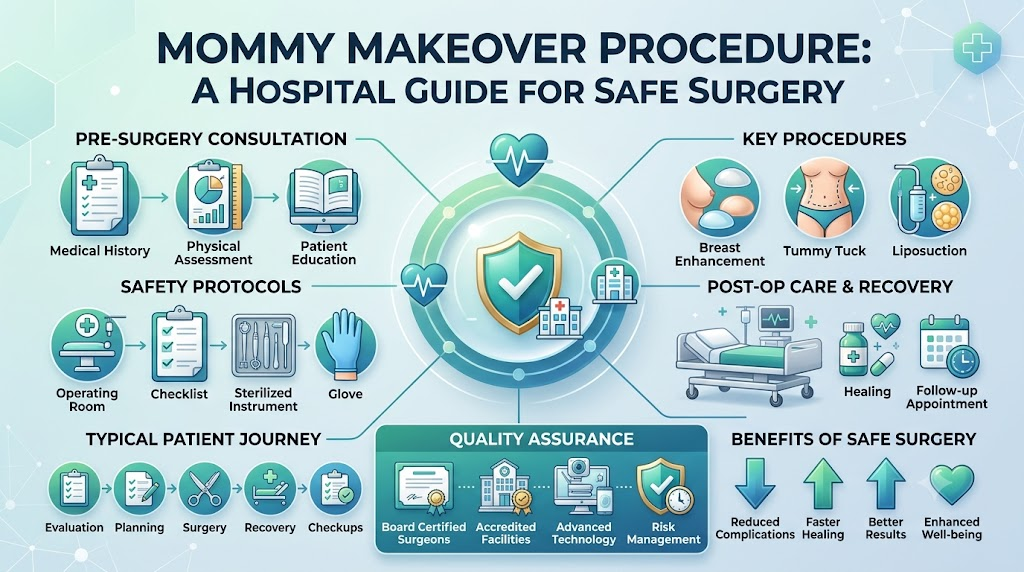
A mommy makeover procedure is a personal plan that may combine two or more cosmetic surgeries. The plan depends on your health, goals, and medical review. You can explore hospital information at Bestcosmetichospitals as a starting point.
Choosing a suitable hospital and a qualified surgical team is important. Ask about staff training, anesthesia, emergency care, costs, and recovery support. Surgery is a personal choice, and it is not right for everyone. Results and healing vary, so take time to understand the benefits and risks.
What Is a Mommy Makeover Procedure?
A mommy makeover is a group of cosmetic procedures planned for one patient. It often aims to change the shape of the breasts and belly. Some plans may also include liposuction.
It is not one fixed operation. A qualified plastic surgeon reviews your health and goals first. The surgeon then explains which options may suit your needs.
Some women may choose breast surgery with a tummy tuck. Others may need only one procedure. You do not need surgery to accept or value your body. Your choice should be based on your own wishes, not pressure from others.
Which Procedures May Be Included?
A mommy makeover may include several types of surgery. The exact mix depends on your health and goals.
Tummy Tuck
A tummy tuck removes extra skin from the belly. It may also tighten separated belly muscles when suitable. This can change the shape of the abdomen.
It is not a weight-loss treatment. Ask about the scar, healing time, and possible risks. Your surgeon should explain what this surgery can and cannot change.
Breast Lift
A breast lift raises and reshapes breasts that have begun to sag. It removes extra skin and changes the breast shape. It does not always make breasts larger.
Ask where scars may form and how they may look. Breast shape and healing can differ from person to person.
Breast Augmentation or Reduction
Breast augmentation uses implants to increase breast size. Breast reduction removes tissue to make breasts smaller. Both choices need a careful review of your goals and health.
Ask about possible changes in feeling, scars, and future breast care. If you may become pregnant again, discuss how that could affect your results.
Liposuction
Liposuction removes selected fat deposits under the skin. It can help change body shape in certain areas. It does not treat obesity or replace healthy habits.
Combining procedures can make surgery longer and more demanding. Your surgeon must decide whether it is safe to combine them. More procedures do not always mean better results.
Who May Be a Suitable Candidate?
A surgeon will review your health before suggesting surgery. Your wishes matter, but safety must come first.
The review may cover:
- Your medical history and current health.
- Your weight and whether it has been stable.
- Your recovery after childbirth.
- Whether you are breastfeeding.
- Plans for future pregnancy.
- Smoking or nicotine use.
- Medicines, allergies, and past operations.
- The help you can get during recovery.
Some breast procedures may be best planned after breastfeeding ends. Breast size may also need time to settle. Ask your surgeon when the timing may be right for you.
A future pregnancy may change your results. Smoking and some health conditions may raise the risk of poor healing. Only a qualified medical team can assess your personal risks and needs.
You should also have time to rest after surgery. Daily tasks, childcare, and lifting can be hard during early healing. Plan support before you book an operation.
How to Choose a Hospital for Mommy Makeover Surgery
Choosing the right mommy makeover hospital is a key step. Look beyond photos, ads, and low prices. Focus on trained staff, safe facilities, emergency care, and support after surgery.
Check the Plastic Surgeon
Choose a qualified plastic surgeon with recognized specialist training. Ask about their experience with each planned procedure. Confirm their credentials with the hospital or the relevant medical authority.
Ask to discuss likely scars, limits, and possible results. Be careful with promises of perfect results or no risks. A good surgeon will explain both the benefits and the limits of surgery.
Ask About the Anesthesia Team
Anesthesia is medicine that prevents pain during surgery. Ask who will provide it and monitor you. Check that the team is trained to manage changes in breathing, heart rate, and blood pressure.
Tell the team about all medicines, allergies, and health problems. Ask how they will assess your fitness for anesthesia.
Check the Operating Room
The hospital should have suitable surgical tools and monitoring systems. Ask how staff check equipment before an operation. Also ask how they keep the operating room clean.
Review Emergency Support
Every surgical facility should have a clear plan for serious problems. Ask how staff respond to heavy bleeding, breathing trouble, or blood clots. Find out whether emergency help is available on-site or through a transfer plan.
Check Recovery and Overnight Care
Ask where you will recover after surgery. Find out who will monitor you and how long that care may last. Some patients may need an overnight stay, depending on their health and procedures.
Ask About Infection Prevention
Ask how the team keeps wounds clean and checks for infection. Find out who will explain wound care and what supplies you may need at home.
Confirm Follow-Up Care
Before booking, ask how follow-up visits work. Find out who you can contact after discharge. Ask what happens if you have a concern outside normal clinic hours.
The best facility is not always the most costly or attractive. Safe care, suitable staff, and clear follow-up plans matter more than marketing claims.
What Happens During the Hospital Admission Process?
The process may differ by hospital and procedure. Most planned admissions include several steps.
- Consultation: Discuss your goals, questions, and expected changes.
- Health review: Share your medical history and have a physical check.
- Medicine review: Tell the team about medicines, allergies, and supplements.
- Tests: Complete any tests or medical checks the team requests.
- Treatment plan: Review the procedures, other options, and likely risks.
- Anesthesia review: Discuss how anesthesia will be given and monitored.
- Consent: Make sure you understand the plan before signing consent forms.
- Surgery: The team performs the agreed procedures and monitors you.
- Recovery: Staff check your condition and plan your discharge or stay.
Ask questions whenever something is unclear. You should understand the plan before you agree to surgery. Do not feel rushed into making a choice.
What Are the Risks of a Mommy Makeover?
All surgery carries risks. A mommy makeover may involve more than one procedure. This can make the operation longer and the recovery more demanding.
Possible risks include:
- Bleeding or infection.
- Slow wound healing.
- Scars and swelling.
- Fluid collecting under the skin.
- Changes in skin or breast feeling.
- Uneven results or unhappiness with appearance.
- Problems linked to anesthesia.
- Blood clots.
- Serious heart or lung problems.
Your risk depends on your health and the procedures planned. Smoking, some medicines, and certain health conditions may affect healing. Your surgeon should review these factors before surgery.
Ask how the team works to lower risks. Find out what happens if a problem occurs. Also discuss other options, including delaying surgery or choosing fewer procedures.
No hospital or surgeon can promise a risk-free operation. A careful review helps you make a more informed choice.
How Much Does a Mommy Makeover Cost?
The mommy makeover cost depends on the planned procedures and care needs. There is no single price that fits every patient.
The total may include:
- Surgeon and anesthesia fees.
- Operating room and hospital charges.
- Medical tests and prescribed medicines.
- Support garments and wound-care supplies.
- An overnight stay, if needed.
- Follow-up visits.
- Care for complications or later revision surgery.
Ask for a written, itemized estimate. Check what is included and which extra fees may apply. Ask whether the estimate covers follow-up visits and care if healing problems occur.
Cosmetic surgery is often not covered by health insurance. However, coverage depends on the procedure, medical reason, and policy. Check directly with your insurer and the hospital before making payment plans.
Do not choose a facility on price alone. Compare the care team, safety support, and follow-up plan too.
What Should Patients Expect During Recovery?
Mommy makeover recovery depends on the procedures and your health. Some people may need several weeks before returning to usual tasks. Full healing can take longer.
Plan for rest and help with daily needs. You may need support with:
- Taking prescribed medicines as directed.
- Keeping wounds clean as instructed.
- Wearing support garments when advised.
- Attending follow-up visits.
- Caring for drains, if used.
- Returning to walking and daily tasks slowly.
- Avoiding heavy lifting, exercise, and driving until cleared.
Arrange help with childcare and housework before surgery. You may not be able to lift a young child during early healing. Ask your surgeon when it is safe to lift children or heavy items.
Follow your own discharge instructions. Do not change medicines or activity limits without advice from your care team. Contact the team if you are unsure about a symptom or task.
What to Check Before Choosing a Mommy Makeover Hospital
| What to Check | Why It Matters | Questions to Ask |
|---|---|---|
| Surgeon qualifications | Helps confirm suitable training | Is the surgeon a recognized specialist? |
| Anesthesia team | Supports safe monitoring | Who will provide and monitor anesthesia? |
| Operating room safety | Supports safe surgery | What safety checks are used? |
| Emergency response | Helps prepare for serious problems | How are emergencies managed? |
| Recovery and monitoring | Supports care after surgery | Who will monitor me after the operation? |
| Infection prevention | Helps reduce infection risk | How are wounds and rooms kept clean? |
| Written cost estimate | Helps plan expenses | What does the estimate include? |
| Follow-up care | Supports healing | Who can I contact after discharge? |
Preparing for Surgery at Home
Good planning can make recovery easier. Follow the instructions given by your surgical team.
- Follow advice about food, drink, and medicines.
- Discuss smoking, nicotine, alcohol, and supplements with your team.
- Arrange transport to and from the hospital.
- Ask a trusted adult to stay with you, as advised.
- Arrange childcare and help with lifting.
- Prepare easy meals and a comfortable rest area.
- Keep discharge instructions and emergency numbers nearby.
Do not stop prescribed medicines on your own. Your care team should tell you whether any changes are needed. Ask for written instructions if you are unsure.
Prepare your home before admission. Keep items you use often within easy reach. This can reduce the need to bend, stretch, or lift during early recovery.
Mommy Makeover Admission Checklist
| Task | When to Arrange It | Why It Helps |
|---|---|---|
| Complete the pre-surgery assessment | Before the operation | Checks your health needs |
| Review medicines and allergies | Before admission | Helps the team plan safe care |
| Confirm the written surgical plan | Before signing consent | Makes the plan clear |
| Understand costs and payment terms | Before booking | Helps avoid bill surprises |
| Arrange a ride home | Before admission | Supports safe travel after discharge |
| Organize childcare and home help | Before surgery | Allows time to rest |
| Prepare recovery supplies | Before admission | Keeps needed items close |
| Save the after-hours contact number | Before discharge | Helps you seek advice when needed |
When Should Patients Contact the Hospital After Surgery?
Follow the emergency instructions given by your surgical team. Some symptoms need urgent medical care.
Seek urgent help for:
- Sudden shortness of breath.
- Chest pain.
- Fainting or severe weakness.
- Heavy or uncontrolled bleeding.
- One-sided leg swelling or pain, especially with breathing symptoms.
These may signal a serious problem. Call local emergency services if symptoms are severe or sudden. Do not wait for an online reply.
Contact your surgical team promptly if you have a fever, worsening redness, rising pain, unusual wound discharge, or other warning signs in your discharge papers. If you are unsure, ask a healthcare professional for advice.
How BestCosmeticHospitals.com Can Help Readers
BestCosmeticHospitals.com can help readers explore information about cosmetic hospitals and prepare for consultations. Use the available details to create a list of questions for each facility.
Confirm the surgeon’s qualifications, hospital services, emergency support, costs, and follow-up care directly with the provider. Do not assume that a listing proves a hospital has been inspected or endorsed. Your medical team should help you assess whether a planned procedure suits your needs.
Frequently Asked Questions About Mommy Makeover Surgery
1. What is included in a mommy makeover procedure?
It may combine a tummy tuck, breast lift, breast augmentation or reduction, and liposuction. The exact plan depends on the patient’s health and goals.
2. How do I choose a hospital for mommy makeover surgery?
Check the surgeon’s credentials, anesthesia team, operating room, emergency support, recovery care, costs, and follow-up services. Confirm these details directly.
3. How can I check a plastic surgeon’s qualifications?
Ask about specialist training and registration. Confirm the details with the hospital or relevant medical authority.
4. Is a mommy makeover performed under general anesthesia?
Many mommy makeover procedures use general anesthesia, but the plan can vary. Ask the surgeon and anesthesia provider what is suitable for your case.
5. What risks should I discuss before surgery?
Ask about bleeding, infection, poor healing, scars, blood clots, anesthesia risks, and changes in feeling. Your personal risks depend on your health and planned procedures.
6. How long does recovery from a mommy makeover take?
Recovery varies with the procedures and your health. Some activities may need to wait several weeks, while full healing may take longer.
7. Can a mommy makeover affect future pregnancies?
Future pregnancy may change the results, especially after breast or abdominal surgery. Discuss your plans with your surgeon before deciding.
8. What should I ask about the total surgery cost?
Request a written estimate covering surgeon fees, anesthesia, hospital charges, tests, supplies, and follow-up care. Ask about extra fees too.
9. Will I need help with childcare during recovery?
You may need help with childcare, housework, and lifting. Ask your surgeon how long you should avoid lifting children.
10. When should I seek medical help after surgery?
Seek urgent help for chest pain, sudden breathlessness, fainting, or heavy bleeding. Contact your surgical team promptly for fever, worsening redness, or unusual wound discharge.
Conclusion
A mommy makeover procedure is a personal choice that needs careful thought. Compare surgeon training, hospital facilities, safety plans, costs, and recovery support. Ask about risks, alternatives, and realistic results before you decide.
Choose based on your medical needs, not price or appearance alone. A qualified team can help you understand your options and plan suitable care. This article offers general information and does not replace advice from a qualified healthcare professional.