Introduction
Choosing to undergo a cosmetic procedure is an important healthcare decision that requires careful planning, research, and professional guidance. Many patients begin their exploration online long before visiting a physical hospital or meeting a surgeon in person. Gathering initial information helps individuals understand what various procedures involve, explore potential aesthetic options, and identify qualified medical centers.Navigating this research process benefits from reliable educational guidance. Platforms like BestCosmeticHospitals serve as a valuable resource for researching cosmetic hospitals, qualified surgeons, procedure categories, global destinations, and virtual consultation options.
What Is an Online Cosmetic Consultation?
An online cosmetic consultation is a secure virtual meeting between a patient and a qualified healthcare professional or plastic surgeon. It utilizes digital communication tools to facilitate early discussions about aesthetic goals and health backgrounds.
Key elements typically include:
- Video consultations allowing face-to-face interaction over secure internet links
- Phone consultations for preliminary discussions when video is unavailable
- Secure transmission of medical history forms and relevant personal health data
- Discussion of aesthetic goals, concerns, and patient expectations
- Review of previous cosmetic procedures, past surgeries, or underlying conditions
- Examination of photographs or digital scans where appropriate and secure
- Preliminary treatment discussions outlining potential surgical or non-surgical options
- Open dialogue for questions regarding recovery, safety, and hospital facilities
It is important to understand that a virtual consultation is an introductory or supplementary step. It provides valuable educational direction but does not replace an in-person clinical examination.
How Online Cosmetic Consultations Work
Understanding the typical workflow of a virtual consultation helps patients navigate the process smoothly and set realistic expectations.
The process generally follows these steps:
- Step 1 – Appointment Request: The patient selects a hospital, clinic, or qualified professional and requests an online consultation slot.
- Step 2 – Patient Information: Basic medical history, procedure interests, and sometimes secure photographs are collected before the meeting.
- Step 3 – Virtual Consultation: The patient connects with the healthcare professional to discuss goals, concerns, and health background.
- Step 4 – Preliminary Discussion: The provider explains potential approaches, general limitations, inherent risks, and necessary next steps.
- Step 5 – In-Person Assessment: If appropriate, the patient schedules a physical consultation at the hospital for direct clinical evaluation.
- Step 6 – Treatment Planning: A finalized, safe treatment plan is formulated based on thorough clinical examination rather than virtual dialogue alone.
What Can Patients Discuss During an Online Cosmetic Consultation?
A virtual session provides a structured opportunity to cover many foundational aspects of your aesthetic journey. Coming prepared with clear topics makes the conversation much more productive.
Patients can discuss:
- Desired aesthetic changes and specific areas of the body or face of concern
- Potential procedure categories, including both surgical and non-surgical options
- General recovery expectations, downtime, and basic postoperative care
- Potential risks, limitations, and realistic outcomes associated with procedures
- Preparation steps required before any physical examination or treatment
- Questions regarding the surgeon’s background, training, and experience
- Hospital facilities, safety standards, and accreditation credentials
- Medical-tourism logistics, travel planning, and scheduling for international patients
- Approximate treatment planning and what subsequent steps are necessary
Maintaining realistic expectations during these discussions ensures a healthy approach to cosmetic care.
Cosmetic Procedures That May Be Discussed Online
A wide range of cosmetic procedures can be introduced during an initial virtual meeting, allowing patients to learn about options from home.
Commonly discussed categories include:
- Facial Procedures: Including rhinoplasty, facelift, blepharoplasty (eyelid surgery), and facial contouring.
- Breast Procedures: Such as breast augmentation, breast reduction, and breast lift procedures.
- Body Procedures: Covering liposuction, tummy tuck (abdominoplasty), body contouring, and body lift options.
- Non-Surgical Treatments: Involving injectables, laser-based skin treatments, skin rejuvenation, and hair-related aesthetic treatments.
Discussing a procedure online is purely exploratory. It does not automatically mean the patient is medically suitable for that specific intervention.
Benefits of Online Cosmetic Consultations
Virtual consultations offer several distinct advantages for individuals beginning their research into aesthetic care.
Potential benefits include:
- Exceptional convenience for individuals with busy schedules or remote locations
- Early access to specialized surgeons and accredited medical centers worldwide
- The ability to ask initial questions and gather information from the comfort home
- An easier way to compare different treatment options and institutional approaches
- Valuable support for international medical tourists planning travel logistics
- Reduced need for preliminary travel before confirming interest in a provider
- An opportunity to discuss personal expectations and clarify misconceptions
- Effective preparation for a subsequent in-person consultation and physical exam
- Follow-up convenience for routine check-ins where clinically appropriate
While beneficial, virtual consultations complement rather than supersede direct physical assessments.
Limitations of Online Cosmetic Consultations
Recognizing the boundaries of virtual care ensures that patients approach cosmetic planning safely and realistically.
Important limitations include:
- Inability to perform a complete physical examination of skin texture, muscle tone, and tissue laxity
- Restricted ability to accurately assess certain anatomical features through a screen or photographs
- Inability to perform necessary diagnostic measurements or physical evaluations
- Absence of mandatory preoperative testing, such as blood work or imaging
- Inability for an anesthesiologist to conduct a complete surgical risk clearance remotely
- The absolute requirement for a direct physical examination before any final surgical decision is made
Understanding these constraints prevents misunderstandings about what a virtual meeting can achieve.
Table 1 – What Can and Cannot Usually Be Covered Online?
| Consultation Area | May Be Discussed Online | May Require In-Person Assessment |
| Aesthetic goals | Yes | Yes |
| Medical history | Yes | Yes |
| Procedure education | Yes | No |
| General risks | Yes | Yes |
| Previous procedures | Yes | Yes |
| Preliminary treatment options | Yes | Yes |
| Physical examination | No | Yes |
| Anatomical measurements | No | Yes |
| Preoperative testing | No | Yes |
| Final surgical planning | No | Yes |
Preparing for an Online Cosmetic Consultation
Preparation is key to maximizing the value of your virtual meeting with a healthcare professional. Taking time to organize your thoughts and health records pays off during the call.
Patients should consider preparing:
- A complete medical history, including chronic illnesses and past surgeries
- A list of previous cosmetic treatments or procedures
- A detailed record of known allergies
- A comprehensive list of all current medications, vitamins, and herbal supplements
- Relevant medical reports or previous diagnostic documents if applicable
- A structured list of questions about procedures, risks, and recovery
- Clear notes on your personal aesthetic goals and motivations
- Honest thoughts regarding your budget expectations and preferred treatment locations
- Practical travel considerations if exploring care outside your home region
Honest disclosure of medical information is vital for your safety.
Preoperative Assessment After an Online Consultation
An online discussion is only the first phase of a comprehensive medical evaluation. Before any cosmetic procedure can be safely performed, a rigorous preoperative assessment must take place.
This assessment typically involves:
- A thorough review and verification of your submitted medical history
- A comprehensive physical examination conducted in person by the surgeon
- Recording of vital signs, weight, and relevant anatomical measurements
- Ordering and reviewing required laboratory tests or diagnostic imaging
- An anesthesia evaluation to assess surgical and airway safety risks
- Procedure-specific clinical assessments to confirm anatomical suitability
- A meticulous review of all current medications, supplements, and potential drug interactions
- A comprehensive allergy review to prevent adverse reactions
- Formal surgical risk stratification
Preoperative assessment ensures that a planned procedure can be approached with maximum safety.
How to Evaluate Hospitals Offering Online Cosmetic Consultations
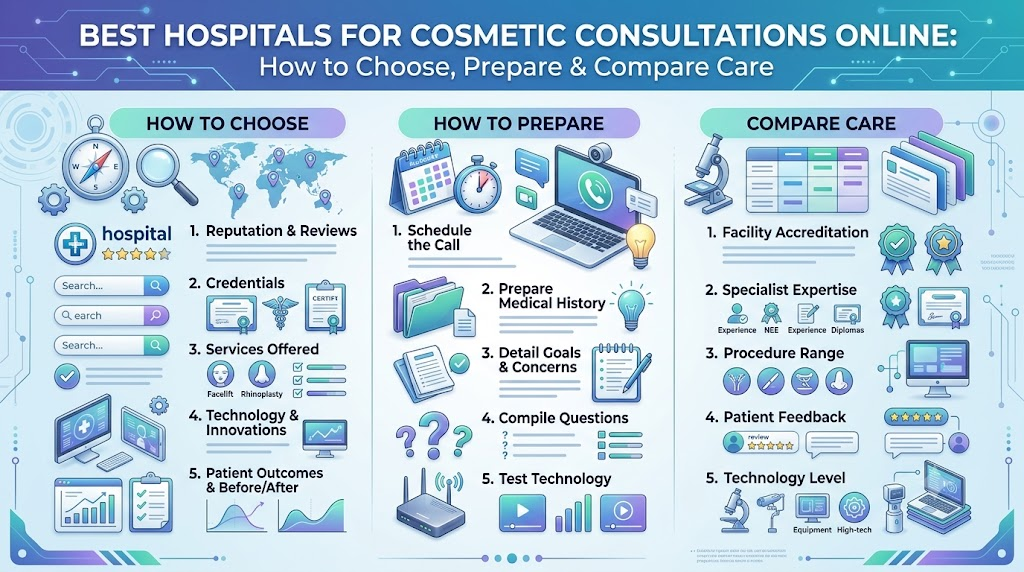
When researching medical centers for virtual consultations, patients should examine several core criteria to gauge institutional quality and safety.
Key factors to review include:
- Qualified Surgeons: Look for appropriate specialist training, board certification where applicable, and verifiable professional registration.
- Hospital Accreditation: Consider recognized national or international quality accreditations that reflect adherence to strict safety standards.
- Appropriate Facilities: Verify the presence of fully equipped operating rooms, certified anesthesia support, emergency services, and dedicated recovery units.
- Consultation Process: Look for transparent information detailing what the virtual consultation includes and what steps follow.
- Follow-Up Protocols: Understand who provides postoperative monitoring and how clinical complications or revisions are managed.
- Transparency: Seek clear communication regarding costs, risks, recovery timelines, and procedural limitations.
How to Verify Cosmetic Surgeon Credentials
Verifying a surgeon’s professional background is one of the most critical steps in ensuring your personal safety and care quality.
Practical verification steps include:
- Checking official medical council or board registrations in the surgeon’s practicing country
- Confirming recognized specialist qualifications in plastic or cosmetic surgery
- Reviewing board certification status with relevant professional bodies where applicable
- Examining affiliations with reputable national and international professional organizations
- Verifying hospital staff privileges and active credentials at recognized medical centers
- Investigating procedure-specific experience and specialized training backgrounds
- Reviewing published professional information and academic contributions
Membership in a single organization alone does not guarantee that a surgeon is the right choice for your specific needs; thorough verification across multiple channels is recommended.
Cosmetic Surgery Second Opinions Online
Seeking a second opinion is a standard practice in medicine, and virtual consultations can sometimes facilitate initial second-opinion discussions for cosmetic concerns.
An online second opinion may help patients understand:
- Whether a proposed procedure is commonly utilized for a particular aesthetic concern
- What alternative surgical or non-surgical approaches might exist
- Detailed clarifications regarding procedure risks and limitations
- Realistic recovery expectations and timeline projections
- Whether an in-person physical assessment is necessary to confirm a plan
- Whether consultation with a different subspecialist would be beneficial
A virtual second opinion provides additional perspective but does not replace direct clinical examination.
Table 2 – Comparing Hospitals for Online Cosmetic Consultations
| Hospital/Provider Factor | What Patients Should Check | Why It Matters |
| Surgeon credentials | Board certification and specialist training | Ensures expert surgical skill and safety standards |
| Hospital accreditation | Recognized quality seals and safety audits | Reflects adherence to rigorous institutional protocols |
| Consultation format | Secure video platforms and clear scheduling | Protects privacy and ensures effective communication |
| Privacy/security | Compliance with data protection standards | Safeguards sensitive medical records and photos |
| Procedure expertise | Depth of experience in specific surgery types | Tailors care to specialized anatomical needs |
| Preoperative assessment | Thorough in-person evaluation protocols | Confirms medical fitness and anatomical candidacy |
| Anesthesia support | Certified anesthesiologists and safety equipment | Guarantees vital safety during surgical procedures |
| Emergency facilities | On-site ICU and emergency transfer readiness | Secures patient safety during unexpected events |
| Postoperative care | Structured recovery monitoring programs | Ensures smooth healing after discharge |
| Follow-up | Long-term care and revision management policies | Protects patient health over time |
| Cost transparency | Clear, itemized price estimates | Prevents unexpected financial stress |
| International-patient support | Dedicated coordination teams for travel and lodging | Eases logistics for medical tourists |
Cost of Online Cosmetic Consultation and Treatment
Understanding the financial structure of cosmetic care helps patients plan responsibly. Total costs can encompass many different administrative and clinical components.
Cost variables typically include:
- Online consultation fees charged by the platform or hospital
- In-person physical consultation fees upon arrival
- Diagnostic testing, blood work, and preoperative imaging
- Surgeon and assistant fees
- Hospital operating room and facility fees
- Anesthesia fees and medication costs
- Postoperative garments, supplies, and follow-up care visits
- Revision procedures when medically necessary
- Travel, lodging, and local transportation for international medical tourists
Patients should always request a comprehensive, itemized cost estimate in writing and confirm what is included before committing to treatment.
Medical Tourism and Online Cosmetic Consultations
Medical tourism has made specialized cosmetic care globally accessible, and virtual consultations play an important role in helping international patients research providers before traveling.
Virtual consultations help international patients:
- Research and vet overseas hospitals and surgeons from home
- Discuss procedure options and share medical history securely
- Understand hospital facility standards and accreditation
- Plan travel itineraries and coordinate preliminary timelines
- Estimate recovery durations required before flying home
However, medical tourism also involves important limitations:
- An in-person physical assessment is still mandatory upon arrival before surgery
- Travel should never be booked solely on the basis of a virtual meeting
- Recovery timelines must be strictly respected before booking return flights
- Patients must establish who will provide postoperative care after returning home
Privacy and Security During Online Consultations
Protecting your personal health information during digital communications is paramount. Patients should take steps to ensure their virtual interactions remain secure.
Best practices include:
- Using secure, encrypted consultation platforms provided by reputable hospitals
- Protecting digital medical records and avoiding public file-sharing networks
- Exercising caution when taking or sharing photographs, ensuring secure upload portals are used
- Understanding the hospital’s privacy policy regarding data handling and retention
- Conducting virtual meetings from private, quiet spaces rather than unsecured public Wi-Fi networks
- Confirming the professional identity and credentials of the healthcare provider before sharing data
Red Flags When Choosing an Online Cosmetic Provider
When researching cosmetic providers online, certain warning signs should prompt immediate caution and a reevaluation of the provider.
Warning signs include:
- Guaranteeing specific aesthetic results or promising flawless outcomes
- Offering extreme discounts with vague terms or high-pressure sales tactics
- Pressuring the patient to book surgery immediately during the virtual call
- Refusing or evading questions about major risks, limitations, or complications
- Inability to verify the surgeon’s credentials, board certifications, or hospital affiliations
- Lack of clear information about the hospital where surgery will be performed
- Requests to hide underlying medical conditions or current medications from the surgeon
- Providing no clear explanation of postoperative care or follow-up protocols
- Unclear, non-transparent pricing structures with hidden fees
- Presenting before-and-after photos as guaranteed outcomes rather than examples
- Claiming that a physical examination is unnecessary for major surgery
When these red flags appear, patients should pause their research and seek verified, reputable alternatives.
What Happens After the Online Consultation?
An online consultation concludes with a set of recommended next steps designed to move your care journey forward safely.
Typical outcomes include:
- A request to provide additional medical history, lab reports, or specialized photographs
- Scheduling an in-person consultation and physical examination at the hospital
- Recommendations for preliminary local diagnostic or preoperative testing
- Review of alternative procedure options and discussion of pros and cons
- Provision of a detailed preliminary cost estimate
- Time to reflect on information without pressure to schedule immediately
- Planning for preoperative preparation and postoperative follow-up care
Patients should never feel rushed into making a surgical decision following a virtual meeting.
Step-by-Step Guide to Choosing a Hospital for an Online Cosmetic Consultation
Navigating your search for virtual cosmetic care benefits from a structured, methodical framework:
- Step 1: Identify and define your personal cosmetic concerns and aesthetic goals.
- Step 2: Research appropriate procedure categories and understand basic surgical concepts.
- Step 3: Identify reputable hospitals and qualified surgeons offering secure online consultations.
- Step 4: Verify professional credentials, board certifications, and medical registrations.
- Step 5: Review hospital facilities, safety infrastructure, and quality accreditations.
- Step 6: Book an initial virtual consultation through a secure platform.
- Step 7: Prepare your comprehensive medical history, medication list, and targeted questions.
- Step 8: Discuss options, risks, limitations, and alternatives openly with the clinician.
- Step 9: Plan for and complete any required in-person physical assessment before treatment.
- Step 10: Make an informed treatment decision only after understanding the complete care pathway.
EXACTLY 15 FAQs
1.What are the best hospitals for cosmetic consultations online?
Reputable hospitals feature board-certified surgeons, accredited surgical facilities, transparent consultation processes, and secure communication platforms.
2.How does an online cosmetic consultation work?
It connects patients with surgeons via secure video or phone links to discuss aesthetic goals, review health history, and explore options.
3.Can cosmetic surgery be planned completely online?
No, cosmetic surgery requires an in-person physical examination, anatomical measurement, and formal medical clearance before final planning.
4.What cosmetic procedures can be discussed during a virtual consultation?
Patients can discuss facial surgeries, breast procedures, body contouring options, and non-surgical aesthetic treatments.
5.Do I still need an in-person consultation before cosmetic surgery?
Yes, a direct physical examination is mandatory to assess tissue characteristics, take measurements, and confirm surgical candidacy.
6.What information should I prepare for an online cosmetic consultation?
Prepare your medical history, list of medications, past surgical records, allergy details, and a clear list of questions.
7.Can I share photographs during a cosmetic consultation?
Yes, secure photo sharing through encrypted hospital portals helps surgeons evaluate your anatomy and discuss possibilities.
8.Can an online consultation determine whether I am suitable for surgery?
An online session offers a preliminary assessment, but final surgical candidacy can only be determined after an in-person physical exam.
9.Can I get a second opinion about cosmetic surgery online?
Virtual consultations can facilitate initial second-opinion discussions regarding procedure options, though physical evaluation remains necessary.
10.How can I verify a cosmetic surgeon’s credentials?
Check official medical board registries, specialist qualifications, hospital affiliations, and professional society memberships.
Conclusion
Online cosmetic consultations serve as a valuable and convenient starting point for researching procedures, discussing aesthetic goals, asking questions, and understanding possible next steps. However, choosing a hospital and surgeon requires careful due diligence, including verifying professional credentials, reviewing hospital accreditations, ensuring transparent costs, and arranging for a thorough in-person clinical assessment. Cosmetic treatment is a medical decision that should always be made after comprehensive professional evaluation rather than relying solely on virtual discussions or promotional claims.