Introduction
As time passes, changes in body weight, natural aging, sun exposure, and genetic factors can alter the firmness and elasticity of our skin. What starts as subtle softening along the jawline, neck, abdomen, or upper arms can gradually lead to visible skin laxity. For many individuals, exploring ways to restore a firmer appearance becomes a personal aesthetic goal.However, entering the world of cosmetic dermatology and plastic surgery can feel overwhelming. With dozens of advertised devices—ranging from energy-based radiofrequency and focused ultrasound to fractional lasers and surgical lifts—it is challenging to know which approach aligns with your specific needs.Platforms like BESTCOSMETICHOSPITALS offer educational resources to help patients research cosmetic facilities, understand standard treatment categories, and formulate meaningful questions before booking a consultation.
What Is Skin Tightening?
To understand how skin tightening works, it helps to look at the structural layers of human skin:
┌─────────────────────────────────────────────────────────────────┐
│                           EPIDERMIS                             │
│  (Outer protective layer; affects texture and tone)             │
├─────────────────────────────────────────────────────────────────┤
│                             DERMIS                              │
│  (Middle structural layer; rich in Collagen and Elastin fibers) │
├─────────────────────────────────────────────────────────────────┤
│                        SUBCUTANEOUS TISSUE                      │
│  (Deeper fatty layer & SMAS connective tissue architecture)     │
└─────────────────────────────────────────────────────────────────┘
The firmness, bounce, and resilience of youthful skin depend primarily on two proteins found within the dermis:
- Collagen: Structural proteins that form a supportive scaffold, keeping skin firm and structured.
- Elastin: Elastic fibers that allow skin to stretch and snap back into place.
The Mechanism of Skin Tightening
Skin laxity occurs when collagen production slows down and existing elastin fibers degrade or stretch out. Skin tightening treatments—whether non-invasive, minimally invasive, or surgical—aim to address this structural decline:
- Thermal Stimulation: Energy-based devices (radiofrequency, ultrasound, lasers) deliver controlled heat to targeted depths within the dermis or sub-dermal layers.
- Immediate Fibroblast Response: Heat causes existing collagen fibers to contract slightly while stimulating specialized cells called fibroblasts.
- Neocollagenesis: Over weeks to months, the body responds to this mild thermal stimulus by synthesizing fresh collagen and remodeling existing tissue.
- Surgical Redirection: For significant skin laxity, surgical procedures physically reposition underlying tissues and excise excess skin entirely.
Treatment outcomes vary considerably based on age, genetics, skin thickness, lifestyle habits, the device used, clinical settings, and the operator’s skill.
Why Does Skin Become Loose or Saggy?
Skin laxity is a natural biological process rather than a medical disease. Understanding why your skin loses firmness helps set realistic expectations for what non-surgical or surgical treatments can achieve.
                  ┌──────────────────────────────────────────┐
                  │    Primary Drivers of Skin Laxity        │
                  └─────────────────────┬────────────────────┘
                                        │
      ┌──────────────────┬──────────────┴───────────────┬──────────────────┐
      ▼                  ▼                              ▼                  ▼
┌───────────┐    ┌──────────────┐              ┌───────────────┐    ┌──────────────┐
│ Chronic   │    │ Ultraviolet  │              │ Weight        │    │ Genetic &    │
│ Aging     │    │ Damage (UV)  │              │ Fluctuations  │    │ Hormonal     │
└───────────┘    └──────────────┘              └───────────────┘    └──────────────┘
- Natural Biological Aging: Beginning in early adulthood, internal collagen production decreases naturally by roughly 1% per year. Over time, the dermal layer thins and loses its structural density.
- Sun Exposure (Photoaging): Chronic exposure to ultraviolet (UV) radiation accelerates the breakdown of collagen and degrades elastin fibers (solar elastosis), leading to premature sagging and leathery texture.
- Weight Fluctuations & Pregnancy: Significant weight loss or abdominal expansion during pregnancy stretches the skin’s structural fibers beyond their elastic limit. Once stretched, skin may struggle to contract fully on its own.
- Hormonal Changes: Declining estrogen levels during menopause lead to a rapid drop in skin collagen content and hydration levels, accelerating skin laxity.
- Genetics & Lifestyle Factors: Genetic predisposition dictates structural skin density, while habits like smoking, inadequate sleep, poor nutrition, and chronic stress generate free radicals that damage skin architecture.
Types of Skin Tightening Treatments
Modern cosmetic medicine offers a spectrum of procedures tailored to varying degrees of skin laxity. Hospitals offering skin tightening treatments typically classify their services into three main categories: non-invasive, minimally invasive, and surgical.
                  ┌─────────────────────────────────────────┐
                  │        Skin Tightening Approaches       │
                  └────────────────────┬────────────────────┘
                                       │
            ┌──────────────────────────┼──────────────────────────┐
            ▼                          ▼                          ▼
┌───────────────────────┐  ┌───────────────────────┐  ┌───────────────────────┐
│ Non-Invasive Energy  │  │ Minimally Invasive    │  │ Surgical Excision     │
│ (RF, Ultrasound,      │  │ (Subdermal RF,        │  │ (Facelift, Neck Lift, │
│ Laser)                │  │ Microneedling RF)     │  │ Body Contouring)      │
└───────────────────────┘  └───────────────────────┘  └───────────────────────┘
1. Non-Invasive Energy-Based Treatments
These procedures deliver energy through the surface of intact skin without surgical incisions or needle punctures.
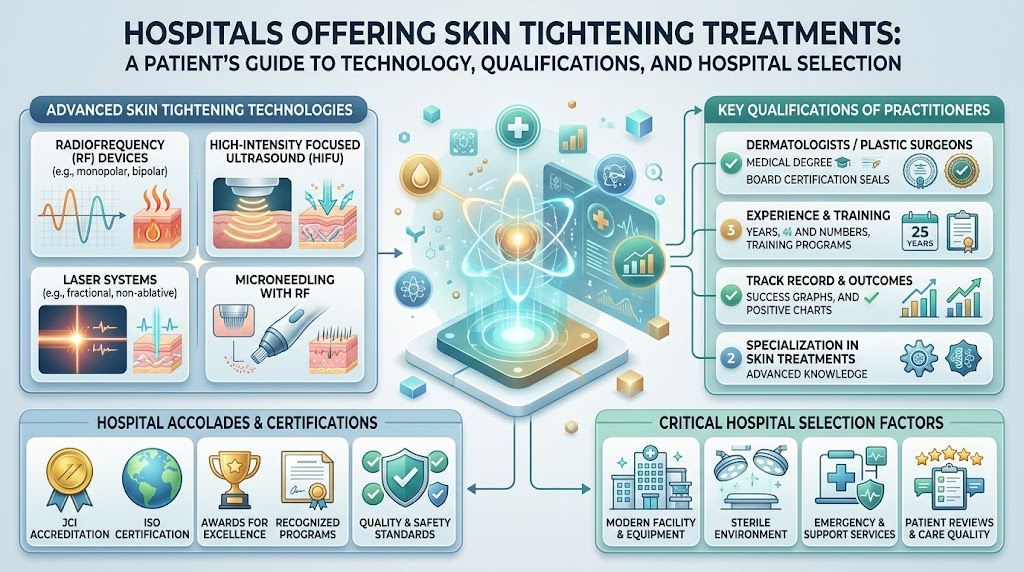
- Radiofrequency (RF) Skin Tightening: Uses electrical energy to generate controlled heat within the dermal layer. RF energy is tissue-depth selective and color-blind, making it suitable for a wide variety of skin tones when properly administered.
- Micro-Focused Ultrasound (MFU): Delivers precise ultrasound energy deep into the dermal and sub-dermal layers (including the SMAS layer targeted in facelifts). The energy creates micro-thermal coagulation points without damaging the skin surface.
- Infrared and Laser Tightening: Uses specific wavelengths of light energy to heat the deep dermis, stimulating collagen remodeling while keeping the outer skin layer cool.
2. Minimally Invasive Treatments
These techniques breach the skin barrier slightly to deliver energy deeper into the target tissues.
- Microneedling Radiofrequency (MNRF): Uses fine, sterile insulated needles to penetrate the skin at precise depths before releasing a pulse of radiofrequency energy. This combines physical micro-injuries with localized thermal stimulation.
- Subdermal / Probe-Assisted Radiofrequency: A tiny probe or cannula is inserted just beneath the skin under local anesthesia to deliver thermal energy directly to sub-dermal fat and connective tissue.
- Fractional Laser Resurfacing: Ablative or non-ablative lasers create microscopic thermal zones across the skin to encourage collagen renewal, improving both skin tightness and superficial surface texture.
3. Surgical Options
When skin laxity is severe or accompanied by significant tissue sagging, non-surgical devices may not yield satisfactory results.
- Facelift / Neck Lift: Surgical procedures that lift and reposition underlying facial muscles and connective tissue (SMAS), remove excess skin, and redrape remaining tissues for a refreshed appearance.
- Surgical Body Contouring: Procedures such as abdominoplasty (tummy tuck), brachioplasty (arm lift), or thigh lifts physically excise stretched, hanging skin following massive weight loss.
Non-Surgical vs. Minimally Invasive vs. Surgical
Comparing treatment categories helps clarify expectations regarding downtime, procedure invasiveness, and typical outcomes.
| Treatment Category | Skin Barrier Intact? | Typical Anesthesia | Downtime / Recovery | Expected Degree of Tightening |
| Non-Invasive (RF, MFU, Lasers) | Yes (No punctures or cuts) | None or topical numbing cream | Little to none (Immediate return to activities) | Mild to modest, gradual improvement |
| Minimally Invasive (MNRF, Subdermal RF) | Micro-punctures or tiny cannula entry | Topical numbing or local anesthesia | 2 to 7 days (Mild swelling, redness, peeling) | Moderate, localized structural tightening |
| Surgical (Facelift, Body Lift) | Surgical incisions made | Local sedation or general anesthesia | 2 to 4 weeks (Stitches, compression garments) | Significant, long-lasting structural correction |
According to the American Academy of Dermatology, non-invasive procedures provide subtle to modest tightening over time, whereas surgical interventions offer structural repositioning for significant tissue laxity.
Who May Be a Candidate for Skin Tightening?
Suitability for skin tightening depends on skin health, tissue quality, medical history, and personal goals.
┌────────────────────────────────────────────────────────────────────────┐
│                   General Candidate Considerations                     │
├────────────────────────────────────────────────────────────────────────┤
│ • Mild to moderate skin laxity along the face, neck, or body          │
│ • Realistic expectations regarding subtle vs. dramatic results         │
│ • Overall good health without active skin infections in the target area │
│ • Non-smoker or willing to refrain from smoking during healing         │
│ • Absence of severe medical conditions that impair tissue healing      │
└────────────────────────────────────────────────────────────────────────┘
- Ideal Non-Surgical Candidates: Individuals aged 30 to 60 with mild-to-moderate skin softening who want subtle rejuvenation without taking time off work or undergoing surgery.
- Ideal Surgical Candidates: Individuals with advanced skin sagging, jowling, deep tissue descent, or large aprons of excess skin following major weight loss.
Only a qualified healthcare professional can evaluate your skin during an in-person consultation to determine the safest, most effective approach.
Commonly Treated Areas
Energy-based and surgical treatments can address skin laxity across several body areas, provided the appropriate device and settings are selected.
[ Face & Jawline ] ─────> Jowls, softened jawline contours, cheek sagging
[ Neck & Submental ] ───> "Turkey neck," double chin laxity, horizontal neck lines
[ Abdomen ] ────────────> Post-pregnancy skin softening, mild post-weight-loss laxity
[ Arms & Thighs ] ──────> Loose skin on the inner thighs or upper arms ("bat wings")
[ Décolletage ] ────────> Crepey chest skin and sun-damaged texture
Not every energy device is suitable for all body zones. For example, thin facial skin requires different frequency parameters and cooling controls than thicker abdominal tissue.
How to Choose a Hospital for Skin Tightening
Selecting a reputable cosmetic center or hospital ensures high standards of clinical safety, proper device operation, and attentive aftercare.
┌────────────────────────────────────────────────────────────────────────┐
│                      Hospital Evaluation Checklist                     │
├────────────────────────────────────────────────────────────────────────┤
│  1. Medical Director: Board-certified in Dermatology or Plastic Surgery│
│  2. On-Site Staff: Licensed medical professionals operating devices     │
│  3. Facility Standards: Accredited, clean, dedicated procedure rooms   │
│  4. Technology: Authentic, medically cleared energy devices            │
│  5. Patient Care: Thorough pre-treatment consultations and history reviews│
│  6. Safety Protocols: Emergency measures and sterile technique         │
│  7. Pricing: Transparent, written estimates without hidden add-ons     │
│  8. Follow-Up: Structured post-treatment evaluations                   │
└────────────────────────────────────────────────────────────────────────┘
The AAD emphasizes that cosmetic treatment results depend heavily on the skill and knowledge of the practitioner performing the procedure. Choosing a facility led by board-certified specialists helps lower risk and leads to more predictable outcomes.
Why Practitioner Experience Matters
Operating energy-based tightening devices requires deep knowledge of skin anatomy, thermal dynamics, and tissue depth.
[ In-Depth Knowledge of Skin Layers ] + [ Device Parameter Control ] = Safe, Predictable Results
                 │                                    │
                 ▼                                    ▼
      Prevents Deep Tissue Burns             Avoids Surface Hyperpigmentation
Clinical Factors Influencing Treatment Safety
- Skin Tone Differences (Fitzpatrick Scale): Darker skin tones (Fitzpatrick Types IV–VI) have higher melanin concentrations in the epidermis. Using incorrect laser wavelengths or unmonitored surface heat can trigger post-inflammatory hyperpigmentation (dark spots) or hypopigmentation (light spots).
- Anatomical Variations: Facial nerves and delicate blood vessels sit just below the skin surface. An experienced clinician understands safe depth zones, avoiding sensitive structural areas.
- Customized Energy Settings: Applying fixed, standard settings to every patient can lead to under-treatment or thermal tissue injury. Experienced practitioners adjust pulse duration, energy fluency, and cooling levels for each individual.
Always ask how often your practitioner performs the specific procedure being considered on individuals with your skin tone and type.
What to Expect During a Consultation
A thorough medical consultation should precede any cosmetic treatment. This session allows you to discuss your goals and evaluate the facility.
┌────────────────────────────────────────────────────────────────────────┐
│                    The Consultation Process                            │
├────────────────────────────────────────────────────────────────────────┤
│ Step 1: Complete Review of Medical History & Current Medications       │
│ Step 2: Physical Evaluation of Skin Elasticity & Underlying Laxity     │
│ Step 3: Discussion of Treatment Options (Non-Surgical vs. Surgical)    │
│ Step 4: Explanation of Risks, Side Effects, and Needed Sessions        │
│ Step 5: Creation of an Individualized Treatment Plan & Cost Estimate   │
└────────────────────────────────────────────────────────────────────────┘
A proper consultation is an educational conversation, not a high-pressure sales pitch. If a clinic pushes immediate package purchases without assessing your medical background, consider seeking a second opinion.
Understanding Skin Tightening Results
Managing expectations is key to a positive cosmetic experience. Unlike fillers or neuromodulators that produce near-immediate changes, non-surgical skin tightening relies on your body’s natural healing response.
Day 0: Treatment Session (Thermal stimulation applied to target tissue)
  │
  ▼
Weeks 1–4: Initial Recovery & Micro-Inflammation (Mild tightness may be felt)
  │
  ▼
Months 2–6: Active Neocollagenesis (Fibroblasts synthesize new collagen fibers)
  │
  ▼
Months 6+: Gradual Tissue Remodeling (Peak visible improvements appear)
- Gradual Timeline: Collagen remodeling takes time. While subtle contraction may be visible early on, full structural improvements develop over 3 to 6 months.
- Duration of Results: Non-surgical energy treatments do not halt natural aging. Results typically last between 1 to 2 years, after which maintenance sessions may be recommended.
- Individual Variation: Factors such as smoking, sun exposure, age, and nutritional status influence how effectively your body builds new collagen.
How Many Sessions May Be Needed?
The number of required sessions depends on the chosen technology, target body area, and baseline skin laxity:
- Micro-Focused Ultrasound (MFU): Often performed as a single treatment, with maintenance evaluated every 12 to 18 months.
- Radiofrequency (RF) Treatments: Typically structured as a series of 3 to 6 sessions, spaced 2 to 4 weeks apart, to build collagen progressively.
- Microneedling RF (MNRF): Frequently recommended as a series of 3 treatments, scheduled 4 to 6 weeks apart.
- Surgical Options: Completed in a single operation, though long-term aging will naturally continue over the following decade.
Your practitioner will recommend a tailored treatment schedule during your initial consultation.
Recovery and Downtime Expectations
Post-procedure care varies significantly depending on how deeply the skin barrier was accessed.
┌─────────────────────────────────────────────────────────────────────────┐
│                     Recovery Expectations by Type                       │
├───────────────────────────────────┬─────────────────────────────────────┤
│ Non-Invasive Procedures           │ Minimally Invasive & Surgical Care │
├───────────────────────────────────┼─────────────────────────────────────┤
│ • Mild redness lasting 2–24 hours │ • Redness, swelling, and grid marks │
│ • Subtle swelling or tenderness   │   lasting 3 to 7 days               │
│ • No peeling or open wounds       │ • Pinpoint bleeding or minor bruising│
│ • Immediate return to makeup and  │ • Wound care, skin ointments, and   │
│   daily activities                │   sun avoidance required            │
└───────────────────────────────────┴─────────────────────────────────────┘
Always follow your provider’s specific aftercare instructions to support optimal healing and protect your skin.
Possible Side Effects and Risks
All cosmetic procedures carry potential risks. Understanding these helps you spot unusual symptoms early and seek timely medical care.
┌─────────────────────────────────────────────────────────────────────────┐
│                     Potential Adverse Reactions                         │
├───────────────────────────────────┬─────────────────────────────────────┤
│ Expected / Temporary Reactions    │ Rare / Serious Complications        │
├───────────────────────────────────┼─────────────────────────────────────┤
│ • Transient redness (erythema)    │ • Thermal burns or skin blistering   │
│ • Mild post-procedure edema       │ • Post-inflammatory hyperpigmentation│
│ • Temporary skin tenderness       │ • Subdermal fat atrophy (volume loss)│
│ • Slight itching during healing   │ • Surface scarring or infection     │
└───────────────────────────────────┴─────────────────────────────────────┘
Selecting an experienced clinical team using properly calibrated, authentic equipment significantly reduces the likelihood of severe complications.
Skin Type and Tone Considerations
Human skin varies widely in pigment density, thickness, and reaction to thermal stress.
   [ Light Skin Tones (I–III) ]            [ Melanin-Rich Skin Tones (IV–VI) ]
Low risk of pigment disruption.           Higher risk of post-inflammatory
Standard light/laser energy tolerable.   hyperpigmentation. Requires color-blind
                                         energy (RF) or specialized settings.
If you have melanin-rich skin (Fitzpatrick Types IV–VI), ask your provider about their experience treating darker skin tones. Radiofrequency and micro-focused ultrasound are often preferred over broad-spectrum lasers because their thermal energy bypasses epidermal melanin, reducing pigment-related risks.
When Non-Surgical Skin Tightening May Not Be Suitable
Non-surgical energy treatments have structural limits. A clear evaluation helps avoid spending time and resources on procedures unlikely to meet your goals.
┌────────────────────────────────────────────────────────────────────────┐
│                   Situations Requiring Alternative Care                │
├────────────────────────────────────────────────────────────────────────┤
│ • Advanced skin sagging with heavy apron folds or large jowls          │
│ • Active bacterial, viral (herpes simplex), or fungal skin infections  │
│ • Open wounds, severe eczema, or active psoriasis in the treatment zone│
│ • Pregnancy or active breastfeeding (for energy/anesthetic safety)     │
│ • Implanted electrical devices (pacemakers, defibrillators) for RF     │
│ • History of keloid scarring or connective tissue disorders            │
└────────────────────────────────────────────────────────────────────────┘
When significant skin redundancy exists, a board-certified plastic surgeon can discuss whether surgical excision is a more effective option.
Skin Tightening After Major Weight Loss
Losing a substantial amount of weight is a major health achievement. However, shrinking the underlying fat layer often leaves behind stretched skin that lacks the elasticity to snap back naturally.
                  [ Major Weight Loss Achieved ]
                                │
        ┌───────────────────────┴───────────────────────┐
        ▼                                               ▼
[ Mild Residual Laxity ]                    [ Substantial Excess Skin ]
Energy-based treatments (RF/MFU)            Non-surgical devices yield
may offer modest refinement.                minimal change; surgical body
                                            contouring recommended.
If you have significant folds of excess skin on your abdomen, arms, or thighs, energy-based treatments alone will likely be insufficient. A consultation with a plastic surgeon specializing in post-bariatric body contouring can help clarify your options.
Cost of Skin Tightening Treatments
Because cosmetic skin tightening is an elective procedure, pricing varies widely based on regional factors, device technology, and practitioner expertise.
┌─────────────────────────────────────────────────────────────────────────┐
│                     Skin Tightening Cost Factors                        │
├───────────────────────┬─────────────────────────────────────────────────┤
│ Cost Component        │ Why It Matters                                  │
├───────────────────────┼─────────────────────────────────────────────────┤
│ Device Technology     │ Advanced, single-use tips (e.g., MFU) add cost  │
│ Treatment Area        │ Full-face/body zones cost more than small areas │
│ Number of Sessions    │ Multi-session packages increase overall expense │
│ Specialist Expertise  │ Board-certified dermatologists charge higher fees│
│ Facility Accreditation│ Accredited hospitals invest in higher safety    │
└───────────────────────┴─────────────────────────────────────────────────┘
Cost Factor Overview
- Device & Consumables: Many advanced ultrasound and radiofrequency systems require single-use transducer tips for each patient, which contributes to the base cost.
- Package Pricing: Clinics frequently offer bundled pricing for multi-session procedures (such as 4 to 6 RF sessions).
Always request an itemized, written quote during your consultation that includes all pre-procedure tests, topical anesthetics, and follow-up visits.
Insurance Coverage Clarification
Elective cosmetic skin tightening procedures are performed to enhance appearance rather than treat a medical disease. As a result, commercial health insurance policies generally do not cover non-surgical or surgical skin tightening treatments.
- Reconstructive Exceptions: In rare instances where severe excess abdominal skin following massive weight loss causes chronic, recurrent skin infections (panniculitis) resistant to medical treatment, surgical panniculectomy may be reviewed for medical necessity.
- Verification: Always confirm billing details directly with your insurance provider and the hospital’s financial department before scheduling procedures.
How to Compare Hospitals: Patient Evaluation Matrix
Use this matrix to organize information when visiting different cosmetic centers:
| Comparison Criteria | Hospital A | Hospital B | Verification Notes |
| Medical Leadership | Board-Certified Dermatologist | General Practitioner | Check board certification registries |
| Available Technologies | RF, MFU, MNRF, Surgical | RF Only | Broader options allow tailored care |
| Experience with Skin Tone | Extensive portfolio | Limited | Critical for melanin-rich skin |
| Consultation Quality | Detailed history & expectations | Brief / Sales-focused | Avoid high-pressure environments |
| Facility Accreditation | Full Hospital Accreditation | Unaccredited Salon Suite | Ensures sterile safety standards |
| Emergency Protocols | On-site medical emergency team | Transfer plan only | Important for invasive procedures |
| Transparent Pricing | Itemized written quote | Verbal estimate | Confirm inclusion of follow-up visits |
Red Flags When Choosing a Cosmetic Hospital
Protect your safety and financial well-being by remaining alert to common warning signs:
┌─────────────────────────────────────────────────────────────────────────┐
│                           WARNING RED FLAGS                             │
├─────────────────────────────────────────────────────────────────────────┤
│ ✖ Promising "permanent results" or "guaranteed facelift outcomes"       │
│ ✖ Claiming energy-based procedures are "100% risk-free for everyone"    │
│ ✖ Pressuring you to purchase multi-treatment packages immediately       │
│ ✖ Skipping a comprehensive medical history or skin tone assessment       │
│ ✖ Performing procedures in unhygienic or unaccredited spaces            │
│ ✖ Refusing to specify practitioner credentials or device brand names    │
│ ✖ Using stock photos instead of real, verified clinic patient portfolios │
└─────────────────────────────────────────────────────────────────────────┘
Common Myths vs. Medical Facts
┌─────────────────────────────────────────────────────────────────────────┐
│                           MYTHS VS. FACTS                               │
├───────────────────────────────────────────┬─────────────────────────────┤
│ MYTH                                      │ FACT                        │
├───────────────────────────────────────────┼─────────────────────────────┤
│ "Non-surgical tightening produces the     │ "Non-surgical devices yield │
│  exact same results as a surgical lift."  │  subtle, gradual refinement."│
├───────────────────────────────────────────┼─────────────────────────────┤
│ "Higher energy settings always yield      │ "Excessive heat can cause   │
│  better collagen growth."                 │  thermal burns or fat loss."│
├───────────────────────────────────────────┼─────────────────────────────┤
│ "Skin tightening permanently stops the    │ "Treatments rebuild collagen│
│  aging process."                          │  but natural aging continues."│
├───────────────────────────────────────────┼─────────────────────────────┤
│ "Non-invasive procedures carry zero risk."│ "All energy devices carry   │
│  risk of burns or pigment changes."       │                             │
├───────────────────────────────────────────┼─────────────────────────────┤
│ "A single device works perfectly for      │ "Customizing modalities for │
│  every patient and skin tone."            │  each skin type yields best │
│  results."                                │                             │
└───────────────────────────────────────────┴─────────────────────────────┘
Common Patient Mistakes to Avoid
- Choosing Solely Based on Discounted Rates: Selecting a facility based only on low promotional prices without verifying device authenticity or operator credentials.
- Expecting Immediate Transformations: Failing to understand that collagen synthesis takes 3 to 6 months to display visible changes.
- Omitting Medical Information: Hiding medical conditions, active medications, or previous cosmetic injections from your treating clinician.
- Neglecting Post-Procedure Sun Protection: Exposing newly treated skin to UV radiation, which increases the risk of hyperpigmentation and breaks down new collagen.
- Treating Devices as Inter-Changeable: Assuming all radiofrequency or laser machines perform identically, regardless of brand, calibration, or operator skill.
How BESTCOSMETICHOSPITALS Can Support Your Journey
Navigating cosmetic medical care requires access to balanced, objective information. BESTCOSMETICHOSPITALS.COM offers patient-centered resources to guide your research:
- Hospital Discovery: Learn how to evaluate cosmetic surgery centers, dermatology clinics, and accredited hospital departments.
- Procedure Guides: Explore evidence-based overviews of non-surgical energy devices, minimally invasive options, and surgical procedures.
- Consultation Preparation: Access question checklists to ensure your pre-treatment discussions are informative and thorough.
- Safety Standards: Understand safety protocols, practitioner credentials, and device clearance standards.
Frequently Asked Questions (FAQs)
1.What is skin tightening treatment?
Skin tightening refers to a range of non-surgical, minimally invasive, and surgical procedures designed to improve skin firmness by stimulating collagen remodeling or removing excess skin.
2.What are the best skin tightening treatments?
There is no single “best” treatment. The right option depends on your degree of skin laxity, skin tone, budget, and recovery preferences. Options include radiofrequency, micro-focused ultrasound, microneedling RF, and surgical lifts.
3.Which hospitals offer skin tightening treatments?
Accredited cosmetic hospitals, tertiary medical centers with dedicated dermatology units, and outpatient plastic surgery centers offer these procedures under medical supervision.
4.Is non-surgical skin tightening effective?
Yes, for mild to moderate skin laxity. Non-surgical devices generate controlled heat to stimulate gradual collagen production, resulting in modest structural tightening over several months.
5.How does radiofrequency skin tightening work?
Radiofrequency (RF) delivers targeted electrical heat into the dermis. This contracts existing collagen fibers and stimulates fibroblasts to produce new collagen over time.
6.What is ultrasound skin tightening?
Ultrasound skin tightening (MFU) uses focused acoustic energy to create precise micro-thermal coagulation zones deep within the dermis and foundational tissue layers, encouraging tissue contraction.
7.Can laser treatment tighten loose skin?
Yes. Certain non-ablative and fractional ablative lasers heat the deeper layers of skin to promote collagen synthesis while improving surface texture and sun damage.
8.How many skin tightening sessions are needed?
Micro-focused ultrasound often requires a single treatment. Radiofrequency and microneedling RF typically require a series of 3 to 6 sessions for optimal results.
9.How long do skin tightening results last?
Non-surgical results typically last between 1 and 2 years. Maintenance treatments, paired with proper sun protection and skincare, can help sustain collagen improvements.
10.Is skin tightening safe?
When performed by a qualified medical professional using authentic, cleared equipment, skin tightening is generally safe. However, risks like transient redness, swelling, or rare burns exist.
11.How much does skin tightening cost?
Costs vary based on the technology used, treatment area, number of sessions, and practitioner expertise. Always request a detailed, written cost breakdown during your consultation.
12.Does skin tightening require downtime?
Non-invasive procedures usually require little to no downtime. Minimally invasive methods (like MNRF) may involve 3 to 7 days of mild redness and swelling, while surgery requires weeks of recovery.
13.Can non-surgical skin tightening remove excess skin after weight loss?
No. Non-surgical energy devices cannot shrink large amounts of hanging skin. Significant skin redundancy following major weight loss typically requires surgical body contouring.
14.How should I choose a skin tightening hospital?
Prioritize hospitals led by board-certified dermatologists or plastic surgeons, check for accredited facilities, verify device authenticity, and ensure thorough pre-treatment consultations are offered.
15.What questions should I ask before treatment?
Ask about practitioner credentials, experience with your skin tone, device specifics, expected results, potential side effects, total cost, and post-treatment emergency support.
Final Conclusion
Exploring skin tightening treatments is a personal decision that requires balancing your aesthetic goals with realistic expectations and safety considerations. While non-invasive energy devices offer modest, natural-looking firming with minimal downtime, surgical choices remain the gold standard for correcting severe skin laxity and tissue sag.