Introduction
Facial and neck contouring concerns are common among individuals seeking to refine their profile or address changes in their appearance over time. Fullness beneath the chin, often referred to as a double chin or submental fullness, can significantly influence the overall facial profile and balance. A double chin can occur at various body weights and may be influenced by multiple factors beyond body weight alone, including genetics, underlying facial anatomy, and skin elasticity.Because individual anatomical traits vary widely, understanding available treatment options before making a decision is a vital step for anyone considering aesthetic procedures. Whether exploring non-surgical modalities or surgical interventions, patient safety, technological capability, and medical expertise matter immensely. Platforms like BESTCOSMETICHOSPITALS provide valuable resources to help individuals explore specialized healthcare options and understand cosmetic procedures. This comprehensive guide explores everything readers need to know about hospitals specializing in double chin treatments, from underlying causes and diagnostic evaluations to procedural options, recovery considerations, and long-term maintenance.
Understanding Double Chin Concerns
What Is a Double Chin?
A double chin, clinically known as submental fullness, describes the accumulation of subcutaneous fat, loose skin, or structural tissue located directly beneath the chin and along the upper neck. This anatomical feature can soften the transition between the jawline and the neck.
Why Does a Double Chin Develop?
Submental fullness rarely stems from a single origin. Instead, it is typically influenced by a combination of biological, anatomical, and lifestyle factors that interact uniquely in each person.
- The Role of Genetics: Inherited traits heavily influence where the body stores fat and how facial structures are shaped.
- The Role of Aging: Natural biological aging alters soft tissue distribution and structural support in the face and neck.
- Changes in Skin Elasticity: Reduced collagen and elastin production over time can cause skin to drape or sag beneath the jawline.
- Submental Fat Accumulation: The localized deposition of fat cells in the submental space.
- Facial and Neck Anatomy: Natural bone structure, such as a receding chin or low hyoid bone placement, can make submental fullness more apparent.
- Weight Changes: Fluctuations in overall body weight can influence the volume of fat stored beneath the chin.
The appearance of a double chin varies significantly between individuals, meaning that what works for one person may not be appropriate for another.
Common Causes and Contributing Factors
- Genetics and Family Traits: Inherited predisposition to store fat under the chin or possess specific jawline angles.
- Aging and Loss of Skin Firmness: Gradual breakdown of structural proteins leading to reduced skin tightness.
- Localized Fat Deposits: Pockets of fat that persist despite healthy lifestyle habits or stable body weight.
- Weight Gain: Overall increases in body fat percentage can expand submental fat stores.
- Changes in Body Composition: Shifts in muscle mass and fat distribution as the body matures.
- Posture and Facial Appearance: Habitual neck flexion or posture can temporarily influence the visual contours of the neck.
- Individual Facial Structure: Unique skeletal frameworks that define the jaw and neck interface.
Identifying the main contributing factor helps healthcare professionals recommend a tailored treatment approach rather than applying a generic solution.
Common Factors That May Contribute to a Double Chin
| Contributing Factor | How It May Affect the Chin and Neck Area | General Treatment Considerations |
| Genetics | Determines baseline fat distribution and structural facial angles. | Individualized evaluation focusing on specific anatomical goals. |
| Localized Fat | Creates localized submental fullness despite stable body weight. | Fat reduction approaches such as injectables or liposuction. |
| Skin Laxity | Causes sagging or draping of soft tissues beneath the jawline. | Skin-tightening procedures, energy devices, or surgical lifts. |
| Aging | Alters tissue volume, elasticity, and muscular support over time. | Comprehensive rejuvenation planning combining multiple modalities. |
| Weight Changes | Influences the volume and expansion of subcutaneous fat cells. | Lifestyle stabilization paired with targeted contouring options. |
| Facial Anatomy | Skeletal framework affects how the chin and neck transition. | Anatomical assessment to determine if surgical contouring is suited. |
| Neck Structure | Subplatysmal fat or muscle laxity beneath the surface. | Specialized surgical neck contouring procedures. |
| Combination of Multiple Factors | Intersecting elements of fat, skin laxity, and bone structure. | Multi-faceted treatment plans tailored by qualified specialists. |
A professional clinical evaluation is essential to help distinguish whether the primary concern is excess subcutaneous fat, loose skin, underlying neck anatomy, or a combination of these factors. Because patients present with diverse anatomical profiles, generalized assumptions can lead to mismatched expectations.
Specialists analyze these variables during initial consultations to ensure that proposed interventions directly target the root cause of the submental fullness. This diagnostic clarity supports more predictable, balanced aesthetic outcomes.
Understanding Double Chin Treatment Options
Why Treatment Plans Should Be Individualized
No two facial profiles are identical. Treatment plans must be customized based on skin quality, fat volume, anatomical structure, and personal health background.
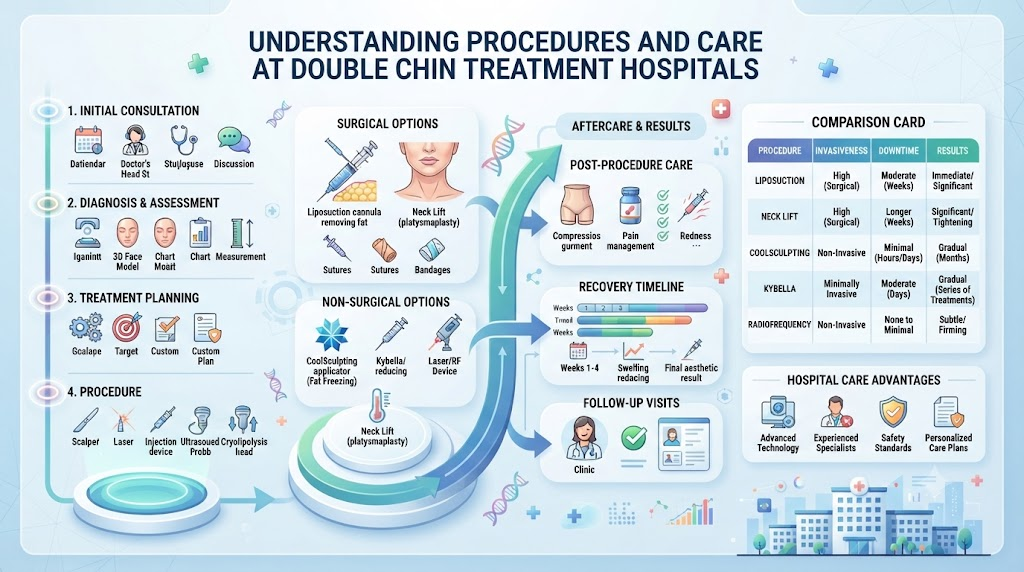
- Non-Surgical Treatment Options: Modalities designed to reduce fat or tighten skin without traditional surgery.
- Injectable Fat-Reduction Treatments: Sub-dermal injections targeting localized fat cells where approved and medically appropriate.
- Energy-Based Treatments: Devices utilizing radiofrequency or ultrasound energy to stimulate tissue remodeling.
- Skin-Tightening Procedures: Non-invasive methods aimed at improving firmness.
- Surgical Fat Removal: Procedures like liposuction physically extracting localized fat cells.
- Chin and Neck Contouring Surgery: Advanced surgical interventions reshaping underlying muscle and removing redundant skin.
- Combined Treatment Approaches: Blending surgical and non-surgical techniques for comprehensive facial framing.
The availability and suitability of these treatments vary depending on the clinical setting, provider expertise, patient anatomy, and thorough medical assessment.
Non-Surgical Double Chin Treatments
Non-surgical approaches offer alternatives for individuals seeking aesthetic improvements with minimal disruption to their daily routines.
- Injectable Treatments for Submental Fat: Utilizing specialized compounds to disrupt fat cell membranes, allowing the body to naturally metabolize the treated cells over time.
- Radiofrequency-Based Treatments: Delivering thermal energy to underlying skin layers to encourage collagen production and tissue tightening.
- Ultrasound-Based Treatments: Focused ultrasound energy directed at precise tissue depths to target fat or stimulate structural support.
- Laser-Based Treatments: Light-based energy applications supporting skin surface texture and minor tightening.
- Non-Invasive Skin Tightening: External modalities focusing on superficial skin laxity.
While these options can offer meaningful improvements for appropriate candidates, non-surgical treatments generally cannot achieve the same degree of dramatic fat removal or skin tightening as surgical interventions.
Surgical Double Chin Treatments
Surgical options are typically considered for patients seeking more pronounced, immediate, or structural corrections to submental fullness and neck laxity.
- Submental Liposuction: A surgical procedure involving small incisions through which a cannula removes targeted pockets of localized fat beneath the chin.
- Neck Contouring Procedures: Surgical management addressing deeper fat compartments or underlying muscle bands (platysma) to define the jawline.
- Skin Tightening Surgery: Excision of excess, draped skin following significant weight loss or aging changes.
- Facelift and Neck Lift Procedures: Comprehensive surgical repositioning of facial and neck tissues for advanced rejuvenation.
- Combined Facial Contouring Approaches: Integrating surgical fat removal with structural tightening for harmonious facial balance.
Surgical procedures require a detailed individual evaluation, comprehensive informed consent, and adherence to professional pre- and post-operative guidelines.
Common Double Chin Treatment Approaches
| Treatment Approach | General Purpose | May Be Considered For | Recovery Considerations |
| Injectable Fat-Reduction Treatment | Chemically targets and breaks down localized fat cells. | Individuals with moderate submental fat and good skin elasticity. | Mild to moderate swelling, bruising, and tenderness for several days. |
| Radiofrequency Treatment | Uses thermal energy to stimulate collagen and tighten skin. | Patients with mild skin laxity and minor fat fullness. | Minimal downtime; temporary mild redness or warmth in the area. |
| Ultrasound-Based Treatment | Delivers targeted energy to deep tissue layers for remodeling. | Adults seeking non-invasive fat reduction and mild tightening. | Temporary tenderness, slight swelling, or tingling sensations. |
| Laser-Based Treatment | Supports skin contraction and superficial texture improvement. | Individuals with mild submental laxity seeking subtle refinement. | Short recovery; temporary redness and mild sun sensitivity. |
| Non-Invasive Skin Tightening | Improves skin firmness without disrupting underlying fat directly. | Patients primarily concerned with loose skin rather than excess fat. | Minimal downtime with gradual results unfolding over several weeks. |
| Submental Liposuction | Physically extracts localized fat deposits via small cannulas. | Patients with good skin elasticity and stubborn localized submental fat. | Compression garment wear, swelling, and bruising for 1–2 weeks. |
| Surgical Neck Contouring | Reshapes underlying muscles, deep fat, and neck structures. | Individuals with significant anatomical fullness or muscle banding. | Extended recovery, potential drainage tubes, and activity restrictions. |
| Combined Procedures | Integrates fat removal, muscle tightening, and skin excision. | Patients presenting with advanced aging, fat, and skin laxity. | Comprehensive post-operative care and longer initial healing timeline. |
Treatment selection depends heavily on a careful balance of clinical factors. The amount and distribution of submental fat, the elasticity and tone of the overlying skin, underlying facial anatomy, general health status, and the patient’s personal aesthetic goals all guide the decision-making process.
Qualified specialists collaborate with patients to review these variables, ensuring that the chosen approach aligns realistically with what can safely be achieved.
Who May Be a Candidate for Double Chin Treatment?
Candidacy for double chin treatments is determined through a professional consultation rather than assumptions.
- Individuals with localized submental fat resistant to diet and exercise.
- People in good overall health without unmanaged medical conditions.
- Individuals with realistic expectations regarding cosmetic outcomes.
- Patients with adequate skin elasticity seeking non-surgical or minimally invasive care.
- People considering surgical treatment for more substantial structural reshaping.
- People seeking non-surgical options with minimal recovery time.
A thorough medical and physical examination is necessary to confirm whether a patient is a suitable candidate for a specific procedure.
What Happens During a Cosmetic Consultation?
A structured cosmetic consultation establishes a clear foundation for safe, effective care:
- Medical History Review: Examining past surgeries, chronic health conditions, and healing tendencies.
- Facial and Neck Examination: Assessing bone structure, jawline definition, and neck proportions.
- Assessment of Skin Quality: Evaluating firmness, thickness, and elasticity.
- Assessment of Fat Distribution: Determining whether fat is superficial, deep, or combined with muscle laxity.
- Understanding Patient Goals: Listening carefully to what the patient wishes to achieve.
- Discussion of Available Options: Reviewing both surgical and non-surgical pathways.
- Review of Risks and Limitations: Providing transparent information on potential side effects.
- Creating an Individualized Treatment Plan: Outlining recommended steps tailored to the patient.
Why Choose a Hospital for Double Chin Treatment?
Undergoing aesthetic procedures within an established hospital setting offers distinct clinical advantages, particularly when surgical interventions or advanced monitoring are involved.
- Access to qualified specialists, including plastic surgeons and dermatologists.
- Comprehensive patient evaluation ensuring overall health safety.
- Availability of both surgical and non-surgical options under one roof.
- Advanced technology and specialized procedural suites.
- Professional anesthesia and dedicated safety support teams.
- Immediate clinical management capabilities should complications arise.
- Coordinated aftercare and structured follow-up pathways.
- Higher standards of clinical monitoring and sterile environments.
The appropriate setting depends on the complexity of the procedure and the individual health needs of the patient.
How to Choose Hospitals Specializing in Double Chin Treatments
- Specialist qualifications, board certifications, and verifiable credentials.
- Demonstrated clinical experience specifically in facial and neck contouring.
- Range of available treatment options ensuring unbiased recommendations.
- State-of-the-art technology and well-maintained equipment.
- Rigorous patient safety standards and accredited surgical facilities.
- Thorough pre-treatment assessment protocols.
- Clear, transparent discussion of risks and limitations.
- Robust recovery and follow-up support infrastructure.
- Transparent treatment planning without high-pressure sales tactics.
- Patient-centered comfort, communication, and ethical care standards.
Patients should thoroughly evaluate these criteria to select a trusted medical provider.
Preparing for Double Chin Treatment
Preparation plays an important role in supporting a smooth procedural experience and recovery.
- Understanding Your Treatment Plan: Reviewing all steps of the scheduled procedure with your provider.
- Discussing Medical History: Disclosing all past medical conditions and previous cosmetic treatments.
- Reviewing Current Medications: Discussing all prescription drugs, over-the-counter products, and supplements with your healthcare team to ensure safety.
- Following Pre-Procedure Instructions: Adhering strictly to fasting, skin preparation, or lifestyle guidelines provided by the hospital.
- Planning for Recovery: Arranging transportation home, time off work, and assistance during initial healing.
- Asking Important Questions: Clarifying any uncertainties regarding aftercare or expected sensations during recovery.
Patients must never alter or stop prescribed medications without professional medical guidance.
Recovery After Double Chin Treatment
Recovery experiences vary widely depending on whether the procedure was non-surgical or surgical, as well as the individual healing characteristics of the patient.
- Recovery After Non-Surgical Procedures: Typically involves minimal downtime, allowing individuals to resume normal daily activities almost immediately, though temporary swelling, tenderness, or bruising may occur.
- Recovery After Surgical Procedures: Involves initial rest, wearing specialized compression garments under the chin to minimize swelling, managing prescribed post-operative care, and avoiding strenuous physical exertion for a couple of weeks.
- Temporary Swelling and Bruising: Common physiological responses to tissue manipulation that gradually subside over days to weeks.
- Follow-Up Care: Attending scheduled post-procedural visits to allow the medical team to monitor healing progress.
- Returning to Daily Activities: Progressing gradually back to routine exercise and social commitments based on provider clearance.
- When to Contact a Healthcare Professional: Knowing specific warning signs, such as worsening pain, spreading redness, or unexpected drainage, that warrant prompt medical contact.
Potential Risks and Side Effects
All cosmetic procedures carry inherent risks and side effects that should be understood prior to treatment.
- Temporary swelling in the treated submental area.
- Bruising and localized skin tenderness.
- Numbness or altered skin sensation in the chin and upper neck.
- Minor skin irregularities or temporary firmness as tissues heal.
- Infection risks associated with injections or surgical incisions.
- Scarring, particularly with surgical approaches (placed discreetly where possible).
- Rare procedure-specific risks depending on the chosen modality.
A detailed discussion of these risks with a qualified professional is an essential part of the informed consent process.
Common Mistakes People Make
- Choosing a treatment provider based solely on the lowest price rather than clinical quality.
- Expecting instant, dramatic results from non-surgical or single-session procedures.
- Assuming every double chin is caused purely by excess body weight.
- Ignoring existing skin laxity when selecting a fat-reduction method.
- Trying unverified home remedies, DIY devices, or unsafe alternative treatments.
- Failing to verify the professional qualifications and credentials of the provider.
- Hiding important medical history or current supplement use during consultation.
- Skipping scheduled follow-up care appointments.
- Expecting to replicate someone else’s specific cosmetic results.
Approaching treatment with patience, realism, and objective guidance supports a much safer journey.
Realistic Expectations and Treatment Results
Achieving satisfaction with cosmetic procedures relies heavily on maintaining realistic expectations. Results vary because every individual possesses unique anatomy, skin quality, healing capabilities, and fat distribution patterns.
Non-surgical treatments yield gradual improvements as the body processes treated cells or remodels collagen, whereas surgical procedures offer more direct structural modification once acute swelling resolves. Long-term lifestyle stability and natural aging processes continue to influence the appearance over time.
Real-Life Patient Scenarios
Disclaimer: The following patient scenarios are hypothetical examples illustrating typical clinical pathways in double chin treatment and do not constitute personal medical advice.
Scenario 1: Localized Submental Fat with Good Skin Elasticity
A 35-year-old individual with stable body weight and firm skin presents with stubborn submental fullness that persists despite regular exercise. Following a comprehensive clinical evaluation, the specialist discusses targeted non-surgical injectable options and submental liposuction as potential pathways to refine the jawline.
Scenario 2: Double Chin with Loose Skin
A 55-year-old patient seeks consultation for a double chin accompanied by noticeable neck skin laxity and mild muscle banding. The plastic surgeon explains that fat reduction alone would be insufficient, recommending a combined surgical approach involving submental contouring and skin tightening to achieve balanced proportions.
Scenario 3: A Patient Seeking a Non-Surgical Option
An adult with moderate submental fat and a busy professional schedule prefers to avoid surgical downtime. During the consultation, the provider outlines the expected benefits, session timelines, and gradual nature of energy-based skin tightening and fat reduction treatments.
Scenario 4: A Patient Considering Surgical Contouring
An individual desiring significant, permanent structural definition under the chin undergoes a detailed surgical consultation. The team reviews pre-operative requirements, anesthesia safety protocols, compression garment protocols, and recovery expectations, empowering the patient to make an informed decision.
Long-Term Maintenance After Treatment
- Maintaining a stable and healthy body weight where appropriate.
- Supporting overall skin health through proper hydration, sun protection, and balanced nutrition.
- Following all post-treatment home-care instructions diligently.
- Attending scheduled follow-up appointments with your medical provider.
- Understanding that natural aging and gravitational changes will continue over the years.
- Maintaining realistic expectations regarding long-term facial contours.
The Future of Double Chin and Facial Contouring Treatments
The field of aesthetic medicine continues to evolve through technological innovation. Researchers are developing improved non-invasive technologies with enhanced precision, advanced energy-based devices that target fat and skin simultaneously, and more personalized treatment planning models.
Furthermore, AI-assisted facial analysis tools and superior 3D imaging technology help clinicians map submental anatomy with greater accuracy, supporting refined combination treatments and enhanced patient safety monitoring.
Frequently Asked Questions (FAQ)
1. What causes a double chin?
A double chin, or submental fullness, is caused by a combination of factors, including localized fat accumulation, genetic predisposition, natural aging, and reduced skin elasticity. Even facial bone structure and posture can influence how fullness appears beneath the chin, meaning it is not solely caused by overall body weight.
2. Can thin people have a double chin?
Yes, thin individuals can have a double chin. Because submental fullness is heavily influenced by genetics and bone structure—such as a receding chin or specific jaw angles—people with low body weight can still possess localized fat deposits or early skin laxity beneath the jawline.
3. What treatments are available for a double chin?
Treatments range from non-surgical options like injectable fat-reduction treatments, radiofrequency, and ultrasound skin tightening to surgical procedures such as submental liposuction and comprehensive neck contouring surgery. The appropriate choice depends on individual anatomy and clinical goals.
4. Are non-surgical double chin treatments effective?
Non-surgical treatments can be effective for suitable candidates with moderate submental fat and good skin elasticity. They offer gradual improvements with minimal downtime, though they typically cannot achieve the dramatic fat removal or skin tightening possible with surgery.
5. Is double chin liposuction a surgical procedure?
Yes, submental liposuction is a surgical procedure. It involves making small incisions under the chin or behind the ears, through which a cannula is used to physically suction out targeted fat deposits under sterile hospital conditions.
6. How do doctors decide which treatment is appropriate?
Doctors evaluate the patient’s skin elasticity, fat volume, underlying neck anatomy, medical history, and aesthetic goals during a comprehensive consultation. This assessment ensures that the selected procedure matches the patient’s unique physical profile.
7. Can loose skin contribute to a double chin?
Yes, loose or sagging skin beneath the chin can create the visual appearance of a double chin, even if very little fat is present. In such cases, treatments focused solely on fat reduction may not provide optimal results, making skin-tightening or surgical lifting procedures more appropriate.
8. How long is recovery after double chin treatment?
Recovery varies widely depending on the procedure. Non-surgical treatments usually involve little to no downtime, allowing immediate return to routine activities. Surgical options like liposuction typically require one to two weeks of swelling management, garment wear, and reduced physical exertion.
9. Are double chin treatments painful?
Most treatments involve manageable discomfort. Non-surgical procedures may cause temporary stinging, warmth, or tenderness. Surgical procedures are performed under anesthesia or sedation, with post-operative soreness managed effectively using prescribed care and resting.
10. What are the risks of double chin treatments?
Potential risks include temporary swelling, bruising, numbness, tenderness, skin irregularities, infection, scarring, or rare procedure-specific complications. Discussing these risks with a qualified specialist before treatment is essential.
11. Can a double chin return after treatment?
While treated fat cells are permanently removed or metabolized and do not regenerate, significant weight fluctuations or natural aging can alter remaining fat cells and skin tissues over time. Maintaining a stable lifestyle helps preserve results.
12. Who is a good candidate for non-surgical treatment?
Good candidates for non-surgical treatments generally include adults with localized submental fat, good skin elasticity, realistic expectations, and a desire to improve their profile without undergoing traditional surgery.
13. How do I choose a hospital for double chin treatment?
Look for hospitals featuring board-certified specialists, accredited surgical facilities, comprehensive evaluation protocols, transparent risk discussions, advanced technology, and robust follow-up care infrastructure to ensure patient safety and quality outcomes.
14. What questions should I ask during a consultation?
Key questions include: What is causing my submental fullness? Which treatment options are best suited for my anatomy? What are the expected recovery timeline and potential risks? Can you show me examples of similar cases you have treated?
15. Are double chin treatment results permanent?
Surgical fat removal permanently eliminates specific fat cells, and non-surgical treatments destroy targeted fat cells. However, long-term results depend on individual aging processes, skin health, and maintaining stable weight habits following the procedure.
Final Thoughts
Navigating the options for facial and neck contouring is an important personal decision that benefits greatly from informed understanding and professional medical guidance. Understanding the underlying causes of a double chin—whether driven by genetics, skin elasticity, or localized fat—allows patients and specialists to tailor interventions effectively. Recognizing that treatment must be individualized highlights why a one-size-fits-all approach is never appropriate in aesthetic medicine.The distinct differences between surgical and non-surgical approaches underscore the value of thorough consultations with qualified specialists within reputable hospital settings. Prioritizing patient safety, expert clinical evaluation, and transparent communication ensures that expectations remain realistic and grounded in physiological reality. Proper aftercare and structured follow-up visits further support safe healing and long-term satisfaction.